


2 months 2 weeks ago
As we speak cruel time is fleeing. Seize the day, believing as little as possible in the morrow.
▼
Source
source
Book I, ode xi, line 7
1 month 4 weeks ago
We have not made the Revolution, the Revolution has made us.
▼
Source
source
Act II.
1 month 2 weeks ago
The living have never shown me how to live.
▼
Source
source
"On My Friendly Critics"

1 month 3 weeks ago
History proves nothing because it contains everything.

3 months 3 weeks ago
It's better to bet on this life than on the next.
1 month 2 weeks ago
Liberalism - it is well to recall this today-is the supreme form of generosity; it is the right which the majority concedes to minorities and hence it is the noblest cry that has ever resounded in this planet. It announces the determination to share existence with the enemy; more than that, with an enemy which is weak. It was incredible that the human species should have arrived at so noble an attitude, so paradoxical, so refined, so acrobatic, so anti-natural. Hence, it is not to be wondered at that this same humanity should soon appear anxious to get rid of it. It is a discipline too difficult and complex to take firm root on earth.
▼
Source
source
Chap. VIII: The Masses Intervene In Everything, And Why Their Intervention Is Solely By Violence
1 week 3 days ago
I mean to lead a simple life, to choose a simple shell I can carry easily - like a hermit crab. But I do not. I find that my frame of life does not foster simplicity. My husband and five children must make their way in the world. The life I have chosen as a wife and mother entrains a whole caravan of complications.
1 month 2 weeks ago
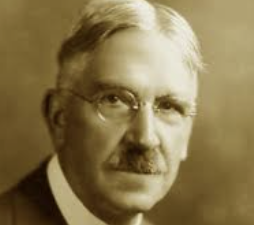
The three qualities of space and time reciprocally affect and qualify one another in experience. Space is inane save as occupied with active volumes. Pauses are holes when they do not accentuate masses and define figures as individuals. Extension sprawls and finally benumbs if it does not interact with place so as to assume intelligible distribution. Mass is nothing fixed. It contracts and expands, asserts and yields, according to its relations to other spatial and enduring things.... these are then the common properties of the matter of arts because there are general conditions without which an experience is not possible. As we saw earlier, the basic condition is felt relationship between doing and undergoing as the organism and environment interact.
▼
Source
source
pp. 220-21

2 months 3 weeks ago
"Say what you like," we shall be told, "the apocalyptic beliefs of the first Christians have been proved to be false. It is clear from the New Testament that they all expected the Second Coming in their own lifetime. And, worse still, they had a reason, and one which you will find very embarrassing. Their Master had told them so. He shared, and indeed created, their delusion. He said in so many words, 'this generation shall not pass till all these things be done.' And he was wrong. He clearly knew no more about the end of the world than anyone else." It is certainly the most embarrassing verse in the Bible.
1 month 2 weeks ago
I leave you but the sound of many a word In mocking echoes haply overheard, I sang to heaven. My exile made me free,from world to world, from all worlds carried me.
▼
Source
source
The Poet's Testament
1 month 2 weeks ago
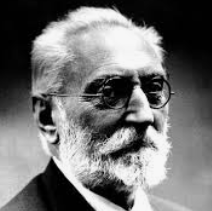
All of this that is happening to me, and happening to others about me, is it reality or is it fiction? May not all of it perhaps be a dream of God, or of whomever it may be, which will vanish as soon as He wakes? And therefore when we pray to Him, and cause canticles and hymns to rise to Him, is it not that we may lull Him to sleep, rocking the cradle of His dreams? Is not the whole liturgy, of all religions, only a way perhaps of soothing God in His dreams, so that He shall not wake and cease to dream us?
▼
Source
source
Niebla [Mist]

2 months 3 weeks ago
The domination of the public way in which things have been interpreted has already decided upon even the possibilities of being attuned, that is, about the basic way in which Da-sein lets itself be affected by the world. The they prescribes that attunement, it determines what and how one "sees."
▼
Source
source
Stambaugh translation
2 months 3 weeks ago
You never know how much you really believe anything until its truth or falsehood becomes a matter of life and death to you. It is easy to you believe a rope to be strong and sound as long as you are merely using it to cord a box. But suppose that you had to hang by that rope over a precipice. Wouldn't you then first discover how much you really trusted it? ... Only a real risk tests the reality of a belief.
2 weeks 2 days ago
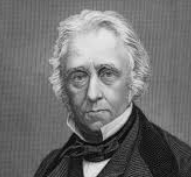
If it is the moral right we are to look at, I say, that on every principle of moral obligation, I hold that the Jew has a right to political power.
▼
Source
source
Speech in the House of Commons (5 April 1830) in favour of Robert Grant's Jewish Disabilities Bill

3 months 3 weeks ago
Start with a planet like the earth, with a complement of simple compounds bound to exist upon it, add the energy of a nearby sun, and you are bound to end with nucleic acids. You can't avoid it.
3 months 2 weeks ago
Among the things held to be just by law, whatever is proved to be of advantage in men's dealings has the stamp of justice, whether or not it be the same for all; but if a man makes a law and it does not prove to be mutually advantageous, then this is no longer just. And if what is mutually advantageous varies and only for a time corresponds to our concept of justice, nevertheless for that time it is just for those who do not trouble themselves about empty words, but look simply at the facts.

2 months 3 days ago
Happy are they that go to bed with grave music like Pythagoras.
1 month 3 weeks ago
If we could sleep twenty-four hours a day, we would soon return to the primordial slime, the beatitude of that perfect torpor before Genesis-the dream of every consciousness sick of itself.
1 month 2 weeks ago
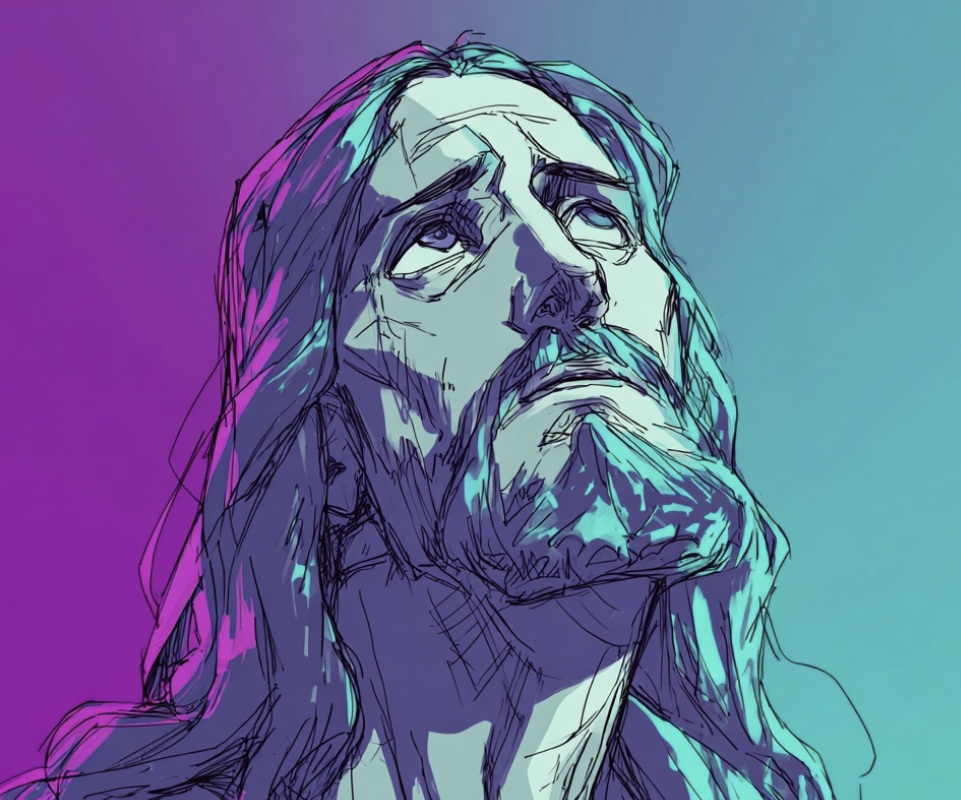
“What man among you with 100 sheep, on losing one of them, will not leave the 99 behind in the wilderness and go after the lost one until he finds it? And when he has found it, he puts it on his shoulders and rejoices. And when he gets home, he calls his friends and his neighbors together, saying to them, ‘Rejoice with me, for I have found my sheep that was lost.' I tell you that in the same way, there will be more joy in heaven over one sinner who repents than over 99 righteous ones who have no need of repentance.
▼
Source
source
Luke 15: 4-7
3 months ago
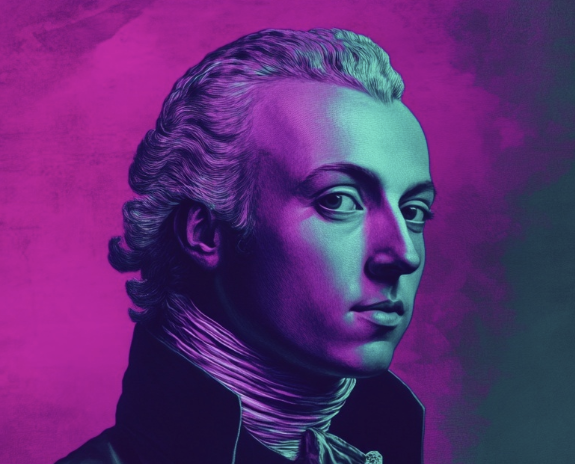
Even if there never have been actions arising from such pure sources, what is at issue here is not whether this or that happened; that, instead, reason by itself and independently of all appearances commands what ought to happen; that, accordingly, actions of which the world has perhaps so far given no example, and whose very practicability might be very much doubted by one who bases everything on experience, are still inflexibly commanded by reason ... because ... duty ... lies, prior to all experience, in the idea of a reason determing the will by means of apriori grounds.
2 months 3 weeks ago
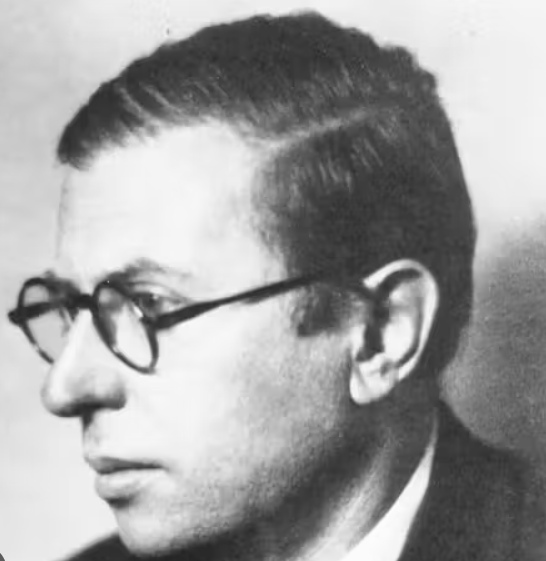
...the prisoner's dreams is the guard's spirituality.
▼
Source
source
p. 400

2 months 4 weeks ago
The alleged power to charm down insanity, or ferocity in beasts, is a power behind the eye.
▼
Source
source
Behavior

3 months 1 week ago
The logic now in use serves rather to fix and give stability to the errors which have their foundation in commonly received notions than to help the search for truth. So it does more harm than good.
▼
Source
source
Aphorism 7
1 month 2 weeks ago
Take heed lest any man deceive you: For many shall come in my name, saying, I am Christ; and shall deceive many. And when ye shall hear of wars and rumours of wars, be ye not troubled: for such things must needs be; but the end shall not be yet. For nation shall rise against nation, and kingdom against kingdom: and there shall be earthquakes in divers places, and there shall be famines and troubles: these are the beginnings of sorrows. But take heed to yourselves: for they shall deliver you up to councils; and in the synagogues ye shall be beaten: and ye shall be brought before rulers and kings for my sake, for a testimony against them. And the gospel must first be published among all nations. But when they shall lead you, and deliver you up, take no thought beforehand what ye shall speak, neither do ye premeditate: but whatsoever shall be given you in that hour, that speak ye: for it is not ye that speak, but the Holy Ghost.
▼
Source
source
13:5b-11 (KJV)
1 month ago
I want to block some common misunderstandings about "understanding": In many of these discussions one finds a lot of fancy footwork about the word "understanding."
2 months 3 weeks ago
Generosity is nothing else than a craze to possess. All which I abandon, all which I give, I enjoy in a higher manner through the fact that I give it away.... To give is to enjoy possessively the object which one gives.
▼
Source
source
Part 2
1 month 2 weeks ago
Simon Peter said to Him, "Let Mary leave us, for women are not worthy of Life." Jesus said, "I myself shall lead her in order to make her male, so that she too may become a living spirit resembling you males. For every woman who will make herself male will enter the Kingdom of Heaven."
1 month 1 week ago
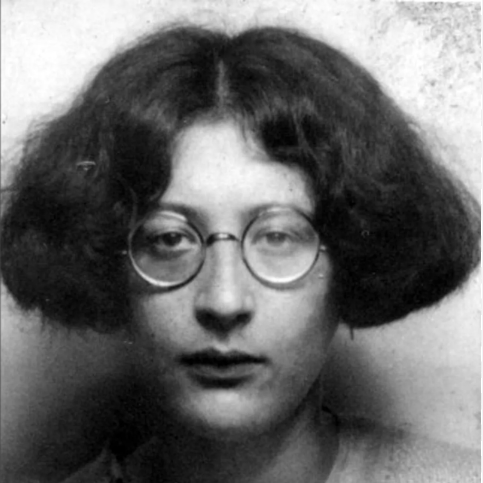
It is not religion but revolution which is the opium of the people.
▼
Source
source
p. 159
2 months 4 weeks ago
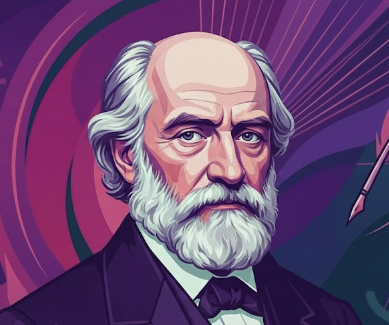
As the biggest library if it is in disorder is not as useful as a small but well-arranged one, so you may accumulate a vast amount of knowledge but it will be of far less value to you than a much smaller amount if you have not thought it over for yourself; because only through ordering what you know by comparing every truth with every other truth can you take complete possession of your knowledge and get it into your power. You can think about only what you know, so you ought to learn something; on the other hand, you can know only what you have thought about.
▼
Source
source
Vol. 2, Ch. 22, § 257 "On Thinking for Yourself" as translated in Essays and Aphorisms(1970) as translated by R. J. Hollingdale

1 month 2 weeks ago
The operations of understanding thus divide the world into numberless polarities, and Hegel uses the expression 'isolated reflection' (isolierte Reflection) to characterize the manner in which understanding forms and connects its polar concepts. The rise and spread of this kind of thinking Hegel connects with the origin and prevalence of crucial relationships in human life. The antagonisms of 'isolated reflections' express real antagonisms. .... Isolation and opposition are not, however, the final state of affairs. The world must not remain a complex of fixed disparates. The unity that underlies the antagonisms must be grasped and realized by reason, which has the task of reconciling the opposites and 'sublimating' them in a true unity.
▼
Source
source
P. 45
3 months 2 days ago
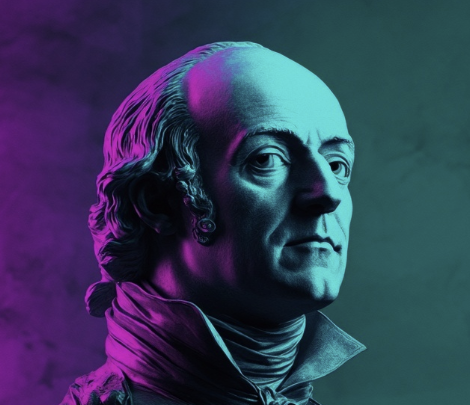
How selfish soever man may be supposed, there are evidently some principles in his nature, which interest him in the fortune of others, and render their happiness necessary to him, though he derives nothing from it except the pleasure of seeing it.
▼
Source
source
Section I, Chap. I

3 months 5 days ago
Plato says, "'Tis to no purpose for a sober man to knock at the door of the Muses;" and Aristotle says "that no excellent soul is exempt from a mixture of folly."
▼
Source
source
Book II, Ch. 2. Of Drunkenness
2 months 3 weeks ago
This is precisely what is decisive in Nietzsche's conception of art, that he sees it in its essential entirety in terms of the artist; this he does consciously and in explicit opposition to that conception of art which represents it in terms of those who "enjoy" and "experience" it.That is a guiding principle of Nietzsche's teaching on art: art must be grasped in terms of creators and producers, not recipients. Nietzsche expresses it unequivocally in the following words (WM, 811): "Our aesthetics heretofore has been a woman's aesthetics, inasmuch as only the recipients of art have formulated their experiences of 'what is beautiful.' In all philosophy to date the artist is missing." Philosophy of art means "aesthetics" for Nietzsche too-but masculine aesthetics, not feminine aesthetics. The question of art is the question of the artist as the productive, creative one; his experiences of what is beautiful must provide the standard.
▼
Source
source
p. 70
2 months 4 weeks ago
If a person is stupid, we excuse him by saying that he cannot help it; but if we attempted to excuse in precisely the same way the person who is bad, we should be laughed at.
▼
Source
source
E. Payne, trans., vol. 2, p. 230
3 months ago
The evil effect of science upon men is principally this, that by far the greatest number of those who wish to display a knowledge of it accomplish no improvement at all of the understanding, but only a perversity of it, not to mention that it serves most of them as a tool of vanity.
▼
Source
source
Part III : Selection on Education from Kant's other Writings, Ch. I Pedagogical Fragments, # 52

1 month 1 week ago
Our whole civilization, our entire culture is concentrated in the mad demand for the most perfected weapons of slaughter. Ammunition! Ammunition! O, Lord, thou who rulest heaven and earth, thou God of love, of mercy and of justice, provide us with enough ammunition to destroy our enemy. Such is the prayer which is ascending daily to the Christian heaven.
2 months 4 weeks ago
Life is not so short but that there is always time enough for courtesy.
▼
Source
source
Social Aims
2 months 3 weeks ago
We think of beauty as being most worthy of reverence. But what is most worthy of reverence lights up only where the magnificent strength to revere is alive. To revere is not a thing for the petty and lowly, the incapacitated and underdeveloped. It is a matter of tremendous passion; only what flows from such passion is in the grand style.
▼
Source
source
p. 125
2 months 4 weeks ago
Society undergoes continual changes; it is barbarous, it is civilized, it is Christianized, it is rich, it is scientific; but this change is not amelioration. For everything that is given something is taken. Society acquires new arts, and loses old instincts. The civilized man has built a coach, but has lost the use of his feet; he has a fine Geneva watch, but cannot tell the hour by the sun.
▼
Source
source
p. 243
1 month 3 weeks ago
All exercise of authority perverts, and submission to authority humiliates.
▼
Source
source
As quoted in Michael Bakunin (1937), E.H. Carr, p. 453
1 week ago
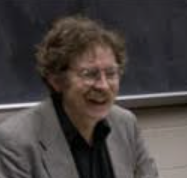
To say that all philosophy is writing is, minimally, to say that it is never the transparent expression of thought.
▼
Source
source
Chapter 3, Deconstruction and Criticism, p. 46
1 month 3 weeks ago
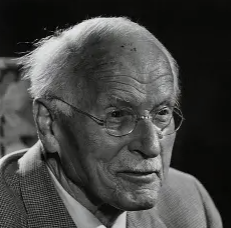
I find that all my thoughts circle around God like the planets around the sun, and are as irresistibly attracted by Him. I would feel it to be the grossest sin if I were to oppose any resistance to this force.
▼
Source
source
Sources: David John Tacey (2007)
3 weeks ago
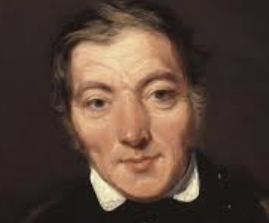
The will of man has no power whatever over his opinions; he must, and ever did, and ever will, believe what has been, is, or may be impressed on his mind by his predecessors, and the circumstances which surround him.
3 months 3 weeks ago
A robot, the man had said, is logical but not reasonable.
1 month 3 weeks ago
Objection to scientific knowledge: this world doesn't deserve to be known.
3 months ago
There will always be some people who think for themselves, even among the self-appointed guardians of the great mass who, after having thrown off the yoke of immaturity themselves, will spread about them the spirit of a reasonable estimate of their own value and of the need for every man to think for himself.
4 weeks 1 day ago
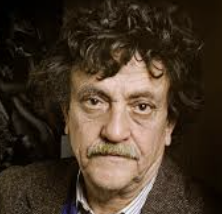
I do feel that evolution is being controlled by some sort of divine engineer. I can't help thinking that. And this engineer knows exactly what he or she is doing and why, and where evolution is headed. That's why we've got giraffes and hippopotami and the clap.
▼
Source
source
On evolution vs. "intelligent design", interviewed by Jon Stewart, The Daily Show
2 months 4 weeks ago
I have heard with admiring submission the experience of the lady who declared "that the sense of being perfectly well-dressed gives a feeling of inward tranquility which religion is powerless to bestow".
▼
Source
source
Social Aims

2 months 3 weeks ago
Don't get involved in partial problems, but always take flight to where there is a free view over the whole single great problem, even if this view is still not a clear one.
▼
Source
source
Journal entry
3 months 5 days ago
All that is under heaven, says the sage, runs one law and one fortune.
▼
Source
source
Ch. 12, tr. Cotton, rev. W. Carew Hazlitt, 1877
CivilSimian.com created by AxiomaticPanic, CivilSimian, Kalokagathia