
But...objective reality determines the grade he gets...


The propagandist's purpose is to make one set of people forget that certain other sets of people are human.
They say cowardice is infectious; but then argument is, on the other hand, a great emboldener.
In order to have the stuff of a tyrant, a certain mental derangement is necessary.
All our problems are caused by forgetting what lives within us, and we sell our souls for the "bowl of stew" of bodily satisfactions.
The first thing to realize, if you wish to become a philosopher, is that most people go through life with a whole world of beliefs that have no sort of rational justification, and that one man's world of beliefs is apt to be incompatible with another man's, so that they cannot both be right. People's opinions are mainly designed to make them feel comfortable; truth, for most people is a secondary consideration.
If the public thought elevates you above the generality of men, let the other humble you, and hold you in a perfect equality with all mankind, for this is your natural condition.
When we see a great man desiring power instead of his real goal we soon recognize that he is sick, or more precisely that his attitude to his work is sick. He overreaches himself, the work denies itself to him, the incarnation of the spirit no longer takes place, and to avoid the threat of senselessness he snatches after empty power. This sickness casts the genius on to the same level as those hysterical figures who, being by nature without power, slave for power, in order that they may enjoy the illusion that they are inwardly powerful, and who in this striving for power cannot let a pause intervene, since a pause would bring with it the possibility of self-reflection and self-reflection would bring collapse.
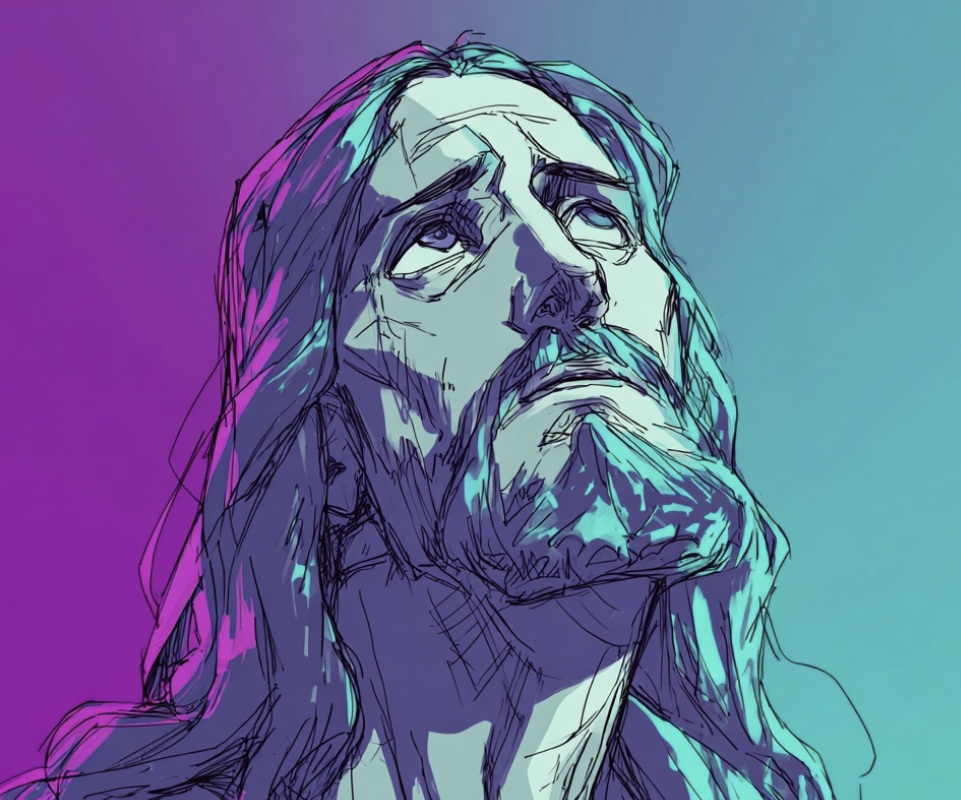
Get thee hence, Satan: for it is written, Thou shalt worship the Lord thy God, and him only shalt thou serve.
Since every effort in our educational life seems to be directed toward making of the child a being foreign to itself, it must of necessity produce individuals foreign to one another, and in everlasting antagonism with each other.
The next day as they were leaving Bethany, Jesus was hungry. Seeing in the distance a fig tree in leaf, he went to find out if it had any fruit. When he reached it, he found nothing but leaves, because it was not the season for figs. Then he said to the tree, “May no one ever eat fruit from you again.” And his disciples heard him say it. The next day when they came out from Bethany, He was hungry. After seeing in the distance a fig tree with leaves, He went to find out if there was anything on it. When He came to it, He found nothing but leaves, because it was not the season for figs. He said to it, "May no one ever eat fruit from you again!"
I believe that the unity of man as opposed to other living things derives from the fact that man is the conscious life of himself. Man is conscious of himself, of his future, which is death, of his smallness, of his impotence; he is aware of others as others; man is in nature, subject to its laws even if he transcends it with his thought.
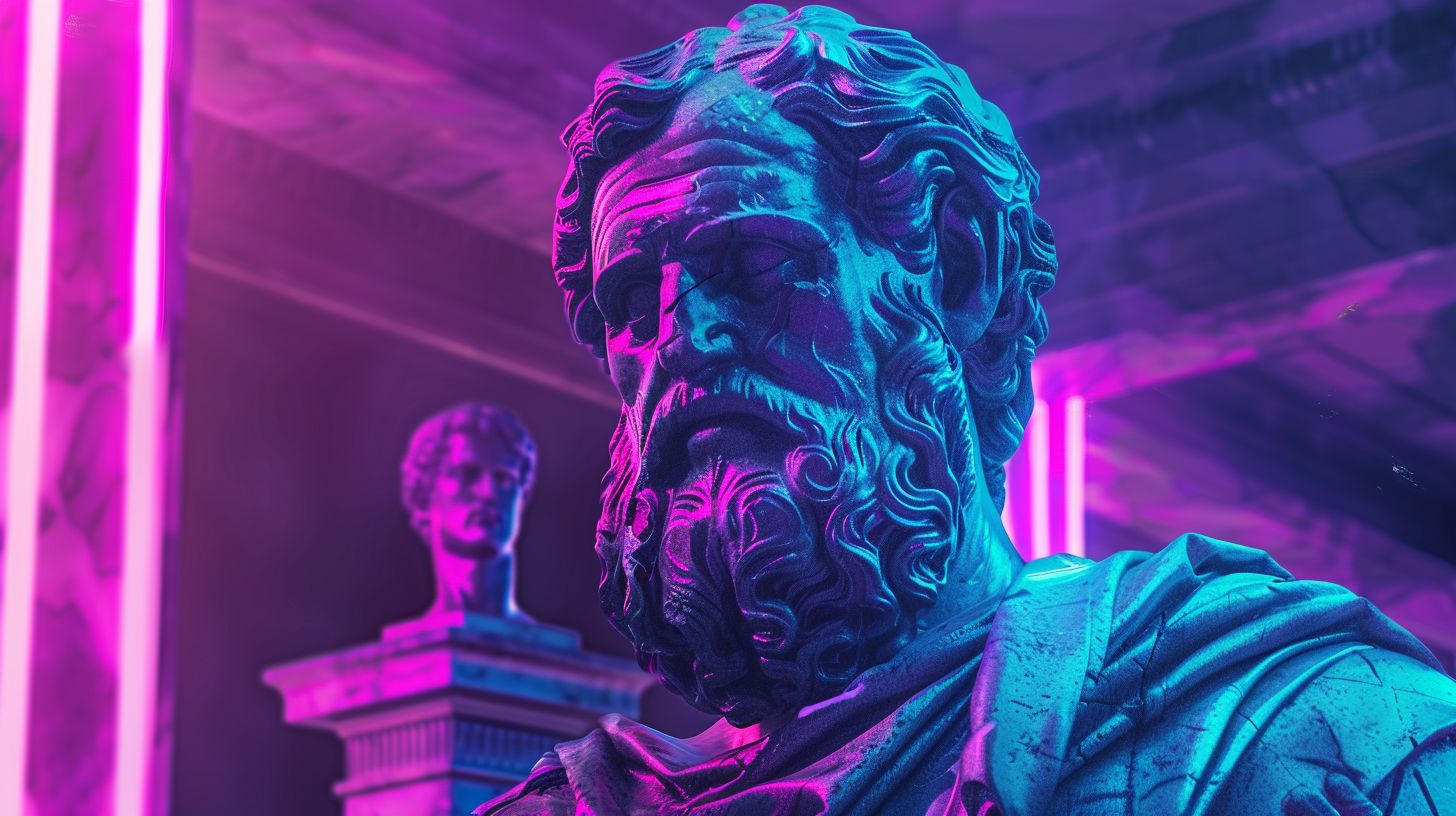
The orators and the despots have the least power in their cities since they do nothing that they wish to do, practically speaking, though they do whatever they think to be best.
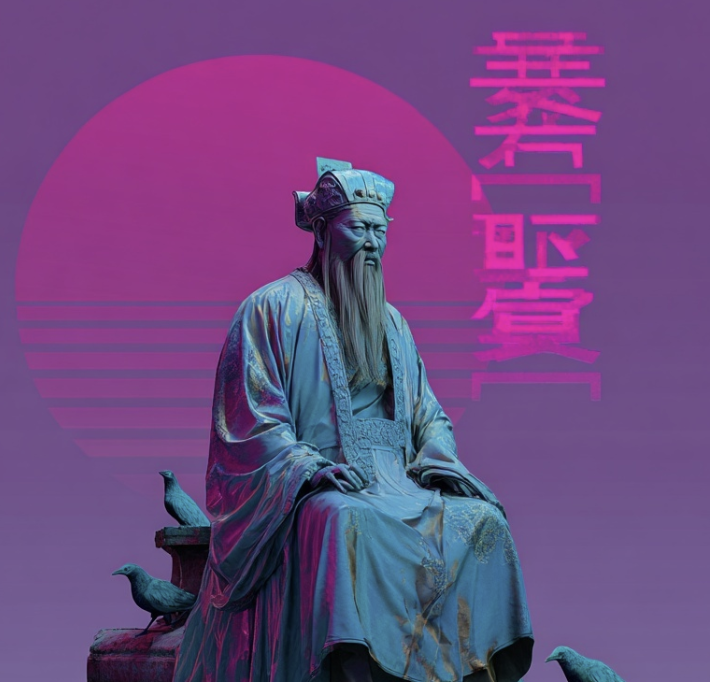
What Heaven has conferred is called The Nature; an accordance with this nature is called The Path of duty; the regulation of this path is called Instruction. The path may not be left for an instant. If it could be left, it would not be the path. On this account, the superior man does not wait till he sees things, to be cautious, nor till he hears things, to be apprehensive.
The student of the history of progressive thought is well aware that every idea in its early stages has been misrepresented, and the adherents of such ideas have been maligned and persecuted...The history of progress is written in the blood of men and women who have dared to espouse an unpopular cause, as, for instance, the black man's right to his body, or woman's right to her soul. If, then, from time immemorial, the New has met with opposition and condemnation, why should my beliefs be exempt from a crown of thorns?
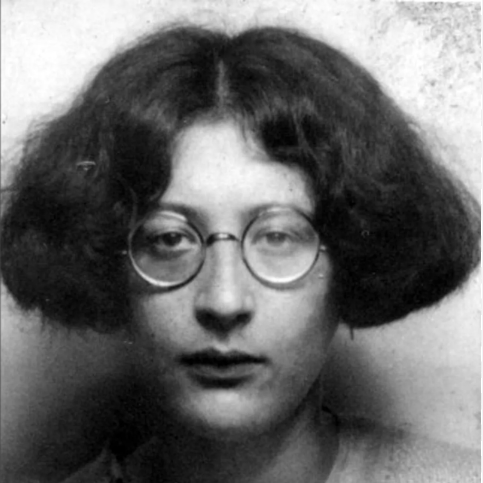
School children and students who love God should never say: "For my part I like mathematics"; "I like French"; "I like Greek." They should learn to like all these subjects, because all of them develop that faculty of attention which, directed toward God, is the very substance of prayer.
Nonviolence does not necessarily emerge from a pacific or calm part of the soul. Very often it is an expression of rage, indignation, and aggression.
Your pride has been too much for the pride of your admirers; they were numerous and high-spirited, but they have all run away, overpowered by your superior force of character; not one of them remains. And I want you to understand the reason why you have been too much for them. You think that you have no need of them or of any other man, for you have great possessions and lack nothing, beginning with the body, and ending with the soul. Socrates speaking to Alcibiades
All violence consists in some people forcing others, under threat of suffering or death, to do what they do not want to do.
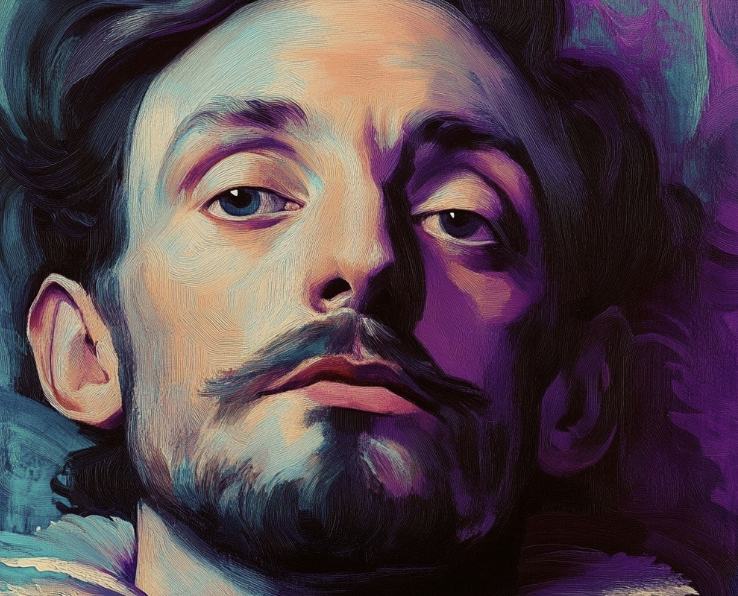
For man seeketh in society comfort, use, and protection: and they be three wisdoms of divers natures, which do often sever: wisdom of the behaviour, wisdom of business, and wisdom of state.
As a rule we disbelieve all the facts and theories for which we have no use.
Howitt says of the man who found the great nugget which weighed twenty-eight pounds, at the Bendigo diggings in Australia: - "He soon began to drink; got a horse, and rode all about, generally at full gallop, and, when he met people, called out to inquire if they knew who he was, and then kindly informed them that he was 'the bloody wretch that had found the nugget.' At last he rode full speed against a tree, and nearly knocked his brains out." I think, however, there was no danger of that, for he had already knocked his brains out against the nugget.
Supply and demand constantly determine the prices of commodities; never balance, or only coincidentally; but the cost of production, for its part, determines the oscillations of supply and demand.
The cup of life is not so shallow
That we have drained the best
That all the wine at once we swallow
And lees make all the rest.
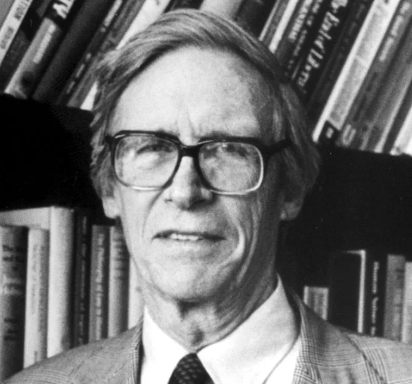
A conception of justice cannot be deduced from self evident premises or conditions on principles; instead, its justification is a matter of the mutual support of many considerations, of everything fitted together into one coherent view.
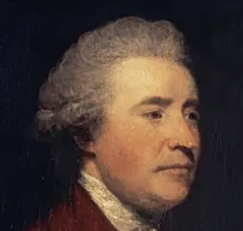
It is not calling the landed estates, possessed by old prescriptive rights, the 'accumulations of ignorance and superstition', that can support me in shaking that grand title, which supersedes all other title, and which all my studies of general jurisprudence have taught me to consider as one principal cause of the formation of states; I mean the ascertaining and securing prescription. But these are donations made in 'ages of ignorance and superstition'. Be it so. It proves that these donations were made long ago; and this is prescription; and this gives right and title.
It is often better for a person to recognize a sin than to do a good deed. Recognizing a sin makes a person humble. Doing a good deed often can feed a person's pride.
The infinite... happens to subsist in a way contrary to what is asserted by others: for the infinite is not that beyond which there is nothing, but it is that of which there is always something beyond. ...But that pertaining to which there is nothing beyond is perfect and whole. ...that of which nothing is absent pertaining to the parts ...the whole is that pertaining to which there is nothing beyond. But that pertaining to which something external is absent, that is not all ...But nothing is perfect which has not an end; and the end is a bound. On this account... Parmenides spoke better than Melissus: for the latter says that the infinite is a whole; but the former, that the whole is finite, and equally balanced from the middle: for to conjoin the infinite with the universe and the whole, is not to connect line with line.

This investigation aims to analyze the type "bourgeois public sphere". Its particular approach is required, to begin with, by the difficulties specific to an object whose complexity precludes exclusive reliance on the specialized methods of a single discipline. Rather, the category. "public sphere" must be investigated within the broad field formerly reflected in the perspective of the traditional science of "politics."' When particular social-scientific discipline, this object disintegrates. The problems that result from fusing aspects of sociology and economics, of constitutional law and political science, and of social and intellectual history are obvious: given the present state of differentiation and specialization in the social sciences, scarcely anyone will be able to master several, let alone all, of these disciplines.
Nonsense. You are a military man and should know better. If there is one science into which man has probed continuously and successfully, it is that of military technology. No potential weapon would remain unrealized for ten thousand years.
Thus intrigues and conspiracies do not arise, and thievery and robbery do not occur; therefore doors need never be locked.
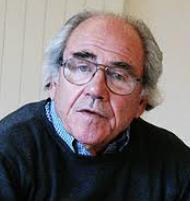
THERE IS NEVER ANYTHING TO PRO-DUCE. In spite of all its materialist efforts, production remains a utopia. We can wear ourselves out in materializing things, in rendering them visible, but we will never cancel the secret.
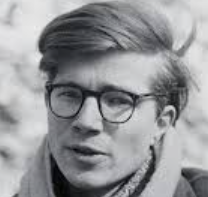
It was not until the ant and Veig had passed each other that Niall realized that he had been reading the ant's mind. It was a sensation like actually being the ant, as if he had momentarily taken possession of its body. And while he had been inside the ant's body, he had also become aware of all the other ants in the nest. It was a bewildering feeling, as if his mind had shattered into thousands of fragments, yet each fragment remained a coherent part of the whole.
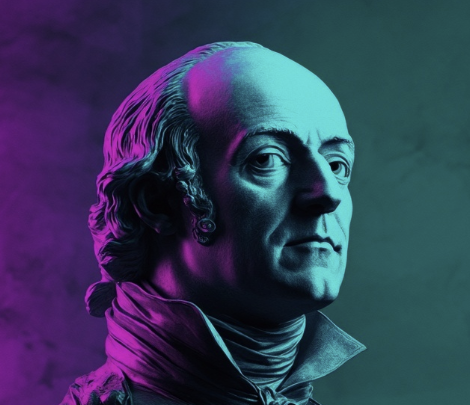
In England, and in all Roman Catholic countries, the lottery of the church is in reality much more advantageous than is necessary.
In the long-run the workman may be as necessary to his master as his master is to him, but the necessity is not so immediate.
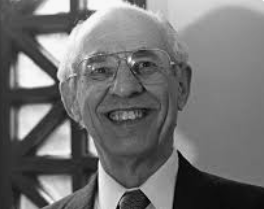
To me it seems clear that the descriptions of human life we find in the novels of Tolstoy or George Eliot are not mere entertainment; they teach us to perceive what goes on in social and individual life. And such descriptions require the many subtle distinctions that ordinary language has made available to us. The question of the relevance or irrelevance of "how we speak" is not just a question for philosophers, although it is that too. It is a question for philosophers because once ordinary language is laughed out of the room, philosophical theories are no longer held responsible at all to the ways we actually speak and actually live; but it is a question for more than just philosophers because, at bottom, contempt for ordinary language is contempt for all the humanities.

At this point of his effort man stands face to face with the irrational. He feels within him his longing for happiness and for reason. The absurd is born of this confrontation between the human need and the unreasonable silence of the world. This must not be forgotten. This must be clung to because the whole consequence of a life can depend on it. The irrational, the human nostalgia, and the absurd that is born of their encounter, these are the three characters in the drama that must necessarily end with all the logic of which an existence is capable.
To the mind of the ancients, who knew something of such matters, liberty and prosperity seemed hardly compatible, yet modern liberalism wants them together.
The same feeling of not belonging, of futility, wherever I go: I pretend interest in what matters nothing to me, I bestir myself mechanically or out of charity, without ever being caught up, without ever being somewhere. What attracts me is elsewhere, and I don't know where that elsewhere is.
I find that the whiter my hair becomes the more ready people are to believe what I say.
Mathematics may be compared to a mill of exquisite workmanship, which grinds you stuff of any degree of fineness; but, nevertheless, what you get out depends upon what you put in; and as the grandest mill in the world will not extract wheat-flour from peascod, so pages of formulae will not get a definite result out of loose data.
Impossible to accede to truth by opinions, for each opinion is only a mad perspective of reality.
In closing, I can only apologize for not having given any positive account of either mathematical truth or mathematical necessity. I can only say that I have not given such an account because I think that the search for such an account is a fundamental mistake. It is not that there is nothing special about mathematics; it is that, in my opinion, the investigation of mathematics must presuppose and not seek to account for the truth of mathematics. But this is the beginning of another paper and not the end of this one.
If we ignore the prior work of attention and notice only the emptiness of the moment of choice we are likely to identify freedom with the outward movement since there is nothing else to identify it with. But if we consider what the work of attention is like, how continuously it goes on, and how imperceptibly it builds up structures of value round about us, we shall not be surprised that at crucial moments of choice most of the business of choosing is already over.
I have all the defects of other people yet everything they do seems to me inconceivable.
It is strange that men will talk of miracles, revelations, inspiration, and the like, as things past, while love remains.
The world at present is obsessed by the conflict of rival ideologies, and one of the apparent causes of conflict is the desire for the victory of our own ideology and the defeat of the other. I do not think that the fundamental motive here has much to do with ideologies. I think the ideologies are merely a way of grouping people, and that the passions involved are merely those which always arise between rival groups. Ideologies, in fact, are one of the methods by which herds are created, and the psychology is much the same however the herd may have been generated.

The idea of a law of progress, or of an all but irresistible tendency to general improvement, is then merely a superstition, one of the tents of the modernist pseudo-religion of humanism. Even if such a law or tendency existed and were demonstrable, the liberal faith in progress would for Santayana be pernicious. For it leads to a corrupt habit of mind in which things are valued, not for their present excellence or perfection, but instrumentally, as leading to something better; and it insinuates into thought and feeling a sort of historical theodicy, in which past evil is justified as a means to present or future good. The idea of progress embodies a kind of time-worship (to adopt an expression used by Wyndham Lewis) in which the particularities of our world are seen and valued, not in themselves, but for what they might perhaps become, thereby leaving us destitute of the sense of the present and, at the same time, of the perspective of eternity.
The violence of love is as much to be dreaded as that of hate. When it is durable, it is serene and equable. Even its famous pains begin only with the ebb of love, for few are indeed lovers, though all would fain be.
CivilSimian.com created by AxiomaticPanic, CivilSimian, Kalokagathia