

3 weeks 4 days ago
You should hammer your iron when it is glowing hot.
▼
Source
source
Maxim 262

2 months 3 weeks ago
Critics who treat adult as a term of approval, instead of as a merely descriptive term, cannot be adult themselves. To be concerned about being grown up, to admire the grown up because it is grown up, to blush at the suspicion of being childish; these things are the marks of childhood and adolescence. And in childhood and adolescence they are, in moderation, healthy symptoms. Young things ought to want to grow. But to carry on into middle life or even into early manhood this concern about being adult is a mark of really arrested development. When I was ten, I read fairy tales in secret and would have been ashamed if I had been found doing so. Now that I am fifty I read them openly. When I became a man I put away childish things, including the fear of childishness and the desire to be very grown up.
▼
Source
source
"On Three Ways of Writing for Children" (1952) - in Of Other Worlds: Essays and Stories (1967), p. 25
3 months 1 week ago
For it is not death or pain that is to be feared, but the fear of pain or death.
▼
Source
source
(Book II, ch. 1) Book II, ch. 1, 13.

2 months 2 weeks ago
Now drown care in wine.
▼
Source
source
Book I, ode vii, line 32
2 months 4 weeks ago
I cannot read a sentence in the book of the Hindoos without being elevated as upon the table-land of the Ghauts. It has such a rhythm as the winds of the desert, such a tide as the Ganges, and seems as superior to criticism as the Himmaleh Mounts. Even at this late hour, unworn by time with a native and inherent dignity it wears the English dress as indifferently as the Sanscrit.
▼
Source
source
August 6, 1841
1 month 3 weeks ago
The one intelligible theory of the universe is that of objective idealism, that matter is effete mind, inveterate habits becoming physical laws. But before this can be accepted it must show itself capable of explaining the tridimensionality of space, the laws of motion, and the general characteristics of the universe, with mathematical clearness and precision ; for no less should be demanded of every Philosophy.

2 months 3 weeks ago
The world is nothing, the man is all; in yourself is the law of all nature, and you know not yet how a globule of sap ascends; in yourself slumbers the whole of Reason; it is for you to know all, it is for you to dare all.
▼
Source
source
par. 48

2 weeks 4 days ago
We should be clear that neither genuine religious nor genuine moral impulses will ever be expressed in terms that tie the two essentially together. If you view religion as necessary for ethics, you've reduced us to the ethical level of 4 year olds. "If you follow these commandments you'll go to heaven, if you don't' you'll burn in hell" is just a spectacular version of the carrots and sticks with which you raise your children.
2 months 4 weeks ago
..Whenever it ceases to be true that mankind, as a rule, prefer themselves to others, and those nearest to them to those more remote, from that moment Communism is not only practicable, but the only defensible form of society...

1 month 3 weeks ago
Nostalgia, more than anything, gives us the shudder of our own imperfection.
2 months 3 weeks ago
Whatever you do, He will make good of it. But not the good He had prepared for you if you had obeyed him.
3 months 1 day ago
In every part of the universe we observe means adjusted with the nicest artifice to the ends which they are intended to produce; and in the mechanism of a plant, or animal body, admire how every thing is contrived for advancing the two great purposes of nature, the support of the individual, and the propagation of the species.
▼
Source
source
Section II, Chap. III.

1 month 1 week ago
I began with a strong bias toward skepticism. Besides, to tell the truth, I still find occult phenomena a little preposterous and irrelevant. What do they really matter if you place them against the truly great human achievements - against the creative genius of a Michaelangelo, a Beethoven, an Einstein? In that context they seem almost trivial.
▼
Source
source
p. 120

2 months 3 weeks ago
The limits of my language mean the limits of my world. (5.6) Variant translations: The limits of my language stand for the limits of my world. The limits of my language are the limits of my mind. All I know is what I have words for.
▼
Source
source
Original German: Die Grenzen meiner Sprache bedeuten die Grenzen meiner Welt.

2 months 2 days ago
"The will of the nation" is one of those expressions which have been most profusely abused by the wily and the despotic of every age.
▼
Source
source
Chapter IV.
1 month 2 weeks ago
The possibility of peace, on whose behalf many are working, might perhaps become actual because the technical advances in offensive weapons make the prospect of a European war so disastrous, and because, if the nations were at grips again, even the victorious aggressor would be ruined. But there still remains open the possibility of a new war which, more dreadful than any that have preceded it would make an end of contemporary Europeans.
3 months 5 days ago
Man is forming thousands of ridiculous relations between himself and God.
▼
Source
source
Ch. 12

2 months 4 weeks ago
This body which called itself and which still calls itself the Holy Roman Empire was in no way holy, nor Roman, nor an empire.
▼
Source
source
Essai sur l'histoire générale et sur les mœurs et l'esprit des nations, Chapter 70, 1756
2 months 4 weeks ago
The reasons for legal intervention in favour of children, apply not less strongly to the case of those unfortunate slaves and victims of the most brutal part of mankind, the lower animals.
▼
Source
source
Book V, Chapter 11, Section 9
1 month 3 weeks ago
The study of Ethics would, no doubt, be far more simple, and its results far more "systematic," if, for instance, pain were an evil of exactly the same magnitude as pleasure is a good; but we have no reason whatever to assume that the Universe is such that ethical truths must display this kind of symmetry ... .
▼
Source
source
Principia Ethica (1903), ch. VI.

2 months 3 days ago
For the world, I count it not an Inn, but a Hospital, and a place, not to live, but to die in.
▼
Source
source
Section 11

3 months 3 weeks ago
When you write a short story ... you had better know the ending first. The end of a story is only the end to the reader. To the writer, it's the beginning. If you don't know exactly where you're going every minute you're writing, you'll never get there or anywhere.
1 month 2 weeks ago
In books of psychology written from the spiritualist point of view, it is customary to begin the discussion of the existence of the soul as a simple substance, separable from the body, after this style: There is in me a principle which thinks, wills and feels... Now this implies a begging of the question. For it is far from being an immediate truth that there is in me such a principle; the immediate truth is that I think, will and feel. And I - the I that thinks, wills and feels - am immediately my living body with the states of consciousness which it sustains. It is my living body that thinks, wills and feels.
3 weeks 4 days ago
While people are engaged in creating a totally different world, they always form vivid images of the preceding world.
▼
Source
source
(p. 21)
1 month 1 week ago
The application of psychoanalysis to sociology must definitely guard against the mistake of wanting to give psychoanalytic answers where economic, technical, or political facts provide the real and sufficient explanation of sociological questions. On the other hand, the psychoanalyst must emphasize that the subject of sociology, society, in reality consists of individuals, and that it is these human beings, rather than abstract society as such, whose actions, thoughts, and feelings are the object of sociological research.
▼
Source
source
"Psychoanalyse und Soziologie" (1929); published as "Psychoanalysis and Sociology" as translated by Mark Ritter, in Critical Theory and Society : A Reader (1989) edited by S. E. Bronner and D. M. Kellner
1 month 3 weeks ago
Speech and silence. We feel safer with a madman who talks than with one who cannot open his mouth.
2 months 4 weeks ago
The process of philosophizing, to my mind, consists mainly in passing from those obvious, vague, ambiguous things, that we feel quite sure of, to something precise, clear, definite, which by reflection and analysis we find is involved in the vague thing that we start from, and is, so to speak, the real truth of which that vague thing is a sort of shadow.

2 months 2 weeks ago
He who intends to enjoy life should not be busy about many things, and in what he does should not undertake what exceeds his natural capacity. On the contrary, he should have himself so in hand that even when fortune comes his way, and is apparently ready to lead him on to higher things, he should put her aside and not o'erreach his powers. For a being of moderate size is safer than one that bulks too big.

1 month 1 week ago
To understand God's thoughts we must study statistics, for these are the measure of His purpose.
▼
Source
source
As quoted in Chance Rules : An Informal Guide to Probability, Risk, and Statistics (1999) by Brian Everitt, p. 137

1 week 6 days ago
My convictions, positive and negative, on all the matters of which you speak, are of long and slow growth and are firmly rooted. But the great blow which fell on me seemed to stir them to their foundation, and had I lived a couple of centuries earlier I could have fancied a devil scoffing at me and them - and asking me what profit it was to have stripped myself of the hopes and consolations of the mass of mankind? To which my only reply was and is - Oh devil! Truth is better than much profit. I have searched over the grounds of my belief, and if wife and child and name and fame were all to be lost to me one after the other as the penalty, still I will not lie.
1 month 2 weeks ago
To covet truth is a very distinguished passion.
▼
Source
source
p. 48
3 months ago
Men will not understand ... that when they fulfil their duties to men, they fulfil thereby God's commandments; that they are consequently always in the service of God, as long as their actions are moral, and that it is absolutely impossible to serve God otherwise.
▼
Source
source
As quoted in German Thought, From The Seven Years' War To Goethe's Death : Six Lectures (1880) by Karl Hillebrand, p. 207
3 months 1 day ago
God is the Immanent Cause of all things, never truly transcendent from them.
▼
Source
source
Part I, Prop. XVIII
3 months 1 week ago
Practice yourself, for heaven's sake, in little things; and thence proceed to greater.
▼
Source
source
Book I, ch. 18, 18.
3 months 5 days ago
All that is under heaven, says the sage, runs one law and one fortune.
▼
Source
source
Ch. 12, tr. Cotton, rev. W. Carew Hazlitt, 1877
1 month 2 weeks ago
The Son of man shall be betrayed into the hands of men: And they shall kill him, and the third day he shall be raised again.
▼
Source
source
17:22-23 (KJV)
2 months 3 weeks ago
To see ourselves as others see us is a most salutary gift. Hardly less important is the capacity to see others as they see themselves.
2 months 3 weeks ago
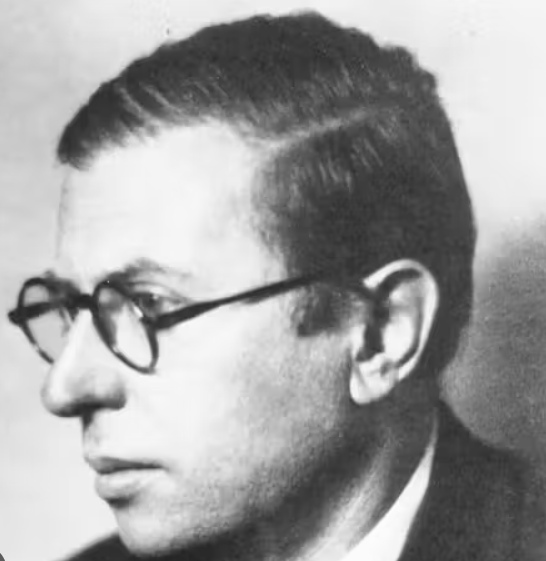
With despair, true optimism begins: the optimism of the man who expects nothing, who knows he has no rights and nothing coming to him, who rejoices in counting on himself alone and in acting alone for the good of all.
1 month 3 weeks ago
If death had only negative aspects, dying would be an unmanageable action.
1 month 4 weeks ago
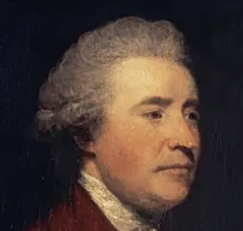
In all persuasions the bigots are persecutors; the men of a cool and reasonable piety are favourers of toleration; because the former sort of men not taking the pains to be acquainted with the grounds of their adversaries tenets, conceive them to be so absurd and monstrous, that no man of sense can give into them in good earnest. For which reason they are convinced that some oblique bad motive induces them to pretend to the belief of such doctrines, and to the maintaining of them with obstinacy. This is a very general principle in all religious differences, and it is the corner stone of all persecution.
▼
Source
source
Volume II, p. 148
2 weeks 6 days ago
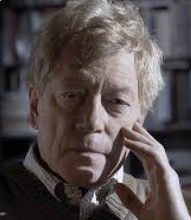
Hayek fails to account either for the passion among intellectuals for equality, or for the resulting success of socialists and their egalitarian successors in driving the liberal idea from the stage of politics. This passion for equality is not a new thing, and indeed pre-dates socialism by many centuries, finding its most influential expression in the writings of Rousseau. There is no consensus as to how equality might be achieved, what it would consist in if achieved, or why it is so desirable in the first place. But no argument against the cogency or viability of the idea has the faintest chance of being listened to or discussed by those who have fallen under its spell.
▼
Source
source
Hayek and conservatism, in Edward Feser (ed.), The Cambridge Companion to Hayek

2 months 4 days ago
That neither our Thoughts, nor Passions, nor Ideas formed by the Imagination, exist without the Mind, is what every Body will allow. And it seems no less evident that the various Sensations or Ideas imprinted on the Sense... cannot exist otherwise than in a Mind perceiving them... For as to what is said of the absolute Existence of unthinking Things without any relation to their being perceived, that seems perfectly unintelligible. Their Esse is Percipi, nor is it possible they should have any Existence, out of the Minds or thinking Things which perceive them.
1 month 1 week ago
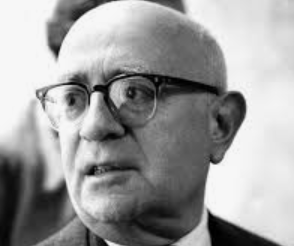
We cannot think any true thought unless we want the true. Thinking is itself an aspect of practice.
▼
Source
source
p. 45

1 month ago
Where questions of style and exposition are concerned I try to follow a simple maxim: if you can't say it clearly you don't understand it yourself.
▼
Source
source
P. x.
1 month 4 weeks ago
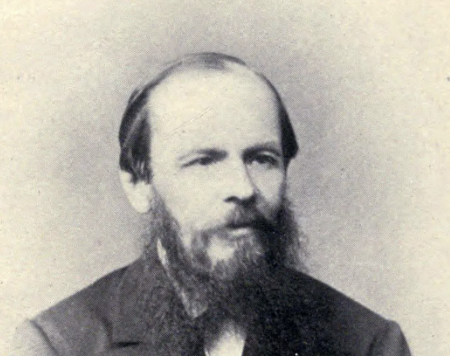
Lack of originality, everywhere, all over the world, from time immemorial, has always been considered the foremost quality and the recommendation of the active, efficient and practical man...
▼
Source
source
Part 3, Chapter ?
1 month 4 weeks ago
What terrible tragedies realism inflicts on people.'
3 weeks 2 days ago
An atheist is just somebody who feels about Yahweh the way any decent Christian feels about Thor or Baal or the golden calf. As has been said before, we are all atheists about most of the gods that humanity has ever believed in. Some of us just go one god further.
▼
Source
source
Richard Dawkins on militant atheism,
2 months 3 weeks ago
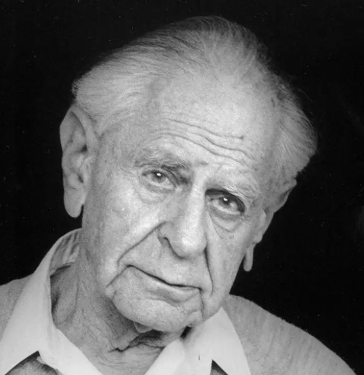
As a rule, begin my lectures on Scientific Method by telling my students that scientific method does not exist. ...having been ...the one and only professor of this non-existent subject within the British Commonwealth.

3 months 1 day ago
We speak not strictly and philosophically when we talk of the combat of passion and of reason. Reason is, and ought only to be the slave of the passions, and can never pretend to any other office than to serve and obey them.
▼
Source
source
Part 3, Section 3
CivilSimian.com created by AxiomaticPanic, CivilSimian, Kalokagathia