

1 month 2 weeks ago
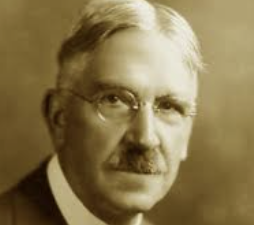
Position expresses the poised readiness of the live creature to meet the impact of surrounding forces, to meet so as to endure and persist, to extend or expand through undergoing the very forces that, apart from its response, are indifferent and hostile. Through going out into the environment, position unfolds into volume; through the pressure of environment, mass is retracted into energy of position, and space remains, when matter is contracted, as an opportunity for further action.
▼
Source
source
p. 221
3 weeks 1 day ago
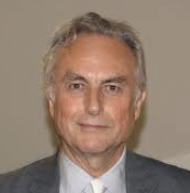
Maybe somewhere in some other galaxy there is a super-intelligence so colossal that from our point of view it would be a god. But it cannot have been the sort of God that we need to explain the origin of the universe, because it cannot have been there that early.
2 months 3 weeks ago
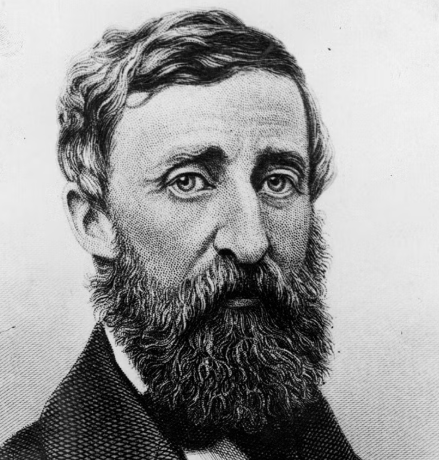
The bluebird carries the sky on his back.
▼
Source
source
April 3, 1852
1 month 3 weeks ago
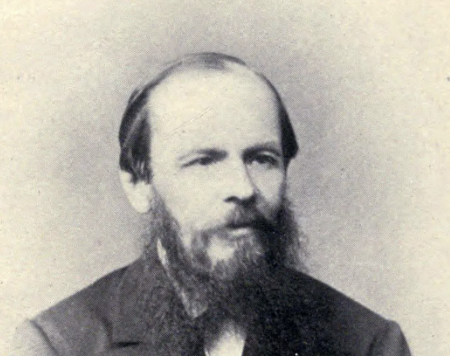
If I seem happy to you . . . You could never say anything that would please me more. For men are made for happiness, and anyone who is completely happy has a right to say to himself, 'I am doing God's will on earth.' All the righteous, all the saints, all the holy martyrs were happy.
▼
Source
source
Book II, Chapter 4 (trans. Constance Garnett)
4 weeks ago
Quite apart from assiduous efforts to restrict the use of violence as means rather than an end, the actualization of violence as a means can inadvertently become its own end, producing new violence, producing violence anew, reiterating the license, and licensing further violence. Violence does not exhaust itself in the realization of a just end; rather, it renews itself in directions that exceed both deliberate intention and instrumental schemes. In other words, by acting as if the use of violence can be a means to achieve a nonviolent end, one imagines that the practice of violence does not in the act posit violence as its own end. The technē is undermined by the praxis, and the use of violence only makes the world into a more violent place, by bringing more violence into the world.
▼
Source
source
p. 20

1 month 3 weeks ago
In doing good, we are generally cold, and languid, and sluggish; and of all things afraid of being too much in the right. But the works of malice and injustice are quite in another style. They are finished with a bold, masterly hand; touched as they are with the spirit of those vehement passions that call forth all our energies, whenever we oppress and persecute.
▼
Source
source
Speech at Bristol Previous to the Election (6 September 1780), quoted in The Works of the Right Honourable Edmund Burke, Vol. II (1855), pp. 158-159
3 months 3 weeks ago
We face eternity now. We have no universe left, no outside phenomena, no emotions, no passions. Nothing but ourselves and thought. We face an eternity of introspection, when all through history we have never known what to do with ourselves on a rainy Sunday.
2 months 3 weeks ago
Matter is indeed infinitely and incredibly refined. To anyone who has ever looked on the face of a dead child or parent the mere fact that matter could have taken for a time that precious form, ought to make matter sacred ever after. It makes no difference what the principle of life may be, material or immaterial, matter at any rate co-operates, lends itself to all life's purposes. That beloved incarnation was among matter's possibilities.
▼
Source
source
Lecture III, Some Metaphysical Problems Pragmatically Considered
1 month 3 weeks ago
The primary use of knowledge is for such guidance of conduct under all circumstances as shall make living complete. All other uses of knowledge are secondary.
▼
Source
source
Vol. 3, Ch. XV, The Americans

1 month 3 weeks ago
History shows that the thinkers who mounted on the top of the ladder of questions, who set their foot on the last rung, that of the absurd, have bequeathed to posterity only an example of sterility.
3 months ago
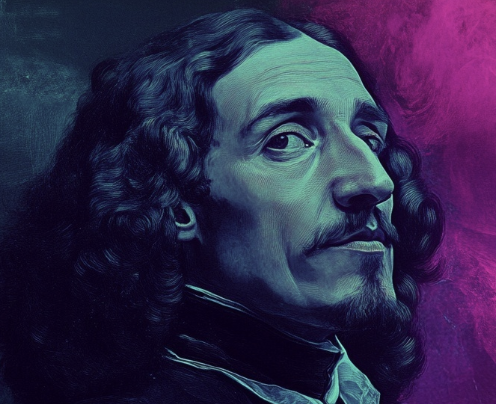
Human infirmity in moderating and checking the emotions I name bondage: for, when a man is a prey to his emotions, he is not his own master, but lies at the mercy of fortune: so much so, that he is often compelled, while seeing that which is better for him, to follow that which is worse.
▼
Source
source
Part IV, Preface; translation by R. H. M. Elwes
2 months 1 week ago
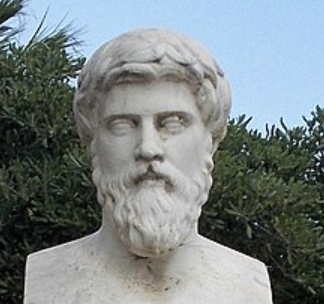
Cato requested old men not to add the disgrace of wickedness to old age, which was accompanied with many other evils.
▼
Source
source
Cato the Elder
2 months 3 weeks ago
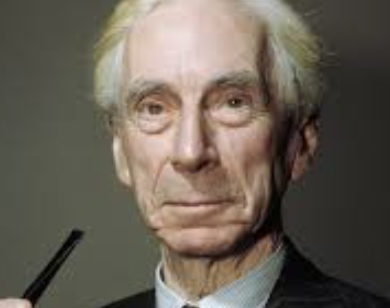
I knew a parson who frightened his congregation terribly by telling them that the second coming was very imminent indeed, but they were much consoled when they found that he was planting trees in his garden.
▼
Source
source
"Defects in Christ's Teaching"
1 month 2 weeks ago
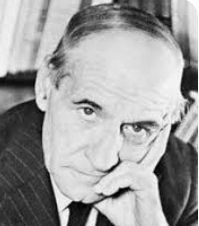
The mass-man sees in the State an anonymous power, and feeling himself, like it, anonymous, he believes that the State is something of his own. Suppose that in the public life of a country some difficulty, conflict, or problem presents itself, the mass-man will tend to demand that the State intervene immediately and undertake a solution directly with its immense and unassailable resources. This is the gravest danger that to-day threatens civilisation: State intervention; the absorption of all spontaneous social effort by the State.
▼
Source
source
Chapter XIII: The Greatest Danger, The State

1 month 3 weeks ago
In Germany, the judicial system has been the whore of the German princes for centuries.
1 month 4 days ago
Well, he wasn't a relativist. There's a long and complicated story of the rise of a desire for scientific relativism. Part of it may well be simply sort of rage against reason, the fear of the sciences and a kind of total dislike of the arrogance of a great many scientists who say we're finding out the truth about everything-and here [with Kuhn] there was a way to undermine that arrogance.
▼
Source
source
Ian Hacking, in Gary Stix, "A Q&A with Ian Hacking on Thomas Kuhn's Legacy as "The Paradigm Shift" Turns 50"

3 months 1 week ago
So far as it goes, a small thing may give an analogy of great things, and show the tracks of knowledge.
▼
Source
source
Book II, lines 123-124 (tr. Rouse)
3 weeks 1 day ago
Ten years ago, you could have traveled thousands of miles through the United States and never seen a baseball cap turned back to front. Today, the reverse baseball cap is ubiquitous. I do not know what the pattern of geographical spread of the reverse baseball cap precisely was, but epidemiology is certainly among the professions primarily qualified to study it.
2 months 3 weeks ago
When I was a child the atmosphere in the house was one of puritan piety and austerity. There were family prayers at eight o'clock every morning. Although there were eight servants, food was always of Spartan simplicity, and even what there was, if it was at all nice, was considered too good for children. For instance, if there was apple tart and rice pudding, I was only allowed the rice pudding. Cold baths all the year round were insisted upon, and I had to practice the piano from seven-thirty to eight every morning although the fires were not yet lit. My grandmother never allowed herself to sit in an armchair until the evening. Alcohol and tobacco were viewed with disfavor although stern convention compelled them to serve a little wine to guests. Only virtue was prized, virtue at the expense of intellect, health, happiness, and every mundane good.
▼
Source
source
p. 9
1 month 2 weeks ago
Language transcends us and yet, we speak.
▼
Source
source
p. 349

2 months 3 weeks ago
Friendship is the greatest of worldly goods. Certainly to me it is the chief happiness of life. If I had to give a piece of advice to a young man about a place to live, I think I shd. say, 'sacrifice almost everything to live where you can be near your friends.
▼
Source
source
Letter to Arthur Greeves (29 December 1935) - in They Stand Together: The Letters of C. S. Lewis to Arthur Greeves (1914-1963) (1979), p. 477

2 months 2 weeks ago
If one choose the goods of the soul, he chooses the diviner [portion]; if the goods of the body, the merely mortal.
3 weeks 3 days ago
The metropolis today is a classroom; the ads are its teachers. The traditional classroom is an obsolete detention home, a feudal dungeon.
▼
Source
source
(p. 12)
1 month 6 days ago
A book which, above all others in the world, should be forbidden, is a catalogue of forbidden books.
▼
Source
source
As quoted in A Dictionary of Scientific Quotations (1991) edited by Alan Lindsay Mackay, p. 153

1 month 5 days ago
The function of knowledge in the decision-making process is to determine which consequences follow upon which of the alternative strategies. It is the task of knowledge to select from the whole class of possible consequences a more limited subclass, or even (ideally) a single set of consequences correlated with each strategy.
▼
Source
source
p. 78.
2 months 3 weeks ago
There is no worse lie than a truth misunderstood by those who hear it.
▼
Source
source
Lectures XIV and XV, "The Value of Saintliness"

2 months 2 weeks ago
There is hardly a philosophy which has not invoked something like the will or desire to know, the love of truth, etcetera. But, in truth, very few philosophers-apart, perhaps, from Spinoza and Schopenhauer-have accorded it more than a marginal status; as if there was no need for philosophy to say first of all what the name that it bears actually refers to. As if placing at the head of its discourse the desire to know, which it repeats in its name, was enough to justify its own existence and show-at a stroke-that it is necessary and natural: All men desire to know. Who, then, is not a philosopher, and how could philosophy not be the most necessary thing in the world?
▼
Source
source
pp. 4-5
1 month 2 weeks ago
Two half philosophers will probably never a whole metaphysician make.
▼
Source
source
A Retrospective Glance at the Lifework of a Master of Books
2 months 3 weeks ago
What is now common to all men is a mere abstract universal, an H.C.F. [Highest Common Factor], and Man's conquest of himself means simply the rule of the Conditioners over the conditioned human material, the world of post-humanity which, some knowingly and some unknowingly, nearly all men in all nations are at present labouring to produce.
1 month 3 weeks ago
The terrifying experience and obsession of death, when preserved in consciousness, becomes ruinous. If you talk about death, you save part of yourself. But at the same time, something of your real self dies, because objectified meanings lose the actuality they have in consciousness.
1 month 3 weeks ago
A definition may be very exact, and yet go but a very little way towards informing us of the nature of the thing defined.
▼
Source
source
Introduction On Taste
3 months 3 weeks ago
It seems to be almost an invariable rule that as real power declines, the symbols of power multiply and intensify in compensation.

3 months 2 weeks ago
The order of authority derives from God, as the Apostle says [in Romans 13:1-7]. For this reason, the duty of obedience is, for the Christian, a consequence of this derivation of authority from God, and ceases when that ceases. But, as we have already said, authority may fail to derive from God for two reasons: either because of the way in which authority has been obtained, or in consequence of the use which is made of it. There are two ways in which the first may occur. Either because of a defect in the person, if he is unworthy; or because of some defect in the way itself by which power was acquired, if, for example, through violence, or simony or some other illegal method.
▼
Source
source
in Aquinas: Selected Political Writings (Basil Blackwell: 1974), p. 183
1 month 2 weeks ago
Injustice, poverty, slavery, ignorance - these may be cured by reform or revolution. But men do not live only by fighting evils. They live by positive goals, individual and collective, a vast variety of them, seldom predictable, at times incompatible.
1 week 5 days ago
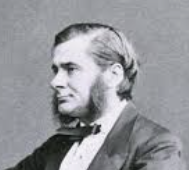
Is Man so different from any of these Apes that he must form an order by himself? Or does he differ less from them than they differ from one another, and hence must take his place in the same order with them?
▼
Source
source
Ch.2, p. 86

3 months 2 weeks ago
The kingdom, its states, and its families, may be perfectly ruled; dignities and emoluments may be declined; naked weapons may be trampled under the feet; but the course of the Mean cannot be attained to.

2 months 3 weeks ago
I am showing my pupils details of an immense landscape which they cannot possibly know their way around.
▼
Source
source
p. 56e

2 months 3 weeks ago
We're at such a low point in the American empire. Its spiritual decay and its immoral decadence are so profound that we have to begin on the foundational level of a spiritual awakening and a moral reckoning. Organized greed. Institutionalized hatred. Routinized indifference to the lives of poor and working people of all colors. We've got to get beyond an analysis of the predatory capitalist processes that have saturated every nook and cranny of the culture. We've got to get beyond the ways in which the political system has been colonized by corporate wealth and by monied elite. We've got to get beyond that sense of impotence of the citizenry. These are all the signs of an empire in decline. The only thing that we have to add is military overreach, and we see that as well. Speaking to Chris Hedges about his decision to run for president in 2024.
▼
Source
source
Chris Hedges: Dr. Cornel West Announces He Is Running for President. Scheerpost. June 5, 2023
3 months ago
But bounty and hospitality very seldom lead to extravagance; though vanity almost always does.
▼
Source
source
Chapter III, Part V, p. 987.

3 months 5 days ago
No Man is wise at all Times, or is without his blind Side.
▼
Source
source
The Alchymyst, in Colloquies of Erasmus, Volume I.
1 month 4 days ago
When land and its tillage are the basis of taxation, one need not care exactly how many people there are.
▼
Source
source
Chapter 12, Political Arithmetic, p. 103.

3 months 2 weeks ago
I have always been of the opinion that infamy earned by doing what is right is not infamy at all, but glory.
▼
Source
source
Speech I
2 months 2 weeks ago
If evolution is a struggle for survival, why hasn't it ruthlessly eliminated altruists, who seem to increase another's prospects of survival at the cost of their own?
▼
Source
source
Chapter 1, The Origins Of Altruism, p. 5
2 months 3 weeks ago
The human body is the best picture of the human soul.
▼
Source
source
Pt II, p. 178
3 months 1 week ago
For human beings, the measure of every action is the impression of the senses.
▼
Source
source
Book I, ch. 28, 10
1 month 3 weeks ago
It is the love of the people; it is their attachment to their government, from the sense of the deep stake they have in such a glorious institution, which gives you both your army and your navy, and infuses into both that liberal obedience, without which your army would be a base rabble, and your navy nothing but rotten timber.
3 weeks 1 day ago
Time passes quickly with lovers.
▼
Source
source
The Pavilion on the Links, ch. V.
CivilSimian.com created by AxiomaticPanic, CivilSimian, Kalokagathia