

1 month 5 days ago
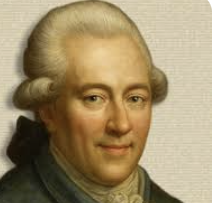
Every man has his moral backside which he refrains from showing unless he has to and keeps covered as long as possible with the trousers of decorum.
▼
Source
source
B 12 Variant translation: Everyone has a moral backside, which he does not show except in case of need and which he covers as long as possible with the breeches of respectability.

2 months 2 weeks ago
Commit no lustfulness, so that harm and regret may not reach thee from thine own actions.

1 month 3 weeks ago
After all, why should ordinary people want to contemplate the End, especially when we see the condition of those who do?
2 months 3 weeks ago
Wit and good nature meeting in a fair young lady as they do in you make the best resemblance of an angel that we know; and he that is blessed with the conversation and friendship of a person so extraordinary enjoys all that remains of paradise in this world.
▼
Source
source
Letter to Mary Clarke (7 May 1682), quoted in Maurice Cranston, John Locke: A Biography (1957; 1985), p. 221
1 month 5 days ago
In order for music to free itself, it will have to pass over to the other side - there where territories tremble, where the structures collapse, where the ethoses get mixed up, where a powerful song of the earth is unleashed, the great ritornelles that transmutes all the airs it carries away and makes return.
▼
Source
source
from Essays Critical and Clinical, p. 104.

2 months 3 weeks ago
If God had looked into our minds he would not have been able to see there whom we were speaking of.
▼
Source
source
Pt II, p. 217
3 months 3 days ago
Peace is more important than all justice; and peace was not made for the sake of justice, but justice for the sake of peace.
▼
Source
source
On Marriage

2 months 3 weeks ago
Each the herald is who wrote His rank, and quartered his own coat. There is no king nor sovereign state That can fix a hero's rate.
▼
Source
source
Astræa

1 month 3 weeks ago
It is not, what a lawyer tells me I may do; but what humanity, reason, and justice, tell me I ought to do.
3 weeks 2 days ago
War is never anything less than accelerated technological change.
▼
Source
source
(p. 102)
3 weeks 4 days ago
The only absolute knowledge attainable by man is that life is meaningless.
▼
Source
source
Ch. 5, translated by David Patterson, 1983
2 months 3 weeks ago
People say law but they mean wealth.
▼
Source
source
1841
2 weeks 4 days ago
In the greatest confusion there is still an open channel to the soul. It may be difficult to find because by midlife it is overgrown, and some of the wildest thickets that surround it grow out of what we describe as our education. But the channel is always there, and it is our business to keep it open, to have access to the deepest part of ourselves-to that part of us which is conscious. ... The independence of this consciousness, which has the strength to be immune to the noise of history and the distractions of our immediate surroundings, is what the life struggle is all about. The soul has to find and hold its ground against hostile forces, sometimes embodied in ideas which frequently deny its very existence, and which indeed often seem to be trying to annul it altogether.
▼
Source
source
pp. 16-17
2 months ago
The arbitrary rule of a just and enlightened prince is always bad. His virtues are the most dangerous and the surest form of seduction: they lull a people imperceptibly into the habit of loving, respecting, and serving his successor, whoever that successor may be, no matter how wicked or stupid.
▼
Source
source
Refutation of Helvétius

2 months 3 weeks ago
I resolved from the beginning of my quest that I would not be misled by sentiment and desire into beliefs for which there was no good evidence.
▼
Source
source
Fact and Fiction (1961), Part I, Ch. 6: "The Pursuit of Truth", p. 37
1 month 5 days ago
You believe that I run after the strange because I do not know the beautiful; no, it is because you do not know the beautiful that I seek the strange.
▼
Source
source
F160

2 months 3 weeks ago
The human imagination has seldom had before it an object so sublimely ordered as the medieval cosmos. If it has an aesthetic fault, it is perhaps, for us who have known romanticism, a shade too ordered. For all its vast spaces it might in the end afflict us with a kind of claustrophobia. Is there nowhere any vagueness? No undiscovered by-ways? No twilight? Can we never really get out of doors?
▼
Source
source
The Discarded Image: An Introduction to Medieval and Renaissance Literature, 1964
2 months 3 weeks ago
One is still what one is going to cease to be and already what one is going to become. One lives one's death, one dies one's life.
▼
Source
source
Book 2, "The Melodious Child Dead in Me"
1 month 3 weeks ago
I thought that the only action a man could perform without shame was to take his life; that he had no right to diminish himself in the succession of days and the inertic of misery. No elect, I kept telling myself, but those who committed suicide.
2 months 3 weeks ago
Clichés, stock phrases, adherence to conventional, standardized codes of expression and conduct have the socially recognized function of protecting us against reality.
▼
Source
source
p. 4
3 months 1 week ago
Why, then, do we wonder any longer that, although in material things we are thoroughly experienced, nevertheless in our actions we are dejected, unseemly, worthless, cowardly, unwilling to stand the strain, utter failures one and all? .
▼
Source
source
Book II, ch. 16, 18
2 months 3 weeks ago
You can choose whatever name you like for the two types of government. I personally call the type of government which can be removed without violence "democracy", and the other "tyranny".
▼
Source
source
As quoted in Freedom: A New Analysis (1954) by Maurice William Cranston, p. 112
1 month 3 weeks ago
How many disappointments are conducive to bitterness? One or a thousand, depending on the subject.

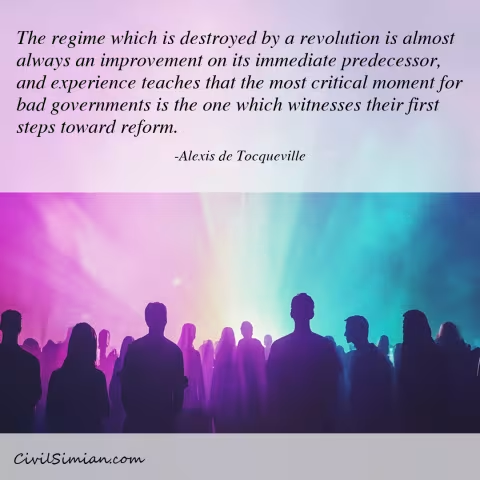

2 months 3 weeks ago
If beings are grasped as will to power, the "should" which is supposed to hang suspended over them, against which they might be measured, becomes superfluous. If life itself is will to power, it is itself the ground, principium, of valuation. Then a "should" does not determine being. Being determines a "should." "When we talk of values we are speaking under the inspiration or optics of life: life itself compels us to set up values; life itself values through us whenever we posit values."
▼
Source
source
(VIII, 89) p. 32
3 months 2 weeks ago
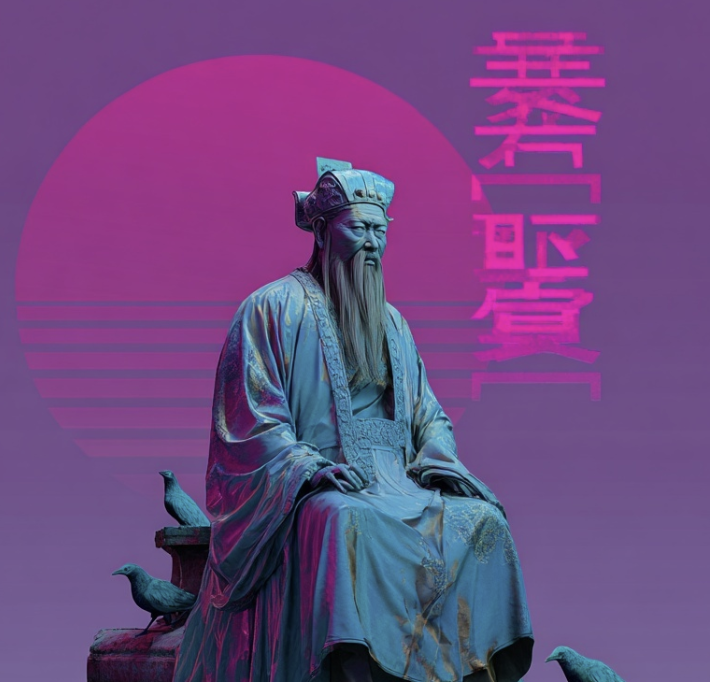
Things have their root and their branches. Affairs have their end and their beginning. To know what is first and what is last will lead near to what is taught in the Great Learning.

1 month 1 week ago
My own book Women, Race and Class was one of many that were published during that era, including, to name only a few, This Bridge Called My Back, edited by Gloria Anzaldúa and Cherrie Moraga, the work of bell hooks and Michelle Wallace, and the anthology All the Women Are White, All the Blacks Are Men, but Some of Us Are Brave: Black Women's Studies. So behind this concept of intersectionality is a rich history of struggle. A history of conversations among activists within movement formations, and with and among academics as well.
▼
Source
source
Angela Davis Freedom Is a Constant Struggle: Ferguson, Palestine, and the Foundations of a Movement (2015) p 19
2 weeks ago
People crushed by law have no hopes but from power. If laws are their enemies, they will be enemies to laws.
▼
Source
source
According to Kenneth Owen Morgan (The Illustrated History of Britain (1984) p. 421) this was said by Macaulay in 1832. If so, he was quoting a letter written by Edmund Burke in 1777.
1 month 3 weeks ago
There is but one law for all, namely, that law which governs all law, the law of our Creator, the law of humanity, justice, equity - the law of nature, and of nations.
▼
Source
source
28 May 1794
2 months 4 weeks ago
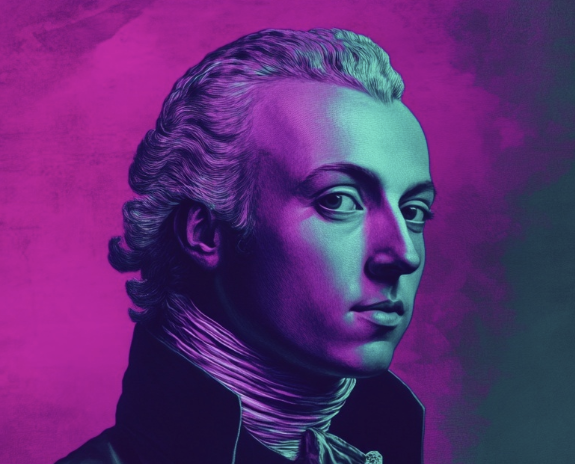
The use of the intellect in the sciences whose primitive concepts as well as axioms are given by sensuous intuition is only logical, that is, by it we only subordinate cognitions to one another according to their relative universality conformably to the principle of contradiction, phenomena to more general phenomena, and consequences of pure intuition to intuitive axioms. But in pure philosophy, such as metaphysics, in which the use of the intellect in respect to principles is real, that is to say, where the primary concept of things and relations and the very axioms are given originally by the pure intellect itself, and not being intuitions do not enjoy immunity from error, the method precedes the whole science, and whatever is attempted before its precepts are thoroughly discussed and firmly established is looked upon as rashly conceived and to be rejected among vain instances of mental playfulness.
2 months 3 weeks ago
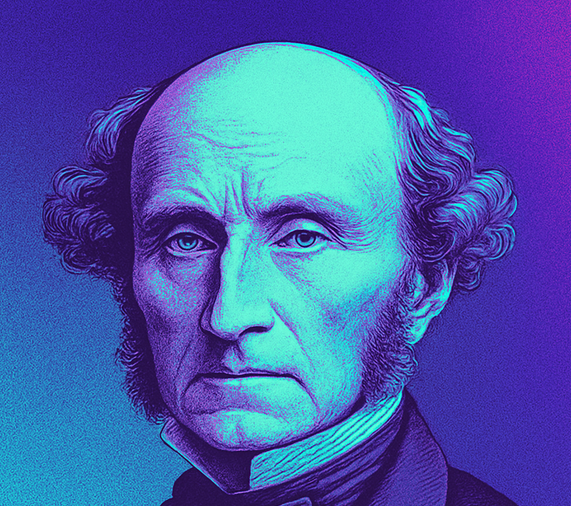
I now saw, that a science is either deductive or experimental, according as, in the province it deals with, the effects of causes when conjoined, are or are not the sums of the effects which the same causes produce when separate. It followed that politics must be a deductive science. It thus appeared, that both Macaulay and my father were wrong; the one in assimilating the method of philosophising in politics to the purely experimental method of chemistry; while the other, though right in adopting a deductive method, had made a wrong selection of one, having taken as the type of deduction, not the appropriate process, that of the deductive branches of natural philosophy, but the inappropriate one of pure geometry, which, not being a science of causation at all, does not require or admit of any summing-up of effects.
▼
Source
source
(pp. 160-161)
1 month 1 week ago
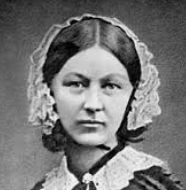
Passion, intellect, moral activity - these three have never been satisfied in a woman. In this cold and oppressive conventional atmosphere, they cannot be satisfied. To say more on this subject would be to enter into the whole history of society, of the present state of civilisation.
1 month 3 weeks ago
We must live, you used to say, as if we were never going to die. - Didn't you know that's how everyone lives, including those obsessed with Death?
3 months 2 weeks ago
The superior man, while there is anything he has not studied, or while in what he has studied there is anything he cannot understand, Will not intermit his labor. While there is anything he has not inquired about, or anything in what he has inquired about which he does not know, he will not intermit his labor. While there is anything which he has not reflected on, or anything in what he has reflected on which he does not apprehend, he will not intermit his labor. While there is anything which he has not discriminated or his discrimination is not clear, he will not intermit his labor. If there be anything which he has not practiced, or his practice fails in earnestness, he will not intermit his labor. If another man succeed by one effort, he will use a hundred efforts. If another man succeed by ten efforts, he will use a thousand. Let a man proceed in this way, and, though dull, he will surely become intelligent; though weak, he will surely become strong.
3 months 3 days ago
At the very beginning of my fevers and sicknesses that cast me down, whilst still entire, and but little, disordered in health, I reconcile myself to Almighty God by the last Christian, offices, and find myself by so doing less oppressed and more easy, and have got, methinks, so much the better of my disease. And I have yet less need of a notary or counsellor than of a physician.
▼
Source
source
Ch. 9

1 month 2 weeks ago
The fault with Hegel lies much deeper than in his glorification of the Prussian monarchy. He is guilty not so much of being servile as of betraying his highest philosophical ideas. His political doctrine surrenders society to nature, freedom to necessity, reason to caprice. And in so doing, it mirrors the destiny of the social order that falls, while in pursuit of its freedom, into a state of nature far below reason.
▼
Source
source
P. 218
1 month 2 weeks ago
I am a dreamer of words, of written words. I think I am reading; a word stops me. I leave the page. The syllables of the word begin to move around. Stressed accents begin to invert. The word abandons its meaning like an overload which is too heavy and prevents dreaming. Then words take on other meanings as if they had the right to be young. And the words wander away, looking in the nooks and crannies of vocabulary for new company, bad company.
▼
Source
source
Introduction, sect. 6

2 months 3 weeks ago
If we take a survey of ages and of countries, we shall find the women, almost - without exception - at all times and in all places, adored and oppressed. Man, who has never neglected an opportunity of exerting his power, in paying homage to their beauty, has always availed himself of their weakness He has been at once their tyrant and their slave.
3 weeks ago
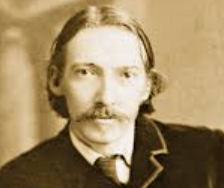
Youth now flees on feathered foot.
▼
Source
source
To Will H. Low, reported in Bartlett's Familiar Quotations, 10th ed. (1919).
3 weeks 2 days ago
The fall or scrapping of a cultural world puts us all into the same archetypal cesspool, engendering nostalgia for earlier conditions.
▼
Source
source
p. 103
2 months 3 weeks ago
The child learns to believe a host of things. I.e. it learns to act according to these beliefs. Bit by bit there forms a system of what is believed, and in that system some things stand unshakeably fast and some are more or less liable to shift. What stands fast does so, not because it is intrinsically obvious or convincing; it is rather held fast by what lies around it.

1 month 1 week ago
We all observe that the reality of sexual intercourse is far from perfect; yet this does not convince us that sex is a greatly overrated occupation. Every time a man glimpses a pretty girl pulling up her stocking, he catches a glimpse of what might be called the "primal sexual vision." It is unfortunate that there seems to be a certain disparity between this primal vision and most ordinary sexual experience. But it dances in front of us like a will-o'-the-wisp, luring us into tormented effort. It can lead novelists to write novels, poets to write poems, and musicians to write symphonies.
▼
Source
source
p. 39
1 month 1 week ago
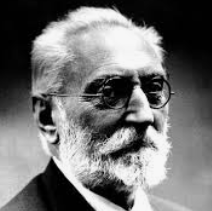
...as the great Unitarian preacher Channing pointed out, that in France and Spain there are multitudes who have proceeded from rejecting Popery to absolute atheism, because "the fact is, that false and absurd doctrines, when exposed, have a natural tendency to beget skepticism in those who receive them without reflection. None are so likely to believe too little as those who have begun by believing too much." Here is, indeed, the terrible danger of believing too much. But no! the terrible danger comes from another quarter - from seeking to believe with the reason and not with the life.

2 days ago
Humanists today, who claim to take a wholly secular view of things, scoff at mysticism and religion. But the unique status of humans is hard to defend, and even to understand, when it is cut off from any idea of transcendence. In a strictly naturalistic view - one in which the world is taken on its own terms, without reference to a creator or any spiritual realm - there is no hierarchy of value with humans at the top. There are simply multifarious animals, each with their own needs. Human uniqueness is a myth inherited from religion, which humanists have recycled into science.
▼
Source
source
An Old Chaos: Humanism and Flying Saucers (p. 77)
1 month 3 weeks ago
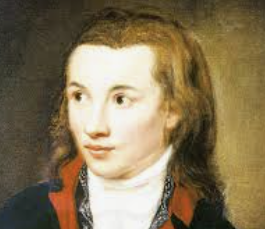
No one, of a surety, wanders farther from the mark than he who fancies to himself that he already understands this marvellous Kingdom, and can, in few words, fathom its constitution, and everywhere find the right path. To no one, who has broken off, and made himself an Island, will insight rise of itself, nor even without toilsome effort. Only to children, or childlike men, who know not what they do, can this happen. Long, unwearied intercourse, free and wise Contemplation, attention to faint tokens and indications; an inward poet-life, practised senses, a simple and devout spirit: these are the essential requisites of a true Friend of Nature; without these no one can attain his wish.
1 month 3 weeks ago
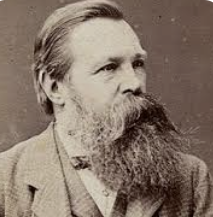
I have never seen a class so deeply demoralised, so incurably debased by selfishness, so corroded within, so incapable of progress, as the English bourgeoisie; and I mean by this, especially the bourgeoisie proper, particularly the Liberal, Corn Law repealing bourgeoisie. For it nothing exists in this world, except for the sake of money, itself not excluded. It knows no bliss save that of rapid gain, no pain save that of losing gold. In the presence of this avarice and lust of gain, it is not possible for a single human sentiment or opinion to remain untainted.
▼
Source
source
p. 275
3 months 2 weeks ago
Nearly allied to justice are the virtues of beneficence, compassion, gratitude, piety, and friendship.
2 days ago
The irony of the post-Cold War period is that the fall of communism was followed by the rise of another utopian ideology. In American and Britain, and to a lesser extent other Western countries, a type of market fundamentalism became the guiding philosophy. The collapse of American power that is underway is the predictable upshot.
2 months 4 weeks ago
Next to the ridicule of denying an evident truth, is that of taking much pains to defend it; and no truth appears to me more evident, than that beasts are endow'd with thought and reason as well as men. The arguments are in this case so obvious, that they never escape the most stupid and ignorant.
▼
Source
source
Part 3, Section 16
CivilSimian.com created by AxiomaticPanic, CivilSimian, Kalokagathia