


1 month 3 weeks ago
Their principles always go to the extreme. They who go with the principles of the ancient Whigs, which are those contained in Mr. Burke's book, never can go too far. ... The opinions maintained in that book never can lead to an extreme, because their foundation is laid in an opposition to extremes.
▼
Source
source
p. 470
2 months 4 weeks ago
Art may make a suit of clothes; but nature must produce a man.
▼
Source
source
Part I, Essay 15: The Epicurean

2 months 3 weeks ago
Man is a rational animal - so at least I have been told. Throughout a long life, I have looked diligently for evidence in favor of this statement, but so far I have not had the good fortune to come across it, though I have searched in many countries spread over three continents. Often paraphrased as "It has been said that man is a rational animal. All my life I have been searching for evidence which could support this."
1 month 2 weeks ago
Thou shalt do no murder, Thou shalt not commit adultery, Thou shalt not steal, Thou shalt not bear false witness, Honour thy father and thy mother: and, Thou shalt love thy neighbour as thyself.
▼
Source
source
19:18-19 (KJV)
2 months 4 weeks ago
Money is the password, and all doors, which are closed to the man of lesser means, fly open to those whom Plutus favors. The invention of money, which has no other usefulness (or at least it should not have any) except for the commercial exchange of the products of man's industry, now serves all that is physically good among men. Especially after money was represented by metal, it has produced avarice which, finally, without indulgence, but by its mere possession, and even with the resolution (of the stingy) not to spend it, still contains a power which people believe can sufficiently compensate for the lack of any other power.
▼
Source
source
Kant, Immanuel (1996), pages 181-182
2 months 3 weeks ago
Kant ... discovered "the scandal of reason," that is the fact that our mind is not capable of certain and verifiable knowledge regarding matters and questions that it nevertheless cannot help thinking about.
▼
Source
source
p. 14
1 month 2 weeks ago
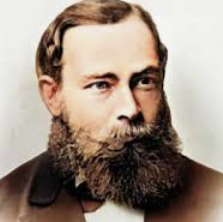
A scientist can hardly meet with anything more undesirable than to have the foundations give way just as the work is finished. I was put in this position by a letter from Mr. Bertrand Russell when the work was nearly through the press.
▼
Source
source
Note in the appendix of Grundlagen der Arithmetik (Vol. 2) after Frege had received a letter of Bertrand Russell in which Russell had explained his discovery of, what is now known as, Russell's paradox.
2 months 4 weeks ago
The ancient Egyptians had a superstitious antipathy to the sea; a superstition nearly of the same kind prevails among the Indians; and the Chinese have never excelled in foreign commerce.
▼
Source
source
Chapter V, p. 402.
2 months 3 weeks ago
I do not think it can be questioned that sympathy is a genuine motive, and that some people at some times are made somewhat uncomfortable by the sufferings of some other people. It is sympathy that has produced the many humanitarian advances of the last hundred years. We are shocked when we hear stories of the ill-treatment of lunatics, and there are now quite a number of asylums in which they are not ill-treated. Prisoners in Western countries are not supposed to be tortured, and when they are, there is an outcry if the facts are discovered. We do not approve of treating orphans as they are treated in Oliver Twist.
2 months 3 weeks ago
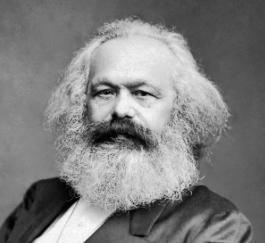
We are obviously heading for revolution-something I have never once doubted since 1850. The first act will include a by no means gratifying rehash of the stupidities of '48-'49. However, that's how world history runs its course, and one has to take it as one finds it.
▼
Source
source
Letter to Ludwig Kugelmann (28 December 1862), quoted in The Collected Works of Karl Marx and Friedrich Engels: Volume 41. Letters 1860-64 (2010), p. 437
2 weeks ago
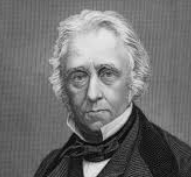
A life of action, if it is to be useful, must be a life of compromise. But speculation admits of no compromise. A public-man is often under the necessity of consenting to measures which he dislikes, lest he should endanger the success of measures which he thinks of vital importance.
▼
Source
source
War of the Succession in Spain', The Edinburgh Review (January 1833), quoted in T. B. Macaulay, Critical and Historical Essays Contributed to The Edinburgh Review, Vol. II (1843), p. 91
3 weeks ago
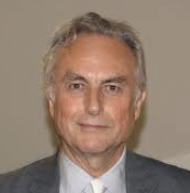
I do feel visceral revulsion at the burka because for me it is a symbol of the oppression of women.
▼
Source
source
As quoted in Richard Dawkins causes outcry after likening the burka to a bin liner (10 August 2010), The Telegraph.

2 months 3 weeks ago
The small are always dependent on the great; they are "small" precisely because they think they are independent. The great thinker is one who can hear what is greatest in the work of other "greats" and who can transform it in an original manner.
▼
Source
source
p. 35
2 months 3 weeks ago
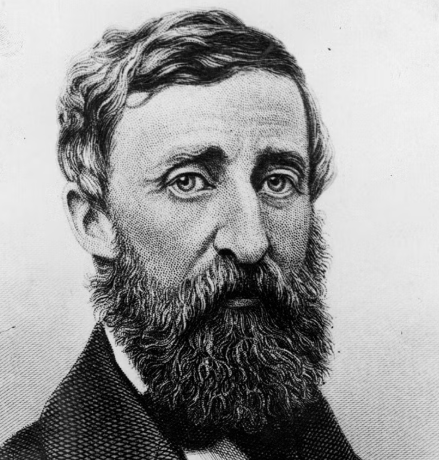
Nothing makes the earth seem so spacious as to have friends at a distance; they make the latitudes and longitudes.
▼
Source
source
Pearls of Thought (1881) p. 95
3 weeks ago
As a liberal I would hesitate to propose a blanket ban on any style of dress because of the implications for individual liberty and freedom of choice.
▼
Source
source
As quoted in Richard Dawkins causes outcry after likening the burka to a bin liner (10 August 2010), The Telegraph.
1 month 1 week ago
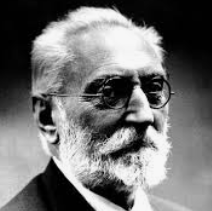
For the mockers are those who die comically, and God laughs at their comic ending, while the nobler part, the part of tragedy, is theirs who endured the mockery.
2 months 4 weeks ago
For a very small expence the public can facilitate, can encourage, and can even impose upon almost the whole body of the people, the necessity of acquiring those most essential parts of education.
▼
Source
source
Chapter I, Part III, Article II, p. 847.

2 months 3 weeks ago
For there's no rood has not a star above it; The cordial quality of pear or plum Ascends as gladly in a single tree, As in broad orchards resonant with bees; And every atom poises for itself, And for the whole.
▼
Source
source
Musketaquid, st. 5
1 month 3 weeks ago
...out of the tomb of the murdered Monarchy in France, has arisen a vast, tremendous, unformed spectre, in a far more terrific guise than any which ever yet have overpowered the imagination and subdued the fortitude of man.
▼
Source
source
p. 7
1 month 3 weeks ago
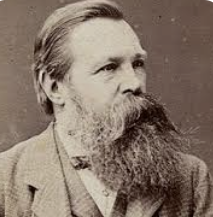
From the moment when labour can no longer be converted into capital, money, or rent, into a social power capable of being monopolized, i.e., from the moment when individual property can no longer be transformed into bourgeois property, into capital, from that moment, you say individuality vanishes.
2 months 1 week ago
Not only can logos be seen in absolutely all animals, but in many of them it has the groundwork for being perfected.
▼
Source
source
3, 2, 4

3 months 3 weeks ago
It is of this sort of divine service I used the expression that, in comparison with the Christianity of the New Testament, it is playing Christianity. The expression is essentially true and characterizes the thing perfectly. For what does it mean to play, when one reflects how the word must be understood in this connection? It means to imitate, to counterfeit, a danger when there is no danger, and to do it in such a way that the more art is applied to it, the more delusive the pretense is that the danger is present.
3 weeks 2 days ago
He who helps the guilty, shares the crime.
▼
Source
source
Maxim 139
2 months 3 weeks ago
The speaker with whom I was most struck, though I dissented from nearly every word he said, was Thirlwall, the historian, since Bishop of St. David's, then a Chancery barrister, unknown except by a high reputation for eloquence acquired at the Cambridge Union before the era of Austin and Macaulay. His speech was in answer to one of mine. Before he had uttered ten sentences, I set him down as the best speaker I had ever heard, and I have never since heard any one whom I placed above him.
▼
Source
source
(p. 125)
1 month 3 weeks ago
Every man is free to do that which he wills, provided he infringes not the equal freedom of any other man.
▼
Source
source
Ch. 6, The Formula of Justice
2 months ago
If there is one realm in which it is essential to be sublime, it is in wickedness. You spit on a petty thief, but you can't deny a kind of respect for the great criminal.
1 month 3 weeks ago
While moral rules may be propounded by authority the fact that these were so propounded would not validate them.
▼
Source
source
"The Meaning of Life".

1 month 3 weeks ago
Objection to scientific knowledge: this world doesn't deserve to be known.

2 days ago
I may not be as unambiguously hostile to capitalism as many people are, but what I don't like about it is the commodification of personal experiences, it turns everyone into actors.
▼
Source
source
Quoted in Will Self, "John Gray: Forget everything you know," The Independent
3 months 3 weeks ago
I don't believe in flying saucers... The energy requirements of interstellar travel are so great that it is inconceivable to me that any creatures piloting their ships across the vast depths of space would do so only in order to play games with us over a period of decades.


1 month 1 week ago
A modern factory reaches perhaps almost the limit of horror. Everybody in it is constantly harassed and kept on edge by the interference of extraneous wills while the soul is left in cold and desolate misery. What man needs is silence and warmth; what he is given is an icy pandemonium.Physical labour may be painful, but it is not degrading as such. It is not art; it is not science; it is something else, possessing an exactly equal value with art and science, for it provides an equal opportunity to reach the impersonal stage of attention.
▼
Source
source
p. 59

2 months 3 weeks ago
If someone is merely ahead of his time, it will catch up to him one day.
▼
Source
source
p. 8e
1 month 3 weeks ago
Speech and silence. We feel safer with a madman who talks than with one who cannot open his mouth.
1 month 3 weeks ago
Those who cavalierly reject the Theory of Evolution, as not adequately supported by facts, seem quite to forget that their own theory is supported by no facts at all. Like the majority of men who are born to a given belief, they demand the most rigorous proof of any adverse belief, but assume that their own needs none.
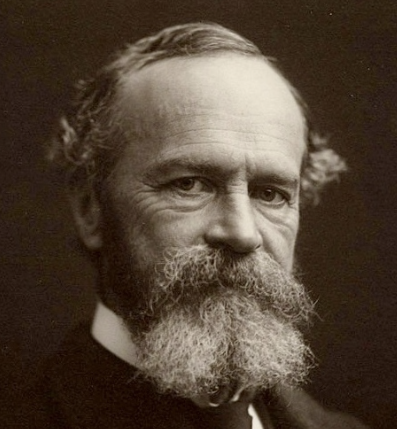
2 months 3 weeks ago
Consciousness, then, does not appear to itself chopped up in bits ... A 'river' or a 'stream' are the metaphors by which it is most naturally described. In talking of it hereafter, let us call it the stream of thought, of consciousness, or of subjective life.
▼
Source
source
Ch. 9
1 month 3 weeks ago
The modern state, in its essence and objectives, is necessarily a military state, and a military state necessarily becomes an aggressive state. If it does not conquer others it will itself be conquered, for the simple reason that wherever force exists, it absolutely must be displayed or put into action. From this again it follows that the modern state must without fail be huge and powerful; that is the indispensable condition for its preservation.

2 months 4 weeks ago
It is too difficult to think nobly when one thinks only of earning a living.
▼
Source
source
Variant translation: It is too difficult to think nobly when one only thinks to get a living.
3 months 3 weeks ago
People who want to do so can lose weight most safely and permanently if they realize that above all they must be patient. ... It is better to eat a little less at each meal than impulse would suggest and to do that constantly. Add to this a little more exercise or activity than impulse suggests and keep that up constantly too. A few less calories taken in each day and a few more used up will decrease weight, slowly, to be sure, but without undue misery. And with better long-range results too.
1 week 4 days ago
I am too much of a sceptic to deny the possibility of anything - especially as I am now so much occupied with theology - but I don't see my way to your conclusion.
▼
Source
source
Letter to Herbert Spencer (22 March 1886); this is often quoted with a variant spelling as: I am too much of a skeptic to deny the possibility of anything.

2 months 3 weeks ago
As much in vain, perhaps, will they search ancient history for examples of the modern Slave-Trade. Too many nations enslaved the prisoners they took in war. But to go to nations with whom there is no war, who have no way provoked, without farther design of conquest, purely to catch inoffensive people, like wild beasts, for slaves, is an hight of outrage against Humanity and Justice, that seems left by Heathen nations to be practised by pretended Christians. How shameful are all attempts to colour and excuse it!
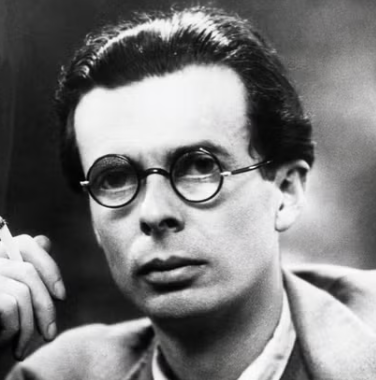
2 months 3 weeks ago
The survival of democracy depends on the ability of large numbers of people to make realistic choices in the light of adequate information.
▼
Source
source
Chapter 6 (p. 47)
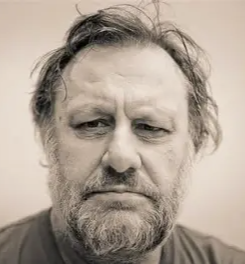
7 months 1 day ago
If we merely wait for the appropriate moment we will never live to see it, because this [appropriate moment] cannot arrive without the subjective conditions of the maturity of the revolutionary force being fulfilled - it can only arrive after a series of failed attempts.

4 weeks 1 day ago
I do not know what I may appear to the world, but to myself I seem to have been only like a boy playing on the sea-shore, and diverting myself in now and then finding a smoother pebble or a prettier shell than ordinary, whilst the great ocean of truth lay all undiscovered before me.
▼
Source
source
Memoirs of the Life, Writings, and Discoveries of Sir Isaac Newton (1855) by Sir David Brewster (Volume II. Ch. 27).
1 month 1 week ago
The 'open' mind of the poet and artist can sense realities beyond the reach of our normal senses. The real problem is that our materialistic assumptions have a number of false premises built into them: it is only when we recognize this that we see there is no sharp dividing line between the everyday world and the invisible world of the clairvoyant.
▼
Source
source
p. 294
3 months 3 weeks ago
It is simplicity that makes the uneducated more effective than the educated when addressing popular audiences.
3 months 3 weeks ago
An observer studying the Solar system dispassionately, and finding himself capable of bringing the four giant planets to his notice, could reasonably say that the Solar system consisted of one star, four planets, and some traces of debris.
1 week 4 days ago
Missionaries, whether of philosophy or of religion, rarely make rapid way, unless their preachings fall in with the prepossessions of the multitude of shallow thinkers, or can be made to serve as a stalking-horse for the promotion of the practical aims of the still larger multitude, who do not profess to think much, but are quite certain they want a great deal.
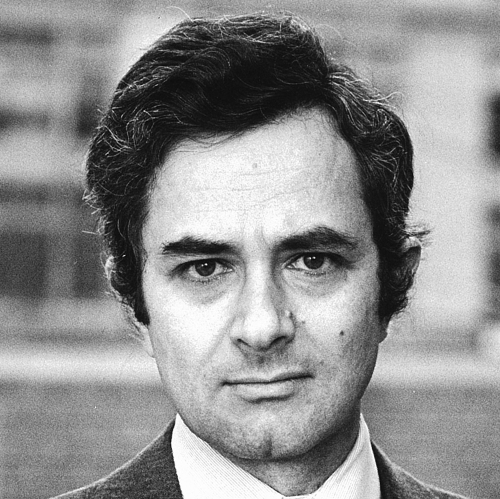
2 months 2 weeks ago
The distance between oneself and other persons and other species can fall anywhere on a continuum. Even for other persons the understanding of what it is like to be them is only partial, and when one moves to species very different from oneself, a lesser degree of partial understanding may still be available. The imagination is remarkably flexible. My point, however, is not that we cannot know what it is like to be a bat. I am not raising that epistemological problem. My point is rather that even to form a conception of what it is like to be a bat and a fortiori to know what it is like to be a bat, one must take up the bat's point of view.
▼
Source
source
p. 172, note 8.
CivilSimian.com created by AxiomaticPanic, CivilSimian, Kalokagathia