

2 months 3 weeks ago
But if you say: "How am I to know what he means, when I see nothing but the signs he gives?" then I say: "How is he to know what he means, when he has nothing but the signs either?"
▼
Source
source
§ 504

2 weeks 3 days ago
While the intellectual space does contain universal ideas, definitions, those definitions are detailed a posteriori. Truth corresponds with reality at a minimum.
1 month 1 week ago
To all this, someone is sure to object that life ought to subject itself to reason, to which we will reply that nobody ought to do what he is unable to do, and life cannot subject itself to reason. "Ought, therefore can," some Kantian will retort. To which we shall demur: "Cannot, therefore ought not." And life cannot submit itself to reason, because the end of life is living and not understanding.

2 months 3 weeks ago
The secret of being a bore is to tell everything.
▼
Source
source
"Sixième discours: sur la nature de l'homme," Sept Discours en Vers sur l'Homme, 1738
2 months 3 weeks ago
Society is undergoing a silent revolution, which must be submitted to, and which takes no more notice of the human existences it breaks down than an earthquake regards the houses it subverts. The classes and the races, too weak to master the new conditions of life, must give way. But can there be anything more puerile, more short-sighted, than the views of those Economists who believe in all earnest that this woeful transitory state means nothing but adapting society to the acquisitive propensities of capitalists, both landlords and money-lords?
▼
Source
source
"Forced Emigration," New York Daily Tribune, 22 March 1853.
5 days ago
It is better to live under a tree in a jungle inhabited by tigers and elephants, to maintain oneself in such a place with ripe fruits and spring water, to lie down on grass and to wear the ragged barks of trees than to live amongst one's relations when reduced to poverty.
2 months 4 weeks ago
You need only look around you, replied PHILO, to satisfy yourself with regard to this question. A tree bestows order and organisation on that tree which springs from it, without knowing the order; an animal in the same manner on its offspring; a bird on its nest; and instances of this kind are even more frequent in the world than those of order, which arise from reason and contrivance. To say, that all this order in animals and vegetables proceeds ultimately from design, is begging the question; nor can that great point be ascertained otherwise than by proving, a priori, both that order is, from its nature, inseparably attached to thought; and that it can never of itself, or from original unknown principles, belong to matter.
▼
Source
source
Philo to Demea, Part VII
1 month 3 days ago
In closing, I can only apologize for not having given any positive account of either mathematical truth or mathematical necessity. I can only say that I have not given such an account because I think that the search for such an account is a fundamental mistake. It is not that there is nothing special about mathematics; it is that, in my opinion, the investigation of mathematics must presuppose and not seek to account for the truth of mathematics. But this is the beginning of another paper and not the end of this one.
▼
Source
source
"Truth and necessity in mathematics"
5 days ago
The world's biggest power is the youth and beauty of a woman.
3 weeks 4 days ago
For us, with the rule of right and wrong given us by Christ, there is nothing for which we have no standard. And there is no greatness where there is not simplicity, goodness, and truth.
▼
Source
source
Bk. XIV, ch. 18
2 months 3 weeks ago
When Descartes said, "Conquer yourself rather than the world," what he meant was, at bottom, - the same - that we should act without hope. Marxists, to whom I have said thus have answered: "Your action is limited, obviously, by your death: but you can rely upon the help of others.
▼
Source
source
p. 39
1 month 2 weeks ago
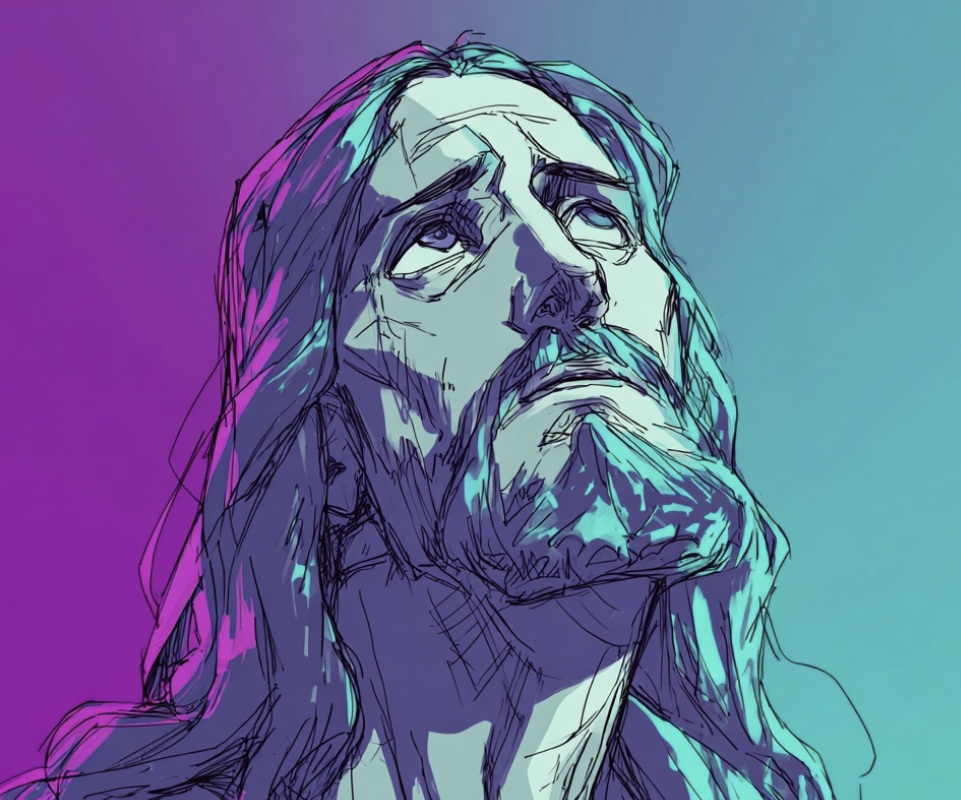
I am Alpha and Omega, the beginning and the end, the first and the last.
▼
Source
source
Revelation 22:13
2 months 3 weeks ago
Logic takes care of itself; all we have to do is to look and see how it does it.
▼
Source
source
Journal entry (13 October 1914), also in Tractatus Logico-Philosophicus (§ 5.47)
1 month 1 week ago
The same polarity of the male and female principle exists in nature; not only, as is obvious in animals and plants, but in the polarity of the two fundamental functions, that of receiving and penetrating. It is the polarity of earth and rain, of the river and the ocean, of night and day, of darkness and light, of matter and spirit.
▼
Source
source
Ch. 2

1 month 2 weeks ago
Our mass media have little difficulty in selling particular interests as those of all sensible men. The political needs of society become individual needs and aspirations, their satisfaction promotes business and the commonweal, and the whole appeals to be the very embodiment of Reason.
▼
Source
source
p. xli
3 months 2 weeks ago
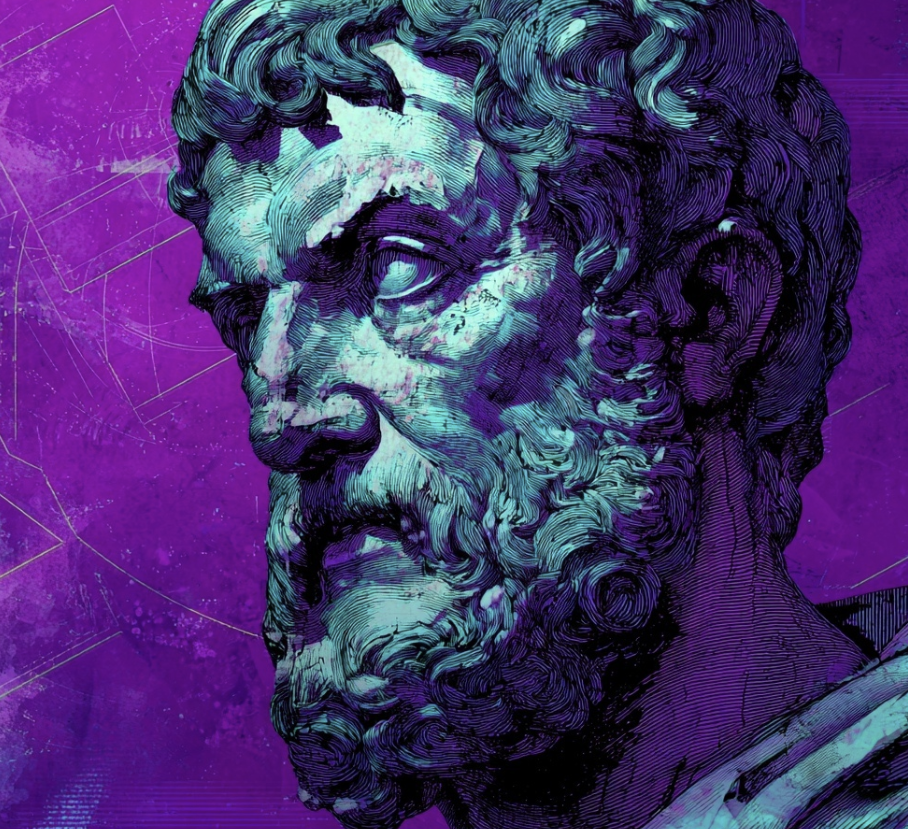
Continence is a branch of temperance, which prevents the diseases, infamy, remorse, and punishment, to which those are exposed, who indulge themselves in unlawful amours.
2 months 3 weeks ago
We do not count a man's years until he has nothing else to count.
▼
Source
source
Old Age

2 months 3 weeks ago
He came in sight of a pass guarded by armed men. 'you cannot pass ... Do you not know that all this country belongs to the Spirit of the Age? ... Here Enlightenment, take this fugitive to our Master.'
▼
Source
source
Pilgrim's Regress 44-45
3 weeks ago
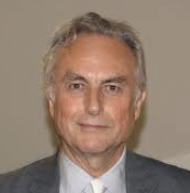
Even the constantly reiterated insistence that we are miserable offenders, born in sin, is a kind of inverted arrogance: such vanity, to presume that our moral conduct has some sort of cosmic significance, as though the Creator of the Universe wouldn't have better things to do than tot up our black marks and our brownie points. The universe is all concerned with me. Is that not the arrogance that passeth all understanding? The Intellectual and Moral Courage of Atheism
▼
Source
source
Originally from 2007; quotes are from the slightly revised 2019 version on the website
3 months 4 days ago
Nothing is terrible except fear itself.
▼
Source
source
De Augmentis Scientiarum, Book II, "Fortitudo"
1 month 5 days ago
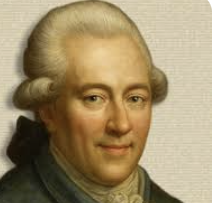
There are people who believe everything is sane and sensible that is done with a solemn face. ... It is no great art to say something briefly when, like Tacitus, one has something to say; when one has nothing to say, however, and none the less writes a whole book and makes truth ... into a liar - that I call an achievement.
▼
Source
source
E 59 Variant translation: There are people who think that everything one does with a serious face is sensible…
2 months 3 weeks ago
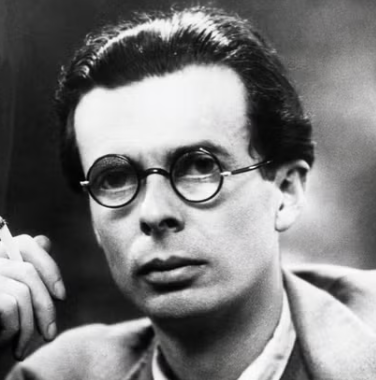
To talk about religion except in terms of human psychology is an irrelevance.
▼
Source
source
"One and Many," p. 3

2 months 1 week ago
Those alone are dear to Divinity who are hostile to injustice.
▼
Source
source
Pythagorean Ethical Sentences From Stobæus
3 months 1 week ago
We were ensnared by the wisdom of the serpent; we are set free by the foolishness of God.
▼
Source
source
1:14 Latin: Serpentis sapientia decepti sumus, Dei stultitia liberamur.

3 months 2 weeks ago
Justice respects man as living in society, and is the common bond without which no society can subsist.
3 months 3 days ago
Faith is born and preserved in us by preaching why Christ came, what he brought and gave to us, and the benefits we obtain when we receive him. This happens when Christian liberty - which he gives to us - is rightly taught and we are told in what way as Christians we are all kings and priests and therefore lords of all.
▼
Source
source
p. 70
1 month 2 weeks ago
The idea that an aim can be reasonable for its own sake-on the basis of virtues that insight reveals it to have in itself-without reference to some kind of subjective gain or advantage, is utterly alien to subjective reason, even where it rises above the consideration of immediate utilitarian values and devotes itself to reflection about the social order as a whole.
▼
Source
source
p. 4.
2 months 4 weeks ago
By Natura naturans we must understand what is in itself and is conceived through itself, or such attributes of substance as express an eternal and infinite essence, that is ... God, insofar as he is considered as a free cause. But by Natura naturata I understand whatever follows from the necessity of God's nature, or from God's attributes, that is, all the modes of God's attributes insofar as they are considered as things which are in God, and can neither be nor be conceived without God.
▼
Source
source
Part I, Prop. XXIX, Scholium, trans: Edwin Curley, London: Penguin, 1996
1 month 1 week ago
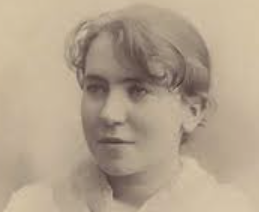
The Kropotkins, the Perovskayas, the Breshkovskayas, and hosts of others repudiated wealth and station and refused to serve King Mammon. They went among the people, not to lift them up but themselves to be lifted up, to be instructed, and in return to give themselves wholly to the people. That accounts for the heroism, the art, the literature of Russia, the unity between the people, the mujik and the intellectual. That to some extent explains the literature of all European countries, the fact that the Strindbergs, the Hauptmanns, the Wedekinds, the Brieux, the Mirbeaus, the Steinlins and Rodins have never dissociated themselves from the people.
1 month 2 weeks ago
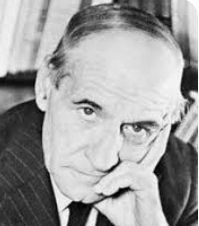
Man must not only make himself: the weightiest thing he has to do is to determine what he is going to be. He is causa sui to the second power.
▼
Source
source
As quoted in Existentialism from Dostoevsky to Sartre, p. 155
1 month 3 weeks ago
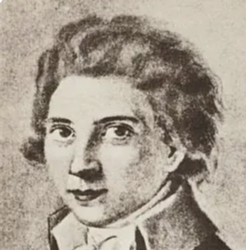
Whoever hasn't yet arrived at the clear realization that there might be a greatness existing entirely outside his own sphere and for which he might have absolutely no feeling; whoever hasn't at least felt obscure intimations concerning the approximate location of this greatness in the geography of the human spirit: that person either has no genius in his own sphere, or else he hasn't been educated to the level of the classic.
▼
Source
source
Lucinde and the Fragments, P. Firchow, trans. (1991), "Critical Fragments," § 36
1 month 2 weeks ago
Pragmatism ... reflects with almost disarming candor the spirit of the prevailing business culture, the very same attitude of 'being practical' as counter to which philosophical meditation as such was conceived.
▼
Source
source
p. 52.

2 months ago
In the United States a man builds a house to spend his latter years in it and he sells it before the roof is on. He plants a garden and lets it just as the trees are coming into bearing. He brings a field into tillage and leaves other men to gather the crops. He embraces a profession and gives it up. He settles in a place which he soon afterward leaves to carry his changeable longings elsewhere. If his private affairs leave him any leisure he instantly plunges into the vortex of politics and if at the end of a year of unremitting labour he finds he has a few days' vacation, his eager curiosity whirls him over the vast extent of the United States, and he will travel fifteen hundred miles in a few days to shake off his happiness.
▼
Source
source
Chapter XXIX.
1 month 2 weeks ago
The significance of God, cause, number, substance or soul consists, as James asserts, in nothing but the tendency of the given concept to make us act or think. If the world should reach a point at which it ceases to care not only about such metaphysical entities but also about murders perpetrated behind closed frontiers or simply in the dark, one would have to conclude that the concepts of such murders have no meaning, that they represent no 'distinct ideas' or truths, since they do not make any 'sensible difference to anybody.
▼
Source
source
describing the pragmatist view, pp. 46-47.
1 week 1 day ago
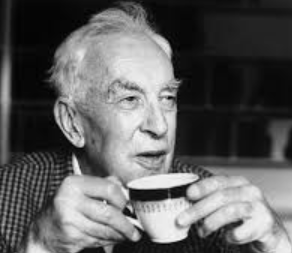
A city that outdistances Man's walking powers is a trap for Man. It threatens to become a prison from which he cannot escape unless he has mechanical means of transport, the thoroughfares for carrying these, and the purchasing power for commanding the use of artificial means of communication.
▼
Source
source
"Has Man's Metropolitan Environment Any Precedents?", Ekistics, vol. 22, no. 133 (December 1966) pp. 385-7
2 months 3 weeks ago
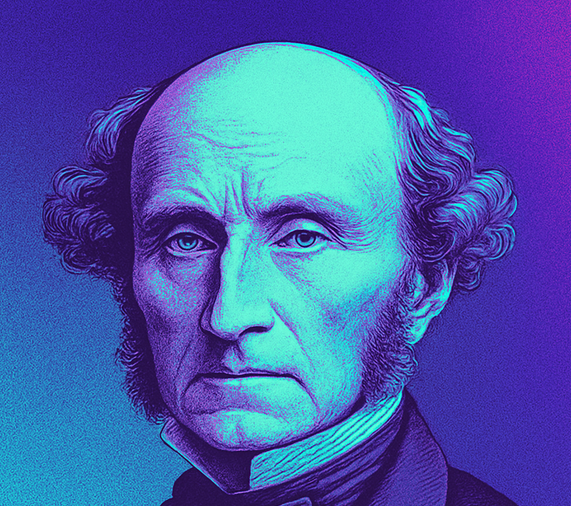
It's not too much to say that every indication of Design in the Kosmos is evidence against the Omnipotence of the Designer. For what is meant by Design? Contrivance: the adaptation of means to an end. But the necessity for contrivance - the need of employing means - is a consequence of the limitation of power. Who would have recourse to means if to attain his end his mere word was sufficient? The very idea of means implies that the means have an efficacy which the direct action of the being who employs them has not. ...
2 months 3 weeks ago
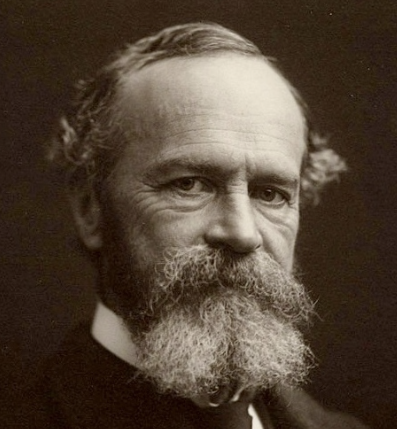
We have nothing to do but to receive, resting absolutely upon the merit, power, and love of our Redeemer.
▼
Source
source
Reported in Dictionary of Burning Words of Brilliant Writers (1895) edited by Josiah Hotchkiss Gilbert, p. 225
2 months 3 weeks ago
I would really like to slow down the speed of reading with continual punctuation marks. For I would like to be read slowly. (As I myself read.)
▼
Source
source
p. 77e

2 months 4 weeks ago
Let's not be dazzled by the sententious glitter with which error and lying often cover themselves. Society is not created by the crowd, and bodies come together in vain when hearts reject each other. The truly sociable man is more difficult in his relationships than others; those which consist only in false appearances cannot suit him. He prefers to live far from wicked men without thinking about them, than to see them and hate them. He prefers to flee his enemy rather than seek him out to harm him. A person who knows no other society than that of the heart will not seek his society in your circles. That is How J.J. must have thought and behaved before the conspiracy of which he is the object.
▼
Source
source
Second Dialogue; translated by Judith R. Bush, Christopher Kelly, Roger D. Masters
1 month 1 week ago
Capitalism lacks narrativity.
1 month 1 week ago
Now he saw the problem with great clarity. If he lived here, life would be pleasant and safe. But it would also be predictable. A child could be born here, grow up here, die here, without ever experiencing the excitement of discovery. Why did Dona question him endlessly about his life in the burrow and his journey to the country of the ants? Because for her, it represented a world that was dangerous and full of fascinating possibilities. For the children of this underground city, life was a matter of repetition, of habit. And this, he suddenly realized, was the heart of the problem. Habit. Habit was a stifling, warm blanket that threatened you with suffocation and lulled the mind into a state of perpetual nagging dissatisfaction. Habit meant the inability to escape from yourself, to change and develop . . .
▼
Source
source
pp. 132-133
2 months ago
Do you see this egg? With this you can topple every theological theory, every church or temple in the world. What is it, this egg, before the seed is introduced into it? An insentient mass. And after the seed has been introduced to into it? What is it then? An insentient mass. For what is the seed itself other than a crude and inanimate fluid? How is this mass to make a transition to a different structure, to sentience, to life? Through heat. And what will produce that heat in it? Motion. "Conversation Between D'Alembert and Diderot", as quoted in Selected Writings (1966) edited by Lester G. Crocker, and The Enlightenment and the Intellectual Foundations of Modern Culture (2004) by Louis K Dupré, p. 30 Variant translation: See this egg. It is with this that all the schools of theology and all the temples of the earth are to be overturned.
▼
Source
source
As quoted in Diderot, Reason and Resonance (1982) by Élisabeth de Fontenay, p. 217
3 weeks ago
Sanity itself is a kind of convention.
▼
Source
source
The Hunter's Family
3 months 4 days ago
I bequeath my soul to God (...). My body to be buried obscurely. For my name and memory, I leave it to men's charitable speeches, and to foreign nations, and the next age.
▼
Source
source
His Will, 1626
3 months 1 week ago
If the room is smoky, if only moderately, I will stay; if there is too much smoke I will go. Remember this, keep a firm hold on it, the door is always open.
▼
Source
source
Book I, ch. 25, 18.
1 month 3 weeks ago
Time is heavy sometimes; imagine how heavy eternity must be.
2 months 4 weeks ago
I. The subjects of every state ought to contribute towards the support of the government, as nearly as possible, in proportion to their respective abilities, that is, in proportion to the revenue which they respectively enjoy under the protection of the state.
▼
Source
source
Chapter II, Part II, p. 892.
2 months 4 weeks ago
All... good and useful properties of character have a price in exchange for others which have just as much use. Talent has a market price, since the sovereign or estate-owner can use a talented person in all sorts of ways. Temperament has a fancy price,22 since one can converse well with such a person; he is a pleasant companion. But, character has an inner value[,] and it is above all price.
▼
Source
source
Kant, Immanuel (1996), page 203

3 months 4 weeks ago
We have seen how it is originally language which works on the construction of concepts, a labor taken over in later ages by science. Just as the bee simultaneously constructs cells and fills them with honey, so science works unceasingly on this great columbarium of concepts, the graveyard of perceptions.
CivilSimian.com created by AxiomaticPanic, CivilSimian, Kalokagathia