


1 day ago
Rather than trying to escape violence, human beings more often become habituated to it. History abounds with long conflicts - the Thirty Years' War in early seventeenth-century Europe, the Time of Troubles in Russia, twentieth-century guerrilla conflicts - in which continuous slaughter has been accepted as normal. Famously adaptable, the human animal quickly learns to live with violence and soon comes to find satisfaction in it.
▼
Source
source
In the Puppet Theatre: Roof Gardens, Feathers and Human Sacrifice (p. 80)
2 months 3 weeks ago
Real power begins where secrecy begins.
▼
Source
source
Part 3, Ch. 12, § 1

3 months 3 weeks ago
Absolute freedom mocks at justice. Absolute justice denies freedom. To be fruitful, the two ideas must find their limits in each other.
▼
Source
source
"Historical Murder", as translated by Anthony Bower
2 months 3 weeks ago
If conquest constitutes a natural right on the part of the few, the many have only to gather sufficient strength in order to acquire the natural right of reconquering what has been taken from them.
▼
Source
source
The Abolition of Landed Property Letter to Robert Applegarth, 3 December 1869
1 month 6 days ago
You ask me why I do not write something... I think one's feelings waste themselves in words; they ought all to be distilled into actions and into actions which bring results.
▼
Source
source
Letter to a friend, quoted in The Life of Florence Nightingale (1913) by Edward Tyas Cook, p. 94
2 months 3 weeks ago
We tend to believe the premises because we can see that their consequences are true, instead of believing the consequences because we know the premises to be true. But the inferring of premises from consequences is the essence of induction; thus the method in investigating the principles of mathematics is really an inductive method, and is substantially the same as the method of discovering general laws in any other science.
▼
Source
source
"The Regressive Method of Discovering the Premises of Mathematics" (1907), in Essays in Analysis (1973), pp. 273-274
3 months 2 weeks ago
Those animals which are incapable of making binding agreements with one another not to inflict nor suffer harm are without either justice or injustice; and likewise for those peoples who either could not or would not form binding agreements not to inflict nor suffer harm.
2 months 3 weeks ago
As a beast of toil an ox is fixed capital. If he is eaten, he no longer functions as an instrument of labour, nor as fixed capital either.
▼
Source
source
Vol. II, Ch. VIII, p. 163.

2 months 3 weeks ago
The doctrine of the Second Coming teaches us that we do not and cannot know when the world drama will end. The curtain may be rung down at any moment: say, before you have finished reading this paragraph.

2 months ago
There is no man alone, because every man is a Microcosm, and carries the whole world about him.
▼
Source
source
Section 10
2 months 3 weeks ago
All poetry is misrepresentation.
▼
Source
source
An Aphorism attributed to him according to John Stuart Mill (see Mill's essay On Bentham and Coleridge in Utilitarianism edt. by Mary Warnock p. 123).

2 months 3 weeks ago
Earth proudly wears the Parthenon As the best gem upon her zone.
▼
Source
source
The Problem, st. 3
2 months 3 weeks ago
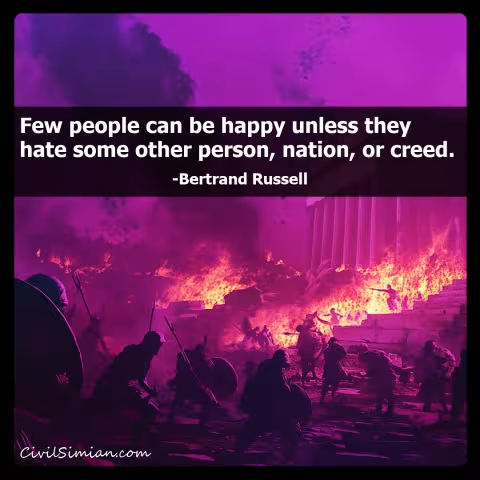
The criminal law has, from the point of view of thwarted virtue, the merit of allowing an outlet for those impulses of aggression which cowardice, disguised as morality, restrains in their more spontaneous forms. War has the same merit. You must not kill you neighbor, whom perhaps you genuinely hate, but by a little propaganda this hate can be transferred to some foreign nation, against whom all your murderous impulses become patriotic heroism.
▼
Source
source
Part III: Man and Himself, Ch. 17: Fear, p. 175
3 months 1 week ago
Philosophers do not claim that God does not know particulars; they rather claim that He does not know them the way humans do. God knows particulars as their Creator whereas humans know them as a privileged creations of God might know them.
2 months 3 weeks ago
We have to learn to think in a new way. We have to learn to ask ourselves, not what steps can be taken to give military victory to whatever group we prefer, for there no longer are such steps; the question we have to ask ourselves is: what steps can be taken to prevent a military contest of which the issue must be disastrous to all parties?
2 months 3 weeks ago
I may as well say at once that I do not distinguish between inference and deduction. What is called induction appears to me to be either disguised deduction or a mere method of making plausible guesses.
▼
Source
source
Principles of Mathematics (1903), Ch. II: Symbolic Logic, p. 11
1 month 2 weeks ago
To live life well is to express life poorly; if one expresses life too well, one is living it no longer.
▼
Source
source
A Retrospective Glance at the Lifework of a Master of Books
1 month 3 weeks ago
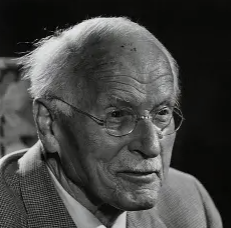
Life has always seemed to me like a plant that lives on its rhizome. Its true life is invisible, hidden in the rhizome. The part that appears above ground lasts only a single summer. What we see is the blossom, which passes. The rhizome remains. Closing lines of the preface
3 months 2 weeks ago
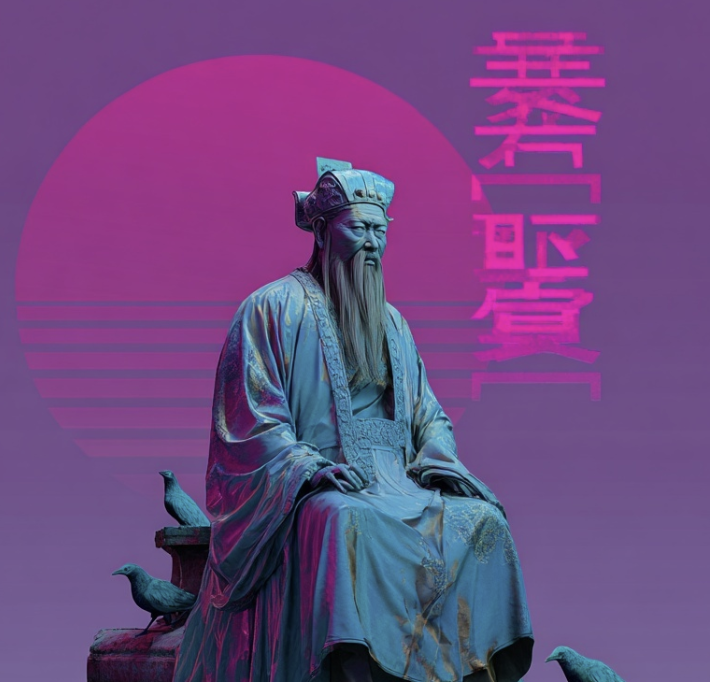
In archery we have something like the way of the superior man. When the archer misses the center of the target, he turns round and seeks for the cause of his failure in himself.
2 months 4 weeks ago
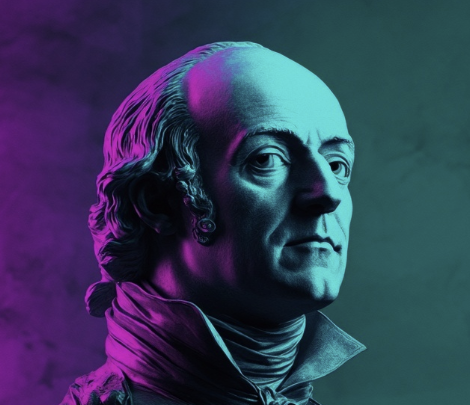
When national debts have once been accumulated to a certain degree, there is scarce, I believe, a single instance of their having been fairly and completely paid. The liberation of the public revenue, if it has ever been brought about at all, has always been brought about by bankruptcy; sometimes by an avowed one, but always by a real one, though frequently by a pretend payment.
▼
Source
source
Chapter III, Part V, p. 1012.
2 weeks 4 days ago
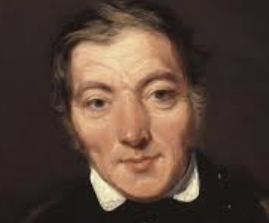
Eight hours daily labour is enough for any human being, and under proper arrangements sufficient to afford an ample supply of food, raiment and shelter, or the necessaries and comforts of life, and for the remainder of his time, every person is entitled to education, recreation and sleep.
▼
Source
source
"Foundation Axioms" of Society for Promoting National Regeneration
2 weeks 4 days ago
The advanced members of the medical profession know that the health of society is not to be obtained or maintained by medicines; - that it is far better, far more easy and far wiser, to adopt substantive measures to prevent disease of body or mind, than to allow substantive measure to remain continually to generate causes to produce physical and mental disorders.
▼
Source
source
3rd Part
1 month 2 weeks ago
The spectacle of what religions have been in the past, of what certain religions still are to-day, is indeed humiliating for human intelligence. What a farrago of error and folly!'
▼
Source
source
Chapter II : Static Religion


2 months 3 weeks ago
There is only one man who gets his own way-he who can get it single-handed; therefore freedom, not power, is the greatest good. That man is truly free who desires what he is able to perform, and does what he desires. This is my fundamental maxim. Apply it to childhood, and all the rules of education spring from it. Society has enfeebled man, not merely by robbing him of the right to his own strength, but still more by making his strength insufficient for his needs. This is why his desires increase in proportion to his weakness; and this is why the child is weaker than the man. If a man is strong and a child is weak it is not because the strength of the one is absolutely greater than the strength of the other, but because the one can naturally provide for himself and the other cannot. Thus the man will have more desires and the child more caprices, a word which means, I take it, desires which are not true needs, desires which can only be satisfied with the help of others.
1 week 6 days ago
Nothing is so galling to a people not broken in from the birth, as a paternal, or, in other words, a meddling government, a government which tells them what to read, and say, and eat, and drink, and wear.
▼
Source
source
p. 252
1 month 6 days ago
I believe that if an individual is not on the path to transcending his society and seeing in what way it furthers or impedes the development of human potential, he cannot enter into intimate contact with his humanity. If the tabus, restrictions, distorted values appear "natural" to him, this is a clear indication that he cannot have a real knowledge of human nature. I believe that society, while having a function both stimulating and inhibiting at the same time, has always been in conflict with humanity. Only when the purpose of society is identified with that of humanity will society cease to paralyze man and encourage his dominance.
2 months 2 weeks ago
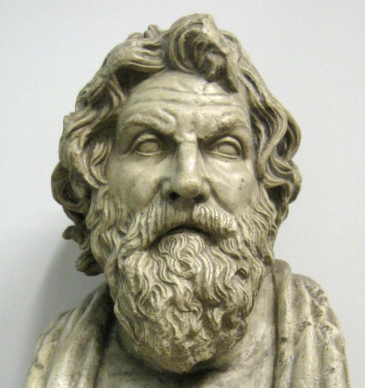
It is a royal privilege to do good and be ill spoken of.
▼
Source
source
§ 3; quoted also by Marcus Aurelius, vii. 36

1 month 2 weeks ago
Doutbless, revenge is not always sweet, once it is consummated we feel inferior to our victim, or else we are tangled in the subtleties of remorse; so vengeance too has its venom, though it comes closer to what we are, to what we feel, to the very law of the self; it is also healthier than magnanimity. The Furies were held to antedate the gods, Zeus included. Vengeance before Divinity! This is the Major intuition of ancient mythology. p. 70.
1 month 2 weeks ago
In order to conceive, and to steep ourselves in, unreality, we must have it constantly present to our minds. The day we feel it, see it, everything becomes unreal, except that unreality which alone makes existence tolerable.
1 month 3 weeks ago
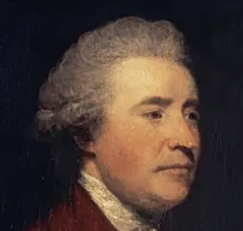
The Crown of Great Britain cannot, in my opinion, be too magnificent. Let us see some great public works set on foot; let it never be said, that the Commons of Great Britain failed in what they owe to the first Crown in the world. Looking up to royalty, I do say, it is the oldest and one of the best parts of our constitution. I wish it should look like royalty; that it should look like a King; like a King of Great Britain.
▼
Source
source
Speech in the House of Commons (28 February 1769)
2 months 3 weeks ago
Science seems to be at war with itself.... Naive realism leads to physics, and physics, if true, shows naive realism to be false. Therefore naive realism, if true, is false; therefore it is false.
▼
Source
source
An Inquiry into Meaning and Truth (1940), Introduction, p. 15
2 months 1 week ago
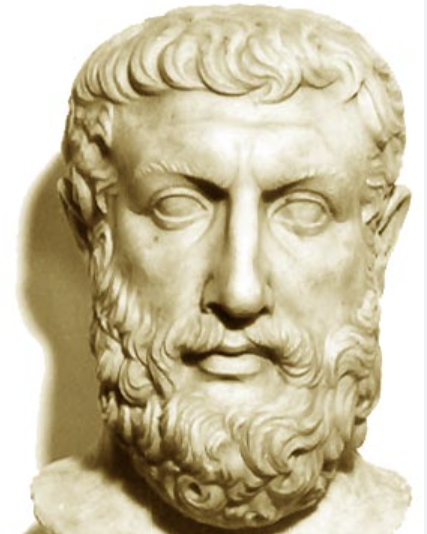
The only roads of enquiry there are to think of: one, that it is and that it is not possible for it not to be, this is the path of persuasion (for truth is its companion); the other, that it is not and that it must not be - this I say to you is a path wholly unknowable.
▼
Source
source
Frag. B 2.2-6, quoted by Proclus, Commentary on the Timaeus I, 345
2 months 3 weeks ago
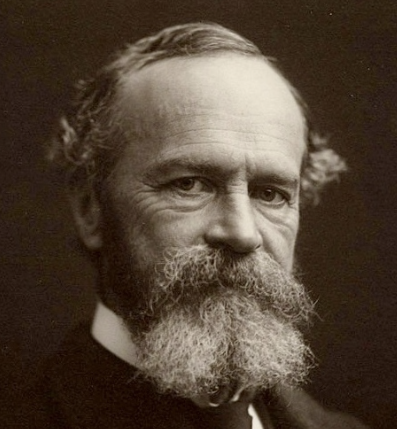
Act as if what you do makes a difference. It does.
▼
Source
source
Correspondence with Helen Keller, 1908, in The Correspondence of William James: April 1908-August 1910, Vol. 12
2 months 2 weeks ago
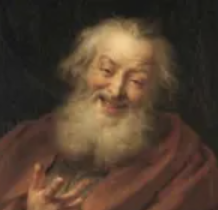
In fact we do not know anything infallibly, but only that which changes according to the condition of our body and of the [influences] that reach and impinge upon it.
1 month 3 weeks ago
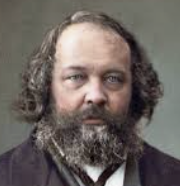
All exercise of authority perverts, and submission to authority humiliates.
▼
Source
source
As quoted in Michael Bakunin (1937), E.H. Carr, p. 453
2 months 2 weeks ago
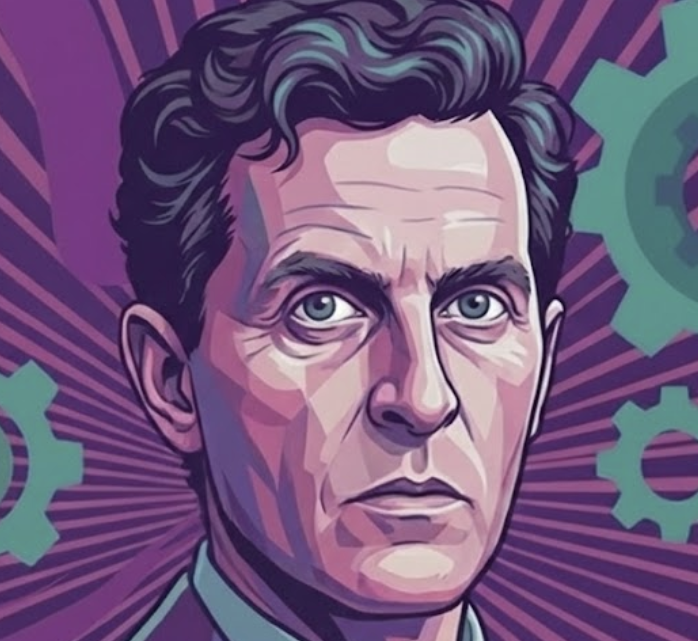
The World and Life are one. Physiological life is of course not "Life". And neither is psychological life. Life is the world. Ethics does not treat of the world. Ethics must be a condition of the world, like logic. Ethics and Aesthetics are one.
▼
Source
source
Journal entry (24 July 1916), p. 77e
1 week ago
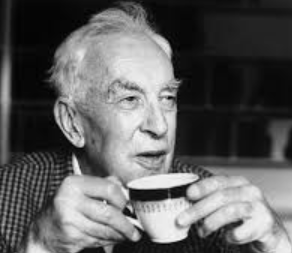
We shall have to share out the fruits of technology among the whole of mankind. The notion that the direct and immediate producers of the fruits of technology have a proprietary right to these fruits will have to be forgotten. After all, who is the producer? Man is a social animal, and the immediate producer has been helped to produce by the whole structure of society, beginning with his own education.
▼
Source
source
Surviving the Future (1971; Oxford UP, 1972) p. 95
2 months 3 weeks ago
Talent works for money and fame; the motive which moves genius to productivity is, on the other hand, less easy to determine. It isn't money, for genius seldom gets any. It isn't fame: fame is too uncertain and, more closely considered, of too little worth. Nor is it strictly for its own pleasure, for the great exertion involved almost outweighs the pleasure. It is rather an instinct of a unique sort by virtue of which the individual possessed of genius is impelled to express what he has seen and felt in enduring works without being conscious of any further motivation. It takes place, by and large, with the same sort of necessity as a tree brings forth fruit, and demands of the world no more than a soil on which the individual can flourish.
▼
Source
source
Vol. 2 "On Philosophy and the Intellect" as translated in Essays and Aphorisms (1970), as translated by R. J. Hollingdale
1 month 1 week ago
books are only what we want them to be; rather, what we read into them.
2 months 3 weeks ago
Manufacture was all the time sheltered by protective duties in the hoe market, by monopolies in the colonial market, and broad as much as possible by differential duties.
▼
Source
source
ibid, pp. 183
2 months 2 weeks ago
What all these people are doing is not aggressive; they are inventing new possibilities of pleasure with strange parts of their body - through the eroticization of the body. I think it's ... a creative enterprise, which has as one of its main features what I call the desexualization of pleasure.
▼
Source
source
In reference to Sadism and Masochism, as quoted in Who's Who in Contemporary Gay & Lesbian History: From World War II to the Present Day (2001) by Robert Aldrich and Gary Wotherspoon
1 month 2 weeks ago
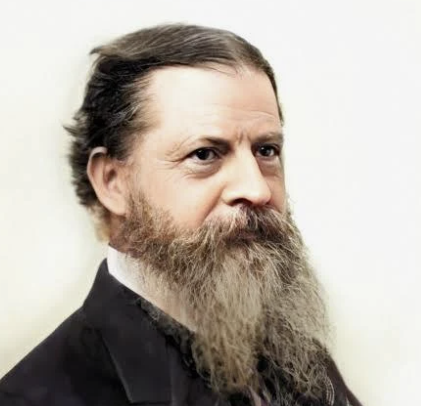
It is important to understand what I mean by semiosis. All dynamic action, or action of brute force, physical or psychical, either takes place between two subjects, - whether they react equally upon each other, or one is agent and the other patient, entirely or partially, - or at any rate is a resultant of such actions between pairs. But by "semiosis" I mean, on the contrary, an action, or influence, which is, or involves, a cooperation of three subjects, such as a sign, its object, and its interpretant, this tri-relative influence not being in any way resolvable into actions between pairs.
▼
Source
source
"Pragmatism" (1907) in The Essential Peirce : Selected Philosophical Writings (1998) edited by the Peirce Edition Project, Vol. 2, p. 411, Indiana University Press.
2 months 3 weeks ago
In art the Chinese aim at being exquisite, and in life at being reasonable.
▼
Source
source
The Problem of China (1922), Ch. XI: Chinese and Western Civilization Contrasted
1 month 2 weeks ago
All living souls welcome whatsoever they are ready to cope with; all else they ignore, or pronounce to be monstrous and wrong, or deny to be possible.
▼
Source
source
Ch. 3, P. 62
1 month 2 weeks ago
Thanks to depression - that alpinism of the indolent - we scale every summit and daydream over every precipice from our bed.
1 month 2 weeks ago
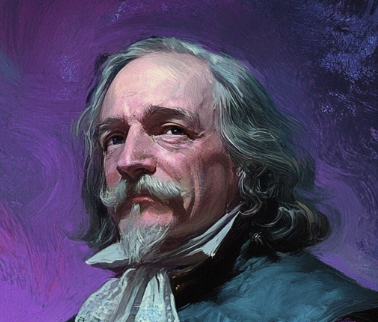
The passion of laughter is nothing else but a sudden glory arising from sudden conception of some eminency in ourselves, by comparison with the infirmities of others, or with our own formerly...
▼
Source
source
The Elements of Law, Natural and Politic Pt. I Human Nature (1640) Ch. 9
2 months 3 weeks ago
In any race between human numbers and natural resources, time is against us.
▼
Source
source
Chapter 12 (p. 113)
CivilSimian.com created by AxiomaticPanic, CivilSimian, Kalokagathia