


2 months 2 weeks ago
Commit no slander; so that infamy and wickedness may not happen unto thee.
▼
Source
source
(p. 59)

2 months ago
Time which antiquates Antiquities, and hath an art to make dust of all things.
▼
Source
source
Chapter V
2 months 3 weeks ago
[N]o matter how abstract our theories may sound or how consistent our arguments may appear, there are incidents and stories behind them which, at least for ourselves, contain as in a nutshell the full meaning of whatever we have to say.
▼
Source
source
Thinking Without a Banister: Essays in Understanding, 1953-1975
2 months 2 weeks ago
Although objectively greater demands are placed on this authority, it operates less as a public opinion giving a rational foundation to the exercise of political and social authority, the more it is generated for the purpose of an abstract vote that amounts to no more than an act of acclamation within a public sphere temporarily manufactured for show or manipulation.
▼
Source
source
p. 222
2 months 3 weeks ago
As the chosen people bore in their features the sign manual of Jehovah, so the division of labour brands the manufacturing workman as the property of capital.
▼
Source
source
Vol. I, Ch. 14, Section 5, pg. 396.
3 months 2 days ago
Women are the most charitable creatures, and the most troublesome. He who shuns women passes up the trouble, but also the benefits. He who puts up with them gains the benefits, but also the trouble. As the saying goes, there's no honey without bees.
▼
Source
source
Act III, scene iv
2 months 3 weeks ago
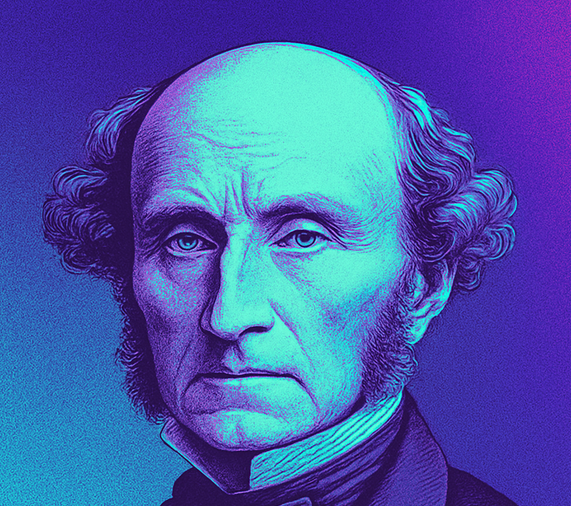
Though they may think the proof incomplete that the universe is a work of design, and though they assuredly disbelieve that it can have an Author and Governor who is absolute in power as well as perfect in goodness, they have that which constitutes the principal worth of all religions whatever, an ideal conception of a Perfect Being, to which they habitually refer as the guide of their conscience; and this ideal of Good is usually far nearer to perfection than the objective Deity of those, who think themselves obliged to find absolute goodness in the author of a world so crowded with suffering and so deformed by injustice as ours.
▼
Source
source
(p. 46)
3 months 3 weeks ago
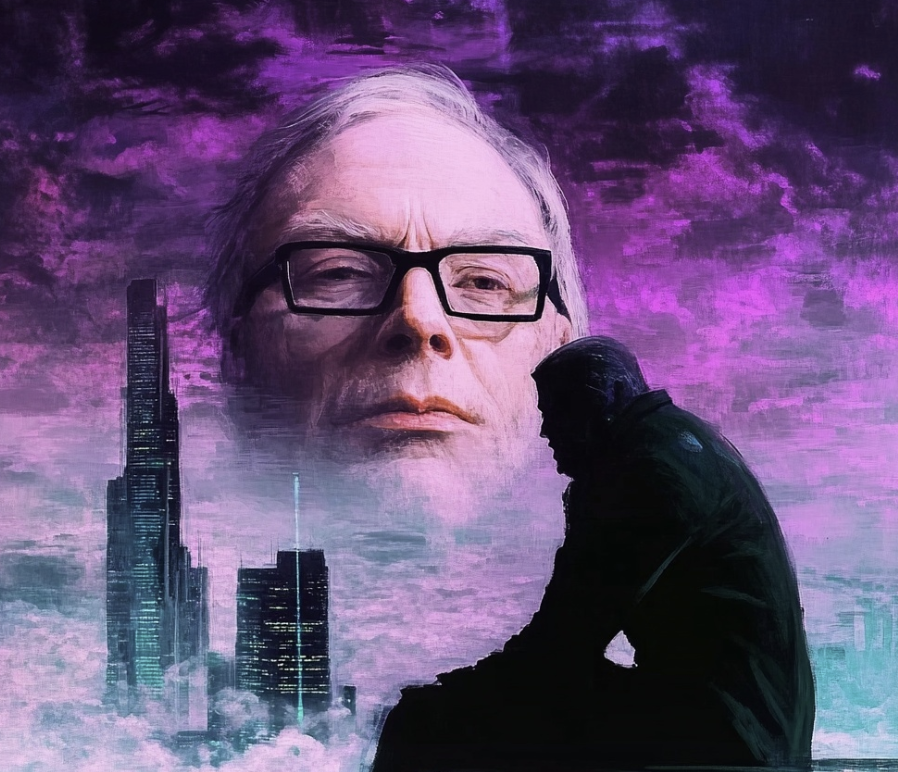
Of all the books I have ever worked on, I think Asimov's Guide to Shakespeare gave me the most pleasure, day in, day out. For months and months I lived and thought Shakespeare, and I don't see how there can be any greater pleasure in the world, any pleasure, that is, that one can indulge in for as much as ten hours without pause, day after day indefinitely.
1 month 1 week ago
Language is a skin: I rub my language against the other. It is as if I had words instead of fingers, or fingers at the tip of my words. My language trembles with desire.
▼
Source
source
Talking, in A Lover's Discourse
1 month 2 weeks ago
Life cannot wait until the sciences may have explained the universe scientifically. We cannot put off living until we are ready. The most salient characteristic of life is its coerciveness: it is always urgent, "here and now" without any possible postponement. Life is fired at us point-blank. And culture, which is but its interpretation, cannot wait any more than can life itself.
▼
Source
source
Mission of the University [Misión de la Universidad (PDF)] (1930; translation © 1944, first published 1946), p. 73 [p. 15 in Spanish PDF], translated by Howard Lee Nostrand. ISBN 978-1-56000-560-5
2 months 3 weeks ago
New truth is often uncomfortable, especially to the holders of power; nevertheless, amid the long record of cruelty and bigotry, it is the most important achievement of our intelligent but wayward species.
▼
Source
source
Religion and Science (1935), Ch. X: Conclusion
2 months 3 weeks ago
For in spite of language, in spite of intelligence and intuition and sympathy, one can never really communicate anything to anybody.
▼
Source
source
"Sermons in Cats"
2 months 4 weeks ago
The government of an exclusive company of merchants is, perhaps, the worst of all governments for any country whatever.
▼
Source
source
Chapter VII, Part Second, p. 619.
2 months 3 weeks ago
As for us, my little friend, we entered [the Communist Party] because we were tired of dying of hunger.
▼
Source
source
Act 3, sc. 2
2 weeks 6 days ago
We should be offended when children are denied a proper education. We should be offended when children are told they will spend eternity in hell. We should be offended when medical science, for example stem-cell research, is compromised by the bigoted opinions of powerful and above all well-financed ignoramuses. We should be offended when voodoo, of all kinds, is given equal weight to science. We should be offended by hymen reconstruction surgery. We should be offended by 'female circumcision', euphemism for genital mutilation. We should be offended by stoning.
▼
Source
source
I Am Offended!, August 3, 2008


2 months 3 weeks ago
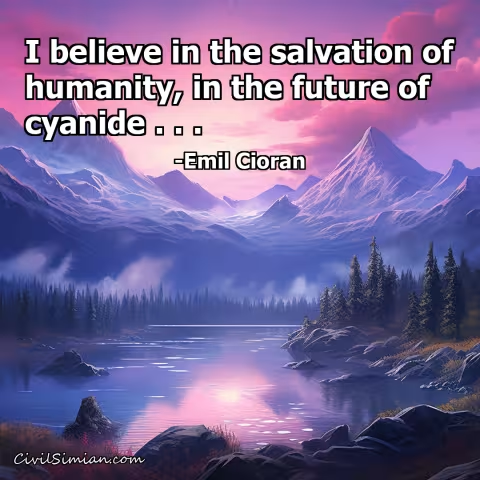
Indeed, history is nothing more than a tableau of crimes and misfortunes.
▼
Source
source
L'Ingénu, ch.10 (1767) Quoted in The End, part 13 of A Series of Unfortunate Events
3 weeks 1 day ago
Audacity augments courage; hesitation, fear.
▼
Source
source
Maxim 63 Variant translation: "Valour grows by daring, fear by holding back."
1 month 2 weeks ago
To have failed in everything, always, out of a love of discouragement.
3 weeks 1 day ago
He doubly benefits the needy who gives quickly. Maxim 6

2 months 3 weeks ago
According to Christian teachers, the essential vice, the utmost evil, is Pride. Unchastity, anger, greed, drunkenness, and all that, are mere fleabites in comparison: it was through Pride that the devil became the devil: Pride leads to every other vice: it is the complete anti-God state of mind.
▼
Source
source
Book III, Chapter 8, "The Great Sin"
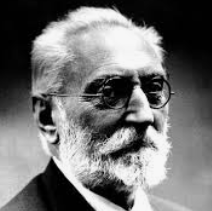
1 month 1 week ago
In books of psychology written from the spiritualist point of view, it is customary to begin the discussion of the existence of the soul as a simple substance, separable from the body, after this style: There is in me a principle which thinks, wills and feels... Now this implies a begging of the question. For it is far from being an immediate truth that there is in me such a principle; the immediate truth is that I think, will and feel. And I - the I that thinks, wills and feels - am immediately my living body with the states of consciousness which it sustains. It is my living body that thinks, wills and feels.

2 months 2 weeks ago
In everything well known something worthy of thought still lurks.
▼
Source
source
p. xxxix
2 months 3 weeks ago
Freedom is what you do with what's been done to you.
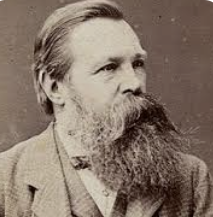
1 month 2 weeks ago
Every change in the social order, every revolution in property relations, is the necessary consequence of the creation of new forces of production which no longer fit into the old property relations. Private property has not always existed. When, towards the end of the Middle Ages, there arose a new mode of production which could not be carried on under the then existing feudal and guild forms of property, this manufacture, which had outgrown the old property relations, created a new property form, private property. And for manufacture and the earliest stage of development of big industry, private property was the only possible property form; the social order based on it was the only possible social order.
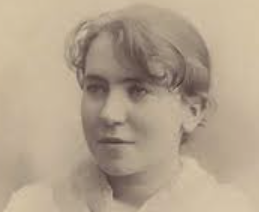
1 month 1 week ago
The most disheartening tendency common among readers is to tear out one sentence from a work, as a criterion of the writer's ideas or personality.
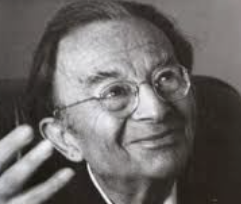
1 month 6 days ago
Optimism is an alienated form of faith, pessimism an alienated form of despair. If one truly responds to man and his future, ie, concernedly and "responsibly." one can respond only by faith or by despair. Rational faith as well as rational despair are based on the most thorough, critical knowledge of all the factors that are relevant for the survival of man.
▼
Source
source
p. 483
3 months 3 weeks ago
What, then, of human activities? Is humankind itself hastening its own end? Man has, for instance, been burning carbon-containing fuel — wood, coal, oil, gas — at a steadily accelerating rate. All these fuels form carbon dioxide. Some is absorbed by plants and the oceans but not as fast as it is produced. This means the carbon dioxide content of the air is going up — slightly but nevertheless up. Carbon dioxide retains heat, and even a small rise means a warming of the Earth's atmosphere. This may result in the melting of the polar ice caps with unusual speed, flooding the world before we have learned climate control. In reverse, our industrial civilization is making our atmosphere dustier so that it reflects more sunlight away and cools the Earth slightly — thus making possible a glacial advance in a few centuries, also before we have learned climate control.
2 months 3 weeks ago
Whate'er we leave to God, God doesAnd blesses us.
▼
Source
source
"Inspiration", in An American Anthology, 1900
1 month 1 week ago
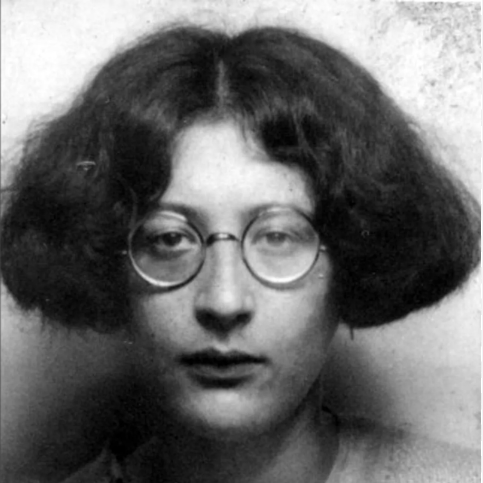
Every time that a man has, with a pure heart, called upon Osiris, Dionysus, Buddha, the Tao, etc., the Son of God has answered him by sending the Holy Spirit. And the Holy Spirit has acted upon his soul, not by inciting him to abandon his religious tradition, but by bestowing upon him light - and in the best of cases the fullness of light - in the heart of that same religious tradition. ... It is, therefore, useless to send out missions to prevail upon the peoples of Asia, Africa or Oceania to enter the Church.
▼
Source
source
Section 8
3 months 2 weeks ago
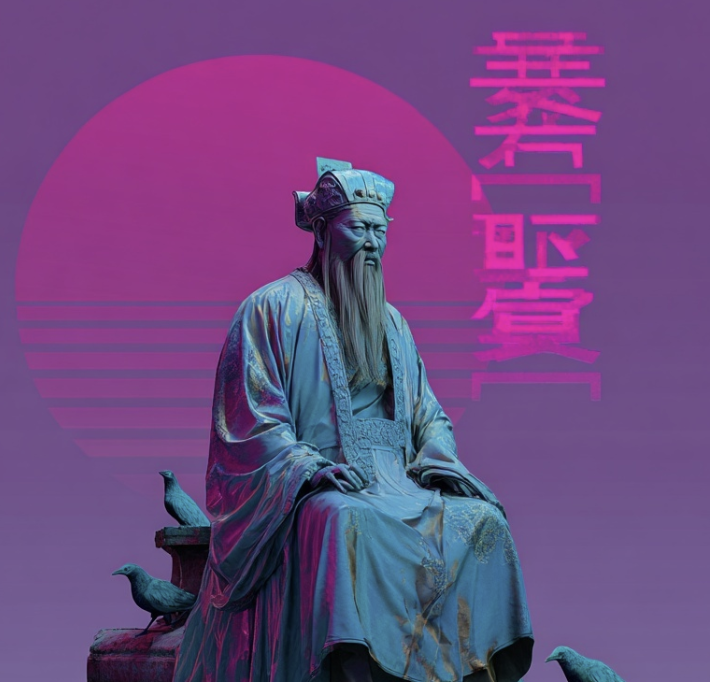
When we have intelligence resulting from sincerity, this condition is to be ascribed to nature; when we have sincerity resulting from intelligence, this condition is to be ascribed to instruction. But given the sincerity, and there shall be the intelligence; given the intelligence, and there shall be the sincerity.
3 days ago
The biology of suffering in intelligent agents is a deep underlying source of existential risk - and one that can potentially be overcome.
▼
Source
source
"Unsorted Postings", pre-2014
2 months 3 weeks ago
But perhaps I lack the gift. I see I've described her as being like a sword. That's true as far as it goes. But utterly inadequate by itself, and misleading. I ought to have said 'But also like a garden. Like a nest of gardens, wall within wall, hedge within hedge, more secret, more full of fragrant and fertile life, the further you explore.' And then, of her, and every created thing I praise, I should say 'in some way, in its unique way, like Him who made it.' Thus up from the garden to the Gardener, from the sword to the Smith. to the life-giving Life and the Beauty that makes beautiful.
2 weeks 6 days ago
We are not arrogant, not hubristic, to celebrate the sheer bulk and detail of what we know through science. We are simply telling the honest and irrefutable truth. Also honest is the frank admission of how much we don't yet know - how much more work remains to be done. That is the very antithesis of hubristic arrogance. Science combines a massive contribution, in volume and detail, of what we do know with humility in proclaiming what we don't. Religion, by embarrassing contrast, has contributed literally zero to what we know, combined with huge hubristic confidence in the alleged facts it has simply made up.
▼
Source
source
The Intellectual and Moral Courage of Atheism

2 months 1 day ago
To a body of infinite size there can be ascribed neither centre nor boundary... Thus the Earth no more than any other world is at the centre.
2 weeks 6 days ago
Perpetual devotion to what a man calls his business, is only to be sustained by perpetual neglect of many other things.
▼
Source
source
An Apology for Idlers.
1 month 1 week ago
My conduct must be the best proof, the moral proof, of my supreme desire; and if I do not end by convincing myself, within the bounds of the ultimate and irremediable uncertainty of the truth of what I hope for, it is because my conduct is not sufficiently pure. Virtue, therefore, is not based upon dogma, but dogma upon virtue, and it is not faith that creates martyrs but martyrs who create faith. There is no security or repose - so far as security and repose are obtainable in this life, so essentially insecure and unreposeful - save in conduct that is passionately good.
1 month 2 weeks ago
Historians of ideas, however scrupulous and minute they may feel it necessary to be, cannot avoid perceiving their material in terms of some kind of pattern.
2 weeks 3 days ago
The first effect of modernism was to make high culture difficult: to surround beauty with a wall of erudition.
▼
Source
source
Avant-garde and Kitsch (p. 85)
2 months 3 weeks ago
Let me suggest a theme for you: to state to yourself precisely and completely what that walk over the mountains amounted to for you, - returning to this essay again and again, until you are satisfied that all that was important in your experience is in it. Give this good reason to yourself for having gone over the mountains, for mankind is ever going over a mountain. Don't suppose that you can tell it precisely the first dozen times you try, but at 'em again, especially when, after a sufficient pause, you suspect that you are touching the heart or summit of the matter, reiterate your blows there, and account for the mountain to yourself. Not that the story need be long, but it will take a long while to make it short.
▼
Source
source
Letter to Harrison Blake, November 16, 1857
3 months 1 week ago
The weakness of little children's limbs is innocent, not their souls.
▼
Source
source
I, 7

3 months 3 weeks ago
An authorship that began with Either/Or and advanced step by step seeks here its decisive place of rest, at the foot of the altar, where the author, personally most aware of his own imperfections and guilt, certainly does not call himself a truth-witness but only a singular kind of poet and thinker who, without authority, has had nothing new to bring but “has wanted once again to read through, if possible in a more inward way, the original text handed down from the fathers.
3 months 2 days ago
I assert once again as a truth to which history as a whole bears witness that men may second their fortune, but cannot oppose it; that they may weave its warp, but cannot break it. Yet they should never give up, because there is always hope, though they know not the end and more towards it along roads which cross one another and as yet are unexplored; and since there is hope, they should not despair, no matter what fortune brings or in what travail they find themselves.
▼
Source
source
Book 2, Ch. 29 (as translated by LJ Walker and B Crick)
1 month 1 week ago
For what is specific in the Catholic religion is immortalization and not justification, in the Protestant sense. Rather is this latter ethical. It is from Kant, in spite of what orthodox Protestants may think of him, that Protestantism derived its penultimate conclusions - namely, that religion rests upon morality, and not morality upon religion, as in Catholicism.
3 months 3 weeks ago
The job of science will never be done, it will just sink deeper and deeper into never-ending complexity.
1 month 1 week ago
Such words as spontaneity, sincerity, gratuitousness, richness, enrichment - words which imply an almost total indifference to contrasts of value - have come more often from their [the surrealists'] pens than words which contain a reference to good and evil. Moreover, this latter class of words has become degraded, especially those which refer to the good, as Valéry remarked some years ago. Words like virtue, nobility, honor, honesty, generosity, have become almost impossible to use or else they have acquired bastard meanings; language is no longer equipped for legitimately praising a man's character.
▼
Source
source
"The responsibility of writers," p. 168
2 months 3 weeks ago
The opinions that are held with passion are always those for which no good ground exists; indeed the passion is the measure of the holder's lack of rational conviction.
▼
Source
source
Opinions in politics and religion are almost always held passionately. Introduction to 1961 edition of Sceptical Essays, 1961
1 month 1 week ago
The Hebrews took for their idol, not something made of metal or wood, but a race, a nation, something just as earthly. Their religion is essentially inseparable from such idolatry, because of the notion of the "chosen people".
▼
Source
source
Section 2
2 months 3 weeks ago
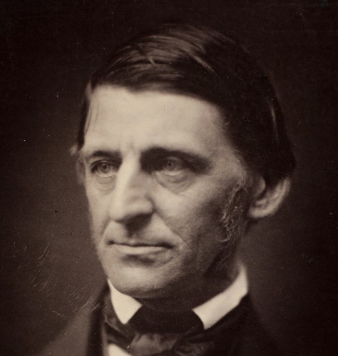
A vivid thought brings the power to paint it; and in proportion to the depth of its source is the force of its projection.
▼
Source
source
p. 261
1 month 2 weeks ago
I cannot contribute anything to this world because I only have one method: agony.
CivilSimian.com created by AxiomaticPanic, CivilSimian, Kalokagathia