

3 weeks 5 days ago
The ethical stand of nonviolence has to be linked to a commitment to radical equality. And more specifically, the practice of nonviolence requires an opposition to biopolitical forms of racism and war logics that regularly distinguish lives worth safeguarding from those that are not-populations conceived as collateral damage, or as obstructions to policy and military aims.
▼
Source
source
p. 62

2 months 6 days ago
No evil is honorable; but death is honorable; therefore death is not evil.
▼
Source
source
As quoted in Epistles No. 82, by Seneca the Younger
2 months 3 weeks ago
I should like to believe my people's religion, which was just what I could wish, but alas, it is impossible. I have really no religion, for my God, being a spirit shown merely by reason to exist, his properties utterly unknown, is no help to my life. I have not the parson's comfortable doctrine that every good action has its reward, and every sin is forgiven. My whole religion is this: do every duty, and expect no reward for it, either here or hereafter.
▼
Source
source
Greek Exercises (1888), written two days after his sixteenth birthday.

1 month 3 weeks ago
Virtue is reason which has become energy.
▼
Source
source
"Selected Ideas (1799-1800)", Dialogue on Poetry and Literary Aphorisms, Ernst Behler and Roman Struc, trans. (Pennsylvania University Press:1968) #23
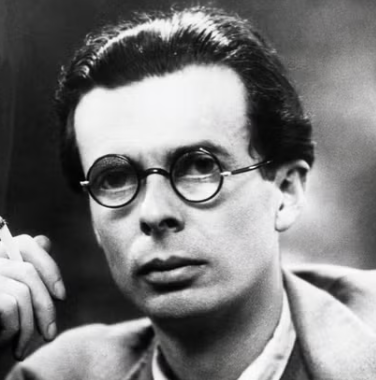
2 months 3 weeks ago
A totally unmystical world would be a world totally blind and insane.
▼
Source
source
Grey Eminence, 1940
2 months 3 weeks ago
Every man takes the limits of his own field of vision for the limits of the world.
▼
Source
source
"Psychological Observations"


3 months 2 days ago
We are beggars: this is true.
▼
Source
source
"The Last Written Words of Luther," Table Talk No. 5468, (16 February 1546), in Dr. Martin Luthers Werke (1909) as translated by James A. Kellerman, Band 85 (TR 5) 317-318
1 month 2 weeks ago
In the world of action, we know that it is disastrous to treat animals or human beings as though they were stocks and stones. Why should we suppose this treatment to be any less mistaken in the world of ideas?
▼
Source
source
p. 21.
2 months 3 weeks ago
To be without some of the things you want is an indispensable part of happiness.
1 month 2 weeks ago
The recurrence of relations-not of elements-in different contexts, which constitutes transposition is qualitative and hence directly experienced in perception.
▼
Source
source
p. 219
2 months 3 weeks ago
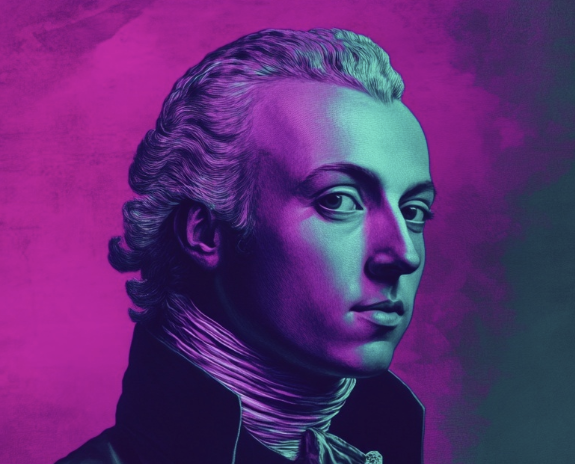
What alone has value is the use to which life is put and the end to which it is directed. The value of life has to be created by man, it cannot be obtained through luck but only through wisdom. He who is anxiously concerned over losing his life will never enjoy life.
▼
Source
source
Kant, Immanuel (1996), pages 141
1 month 3 weeks ago
The plebeian must expect to find himself neglected and despised in proportion as he is remiss in cultivation the objects of esteem; the lord will always be surrounded with sycophants and slaves. The lord therefore has no motive to industry and exertion; no stimulus to rouse him from the lethargic 'oblivious pool', out of which every human intellect originally arose.
▼
Source
source
Book V, Chapter 10, "Of Hereditary Distinction"
2 weeks 6 days ago
Falling in love is the one illogical adventure, the one thing of which we are tempted to think as supernatural, in our trite and reasonable world. The effect is out of all proportion with the cause. Two persons, neither of them, it may be, very amiable or very beautiful, meet, speak a little, and look a little into each other's eyes. That has been done a dozen or so of times in the experience of either with no great result. But on this occasion all is different. They fall at once into that state in which another person becomes to us the very gist and centrepoint of God's creation, and demolishes our laborious theories with a smile; in which our ideas are so bound up with the one master-thought that even the trivial cares of our own person become so many acts of devotion, and the love of life itself is translated into a wish to remain in the same world with so precious and desirable a fellow-creature.
▼
Source
source
Virginibus Puerisque, Ch. 3.
3 weeks 1 day ago
Any new technology is an evolutionary and biological mutation opening doors of perception and new spheres of action to mankind.
▼
Source
source
(p. 67)

2 months 2 weeks ago
Truth is best (of all that is) good. As desired, what is being desired is truth for him who (represents) the best truth.
▼
Source
source
Ahunuvaiti Gatha; Yasna 27, 14.
2 months 2 weeks ago
A reflective, contented mind is the best possession.
▼
Source
source
Ushtavaiti Gatha; Yasna 43, 15.

3 months 2 weeks ago
The man of virtue makes the difficulty to be overcome his first business, and success only a subsequent consideration.
2 months 3 weeks ago
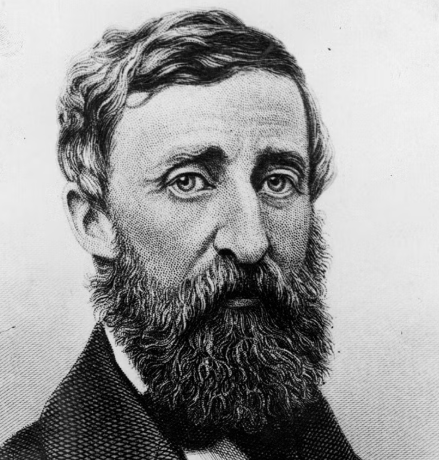
Only that day dawns to which we are awake. There is more day to dawn. The sun is but a morning star.
▼
Source
source
p. 375
1 month 2 weeks ago
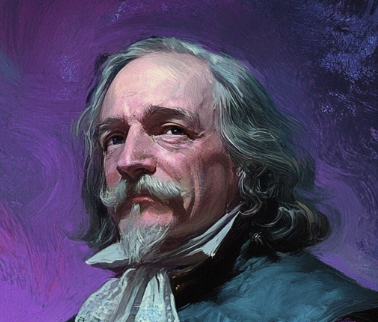
He that is to govern a whole Nation, must read in himself, not this, or that particular man; but Mankind; which though it be hard to do, harder than to learn any Language, or Science; yet, when I shall have set down my own reading orderly, and perspicuously, the pains left another, will be only to consider, if he also find not the same in himself. For this kind of Doctrine, admitteth no other Demonstration.
▼
Source
source
The Introduction, p. 2
1 month 1 week ago
Objectification is above all exteriorization, the alienation of spirit from itself.
▼
Source
source
p. 63
2 months 3 weeks ago
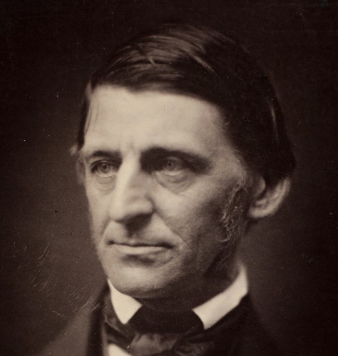
By necessity, by proclivity, and by delight, we all quote.
▼
Source
source
Quotation and Originality
2 months 6 days ago
That which exercises reason is more excellent than that which does not exercise reason; there is nothing more excellent than the universe, therefore the universe exercises reason.
▼
Source
source
As quoted in De Natura Deorum by Cicero, ii. 8.; iii. 9.

3 months 3 weeks ago
Whatever we may do, excess will always keep its place in the heart of man, in the place where solitude is found. We all carry within us our places of exile, our crimes and our ravages. But our task is not to unleash them on the world; it is to fight them in ourselves and in others.
1 month 2 weeks ago
The unfortunate thing about public misfortunes is that everyone regards himself as qualified to talk about them.
1 month 3 weeks ago
Every archetype is capable of endless development and differentiation. It is therefore possible for it to be more developed or less. In an outward form of religion where all the emphasis is on the outward figure (hence where we are dealing with a more or less complete projection) the archetype is identical with externalized ideas but remains unconscious as a psychic factor. When an unconscious content is replaced by a projected image to that extent, it is cut off from all participation in an influence on the conscious mind. Hence it largely forfeits its own life, because prevented from exerting the formative influence on consciousness natural to it; what is more, it remains in its original form - unchanged, for nothing changes in the unconscious.

3 months 1 week ago
The weakness of little children's limbs is innocent, not their souls.
▼
Source
source
I, 7
3 months 2 days ago
We are no nearer heaven on the top of Mount Cenis than at the bottom of the sea; take the distance with your astrolabe. They debase God even to the carnal knowledge of women, to so many times, and so many generations.
▼
Source
source
Ch. 12
2 months 3 weeks ago
Our inventions are wont to be pretty toys, which distract our attention from serious things. They are but improved means to an unimproved end, an end which it was already but too easy to arrive at.
▼
Source
source
pp. 60-61
2 months 3 weeks ago
We tend to believe the premises because we can see that their consequences are true, instead of believing the consequences because we know the premises to be true. But the inferring of premises from consequences is the essence of induction; thus the method in investigating the principles of mathematics is really an inductive method, and is substantially the same as the method of discovering general laws in any other science.
▼
Source
source
"The Regressive Method of Discovering the Premises of Mathematics" (1907), in Essays in Analysis (1973), pp. 273-274

2 months 2 weeks ago
He will through life be master of himself and a happy man who from day to day can have said, "I have lived: tomorrow the Father may fill the sky with black clouds or with cloudless sunshine."
▼
Source
source
Book III, ode xxix, line 41

4 weeks ago
I have studied these things - you have not.
▼
Source
source
Reported as Newton's response, whenever Edmond Halley would say anything disrespectful of religion, by Sir David Brewster in The Life of Sir Isaac Newton (1831)

2 months 3 weeks ago
Among these Jews there suddenly turns up a man who goes about talking as if He was God. He claims to forgive sins. He says He has always existed. He says He is coming to judge the world at the end of time. Now let us get this clear. Among Pantheists, like the Indians, anyone might say that he was a part of God, or one with God: there would be nothing very odd about it. But this man, since He was a Jew, could not mean that kind of God. God, in their language, meant the Being outside of the world, who had made it and was infinitely different from anything else. And when you have grasped that, you will see that what this man said was, quite simply, the most shocking thing that has ever been uttered by human lips.
▼
Source
source
Book II, Chapter 3, "The Shocking Alternative"
3 months 3 weeks ago
He discovered the cruel paradox by which we always deceive ourselves twice about the people we love — first to their advantage, then to their disadvantage.
2 months 3 weeks ago
In the course of evolution nature has gone to endless trouble to see that every individual is unlike every other individual.... Physically and mentally, each one of us is unique. Any culture which, in the interests of efficiency or in the name of some political or religious dogma, seeks to standardize the human individual, commits an outrage against man's biological nature.
▼
Source
source
Chapter 3 (p. 21)
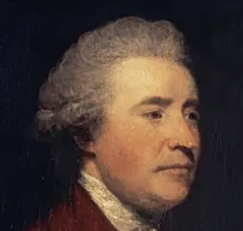
1 month 3 weeks ago
If any ask me what a free Government is, I answer, that, for any practical purpose, it is what the people think so, - and that they, and not I, are the natural, lawful, and competent judges of this matter.
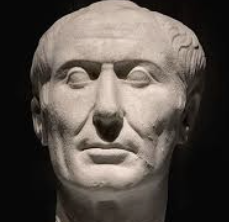
3 weeks 1 day ago
To spare the guilty is to injure the innocent.
▼
Source
source
Maxim 113
2 months 3 weeks ago
The truth can wait, for she lives a long life.
▼
Source
source
Willen in der Natur (On the Will in Nature), 1836;
2 months 3 weeks ago
I may as well say at once that I do not distinguish between inference and deduction. What is called induction appears to me to be either disguised deduction or a mere method of making plausible guesses.
▼
Source
source
Principles of Mathematics (1903), Ch. II: Symbolic Logic, p. 11
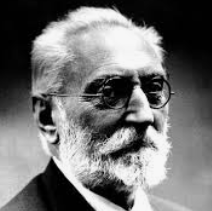
1 month 1 week ago
Knowledge is employed in the service of the necessity of life and primarily in the service of the instinct of personal preservation. The necessity and this instinct have created in man the organs of knowledge and given them such capacity as they possess. Man sees, hears, touches, tastes and smells that which it is necessary for him to see, hear, touch, taste and smell in order to preserve his life. The decay or loss of any of these senses increases the risks with which his life is environed, and if it increases them less in the state of society in which we are actually living, the reason is that some see, hear, touch, taste and smell for others. A blind man, by himself and without a guide, could not live long. Society is an additional sense; it is the true common sense.
3 months 3 weeks ago
Can one be a saint without God?, that's the problem, in fact the only problem, I'm up against today.
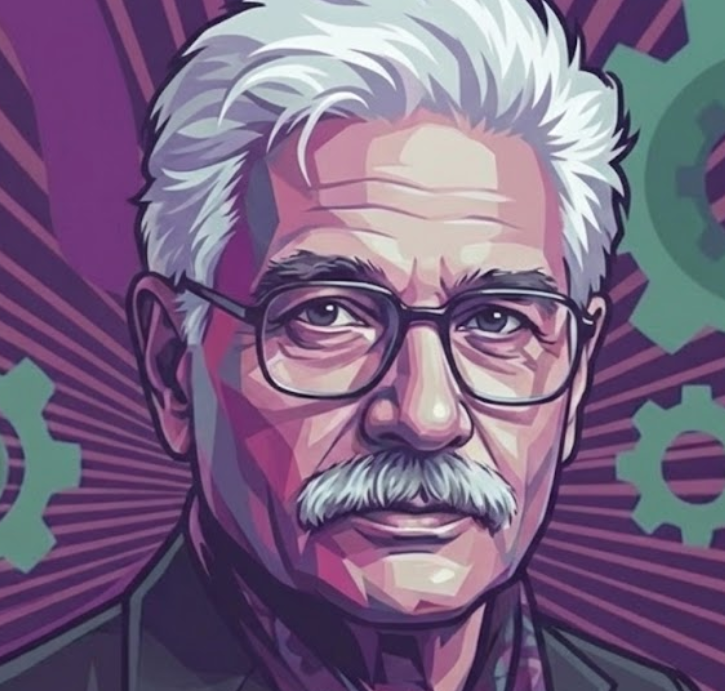
2 months 2 weeks ago
What is called "objectivity," scientific for instance (in which I firmly believe, in a given situation) imposes itself only within a context which is extremely vast, old, firmly established, or rooted in a network of conventions ... and yet which still remains a context.
▼
Source
source
Limited Inc
1 week 6 days ago
All parties seem to be agreed on one point, that the dialects commonly spoken among the natives of this part of India contain neither literary nor scientific information, and are moreover so poor and rude that, until they are enriched from some other quarter, it will not be easy to translate any valuable work into them.

1 day ago
The belief that there is some hidden cabal directing the course of events is a type of anthropomorphism - a way of finding agency in the entropy of history.
▼
Source
source
In the Puppet Theatre: Puppetry, Conspiracy and Ouija Boards (p. 133)

2 months 3 weeks ago
While loving glory so much how can you persist in a plan which will cause you to lose it?
▼
Source
source
Letters of Voltaire and Frederick the Great (New York: Brentano's, 1927), transl. Richard Aldington, letter 130 from Voltaire to Frederick II of Prussia, October 1757.
1 month 2 weeks ago
It is not a question of the mass-man being a fool. On the contrary, to-day he is more clever, has more capacity of understanding than his fellow of any previous period. But that capacity is of no use to him; in reality, the vague feeling that he possesses it seems only to shut him up more within himself and keep him from using it. Once for all, he accepts the stock of commonplaces, prejudices, fag-ends of ideas or simply empty words which chance has piled up within his mind, and with a boldness only explicable by his ingenuousness, is prepared to impose them everywhere.... Why should he listen if he has within him all that is necessary? There is no reason now for listening, but rather for judging, pronouncing, deciding. There is no question concerning public life, in which he does not intervene, blind and deaf as he is, imposing his "opinions."
▼
Source
source
Chap. VIII: The Masses Intervene In Everything, And Why Their Intervention Is Solely By Violence
1 month 3 weeks ago
Since it cannot be overlooked by the Doctrine of Knowledge that Actual Knowledge does by no means present itself as a Unity, such as is assumed above but as a multiplicity, there is consequently a second task imposed upon it, - that of setting forth the ground of this apparent Multiplicity. It is of course understood that this ground is not to be derived from any outward source, but must be shown to be contained in the essential Nature of Knowledge itself as such; - and that therefore this problem, although apparently two-fold, is yet but one and the same, - namely, to set forth the essential Nature of Knowledge.
CivilSimian.com created by AxiomaticPanic, CivilSimian, Kalokagathia