

3 months 1 week ago
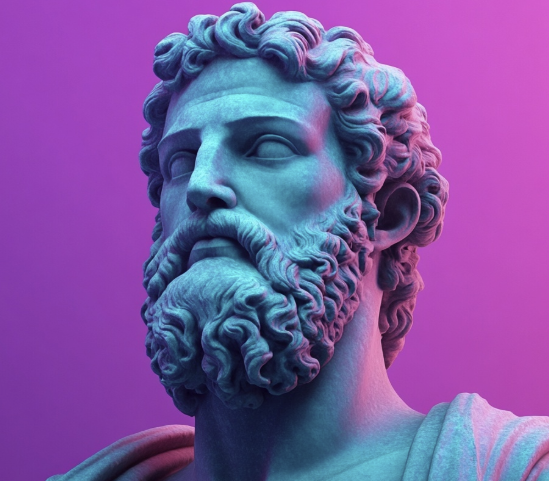
If a person gave your body to any stranger he met on his way, you would certainly be angry. And do you feel no shame in handing over your own mind to be confused and mystified by anyone who happens to verbally attack you?
▼
Source
source
(28) [tr. Elizabeth Carter]
2 months 3 weeks ago
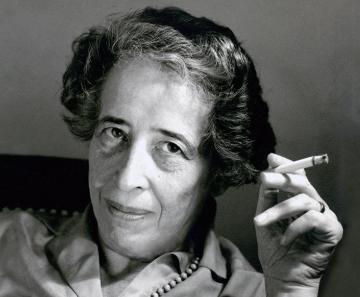
The point, as Marx saw it, is that dreams never come true.
▼
Source
source
"On Violence"
3 weeks 1 day ago
Practice is the best of all instructors.
▼
Source
source
Maxim 439
2 months 2 weeks ago
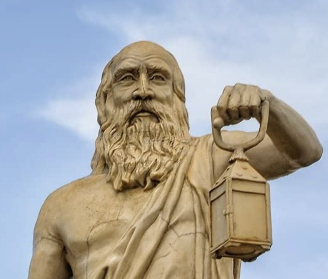
When the slave auctioneer asked in what he was proficient, he replied, "In ruling people."
▼
Source
source
Diogenes Laërtius, vi. 74
1 month 3 weeks ago
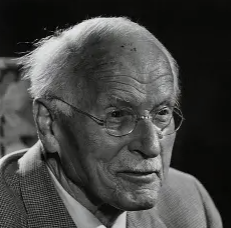
Aging people should know that their lives are not mounting and unfolding but that an inexorable inner process forces the contraction of life. For a young person it is almost a sin - and certainly a danger - to be too much occupied with himself; but for the aging person it is a duty and a necessity to give serious attention to himself.
▼
Source
source
p. 125
2 months 3 weeks ago
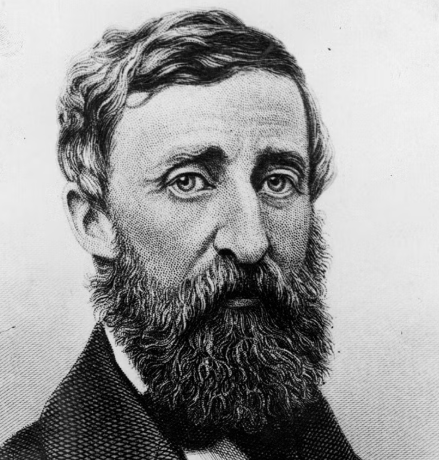
Men remain in their present low and primitive condition; but if they should feel the influence of the spring of springs arousing them, they would of necessity rise to a higher and more ethereal life.
▼
Source
source
p. 49
2 months 3 weeks ago
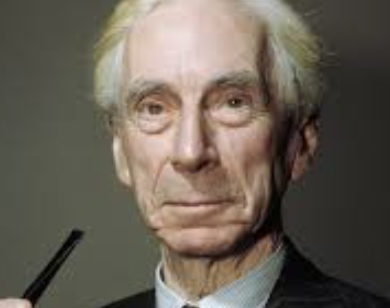
The philosophy of Plotinus has the defect of encouraging men to look within rather than to look without: when we look within we see nous, which is divine, while when we look without we see the imperfections of the sensible world. This kind of subjectivity was a gradual growth; it is to be found in the doctrines of Protagoras, Socrates, and Plato, as well as in the Stoics and Epicureans. But at first it was only doctrinal, not temperamental; for a long time it failed to kill scientific curiosity. [...] Plotinus is both an end and a beginning-an end as regards the Greeks, a beginning as regards Christendom.
▼
Source
source
Russell, Bertrand (2008). History of Western Philosophy. Simon and Schuster. pp. 296-297. ISBN 978-1-4165-9915-9.
3 months 3 weeks ago
May not we then confidently pronounce that man happy who realizes complete goodness in action, and is adequately furnished with external goods? Or should we add, that he must also be destined to go on living not for any casual period but throughout a complete lifetime in the same manner, and to die accordingly, because the future is hidden from us, and we conceive happiness as an end, something utterly and absolutely final and complete? If this is so, we shall pronounce those of the living who possess and are destined to go on possessing the good things we have specified to be supremely blessed, though on the human scale of bliss.
2 months 3 weeks ago
It was his peculiar doctrine that a man has a perfect right to interfere by force with the slaveholder, in order to rescue the slave. I agree with him. They who are continually shocked by slavery have some right to be shocked by the violent death of the slaveholder, but no others.
1 month 3 weeks ago
We should not pretend to understand the world only by the intellect; we apprehend it just as much by feeling. Therefore, the judgment of the intellect is, at best, only the half of truth, and must, if it be honest, also come to an understanding of its inadequacy. Variant translation: We should not pretend to understand the world only by the intellect. The judgement of the intellect is only part of the truth.
▼
Source
source
Conclusion, p. 628

2 months 3 weeks ago
If there is equality, it is in His love, not in us.

1 month 2 weeks ago
The concept of freedom, as the Philosophy of Right has shown, follows the pattern of free ownership. As a result, the history of the world that Hegel looks out upon exalts and enshrines the history of the middle-class, which based itself on this pattern. There is a stark truth in Hegel's strangely certain announcement that history has reached its end. But it announces the funeral of a class, not of history.
▼
Source
source
P. 227
1 month 2 weeks ago
The physical change in the thickness of walls since the Middle Ages could be shown in a diagram. In the fourteenth century each house was a fortress. Man spent the major portion of his day in them, in secret and well-defended solitude. That solitude, working on the soul hour after hour, forged it, like a transcendent blacksmith, into a compact and forceful character. Under its treatment, man consolidated his individual destiny and sallied forth with impunity, never yielding to the contamination from the public. It is only in isolation that we gain, almost automatically, a certain discrimination in ideas, desires, longings, that we learn which are ours, and which are anonymous, floating in the air, falling on us like dust in the street.
▼
Source
source
p. 168

3 months 3 weeks ago
My hearers, this discourse has not wandered out into the world to look for conflict, it has not tried to get the better of anybody, it has not even tried to uphold anybody, as though there was battle without. It has spoken to you; not by way of explaining anything to you, but trying to speak secretly with you about your relationship to that secret wisdom mentioned in our text. Oh that nothing may upset you in respect to this, “neither life nor death nor things present nor things to come nor any other creature” (Romans 8:38) –not this discourse, which, though it may have profited you nothing, yet has striven for what after all is the first and the last, to help you have what the Scripture calls “faith in yourself before God.
1 month 1 week ago
If we love God while thinking that he does not exist, he will manifest his existence.
▼
Source
source
p. 260

3 months 3 days ago
The sun, which passeth through pollutions and itself remains as pure as before.
3 months 3 weeks ago
I accept nothing on authority. A hypothesis must be backed by reason, or else it is worthless.
2 months 2 weeks ago
If I knew that it was fated for me to be sick, I would even wish for it; for the foot also, if it had intelligence, would volunteer to get muddy.
▼
Source
source
As quoted by Epictetus, Discourses, ii. 6. 10.
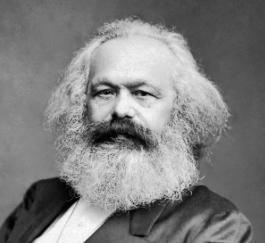
2 months 3 weeks ago
Association, applied to land, shares the economic advantage of large-scale landed property, and first brings to realization the original tendency inherent in land-division, namely, equality. In the same way association also re-establishes, now on a rational basis, no longer mediated by serfdom, overlordship and the silly mysticism of property, the intimate ties of man with the earth, since the earth ceases to be an object of huckstering, and through free labour and free enjoyment becomes once more a true personal property of man.
▼
Source
source
Rent of Land, p. 65.
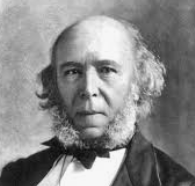
1 month 3 weeks ago
Unlike private enterprise which quickly modifies its actions to meet emergencies - unlike the shopkeeper who promptly finds the wherewith to satisfy a sudden demand - unlike the railway company which doubles its trains to carry a special influx of passengers; the law-made instrumentality lumbers on under all varieties of circumstances at its habitual rate. By its very nature it is fitted only for average requirements, and inevitably fails under unusual requirements.
▼
Source
source
Vol. 3, Ch. VII, Over-Legislation

2 months 3 weeks ago
Men being, as has been said, by nature, all free, equal and independent, no one can be put out of this estate, and subjected to the political power of another, without his own consent.
▼
Source
source
Second Treatise of Government, Ch. VIII, sec. 95
1 month 3 weeks ago
Where love rules, there is no will to power; and where power predominates, there love is lacking. The one is the shadow of the other.
▼
Source
source
P. 97
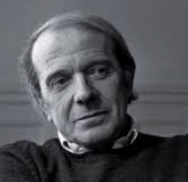
1 month 4 days ago
Evaluations, in essence, are... ways of being, modes of existence of those who judge and evaluate.
▼
Source
source
p. 1
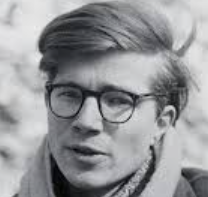
1 month 1 week ago
Christianity was an epidemic rather than a religion. It appealed to fear, hysteria and ignorance. It spread across the Western world, not because it was true, but because humans are gullible and superstitious.
▼
Source
source
p. 212

2 months 3 weeks ago
The offender never forgives.
▼
Source
source
Émile et Sophie, ou Les Solitaires, "Lettre Première", 1781
3 months 2 days ago
I want death to find me planting my cabbages.
▼
Source
source
Ch. 20. Of the Force of Imagination (tr. Donald M. Frame)

3 months 2 days ago
The worst of my actions or conditions seem not so ugly unto me as I find it both ugly and base not to dare to avouch for them.
1 week 3 days ago
The extent of the region of the uncertain, the number of the problems the investigation of which ends in a verdict of not proven, will vary according to the knowledge and the intellectual habits of the individual agnostic. I do not very much care to speak of anything as unknowable. What I am sure about is that there are many topics about which I know nothing, and which, so far as I can see, are out of reach of my faculties. But whether these things are knowable by any one else is exactly one of those matters which is beyond my knowledge, though I may have a tolerably strong opinion as to the probabilities of the case.
2 months 3 weeks ago
Every step of real movement is more important than a dozen programmes.
▼
Source
source
Letter to W. Bracke, 5 May 1875
2 weeks 3 days ago
A free society is a community of free beings, bound by the laws of sympathy and by the obligations of family love. It is not a society of people released from all moral constraint-for that is precisely the opposite of a society. Without moral constraint there can be no cooperation, no family commitment, no long-term prospects, no hope of economic, let alone social, order.
▼
Source
source
"The Limits of Liberty," The American Spectator

1 month 4 weeks ago
The Americans never use the word peasant, because they have no idea of the class which that term denotes; the ignorance of more remote ages, the simplicity of rural life, and the rusticity of the villager have not been preserved among them; and they are alike unacquainted with the virtues, the vices, the coarse habits, and the simple graces of an early stage of civilization.
▼
Source
source
Chapter XVII.
2 months 3 weeks ago
Accumulate, accumulate! That is Moses and the prophets!
▼
Source
source
Vol. I, Ch. 24, Section 3, pg. 652.
2 months 3 weeks ago
That virtue we appreciate is as much ours as another's. We see so much only as we possess.
▼
Source
source
June 22, 1839

2 months 2 weeks ago
What do I know about God and the purpose of life? I know that this world exists. That I am placed in it like my eye in its visual field. That something about it is problematic, which we call its meaning. This meaning does not lie in it but outside of it. That life is the world. That my will penetrates the world. That my will is good or evil. Therefore that good and evil are somehow connected with the meaning of the world. The meaning of life, i.e. the meaning of the world, we can call God. And connect with this the comparison of God to a father. To pray is to think about the meaning of life.
▼
Source
source
Journal entry (11 June 1916), p. 72e and 73e
2 months 3 weeks ago
One is still what one is going to cease to be and already what one is going to become. One lives one's death, one dies one's life.
▼
Source
source
Book 2, "The Melodious Child Dead in Me"
3 weeks 1 day ago
New media are new archetypes, at first disguised as degradations of older media.
▼
Source
source
Arts in society, Volume 3, 1964, p. 240

2 months 2 weeks ago
It seems to me that the current political task in a society like ours is to criticize the working of institutions that are apparently the most neutral and independent, to criticize these institutions and attack them in such a way that the political violence that exercises itself obscurely through them becomes manifest, so that one can fight against them.
▼
Source
source
Debate with Noam Chomsky, École Supérieure de Technologie à Eindhoven, November 1971
2 months 3 weeks ago
The soul active sees absolute truth; and utters truth, or creates.
▼
Source
source
par. 17

3 months 3 weeks ago
But let us not forget this either: it is enough to create new names and estimations and probabilities in order to create in the long run new "things."
3 months 2 weeks ago
Against the diseases of the mind, philosophy provides sufficient antidotes. The instruments which it employs for this purpose are the virtues; the root of which, whence all the rest proceed, is prudence. This virtue comprehends the whole art of living discreetly, justly, and honorably, and is, in fact, the same thing with wisdom. It instructs men to free their understandings from the clouds of prejudice; to exercise temperance and fortitude in the government of themselves: and to practice justice towards others. Although pleasure, or happiness, which is the end of living, be superior to virtue, which is only the means, it is every one's interest to practice all the virtues; for in a happy life, pleasure can never be separated from virtue.
2 months 2 weeks ago
We are observing ourselves being observed by the painter, and made visible to his eyes by the same light that enables us to see him. And just as we are about to apprehend ourselves, transcribed by his hand as though in a mirror, we find that we can in fact apprehend nothing of that mirror but its lusterless back. The other side of a psyche.
▼
Source
source
Las Menias
1 month 1 week ago
In a book called Symbolism, Its Meaning and Effect, Whitehead points out that perception is usually a matter of symbols, just like language; I say I see a book when I actually see a red oblong. The Transactionists (who have been influenced by Whitehead rather than Husserl) take this one stage further, and point out that when I 'perceive' something, I am actually making a bet with myself that what I perceive is what I think it is. In order to act and live at all, I have to make these bets; I cannot afford to make absolutely certain that things are what I think they are. But this means that we should not take our perceptions at face value, any more than Nietzsche was willing to take philosophy at its face value; we must allow for prejudice and distortion.
▼
Source
source
p. 66

1 month 4 days ago
I have remarked very clearly that I am often of one opinion when I am lying down and of another when I am standing up.
▼
Source
source
F 73
2 months 3 weeks ago
The beauty or uncomeliness of many things, in good and ill breeding, will be better learnt, and make deeper impressions on them, in the examples of others, than from any rules or instructions can be given about them.
▼
Source
source
Sec. 82

1 day ago
Like other human freedoms, the freedoms embodied in market institutions are justified inasmuch as they meet human needs. Insofar as they fail to do this they can reasonably be altered. This is true not only of the rights that are involved in market institutions. It is true of all human rights.
▼
Source
source
'Modus Vivendi' (p.36)
1 month 2 weeks ago
Detachment from the world as an attachment to the ego... Who can realize the detachment in which you are as far away from yourself as you are from the world?
CivilSimian.com created by AxiomaticPanic, CivilSimian, Kalokagathia