

1 month 1 week ago
I have written a good number of drafts and small reflections. They are not waiting for the last touch but for the sunlight to wake them up.
▼
Source
source
B 29
1 month 4 weeks ago
Strong as it looks at the outset, State-agency perpetually disappoints every one. Puny as are its first stages, private efforts daily achieve results that astound the world.
▼
Source
source
Vol. 3, Ch. VII, Over-Legislation

3 months 2 weeks ago
It is impossible for a man who secretly violates the terms of the agreement not to harm or be harmed to feel confident that he will remain undiscovered, even if he has already escaped ten thousand times; for until his death he is never sure that he will not be detected.
2 months 3 weeks ago
Genet is a man-failure: he wills the impossible in order to derive from the tragic grandeur of this defeat the assurance that there is something other than the possible.
▼
Source
source
p. 213

1 month 3 weeks ago
Sleep on now, and take your rest: behold, the hour is at hand, and the Son of man is betrayed into the hands of sinners. Rise, let us be going: behold, he is at hand that doth betray me.
▼
Source
source
26:45-46 (KJV)
2 months 4 weeks ago
What strikes one here above all is the crudely empirical conception of profit derived from the outlook of the ordinary capitalist, which wholly contradicts the better esoteric understanding of Adam Smith.
▼
Source
source
Vol. II, Ch. X, p. 202.

3 months 3 weeks ago
Believe me, there is no such thing as great suffering, great regret, great memory...Everything is forgotten, even great love.

2 months 3 days ago
For the first time in sixty years, the priests, the old aristocracy and the people met in a common sentiment-a feeling of revenge, it is true, and not of affection; but even that is a great thing in politics, where a community of hatred is almost always the foundation of friendships.
1 month 2 weeks ago
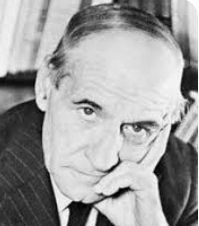
Life cannot wait until the sciences may have explained the universe scientifically. We cannot put off living until we are ready. The most salient characteristic of life is its coerciveness: it is always urgent, "here and now" without any possible postponement. Life is fired at us point-blank. And culture, which is but its interpretation, cannot wait any more than can life itself.
▼
Source
source
Mission of the University [Misión de la Universidad (PDF)] (1930; translation © 1944, first published 1946), p. 73 [p. 15 in Spanish PDF], translated by Howard Lee Nostrand. ISBN 978-1-56000-560-5
1 month 3 weeks ago
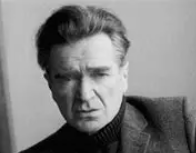
In relation to any act of life, the mind acts as a killjoy.
1 month 4 weeks ago
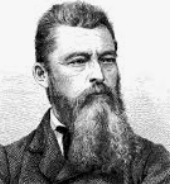
The history of philosophical system is the picture gallery of reason.
▼
Source
source
Z. Hanfi, trans., in The Fiery Brook (1972), p. 68

1 month 3 weeks ago
How many women thus waste life away the prey of discontent, who might have practised as physicians, regulated a farm, managed a shop, and stood erect, supported by their own industry, instead of hanging their heads surcharged with the dew of sensibility, that consumes the beauty to which it at first gave lustre.
▼
Source
source
Ch. 9

3 months 2 days ago
It appears, accordingly, from the experience of all ages and nations, I believe, that the work done by freemen comes cheaper in the end than that performed by slaves.
▼
Source
source
Chapter VIII.
2 months 3 weeks ago
For an occurrence to become an adventure, it is necessary and sufficient for one to recount it.
3 weeks 5 days ago
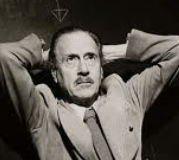
Technologies themselves, regardless of content, produce a hemispheric bias in the users.
▼
Source
source
p. 71
2 months 1 week ago
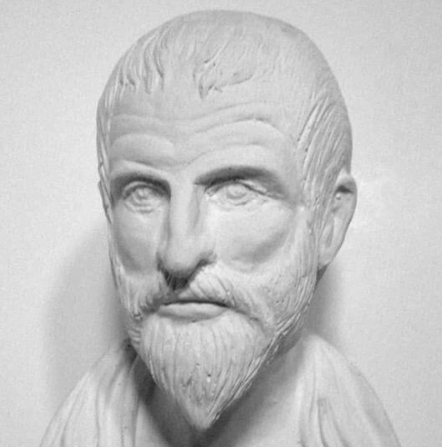
But Eudoxus the Cnidian, who was somewhat junior to Leon, and the companion of Plato, first of all rendered the multitude of those theorems which are called universals more abundant; and to three proportions added three others; and things relative to a section, which received their commencement from Plato, he diffused into a richer multitude, employing also resolutions in the prosecution of these.
▼
Source
source
Ch. IV.

1 month 1 week ago
It is thought pretty to say that "Women have no passion." If passion is excitement in the daily social intercourse with men, women think about marriage much more than men do; it is the only event of their lives. It ought to be a sacred event, but surely not the only event of a woman's life, as it is now. Many women spend their lives in asking men to marry them, in a refined way. Yet it is true that women are seldom in love. How can they be?

2 months 3 weeks ago
So in the end when one is doing philosophy one gets to the point where one would like just to emit an inarticulate sound.
▼
Source
source
§ 261
1 month 4 weeks ago
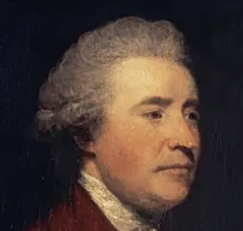
The march of the human mind is slow.

3 months ago
An army of principles will penetrate where an army of soldiers cannot; it will succeed where diplomatic management would fall: it is neither the Rhine, the Channel, nor the ocean that can arrest its progress: it will march on the horizon of the world, and it will conquer.
▼
Source
source
Means by Which the Fund Is to Be Created
2 months 2 weeks ago
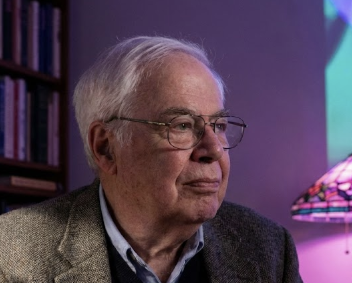
It is no more evident that democratic institutions are to be measured by the sort of person they create than that they are to be measured against divine commands. ... Even if the typical character types of liberal democracies are bland, calculating, petty, and unheroic, the prevalence of such people may be a reasonable price to pay for political freedom.

3 months 2 days ago
If I had as clear an idea of ghosts, as I have of a triangle or a circle, I should not in the least hesitate to affirm that they had been created by God; but as the idea I possess of them is just like the ideas, which my imagination forms of harpies, gryphons, hydras, &c., I cannot consider them as anything but dreams, which differ from God as totally as that which is not differs from that which is.
▼
Source
source
Letter to Hugo Boxel (October 1674) The Chief Works of Benedict de Spinoza (1891) Tr. R. H. M. Elwes, Vol. 2, Letter 58 (54).

3 months 6 days ago
Those who read and rightly understand my teaching will not start an insurrection; they have not learned that from me.
▼
Source
source
p. 65

1 month 1 week ago
The main problem for the average reader -- particularly of The Great Beast -- is that Crowley seems such an intolerable show-off that it is hard to believe anything he says.
▼
Source
source
p. 73
3 months 2 days ago
The Hudson's Bay Company, before their misfortunes in the late war, had been much more fortunate than the Royal African Company.
▼
Source
source
Chapter I, Part III, p. 806.

1 month 1 week ago
Historical time knows no lasting present.
1 month 3 weeks ago
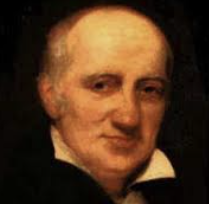
The plebeian must expect to find himself neglected and despised in proportion as he is remiss in cultivation the objects of esteem; the lord will always be surrounded with sycophants and slaves. The lord therefore has no motive to industry and exertion; no stimulus to rouse him from the lethargic 'oblivious pool', out of which every human intellect originally arose.
▼
Source
source
Book V, Chapter 10, "Of Hereditary Distinction"
2 months 4 weeks ago
Last words are for fools who haven't said enough.
▼
Source
source
Various attributions,
2 months 4 weeks ago
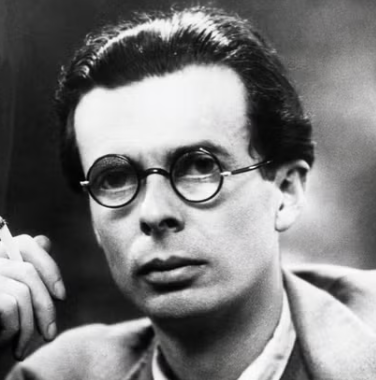
In regard to propaganda the early advocates of universal literacy and a free press envisaged only two possibilities: the propaganda might be true, or it might be false. They did not foresee what in fact has happened, above all in our Western capitalist democracies-the development of a vast mass communications industry, concerned in the main neither with the true nor the false, but with the unreal, the more or less totally irrelevant. In a word, they failed to take into account man's almost infinite appetite for distraction.
▼
Source
source
Chapter 4 (pp. 35-36)
2 months 4 weeks ago
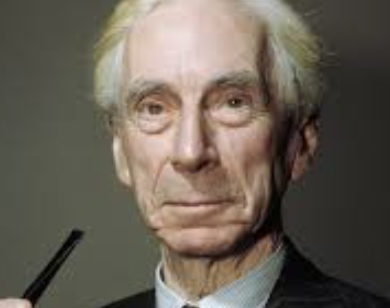
A new moral outlook is called for in which submission to the powers of nature is replaced by respect for what is best in man. It is where this respect is lacking that scientific technique is dangerous.
▼
Source
source
Attributed to Russell at the end of Isaac Asimov's short story Franchise with no specific source given.
2 months 4 weeks ago
The best life is the one in which the creative impulses play the largest part and the possessive impulses the smallest.

3 weeks 3 days ago
Evolution is a fact. Beyond reasonable doubt, beyond serious doubt, beyond sane, informed, intelligent doubt, beyond doubt evolution is a fact. The evidence for evolution is at least as strong as the evidence for the Holocaust, even allowing for eye witnesses to the Holocaust. It is the plain truth that we are cousins of chimpanzees, somewhat more distant cousins of monkeys, more distant cousins still of aardvarks and manatees, yet more distant cousins of bananas and turnips... continue the list as long as desired.
▼
Source
source
The Greatest Show on Earth: The Evidence for Evolution (2009) (p. 8)
2 months 4 weeks ago
There was once a millionaire who bought an infinite number of pairs of shoes and, whenever he bought a pair of shoes, he also bought a pair of socks. We can make a selection choosing one out of each pair of shoes, because we can choose always the right shoe or always the left shoe. Thus, so far as the shoes are concerned, selections exist. But, as regards the socks, where there is no distinction of right and left, we cannot use this rule of selection.
▼
Source
source
pp. 93-93
2 months 1 week ago
The Platonic doctrine of Ideas has been, in all ages, the derision of the vulgar, and the admiration of the wife. Indeed, if we consider that ideas are the most sublime objects of speculation, and that their nature is no less bright in itself, than difficult to investigate, this opposition in the conduct of mankind will be natural and necessary; for, from our connection with a material nature, our intellectual eye, previous to the irradiations of science, is as ill adapted to objects the most splendid of all, "as the eyes of bats to the light of day.
▼
Source
source
A Dissertation on the Doctrine of Ideas, &c." Footnote: see second book of Aristotle's Metaphysics.

3 months 1 day ago
Morality is not properly the doctrine of how we may make ourselves happy, but how we may make ourselves worthy of happiness.
1 month 3 weeks ago
Judge not, that you be not judged. For with what judgment you judge, you will be judged; and with the measure you use, it will be measured back to you. And why do you look at the speck in your brother's eye, but do not consider the plank in your own eye? Or how can you say to your brother, 'Let me remove the speck from your eye'; and look, a plank is in your own eye? Hypocrite! First remove the plank from your own eye, and then you will see clearly to remove the speck from your brother's eye.
▼
Source
source
Matthew 7:1-5 (NKJV) (Also Luke 6:37-42)

3 months 2 weeks ago
He who created you without you will not justify you without you.
▼
Source
source
169

2 months 3 weeks ago
The cultural treasures of the past, believed to be dead, are being made to speak, in the course of which it turns out that they propose things altogether different than what had been thought.
▼
Source
source
"Martin Heidegger at Eighty," in Heidegger and Modern Philosophy: Critical Essays (1978) by Michael Murray, p. 294

2 months 3 weeks ago
If we cannot "practice the presence of God," it is something to practice the absence of God, to become increasingly aware of our unawareness till we feel like man who should stand beside a great cataract and hear no noise, or like a man in a story who looks in a mirror and finds no face there, or a man in a dream who stretches his hand to visible objects and gets no sensation of touch. To know that one is dreaming is to no longer be perfectly asleep. Bur for news of the fully waking world you must go to my betters.
▼
Source
source
"Charity"



1 month 2 weeks ago
The Pope will make the king believe that three are only one, that the bread he eats is not bread...and a thousand other things of the same kind.
▼
Source
source
No. 24. (Rica writing to Ibben)
4 weeks ago
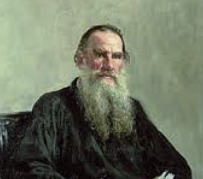
Division of labor is a justification for sloth.
▼
Source
source
p. 79

3 months 6 days ago
Let no man be ashamed to speak what he is not ashamed to think.
▼
Source
source
Book III, Ch. 4
1 month 1 week ago
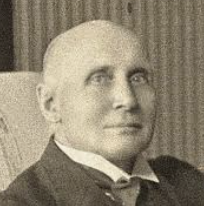
No reason can be given for the nature of God, because that nature is the ground of all rationality.
▼
Source
source
Ch. 11: "God", p. 250
2 months 3 weeks ago
The case of the conscience of Eichmann, which is admittedly complicated but is by no means unique, is scarcely comparable to the case of the German generals, one of whom, when asked at Nuremberg, "How was it possible that all of you honorable generals could continue to serve a murderer with such unquestioning loyalty?," replied that it was "not the task of a soldier to act as judge over his supreme commander. Let history do that or God in Heaven."
▼
Source
source
Ch. VIII
1 month 2 weeks ago
I have always observed that to succeed in the world one should appear like a fool but be wise.
3 weeks 5 days ago
Familiarity breeds contempt.
3 months 1 day ago
Out of the crooked timber of humanity, no straight thing was ever made.
▼
Source
source
Idea for a General History with a Cosmopolitan Purpose (1784), Proposition 6.
3 weeks ago
In an age of enormities, the emotions are naturally weakened. We are continually called upon to have feelings - about genocide, for instance, or about famine or the blowing up of passenger planes - and we are all aware that we are incapable of reacting appropriately. A guilty consciousness of emotional inadequacy or impotence makes people doubt their own human weight.
▼
Source
source
"The Distracted Public" (1990), p. 156
1 month 1 week ago
I've always believed that a writer has got to remain an outsider. If I was offered anything like the Nobel Prize for Literature, I'd find it an extremely difficult conflict because I'd be basically disinclined to accept.
▼
Source
source
Interview with Paul Newman in Abraxas Unbound #7
CivilSimian.com created by AxiomaticPanic, CivilSimian, Kalokagathia