

2 months 3 weeks ago
People who live in society have learned how to see themselves in mirrors as they appear to their friends. I have no friends. Is that why my flesh is so naked?
▼
Source
source
Diary entry of Friday (2 February)

3 months 2 weeks ago
The aged are cared for until death; adults are employed in jobs that make full use of their abilities; and children are nourished, educated, and fostered;...orphans... the disabled and the diseased are all well taken care of....

3 months 3 weeks ago
Liars ... when they speak the truth they are not believed.
1 month 1 week ago
Imagination, which is the social sense, animates the inanimate and anthropomorphizes everything; it humanizes everything and even makes everything identical with man. And the work of man is to supernaturalize Nature - that is to say, to make it divine by making it human, to help it to become conscious of itself, in short. The action of reason, on the other hand, is to mechanize or materialize.
3 months 2 weeks ago
There is the love of knowing without the love of learning; the beclouding here leads to dissipation of mind.
1 month 1 week ago
The reward in heaven is the perpetual bait, a bait that has caught man in an iron net, a strait-jacket which does not let him expand or grow. All pioneers of truth have been, and still are, reviled; they have been, and still are, persecuted. But did they ask humanity to pay the price? Did they seek to bribe mankind to accept their ideas? They knew too well that he who accepts a truth because of the bribe, will soon barter it away to a higher bidder...Proud and self-reliant characters prefer hatred to such sickening artificial love. Not because of any reward does a free spirit take his stand for a great truth, nor has such a one ever been deterred because of fear of punishment.
2 weeks 6 days ago
To hold the same views at forty as we held at twenty is to have been stupefied for a score of years, and take rank, not as a prophet, but as an unteachable brat, well birched and none the wiser. It is as if a ship captain should sail to India from the Port of London; and having brought a chart of the Thames on deck at his first setting out, should obstinately use no other for the whole voyage.
▼
Source
source
Crabbed Age and Youth.

2 months 2 weeks ago
A proposition is completely logically analyzed if its grammar is made completely clear: no matter what idiom it may be written or expressed in...
▼
Source
source
Philosophical Remarks (1930), Part I (1)

1 month 4 weeks ago
As the past has ceased to throw its light upon the future, the mind of man wanders in obscurity. Variant translation: When the past no longer illuminates the future, the spirit walks in darkness.
▼
Source
source
Book Four, Chapter VIII
2 months 4 weeks ago
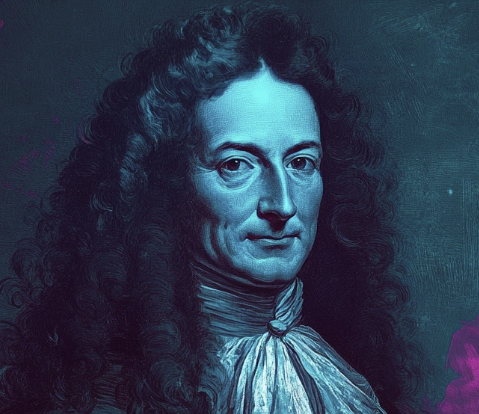
I am convinced that the unwritten knowledge scattered among men of different callings surpasses in quantity and in importance anything we find in books, and that the greater part of our wealth has yet to be recorded.
▼
Source
source
1688-1690

3 months 4 days ago
Some books are to be tasted, others to be swallowed, and some few to be chewed and digested; that is, some books are to be read only in parts; others to be read, but not curiously; and some few to be read wholly, and with diligence and attention.
▼
Source
source
Of Studies

2 months 1 day ago
How can even the lowest mind, if he reflects at all the marvels of this earth and sky, the brilliant fashioning of plants and animals, remain blind to the fact that this wonderful world with its settled order must have a maker to design, determine and direct it?
▼
Source
source
Tibawi, A.L. (ed. and tr.). (1965) Al-Risala al-Qudsiyya (The Jerusalem Epistle) "Al-Ghazali's Tract on Dogmatic Theology". In: The Islamic Quarterly, 9:3-4 (1965), 3-4.

2 months 3 weeks ago
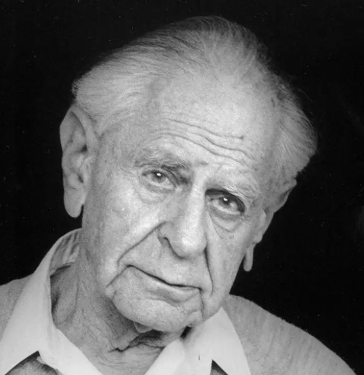
Bold ideas, unjustified anticipations, and speculative thought, are our only means for interpreting nature: our only organon, our only instrument, for grasping her. And we must hazard them to win our prize. Those among us who are unwilling to expose their ideas to the hazard of refutation do not take part in the scientific game.
▼
Source
source
Ch. 10 "Corroboration, or How a Theory Stands up to Tests", section 85: The Path of Science, p. 280.
2 months 3 weeks ago
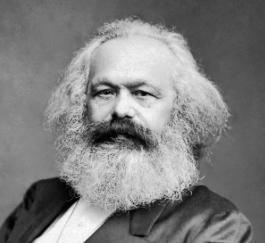
A commodity appears, at first sight, a very trivial thing, and easily understood.Its analysis shows that it is, in reality, a very queer thing, abounding in metaphysical subtleties and theological niceties.
▼
Source
source
Vol. I, Ch. 1, Section 4, pg. 81.

3 months 3 weeks ago
Let us be understood. If the Japanese surrender after the destruction of Hiroshima, having been intimidated, we will rejoice. But we refuse to see anything in such grave news other than the need to argue more energetically in favor of a true international society, in which the great powers will not have superior rights over small and middle-sized nations, where such an ultimate weapon will be controlled by human intelligence rather than by the appetites and doctrines of various states. Before the terrifying prospects now available to humanity, we see even more clearly that peace is the only goal worth struggling for. This is no longer a prayer but a demand to be made by all peoples to their governments a demand to choose definitively between hell and reason.
2 months 3 weeks ago
The entire process seems simple and natural, i.e., possesses the naturalness of a shallow rationalism.
▼
Source
source
Vol. II, Ch. III, p. 95.
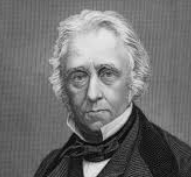
1 week 6 days ago
I shall not be satisfied unless I produce something which shall for a few days supersede the last fashionable novel on the tables of young ladies.
▼
Source
source
Letter to Macvey Napier
1 month 4 weeks ago
The New Englander is attached to his township because it is strong and independent; he has an interest in it because he shares in its management; he loves it because he has no reason to complain of his lot; he invests his ambition and his future in it; in the restricted sphere within his scope, he learns to rule society; he gets to know those formalities without which freedom can advance only through revolutions, and becoming imbued with their spirit, develops a taste for order, understands the harmony of powers, and in the end accumulates clear, practical ideas about the nature of his duties and the extent of his rights.
▼
Source
source
Chapter V.


2 months 3 weeks ago
We Britons should rejoice that we have contrived to reach much legal democracy (we still need more of the economic) without losing our ceremonial Monarchy. For there, right in the midst of our lives, is that which satisfies the craving for inequality, and acts as a permanent reminder that medicine is not food. Hence a man's reaction to Monarchy is a kind of test. Monarchy can easily be "debunked", but watch the faces, mark well the accents of the debunkers. These are the men whose taproot in Eden has been cut - whom no rumor of the polyphony, the dance, can reach - men to whom pebbles laid in a row are more beautiful than an arch. Yet even if they desire mere equality they cannot reach it. Where men are forbidden to honor a king they honor millionaires, athletes, or film-stars instead - even famous prostitutes or gangsters. For spiritual nature, like bodily nature, will be served - deny it food and it will gobble poison.
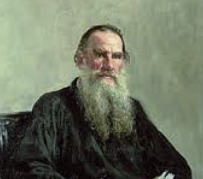
3 weeks 3 days ago
War is not a courtesy but the most horrible thing in life; and we ought to understand that, and not play at war. We ought to accept this terrible necessity sternly and seriously. It all lies in that: get rid of falsehood and let war be war and not a game. As it is now, war is the favourite pastime of the idle and frivolous.
▼
Source
source
Bk. X, ch. 25
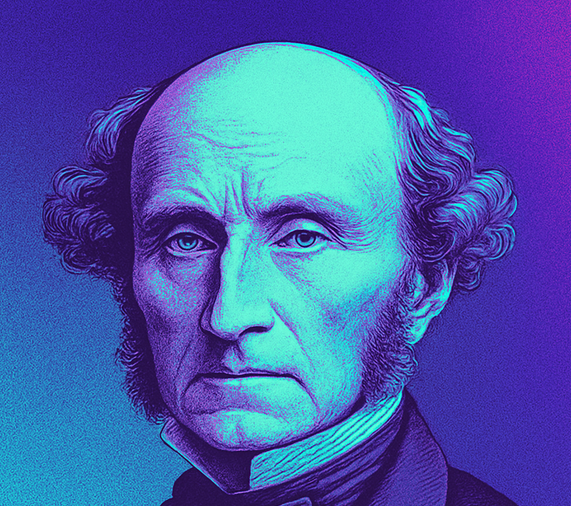
2 months 3 weeks ago
The writers by whom, more than by any others, a new mode of political thinking was brought home to me, were those of the St. Simonian school in France. In 1829 and 1830 I became acquainted with some of their writings. They were then only in the earlier stages of their speculations. They had not yet dressed out their philosophy as a religion, nor had they organized their scheme of Socialism. They were just beginning to question the principle of hereditary property. I was by no means prepared to go with them even this length; but I was greatly struck with the connected view which they for the first time presented to me, of the natural order of human progress; and especially with their division of all history into organic periods and critical periods.
▼
Source
source
(p. 163)

1 month 1 week ago
Every religious practice is an exercise in attention. A temple is the highest degree of attention.
3 months 3 weeks ago
In every rebellion is to be found the metaphysical demand for unity, the impossibility of capturing it, and the construction of a substitute universe.
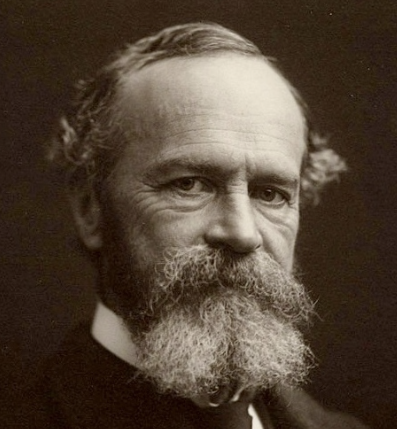
2 months 3 weeks ago
If this life be not a real fight, in which something is eternally gained for the universe by success, it is no better than a game of private theatricals from which one may withdraw at will. But it feels like a real fight.
▼
Source
source
"Is Life Worth Living?"

2 months 2 weeks ago
Of practical wisdom these are the three fruits: to deliberate well, to speak to the point, to do what is right.
3 weeks 6 days ago
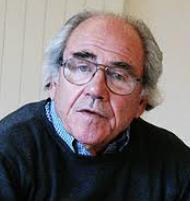
This world wants to be childish in order to make us believe that the adults are elsewhere, in the "real" world, and to conceal the fact that true childishness is everywhere-that it is that of the adults themselves who come here to act the child in order to foster illusions as to their real childishness.
▼
Source
source
"The Precession of Simulacra," p. 13
1 week 3 days ago
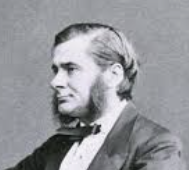
Mr. Darwin's hypothesis is not, so far as I am aware, inconsistent with any known biological fact; on the contrary, if admitted, the facts of Development, of Comparative Anatomy, of Geographical Distribution, and of Palaeontology, become connected together, and exhibit a meaning such as they never possessed before; and I, for one, am fully convinced that if not precisely true, that hypothesis is as near an approximation to the truth as, for example, the Copernican hypothesis was to the true theory of the planetary motions.
▼
Source
source
Ch.2, p. 127

2 months 3 weeks ago
War involves in its progress such a train of unforeseen and unsupposed circumstances ... that no human wisdom can calculate the end. Prospects on the Rubicon
▼
Source
source
London: J. Debrett, 1787
3 months 2 weeks ago
A man's character is formed by the Odes, developed by the Rites and perfected by music.
1 month 2 weeks ago
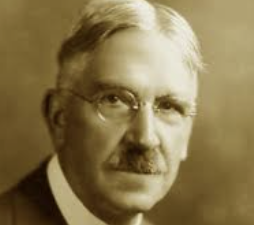
Equally there is no rhythm when variations are not placed. There is a wealth of suggestions in the phrase "takes place". The change not only comes but it belongs; it had its definite place in a larger whole.
▼
Source
source
p. 160
2 months 3 weeks ago
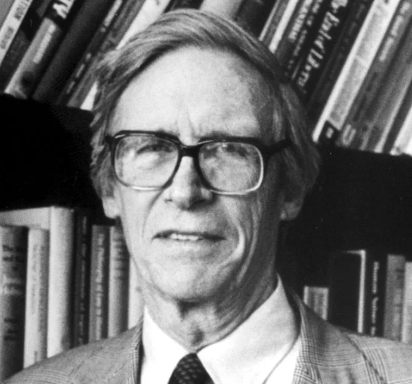
The fault of the utilitarian doctrine is that it mistakes impersonality for impartiality.
▼
Source
source
Chapter III, Section 30, pg. 190
3 weeks 3 days ago
The inherent contradiction of human life has now reached an extreme degree of tension: on the one side there is the consciousness of the beneficence of the law of love, and on the other the existing order of life which has for centuries occasioned an empty, anxious, restless, and troubled mode of life, conflicting as it does with the law of love and built on the use of violence. This contradiction must be faced, and the solution will evidently not be favourable to the outlived law of violence, but to the truth which has dwelt in the hearts of men from remote antiquity: the truth that the law of love is in accord with the nature of man. But men can only recognize this truth to its full extent when they have completely freed themselves from all religious and scientific superstitions and from all the consequent misrepresentations and sophistical distortions by which its recognition has been hindered for centuries.
▼
Source
source
VI
1 month 1 week ago
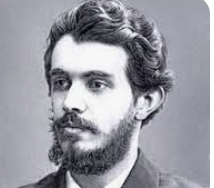
It is difficult to fit the work of Nikolai Berdyaev into any neat category. The label that was used most frequently to characterize him was that of an "existential Christian philosopher" but ... his voice is equally relevant to psychology and psychoanalysis and it also constitutes a uniquely original commentary on the very nature of the person in our postmodern world especially in relation to spirituality.
▼
Source
source
Renos K. Papadopoulos, in C.G. Jung and Nikolai Berdyaev: Individuation and the Person (2011) by Georg Nicolaus, Foreword, p. xiii
2 months 3 weeks ago
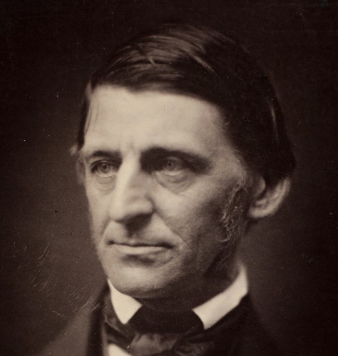
England's genius filled all measure Of heart and soul, of strength and pleasure, Gave to the mind its emperor, And life was larger than before: Nor sequent centuries could hit Orbit and sum of Shakespeare's wit. The men who lived with him became Poets, for the air was fame.
▼
Source
source
Solution, ll. 35-42
1 month 3 weeks ago
I find in myself as much evil as in anyone, but detesting action - mother of all vices - I am the cause of no one's suffering.
2 months 3 weeks ago
Alcohol, hashish, prussic acid, strychnine are weak dilutions. The surest poison is time.
▼
Source
source
Poetry and Imagination
2 months 4 weeks ago
What is prudence in the conduct of every private family, can scarce be folly in that of a great kingdom.
▼
Source
source
Chapter II, p. 490.
1 month 2 weeks ago
Hatred is a feeling which leads to the extinction of values.
▼
Source
source
Cited in the Oxford Dictionary of Quotations by Subject, ed. Susan Ratcliffe (2010), p. 223
2 months 3 weeks ago
The infliction of cruelty with a good conscience is a delight to moralists. That is why they invented Hell.
▼
Source
source
Ch. 1: The Value of Scepticism
2 months 3 weeks ago
What is commonly called friendship even is only a little more honor among rogues.
▼
Source
source
Pearls of Thought (1881) p. 95

2 months 2 weeks ago
All affected can accept the consequences and the side effects that [the norm's] general observance can be anticipated to have for the satisfaction of everyone's interests, and the consequences are preferred to those of known alternative possibilities for regulation.
▼
Source
source
p. 65
3 weeks ago
The second requirement of a virus-friendly environment - that it should obey a program of coded instructions - is again only quantitatively less true for brains than for cells or computers. We sometimes obey orders from one another, but also we sometimes don't. Nevertheless, it is a telling fact that, the world over, the vast majority of children follow the religion of their parents rather than any of the other available religions. Instructions to genuflect, to bow towards Mecca, to nod one's head rhythmically towards the wall, to shake like a maniac, to "speak in tongues" - the list of such arbitrary and pointless motor patterns offered by religion alone is extensive - are obeyed, if not slavishly, at least with some reasonably high statistical probability.
1 month 3 weeks ago
All those instances to be found in history, whether real or fabulous, of a doubtful public spirit, at which morality is perplexed, reason is staggered, and from which affrighted Nature recoils, are their chosen and almost sole examples for the instruction of their youth.
▼
Source
source
No. 1, volume v, p. 286
3 weeks 5 days ago
1. Find a subject you care about.2. Do not ramble, though.3. Keep it simple.4. Have the guts to cut.5. Sound like yourself.6. Say what you mean to say.7. Pity the readers.
▼
Source
source
As quoted in Science Fictionisms (1995), compiled by William Rotsler

4 weeks ago
In default of any other proof, the thumb would convince me of the existence of a God.
▼
Source
source
Stanislas (1856)
2 months 3 weeks ago
Society is undergoing a silent revolution, which must be submitted to, and which takes no more notice of the human existences it breaks down than an earthquake regards the houses it subverts. The classes and the races, too weak to master the new conditions of life, must give way. But can there be anything more puerile, more short-sighted, than the views of those Economists who believe in all earnest that this woeful transitory state means nothing but adapting society to the acquisitive propensities of capitalists, both landlords and money-lords?
▼
Source
source
"Forced Emigration," New York Daily Tribune, 22 March 1853.
2 months 2 weeks ago
Consciousness is what makes the mind-body problem really intractable.
▼
Source
source
p. 165.
1 month 2 weeks ago
The first thinker was, without a doubt, the first man obsessed by why. An unaccustomed mania, not at all contagious: rare indeed are those who suffer from it, who are a prey to questioning, and who can accept no given because they were born in consternation.
CivilSimian.com created by AxiomaticPanic, CivilSimian, Kalokagathia