


2 weeks 3 days ago
History a distillation of Rumour.
▼
Source
source
Pt. I, Bk. VII, ch. 5.
1 week 4 days ago
When I hear any man talk of an unalterable law, the only effect it produces upon me is to convince me that he is an unalterable fool.
▼
Source
source
Peter Plymley's Letters (1808), Letter IV

4 months 3 weeks ago
If the very essence of knowledge changes, at the moment of the change to another essence of knowledge there would be no knowledge, and if it is always changing, there will always be no knowledge, and by this reasoning there will be neither anyone to know nor anything to be known. But if there is always that which knows and that which is known if the beautiful, the good, and all the other verities exist I do not see how there is any likeness between these conditions of which I am now speaking and flux or motion.
2 months 2 weeks ago
Works of art express space as opportunity for movement and action.
▼
Source
source
p. 217
2 months 3 weeks ago
Man consists in Truth. If he exposes Truth, he exposes himself. If he betrays Truth, he betrays himself. We speak not here of lies, but of acting against Conviction.
1 week 5 days ago
Where the world comes in my way - and it comes in my way everywhere - I consume it to quiet the hunger of my egoism. For me you are nothing but - my food, even as I too am fed upon and turned to use by you. We have only one relation to each other, that of usableness, of utility, of use.
▼
Source
source
Dover 2005, p. 296, 297
5 days ago
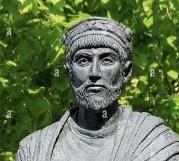
I had imagined that the prelates of the Galilaeans were under greater obligations to me than to my predecessor. For in his reign many of them were banished, persecuted, and imprisoned, and many of the so-called heretics were executed ... all of this has been reversed in my reign; the banished are allowed to return, and confiscated goods have been returned to the owners. But such is their folly and madness that, just because they can no longer be despots, ... or carry out their designs first against their brethren, and then against us, the worshippers of the gods, they are inflamed with fury and stop at nothing in their unprincipled attempts to alarm and enrage the people.
▼
Source
source
Edict to the people of Bostra, reported in Henry Bettenson, Documents of the Christian Church
2 months 1 week ago
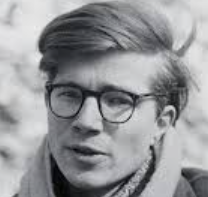
The Outsider wants to cease to be an Outsider. He wants to be 'balanced'. He would like to achieve a vividness of sense-perception (Lawrence, Van Gogh, Hemingway) He would also like to understand the human soul and its working and, be 'possessed' by a Will topower, to more life. (Barbusse and Mitya Karamazov) He would like to escape triviality forever. Above all, he would like to know how to express himself because that is the means by which he can get to know himself and hi unknown possibilities.
▼
Source
source
Chapter Seven, The Great Synthesis…
2 months 3 weeks ago
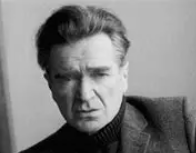
We live in the false as long as we have not suffered. But when we begin to suffer, we enter the truth only to regret the false.
4 months 1 week ago
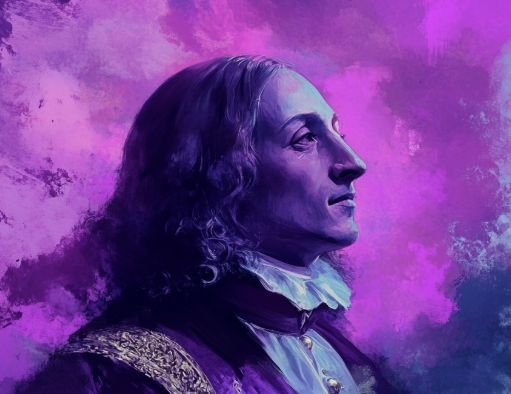
I would have written a shorter letter, but I did not have the time.
▼
Source
source
Provincial Letters: Letter XVI (4 December 1656)
2 weeks 3 days ago
Where this will end? In the Abyss, one may prophecy; whither all Delusions are, at all moments, travelling; where this Delusion has now arrived. For if there be a Faith, from of old, it is this, as we often repeat, that no Lie can live for ever. The very Truth has to change its vesture, from time to time; and be born again. But all Lies have sentence of death written down against them, and Heaven's Chancery itself; and, slowly or fast, advance incessantly towards their hour.
▼
Source
source
Pt. I, Bk. VI, ch. 3.

2 months 2 weeks ago
As the great words of freedom and fulfillment are pronounced by campaigning leaders and politicians, on the screens and radios and stages, they turn into meaningless sounds which obtain meaning only in the context of propaganda, business, discipline, and relaxation. This assimilation of the ideal with reality testifies to the extent to which the ideal has been surpassed. It is brought down from the sublimated realm of the soul or the spirit or the inner man, and translated into operational terms and problems. Here are the progressive elements of mass culture. The perversion is indicative of the fact that advanced industrial society is confronted with the possibility of a materialization of ideals. The capabilities of this society are progressively reducing the sublimated realm in which the condition of man was represented, idealized, and indicted. Higher culture becomes part of the material culture. In this transformation, it loses the greater part of its truth.
▼
Source
source
pp. 57-58
3 months 4 weeks ago
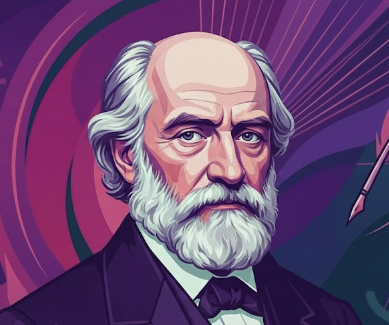
Truth that is naked is the most beautiful, and the simpler its expression the deeper is the impression it makes; this is partly because it gets unobstructed hold of the hearer's mind without his being distracted by secondary thoughts, and partly because he feels that here he is not being corrupted or deceived by the arts of rhetoric, but that the whole effect is got from the thing itself.
1 week 4 days ago
It is a rough road that leads to the heights of greatness.
▼
Source
source
Line 13

3 months 3 weeks ago
It is arrogance in us to call frankness, fairness and chivalry "masculine" when we see them in a woman; it is arrogance in them, to describe a man's sensitiveness or tact or tenderness as "feminine".
2 months 2 weeks ago
If man has learned to see and know what really is, he will act in accordance with truth, Epistemology is in itself ethics, and ethics is epistemology.
▼
Source
source
p. 125
1 month 3 weeks ago
To explain the origin of the DNA/protein machine by invoking a supernatural Designer is to explain precisely nothing, for it leaves unexplained the origin of the Designer.
▼
Source
source
Chapter 6 "Origins and Miracles" (p. 141)
3 months 3 weeks ago
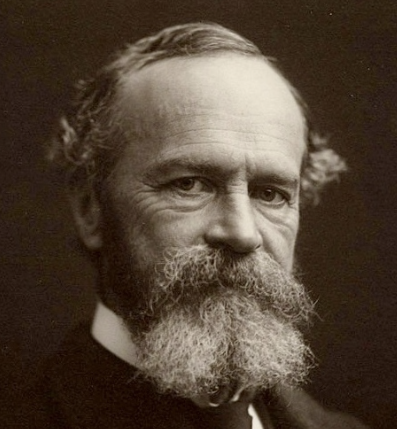
The great thing, then, in all education, is to make our nervous system our ally instead of our enemy.
▼
Source
source
Ch. 4
1 month 4 weeks ago
Nonviolent forms of resistance can and must be aggressively pursued. A practice of aggressive nonviolence is, therefore, not a contradiction in terms. Mahatma Gandhi insisted that satyagraha, or "soul force," his name for a practice and politics of nonviolence, is a nonviolent force, one that consists at once of an "insistence on truth ... that arms the votary with matchless power." To understand this force or strength, there can be no simple reduction to physical strength. At the same time, "soul force" takes an embodied form. The practice of "going limp" before political power is, on the one hand, a passive posture, and is thought to belong to the tradition of passive resistance; at the same time, it is a deliberate way of exposing the body to police power, of entering the field of violence, and of exercising an adamant and embodied form of political agency. It requires suffering, yes, but for the purposes of transforming both oneself and social reality.
▼
Source
source
pp. 21-22

3 months 1 week ago
Concern should drive us into action and not into a depression.
▼
Source
source
The Collected Works of Karen Horney (1957) by Karen Horney, p. 154: "We may feel genuinely concerned about world conditions, though such a concern should drive us into action and not into a depression."


4 months 3 weeks ago
"In the light, the earth remains our first and our last love. Our brothers are breathing under the same sky as we; justice is a living thing. Now is born that strange joy which helps one live and die, and which we shall never again postpone to a later time."
2 weeks 3 days ago
It lies deep in our habits, confirmed by all manner of educational and other arrangements for several centuries back, to consider human talent as best of all evincing itself by the faculty of eloquent speech. Our earliest schoolmasters teach us, as the one gift of culture they have, the art of spelling and pronouncing, the rules of correct speech; rhetorics, logics follow, sublime mysteries of grammar, whereby we may not only speak but write. And onward to the last of our schoolmasters in the highest university, it is still intrinsically grammar, under various figures grammar. To speak in various languages, on various things, but on all of them to speak, and appropriately deliver ourselves by tongue or pen,-this is the sublime goal towards which all manner of beneficent preceptors and learned professors, from the lowest hornbook upwards, are continually urging and guiding us.
2 months 3 weeks ago
The skeptic is the least mysterious man in the world, and yet, starting from a certain moment, he no longer belongs to this world.
1 month 3 weeks ago
We live invested in an electric information environment that is quite as imperceptible to us as water is to fish.
▼
Source
source
(p. 5)
3 months 3 weeks ago
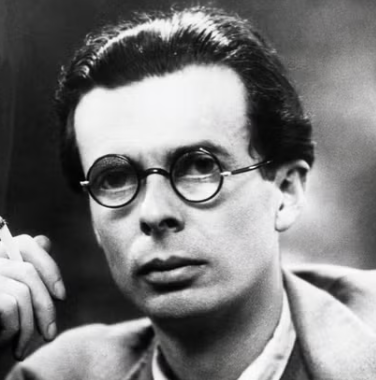
These effects of mescalin are the sort of effects you could expect to follow the administration of a drug having the power to impair the efficiency of the cerebral reducing valve. When the brain runs out of sugar, the undernourished ego grows weak, can't be bothered to undertake the necessary chores, and loses all interest in those spatial and temporal relationships which mean so much to an organism bent on getting on in the world. As Mind at Large seeps past the no longer watertight valve, all kinds of biologically useless things start to happen. ... Other persons discover a world of visionary beauty. To others again is revealed the glory, the infinite value and meaningfulness of naked existence, of the given, unconceptualized event.
▼
Source
source
describing his experiment with mescaline, p. 26
4 months 1 week ago
If a man has reported to you, that a certain person speaks ill of you, do not make any defense (answer) to what has been told you: but reply, The man did not know the rest of my faults, for he would not have mentioned these only.
▼
Source
source
(33) [tr. George Long (1888)].
4 months ago
It may indeed be doubted, whether butcher's meat is any where a necessary of life. Grain and other vegetables, with the help of milk, cheese, and butter, or oil, where butter is not to be had, it is known from experience, can, without any butcher's meat, afford the most plentiful, the most wholesome, the most nourishing, and the most invigorating diet.
▼
Source
source
Chapter II, Part II, Appendix to Articles I and II.

2 months 1 week ago
We are now living in an age of literary exhaustion; we get used to the bleak landscape. Cyril Connolly said that the writer's business is to produce masterpieces; but what masterpieces have been produced in the past fifty years?
▼
Source
source
p. 11
2 months 3 weeks ago
The will is the living principle of the rational soul, is indeed itself reason, when purely and simply apprehended. That reason is itself active, means, that the pure will, as such, rules and is effectual. The infinite reason alone lies immediately and entirely in the purely spiritual order. The finite being lives necessarily at the same time in a sensuous order; that is to say, in one which presents to him other objects than those of pure reason; a material object, to be advanced by instruments and powers, standing indeed under the immediate command of the will, but whose efficacy is conditional also on its own natural laws.
▼
Source
source
Jane Sinnett, trans 1846 p.104
1 week 4 days ago
The wise man will live as long as he ought, not as long as he can.
▼
Source
source
Line 4.

3 months 2 weeks ago
One who is serious all day will never have a good time, while one who is frivolous all day will never establish a household.
▼
Source
source
Maxim no. 25.
2 months 3 weeks ago
Life creates itself in delirium and is undone in ennui.
3 months 2 weeks ago
The noblest people are those despising wealth, learning, pleasure and life; esteeming above them poverty, ignorance, hardship and death.
▼
Source
source
Stobaeus, iv. 29a. 19
1 week 4 days ago
Who, then, can be more ignorant of nature than he who classes this cruel and hurtful vice as belonging to her best and most polished work?
1 week 4 days ago
Why does God afflict the best of men with ill-health, or sorrow, or other troubles? Because in the army the most hazardous services are assigned to the bravest soldiers: a general sends his choicest troops to attack the enemy in a midnight ambuscade, to reconnoitre his line of march, or to drive the hostile garrisons from their strong places. No one of these men says as he begins his march, " The general has dealt hardly with me," but "He has judged well of me."
▼
Source
source
De Providentia (On Providence), 4.8, translated by Aubrey Stewart
3 months 3 weeks ago
We are speaking on this occasion, not as members of this or that nation, continent, or creed, but as human beings, members of the species Man, whose continued existence is in doubt.
4 months 3 weeks ago
If there is some end of the things we do, which we desire for its own sake, clearly this must be the good. Will not knowledge of it, then, have a great influence on life? Shall we not, like archers who have a mark to aim at, be more likely to hit upon what we should? If so, we must try, in outline at least, to determine what it is.
3 months 2 weeks ago
I am a utilitarian. I am also a vegetarian. I am a vegetarian because I am a utilitarian.
▼
Source
source
Utilitarianism and Vegetarianism, Philosophy & Public Affairs, 9(4): 325 (1980).
1 month 1 week ago
I find I am shedding hypocrisy in human relationships. What a rest that will be! The most exhausting thing in life, I have discovered, is being insincere. That is why so much of social life is exhausting; one is wearing a mask. I have shed my mask.
▼
Source
source
Ch. 2; part of this statement has often been paraphrased: "The most exhausting thing in life is being insincere."
3 months 3 weeks ago
Religion...is a man's total reaction upon life.
▼
Source
source
Lecture II, "Circumscription of the Topic"
2 months 1 week ago
A farewell does not dilute the presence of the past; it may make an even deeper presence.
1 week ago
It must be obvious... that there is a contradiction in wanting to be perfectly secure in a universe whose very nature is momentariness and fluidity.
2 months 3 weeks ago
It is an understatement to say that in this society injustices abound: in truth, it is itself the quintessence of injustice.
2 months 1 week ago
Rituals are processes of embodiment and bodily performances. In them, the valid order and values of a community are physically experienced and solidified.

4 months 4 days ago
Fame and tranquility can never be bedfellows.
▼
Source
source
Book I, Ch. 39
CivilSimian.com created by AxiomaticPanic, CivilSimian, Kalokagathia