

2 months 3 weeks ago
Seldom, or perhaps never, does a marriage develop into an individual relationship smoothly and without crises; there is no coming to consciousness without pain.
▼
Source
source
p. 193
2 weeks 5 days ago
Bukharin, like Lenin, regarded the system of basing economic life on mass terror not as a transient necessity but as a permanent principle of socialist organization. He did not shrink from justifying all means of coercion and held, like Trotsky at the same period, that the new system called essentially for the militarization of labour - i.e. the use of police and military force to compel the whole population to work in such places and conditions as the state might arbitrarily decree. Indeed, once the market is abolished there is no longer any free sale of labour or competition between workers, and police coercion is therefore the only means of allocating "human resources". If hired labour is eliminated, only compulsory labour remains. In other words, socialism - as conceived by both Trotsky and Bukharin at this time - is a permanent, nation-wide labour camp.
▼
Source
source
(pg. 28-9)
4 days ago
If compelled to indicate my religion on an immigration blank, I might be tempted to put down the word "Taoist," to the amazement of the customs officer who probably never heard of it.
▼
Source
source
The Wisdom of Laotse (1948), Introduction, p. 15

4 months 3 weeks ago
In that daily effort in which intelligence and passion mingle and delight each other, the absurd man discovers a discipline that will make up the greatest of his strengths. The required diligence and doggedness and lucidity thus resemble the conqueror's attitude. To create is likewise to give a shape to one's fate. For all these characters, their work defines them at least as much as it is defined by them. The actor taught us this: There is no frontier between being and appearing.

4 months 5 days ago
Hurl your calumnies boldly; something is sure to stick.
▼
Source
source
De Augmentis Scientiarum
1 month 3 weeks ago
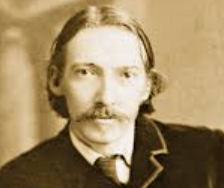
It seems as if marriage were the royal road through life, and realised, on the instant, what we have all dreamed on summer Sundays when the bells ring, or at night when we cannot sleep for the desire of living. They think it will sober and change them. Like those who join a brotherhood, they fancy it needs but an act to be out of the coil and clamour for ever. But this is a wile of the devil's. To the end, spring winds will sow disquietude, passing faces leave a regret behind them, and the whole world keep calling and calling in their ears. For marriage is like life in this - that it is a field of battle, and not a bed of roses.
▼
Source
source
Virginibus Puerisque, Ch. 1.
2 months 6 days ago
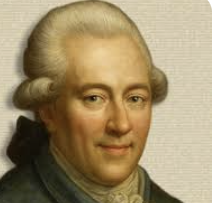
What is called an acute knowledge of human nature is mostly nothing but the observer's own weaknesses reflected back from others.
▼
Source
source
G 7
3 months 3 weeks ago
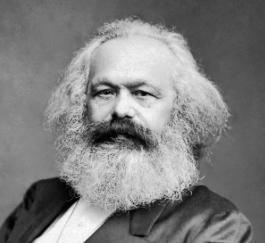
Is a fixed income not a good thing? Does not everyone love to count on a sure thing? Especially every petty-bourgeois, narrow-minded Frenchman? the 'ever needy' man?
▼
Source
source
(Bastiat and Carey), pp. 809-810.
1 month 3 weeks ago
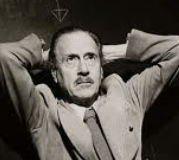
The city no longer exists except as a cultural ghost for tourists. Any highway eatery with its TV set, newspaper and magazine is as cosmopolitan as New York or Paris.
▼
Source
source
(p.12)
2 months 3 weeks ago
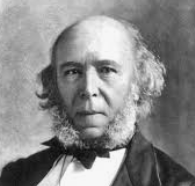
The saying that beauty is but skin deep is but a skin-deep saying.
▼
Source
source
Vol. 2, Ch. XIV, Personal Beauty

3 months 1 week ago
Holding fast to these things, you will know the worlds of gods and mortals which permeates and governs everything. And you will know, as is right, nature similar in all respects, so that you will neither entertain unreasonable hopes nor be neglectful of anything.
▼
Source
source
As quoted in Divine Harmony: The Life and Teachings of Pythagoras by John Strohmeier and Peter Westbrook.
2 months 3 weeks ago
Every man may claim the fullest liberty to exercise his faculties compatible with the possession of like liberties by every other man.
▼
Source
source
Pt. II, Ch. 4 : Derivation of a First Principle, § 3
4 months 3 weeks ago
God is not needed to create guilt or to punish. Our fellow men suffice, aided by ourselves.
1 month 3 weeks ago
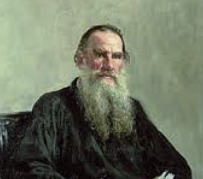
'BUT science and art! You are denying science and art: that is you are denying that by which humanity lives.' People constantly make this rejoinder to me, and they employ: this method in order to reject my arguments without examination. 'He rejects science and art, he wishes man to revert to a state of savagery - why listen to him or discuss with him?' But this is unjust. Not only do I not repudiate science, that is, the reasonable activity of humanity, and art - the expression of that reasonable activity - but it is just on behalf of that reasonable activity and its expression that I speak, only that It may be possible for mankind to escape from the savage state into which it is rapidly lapsing thanks to the false teaching of our time. It is only on that account that I speak as I do.

4 months ago
Look round the world: contemplate the whole and every part of it: You will find it to be nothing but one great machine, subdivided into an infinite number of lesser machines, which again admit of subdivisions, to a degree beyond what human senses and faculties can trace and explain. All these various machines, and even their most minute parts, are adjusted to each other with an accuracy, which ravishes into admiration all men, who have ever contemplated them. The curious adapting of means to ends, throughout all nature, resembles exactly, though it much exceeds, the productions of human contrivance; of human design, thought, wisdom, and intelligence.
▼
Source
source
Philo to Cleanthes, Part II

1 month 3 weeks ago
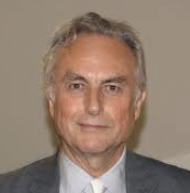
The individual selectionist would admit that groups do indeed die out, and that whether or not a group goes extinct may be influenced by the behaviour of the individuals in that group. He might even admit that if only the individuals in a group had the gift of foresight they could see that in the long run their own best interests lay in restraining their selfish greed, to prevent the destruction of the whole group. How many times must this have been said in recent years to the working people of Britain? But group extinction is a slow process compared with the rapid cut and thrust of individual competition. Even while the group is going slowly and inexorably downhill, selfish individuals prosper in the short term at the expense of altruists. The citizens of Britain may or may not be blessed with foresight, but evolution is blind to the future.
▼
Source
source
Ch. 1. Why Are People?
2 months 2 weeks ago
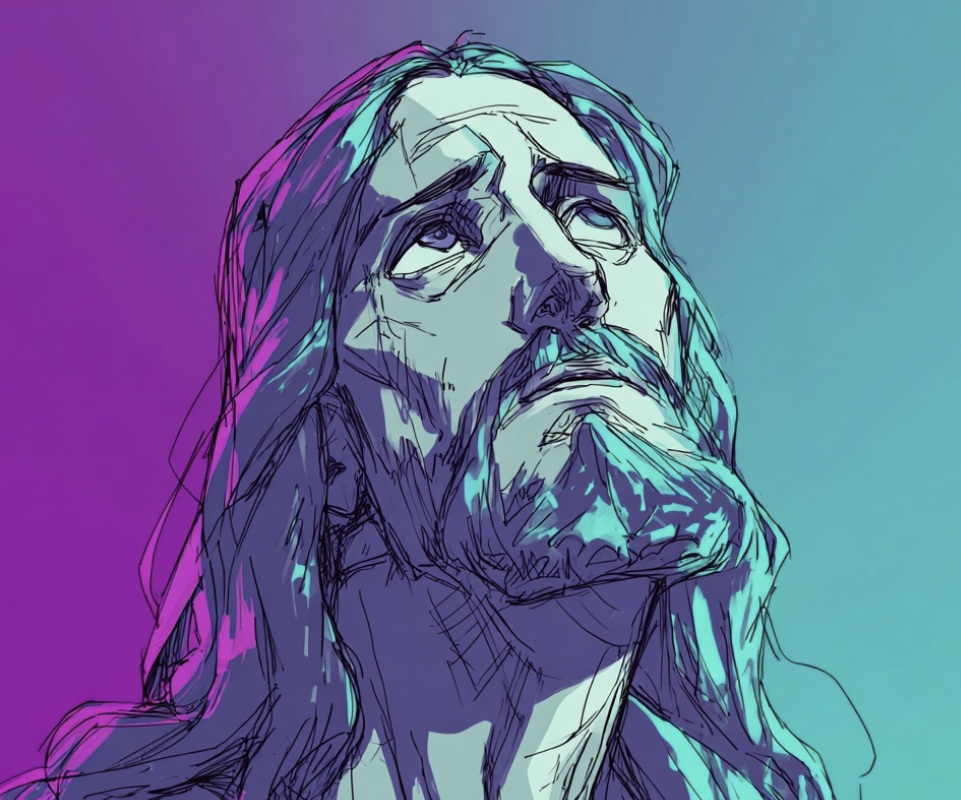
Heaven and earth shall pass away, but my words shall not pass away.
▼
Source
source
Mark 13:31, KJV
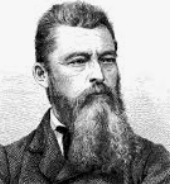
2 months 3 weeks ago
Religion is the dream of the human mind. But even in dreams we do not find ourselves in emptiness or in heaven, but on earth, in the realm of reality; we only see real things in the entrancing splendor of imagination and caprice, instead of in the simple daylight of reality and necessity.
▼
Source
source
Preface to Second Edition

4 months 3 weeks ago
It is surely better to be wronged than to do wrong.
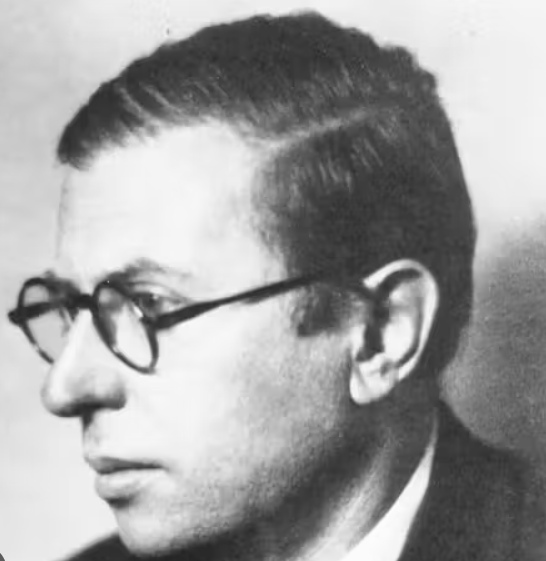
3 months 3 weeks ago
If you are not already dead, forgive. Rancor is heavy, it is worldly; leave it on earth: die light.
▼
Source
source
Act 1
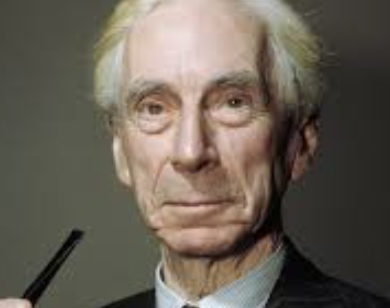
3 months 3 weeks ago
Life seems to me essentially passion, conflict, rage... It is only intellect that keeps me sane; perhaps this makes me overvalue intellect against feeling.
▼
Source
source
Letter to Lady Ottoline Morrell in 1912, as quoted in Clark The life of Bertrand Russell (1976), p. 174
1 month 3 weeks ago
Sight-seeing is the art of disappointment.
▼
Source
source
Pt. I, ch. II.
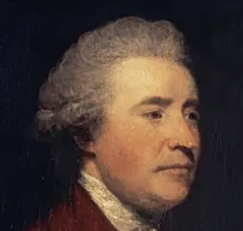
2 months 3 weeks ago
It cannot at this time be too often repeated; line upon line; precept upon precept; until it comes into the currency of a proverb, To innovate is not to reform.
▼
Source
source
p. 20

3 months 1 day ago
I should have loved freedom, I believe, at all times, but in the time in which we live I am ready to worship it.
▼
Source
source
Book Four, Chapter VII.
2 months 3 weeks ago
Nothing less will content me, than whole America.
1 week 4 days ago
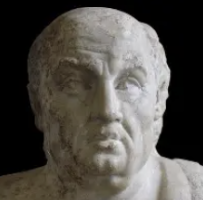
By Hercules, the state would have sustained a great loss if you had not brought him forth from the oblivion to which his two splendid qualities, eloquence and independence, had consigned him: he is now read, is popular, is received into men's hands and bosoms, and fears no old age: but as for those who butchered him, before long men will cease to speak even of their crimes, the only things by which they are remembered.

3 months 3 weeks ago
The human being is not the lord of beings, but the shepherd of Being.
▼
Source
source
Letter on Humanism
1 month 3 weeks ago
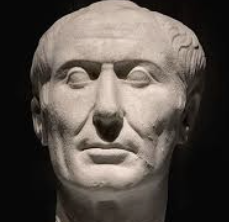
By doing nothing men learn to do ill.
▼
Source
source
Maxim 318 Compare Ecclesiasticus 33:27 (KJV): "idleness teacheth much evil".
3 months 3 weeks ago
To discover the various use of things is the work of history.
▼
Source
source
Vol. I, Ch. 1, Section 1, pg. 42.

2 months ago
The other part of the true religion is our duty to man. We must love our neighbour as our selves, we must be charitable to all men for charity is the greatest of graces, greater then even faith or hope & covers a multitude of sins. We must be righteous & do to all men as we would they should do to us.
▼
Source
source
Of Humanity

3 months 2 days ago
In the deep discovery of the Subterranean world, a shallow part would satisfy some enquirers.
▼
Source
source
Chapter I
2 months 1 week ago
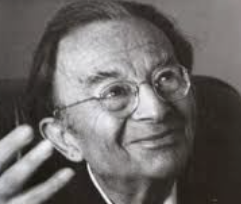
Neurosis can be understood best as the battle between tendencies within an individual; deep character analysis leads, if successful, to the progressive solution.
▼
Source
source
p. 264
1 month 3 weeks ago
In an age of multiple and massive innovations, obsolescence becomes the major obsession.
▼
Source
source
"Innovation is obsolete", Evergreen review, Volume 15, Issues 86-94, Grove Press, 1971, p. 64
4 days ago
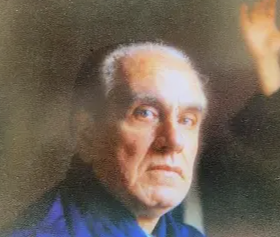
All too often people forget that spirituality is essentially a way of life and that its measure does not consist of notions, theories, and ideas that have been stored in one's head. Spirituality is actually what has been successfully actualized and translated into a sense of superiority which is experienced inside by the soul, and a noble demeanor, which is expressed in the body.
▼
Source
source
Meditations on the Peaks: Mountain Climbing as Metaphor for the Spiritual Quest

4 months 3 weeks ago
It is love that leniently and mercifully says: I forgive you everything-if you are forgiven only little, then it is because you love only little. Justice severely sets the boundary and says: No further! This is the limit. For you there is no forgiveness, and there is nothing more to be said.
1 month 2 weeks ago
People crushed by law have no hopes but from power. If laws are their enemies, they will be enemies to laws.
▼
Source
source
According to Kenneth Owen Morgan (The Illustrated History of Britain (1984) p. 421) this was said by Macaulay in 1832. If so, he was quoting a letter written by Edmund Burke in 1777.
1 month 3 weeks ago
There is a sort of dead-alive, hackneyed people about, who are scarcely conscious of living except in the exercise of some conventional occupation. ... They have no curiosity; they cannot give themselves over to random provocations; they do not take pleasure in the exercise of their faculties for its own sake; and unless necessity lays about them with a stick, they will even stand still. It is no good speaking to such folk: they cannot be idle, their nature is not generous enough; and they pass those hours in a sort of coma, which are not dedicated to furious moiling in the gold-mill.
▼
Source
source
An Apology for Idlers.
2 months 2 weeks ago
And be sure of this: I am with you always, even to the end of the age.
▼
Source
source
Jesus in Matthew 28:20

2 weeks 5 days ago
The social contract between all people around the world only has one requirement: Don't kill. From there it's those who don't agree, those that agree but have some reactive justification, and those that agree and don't kill.
2 weeks 3 days ago
The scientific enterprise as a whole does from time to time prove useful, open up new territory, display order, and test long-accepted belief. Nevertheless, the individual engaged on a normal research problem is almost never doing any one of these things. Once engaged, his motivation is of a rather different sort. What then challenges him is the conviction that, if only he is skillful enough, he will succeed in solving a puzzle that no one before has solved or solved so well.
▼
Source
source
p. 38.

1 month 5 days ago
The biology of suffering in intelligent agents is a deep underlying source of existential risk - and one that can potentially be overcome.
▼
Source
source
"Unsorted Postings", pre-2014

2 weeks 3 days ago
We call that fire of the black thunder-cloud "electricity," and lecture learnedly about it, and grind the like of it out of glass and silk: but what is it? What made it? Whence comes it? Whither goes it? Science has done much for us; but it is a poor science that would hide from us the great deep sacred infinitude of Nescience, whither we can never penetrate, on which all science swims as a mere superficial film. This world, after all our science and sciences, is still a miracle; wonderful, inscrutable, magical and more, to whosoever will think of it.
2 months 2 weeks ago
Existential envy which is directed against the other person's very nature, is the strongest source of ressentiment. It is as if it whispers continually: "I can forgive everything, but not that you are- that you are what you are-that I am not what you are-indeed that I am not you." This form of envy strips the opponent of his very existence, for this existence as such is felt to be a "pressure," a "reproach," and an unbearable humiliation. In the lives of great men there are always critical periods of instability, in which they alternately envy and try to love those whose merits they cannot but esteem. Only gradually, one of these attitudes will predominate. Here lies the meaning of Goethe's reflection that "against another's great merits, there is no remedy but love."
▼
Source
source
L. Coser, trans. (1973), pp. 52-53
2 months 3 weeks ago
When ethics thus moves into the domain of politics and becomes morality, the possibility of violence appears because of the threat of the application of such absolutist forms of thought. Further, although the moral agent must remain free in order to avoid the totalizing domination of the state, morality must still be grounded in the ethical relation of the face-to-face.
▼
Source
source
Steven Bindeman, Levinas: The Face of Otherness and the Ethics of Therapy


2 months 3 weeks ago
The same feeling of not belonging, of futility, wherever I go: I pretend interest in what matters nothing to me, I bestir myself mechanically or out of charity, without ever being caught up, without ever being somewhere. What attracts me is elsewhere, and I don't know where that elsewhere is.
3 months 3 weeks ago
So much of modern mathematical work is obviously on the border-line of logic, so much of modern logic is symbolic and formal, that the very close relationship of logic and mathematics has become obvious to every instructed student. The proof of their identity is, of course, a matter of detail: starting with premisses which would be universally admitted to belong to logic, and arriving by deduction at results which as obviously belong to mathematics, we find that there is no point at which a sharp line can be drawn, with logic to the left and mathematics to the right. If there are still those who do not admit the identity of logic and mathematics, we may challenge them to indicate at what point, in the successive definitions and deductions of Principia Mathematica, they consider that logic ends and mathematics begins. It will then be obvious that any answer must be quite arbitrary.
▼
Source
source
Ch. 18: Mathematics and Logic
CivilSimian.com created by AxiomaticPanic, CivilSimian, Kalokagathia