

1 week ago
What then is the place and role of the writer in this cruel, dynamic, split world on the brink of its ten destructions? After all we have nothing to do with letting off rockets, we do not even push the lowliest of hand-carts, we are quite scorned by those who respect only material power. Is it not natural for us too to step back, to lose faith in the steadfastness of goodness, in the indivisibility of truth, and to just impart to the world our bitter, detached observations: how mankind has become hopelessly corrupt, how men have degenerated, and how difficult it is for the few beautiful and refined souls to live amongst them? But we have not even recourse to this flight. Anyone who has once taken up the WORD can never again evade it; a writer is not the detached judge of his compatriots and contemporaries, he is an accomplice to all the evil committed in his native land or by his countrymen.
3 months 4 weeks ago
As the analysis of a substantial composite terminates only in a part which is not a whole, that is, in a simple part, so synthesis terminates only in a whole which is not a part, that is, the world.
2 months 3 weeks ago
In effect, to follow, not to force the public inclination; to give a direction, a form, a technical dress, and a specific sanction, to the general sense of the community, is the true end of legislature.

3 months 3 weeks ago
The hardness of God is kinder than the softness of men, and His compulsion is our liberation.

3 months 3 weeks ago
Is there any knowledge in the world which is so certain that no reasonable man could doubt it?
3 months 4 weeks ago
Europeans are awakening more and more to a sense that beasts have rights, in proportion as the strange notion is being gradually overcome and outgrown, that the animal kingdom came into existence solely for the benefit and pleasure of man. This view, with the corollary that non-human living creatures are to be regarded merely as things, is at the root of the rough and altogether reckless treatment of them, which obtains in the West.
▼
Source
source
Part III, Ch. VIII, 7, p. 225
1 month 3 days ago
Today those who peer into the future want only relief from anxiety. Unable to face the prospect that the cycles of war will continue, they are desperate to find a pattern of improvement in history. It is only natural that believers in reason, lacking any deeper faith and too feeble to tolerate doubt, should turn to the sorcery of numbers. Happily there are some who are ready to assist them. Just as the Elizabethan magus transcribed tables shown to him by angels, the modern scientific scryer deciphers numerical auguries of angels hidden in ourselves.
▼
Source
source
In the Puppet Theatre: Dark mirrors, Hidden Angels and an Algorithmic Prayer-Wheel (p. 99)
1 month 3 days ago
Blair has been the modern man he claims to be: for him, a sense of subjective certainty is all that is needed for an action to be right. If deception is needed to realise the providential design, it cannot be truly deceitful.
▼
Source
source
Neoconned!: How Blair took New Labour for a ride, The Independent
3 months 3 weeks ago
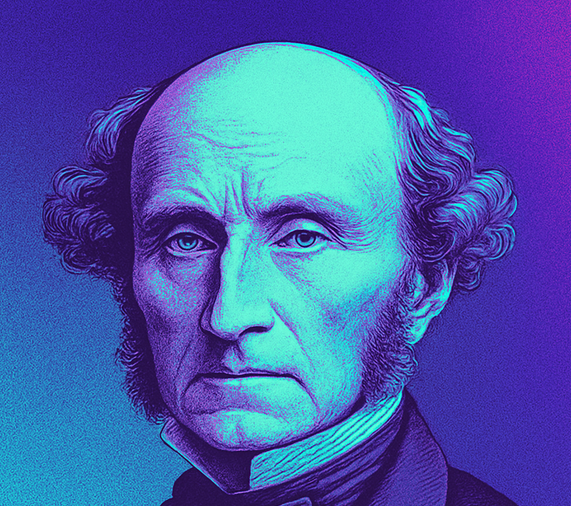
The object of this Essay is to explain as clearly as I am able grounds of an opinion which I have held from the very earliest period when I had formed any opinions at all on social political matters, and which, instead of being weakened or modified, has been constantly growing stronger by the progress reflection and the experience of life. That the principle which regulates the existing social relations between the two sexes - the legal subordination of one sex to the other - is wrong itself, and now one of the chief hindrances to human improvement; and that it ought to be replaced by a principle of perfect equality, admitting no power or privilege on the one side, nor disability on the other.
▼
Source
source
Ch. 1
1 month 3 weeks ago
There is a sort of dead-alive, hackneyed people about, who are scarcely conscious of living except in the exercise of some conventional occupation. ... They have no curiosity; they cannot give themselves over to random provocations; they do not take pleasure in the exercise of their faculties for its own sake; and unless necessity lays about them with a stick, they will even stand still. It is no good speaking to such folk: they cannot be idle, their nature is not generous enough; and they pass those hours in a sort of coma, which are not dedicated to furious moiling in the gold-mill.
▼
Source
source
An Apology for Idlers.
8 months 2 days ago
It is also crucial to bear in mind the interconnection between the Decalogue... and its modern obverse, the celebrated 'human Rights'. As the experience of our post-political liberal-permissive society amply demonstrates, human Rights are ultimately, at their core, simply Rights to violate the Ten Commandments. 'The right to privacy' — the right to adultery, in secret, where no one sees me or has the right to probe my life. 'The right to pursue happiness and to possess private property' -- the right to steal (to exploit others). 'Freedom of the press and of the expression of opinion' -- the right to lie. 'The right of free citizens to possess weapons' -- the right to kill. And, ultimately, 'freedom of religious belief' — the right to worship false gods.
3 months 4 weeks ago
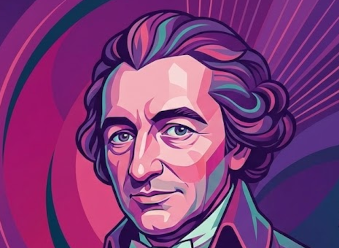
War involves in its progress such a train of unforeseen and unsupposed circumstances ... that no human wisdom can calculate the end. Prospects on the Rubicon
▼
Source
source
London: J. Debrett, 1787
3 months 3 weeks ago
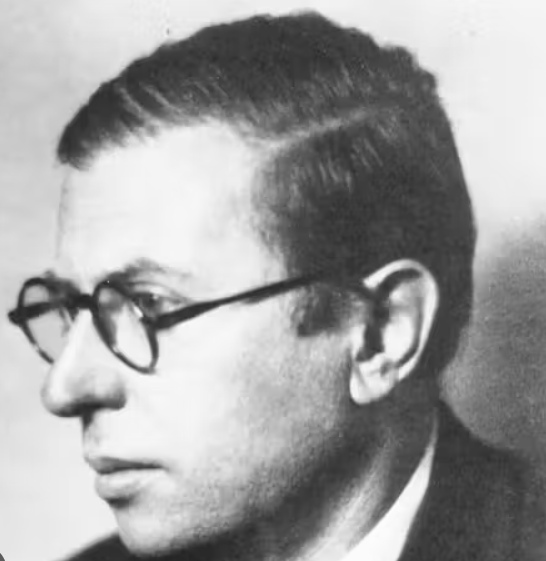
For those who want 'to change life", 'to reinvent love,' God is nothing but a hindrance.
▼
Source
source
p. 500
3 months 1 day ago
I am beginning to feel that I am growing old; soon, I shall have to eat mush like children. I shall no longer be able to speak, which will be a rather great advantage for others and but a small inconvenience for myself.... The time in which I count in years is gone; that in which I count in days is here.... I had thought that the fibers of the heart would grow callous with age, it's not at all the case. I am not sure that my sensitivity hasn't increased; everything moves me, affects me.... To fade out between a man feeling your pulse and another bothering your head; not to know where one comes from, why one came, where one is going ...
▼
Source
source
Letter to his sister Denise, as quoted in Diderot, Reason and Resonance (1982) by Élisabeth de Fontenay, pp. 270-271
2 months 1 week ago
Christianity is most admirably adapted to the training of slaves, to the perpetuation of a slave society; in short, to the very conditions confronting us to-day.... The rulers of the earth have realized long ago what potent poison inheres in the Christian religion. That is the reason they foster it; that is why they leave nothing undone to instill it into the blood of the people. They know only too well that the subtleness of the Christian teachings is a more powerful protection against rebellion and discontent than the club or the gun.
3 weeks 1 day ago
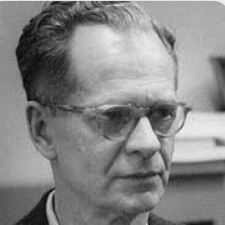
Ethical control may survive in small groups, but the control of the population as a whole must be delegated to specialists-to police, priests, owners, teachers, therapists, and so on, with their specialized reinforcers and their codified contingencies.
▼
Source
source
Beyond Freedom and Dignity (1971), p. 155
4 days ago
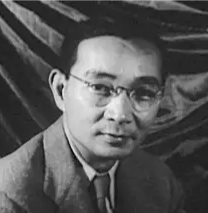
The world I believe is far too serious, and being far too serious, is it has need of a wise and merry philosophy.
▼
Source
source
Ch. I : The Awakening, p. 13

2 months 3 weeks ago
To tell the truth, I couldn't care less about the relativity of knowledge, simply because the world does not deserve to be known.

3 months 3 weeks ago
In Nietzsche's view nihilism is not a Weltanschauung that occurs at some time and place or another; it is rather the basic character of what happens in Occidental history.
▼
Source
source
p. 26

3 months 3 weeks ago
All the thoughts of a turtle are turtle.
▼
Source
source
1855
3 months 3 weeks ago
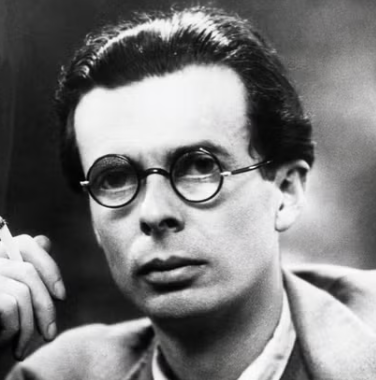
Words are good servants but bad masters.
▼
Source
source
As quoted by Laura Huxley, in conversation with Alan Watts about her memoir This Timeless Moment (1968), in Pacifica Archives #BB2037

4 months 5 days ago
It is true that may hold in these things, which is the general root of superstition; namely, that men observe when things hit, and not when they miss; and commit to memory the one, and forget and pass over the other.
▼
Source
source
Sylva Sylvarum Century X, 1627
2 months 6 days ago
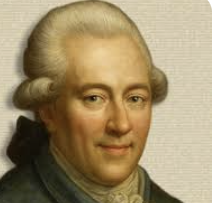
The great rule: If the little bit you have is nothing special in itself, at least find a way of saying it that is a little bit special.
▼
Source
source
E 55

3 months 1 week ago
Despise all those things which when liberated from the body you will not want; invoke the Gods to become your helpers.
▼
Source
source
Pythagorean Ethical Sentences From Stobæus

3 months 3 weeks ago
It is clear that the causal nexus is not a nexus at all.
▼
Source
source
Journal entry (12 October 1916), p. 84e
4 months ago
Though the profusion of Government must undoubtedly have retarded the natural progress of England to wealth and improvement, it has not been able to stop it.
▼
Source
source
Chapter III.
2 months 3 weeks ago
A conscientious man would be cautious how he dealt in blood.
▼
Source
source
Letter to the Sheriffs of Bristol (3 April 1777); as published in The Works of the Right Hon. Edmund Burke (1899), vol. 2, p. 206
4 months 4 days ago
A theologian is born by living, nay dying and being damned, not by thinking, reading, or speculating.
▼
Source
source
352
2 months 3 weeks ago
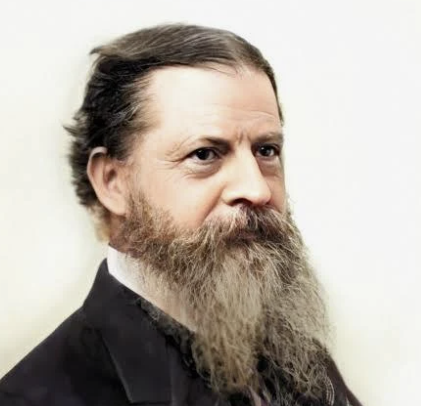
The third category of which I come now to speak is precisely that whose reality is denied by nominalism. For although nominalism is not credited with any extraordinarily lofty appreciation of the powers of the human soul, yet it attributes to it a power of originating a kind of ideas the like of which Omnipotence has failed to create as real objects, and those general conceptions which men will never cease to consider the glory of the human intellect must, according to any consistent nominalism, be entirely wanting in the mind of Deity.
▼
Source
source
Lecture II : The Universal Categories, §3. Laws: Nominalism, CP 5.62
1 month 4 weeks ago
I don't think there would be many jokes, if there weren't constant frustration and fear and so forth. It's a response to bad troubles like crime.
▼
Source
source
Interview Public Radio International
1 month 3 weeks ago
While Poe and the Symbolists were exploring the irrational in literature, Freud had begun to explore the resonant figure/ground double-plot of the conscious and unconscious.
▼
Source
source
p. 52
3 months 3 weeks ago
Do not yet see, that, if the single man plant himself indomitably on his instincts, and there abide, the huge world will come round to him.
▼
Source
source
par. 43

3 months 2 weeks ago
Do you count your birthdays with gratitude?
▼
Source
source
Book II, epistle ii, line 210

3 weeks ago
The other big issue is an emotional one. We tend to feel the greatest bonds of solidarity with people that are close to us. There are very few true citizens of the world. We're citizens of individual countries and we really feel the closest bonds to people that live within our nation, and therefore... the nation becomes a kind of social glue. But if you're going to make a national identity compatible with liberalism, it has to be the right kind of national identity. It has to be one that is open to all of the citizens that actually live in the territory of the nation. It can't exclude certain groups by race, by ethnicity, by religious belief and the like, and therefore it needs to be an open identity that is based on essentially liberal ideas.
▼
Source
source
24:46:00
3 months 2 weeks ago
He who does wrong is more unhappy than he who suffers wrong.
3 months 3 weeks ago
How can I, who was not able to retain my own past, hope to save that of another?
2 months 3 weeks ago
To say that authority, whether secular or religious, supplies no ground for morality is not to deny the obvious fact that it supplies a sanction.
▼
Source
source
"The Meaning of Life".
4 months 3 weeks ago
Self-preservation has frequently knuckled under to that tremendous yearning to get even.
3 months 2 weeks ago
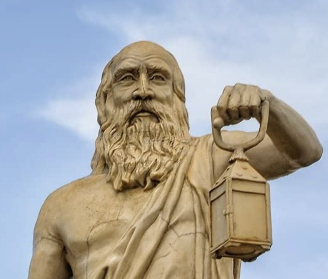
When Alexander the Great addressed him with greetings, and asked if he wanted anything, Diogenes replied "Yes, stand a little out of my sunshine."
▼
Source
source
From Plutarch, Alexander, 14. Cf. Diogenes Laërtius, vi. 38, Cicero, Tusculan Disputations, v. 32

3 months 4 weeks ago
Man is free at the instant he wants to be.
▼
Source
source
Source Brutus, act II, scene I, 1730
4 days ago
It is not when he is working in the office but when he is lying idly on the sand that his soul utters, "Life is beautiful."
▼
Source
source
Ch. I : The Awakening, p. 2
2 months 3 weeks ago
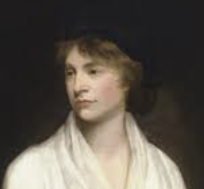
How many women thus waste life away the prey of discontent, who might have practised as physicians, regulated a farm, managed a shop, and stood erect, supported by their own industry, instead of hanging their heads surcharged with the dew of sensibility, that consumes the beauty to which it at first gave lustre.
▼
Source
source
Ch. 9

3 months 3 days ago
It is manifest... that every soul and spirit hath a certain continuity with the spirit of the universe, so that it must be understood to exist and to be included not only there where it liveth and feeleth, but it is also by its essence and substance diffused throughout immensity... The power of each soul is itself somehow present afar in the universe... Naught is mixed, yet is there some presence. Anything we take in the universe, because it has in itself that which is All in All, includes in its own way the entire soul of the world, which is entirely in any part of it.
4 months 3 weeks ago
After these matters we ought perhaps next to discuss pleasure. For it is thought to be most intimately connected with our human nature, which is the reason why in educating the young we steer them by the rudders of pleasure and pain; it is thought, too, that to enjoy the things we ought and to hate the things we ought has the greatest bearing on virtue of character. For these things extend right through life, with a weight and power of their own in respect both to virtue and to the happy life, since men choose what is pleasant and avoid what is painful; and such things, it will be thought, we should least of all omit to discuss, especially since they admit of much dispute.

3 months 2 weeks ago
He who upholds Truth with all the might of his power, He who upholds Truth the utmost in his word and deed,He, indeed, is Thy most valued helper, O Mazda Ahura!
▼
Source
source
Ahunuvaiti Gatha; Yasna 31, 22.
3 months 3 weeks ago
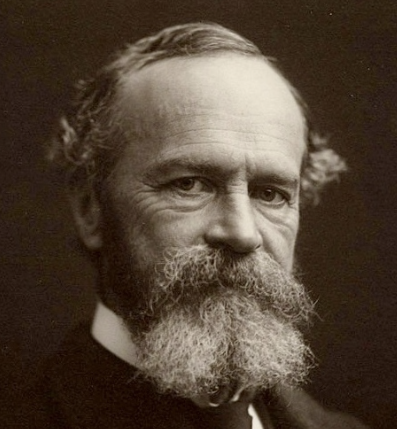
The mere word 'design' by itself has no consequences and explains nothing. It is the barrenest of principles. The old question of whether there is design is idle. The real question is what is the world, whether or not it have a designer - and that can be revealed only by the study of all nature's particulars.
▼
Source
source
Lecture III, Some Metaphysical Problems Pragmatically Considered
3 months 4 weeks ago
There are 80,000 prostitutes in London alone and what are they, if not bloody sacrifices on the altar of monogamy?
▼
Source
source
"Of Women"
2 months 1 week ago
Jung believed that alchemy is about the transmutation of the mind and the discovery of the self. Inevitably, he saw the male and female elements of the prima materia -- the king and queen of alchemy -- as the animus and anima; this seemed to indicate the (sic) alchemy is about psychological processes.
▼
Source
source
p. 103

CivilSimian.com created by AxiomaticPanic, CivilSimian, Kalokagathia