


1 month 1 week ago
Revolutionary feminism embraces men who are able to change, who are capable of responding mutually in a subject-to-subject encounter where desire and fulfillment are in no way linked to coercive subjugation. This feminist vision of the sexual imaginary is the space few men seem able to enter.
1 month 1 week ago
When television screens had only rare images of black folks, black people were more critically vigilant about these representations. Even when blackness was represented 'positiviely,' as it was in early black television shows like Julia, which focused on the life of a black nurse, the beauty standard was a reflection of white supremacist aesthetics.
2 months 3 weeks ago
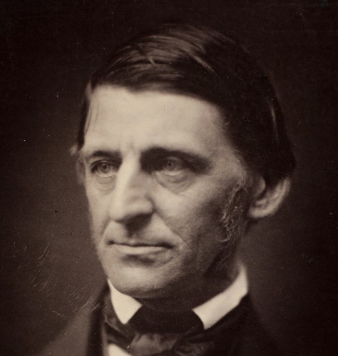
Self-trust is the first secret of success.
▼
Source
source
Success
3 weeks 5 days ago
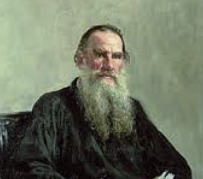
Understand that all the evils from which you suffer, you yourselves cause by yielding to the suggestions by which emperors, kings, members of parliament, governors, officers, capitalists, priests, authors, artists, and all who need this fraud of patriotism in order to live upon your labour, deceive you!
▼
Source
source
Patriotism and Government
2 months 2 weeks ago
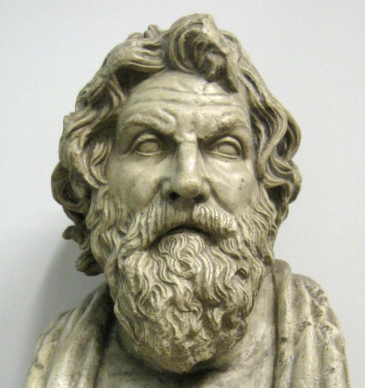
It is a royal privilege to do good and be ill spoken of.
▼
Source
source
§ 3; quoted also by Marcus Aurelius, vii. 36
2 months 3 weeks ago
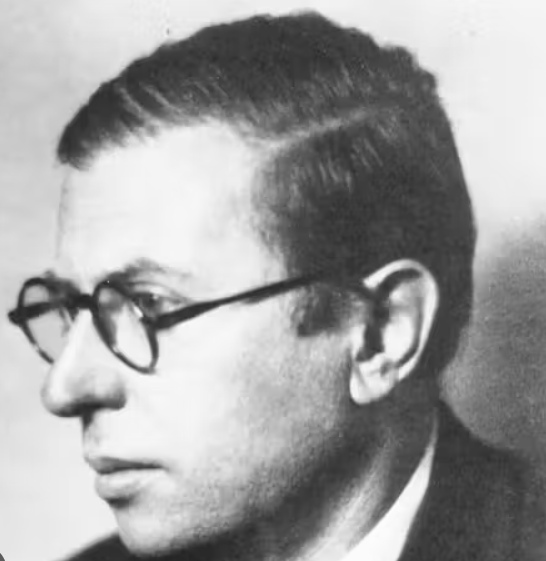
Eh bien, continuons... Well, let's get on with it.
3 weeks 5 days ago
To say that the activity of science and art helps humanity's progress, if by that activity we mean the activity which now calls itself by those names, is as though one said that the clumsy, obstructive splashing of oars in a boat moving down stream assists the boat's progress. It only hinders it... The proof of this is seen in the confession made by men of science that the achievements of the arts and sciences are inaccessible to the labouring masses on account of the unequal distribution of wealth.

2 months 3 weeks ago
In contrast to "Blessed are they who do not see and still believe," he speaks of "seeing and still not believing."
▼
Source
source
p. 30

1 month 3 weeks ago
I am a strange compound of weakness and resolution! However, if I must suffer, I will endeavour to suffer in silence. There is certainly a great defect in my mind - my wayward heart creates its own misery - Why I am made thus I cannot tell; and, till I can form some idea of the whole of my existence, I must be content to weep and dance like a child - long for a toy, and be tired of it as soon as I get it.
▼
Source
source
Undated letter to Joseph Johnson (October? 1792), published in The Collected Letters of Mary Wollstonecraft (2004), edited by Janet Todd, p. 206.

1 month 3 weeks ago
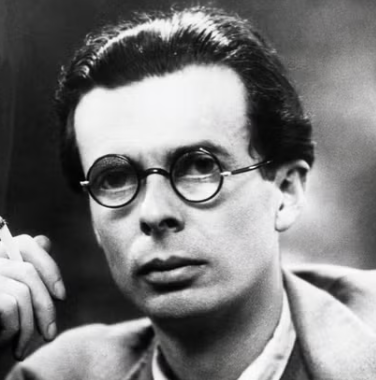
The skepticism which fails to contribute to the ruin of our health is merely an intellectual exercise.
2 months 3 weeks ago
To his dog, every man is Napoleon; hence the constant popularity of dogs.
▼
Source
source
Reader's Digest, 1934

1 month 2 weeks ago
Another parable put he forth unto them, saying, The kingdom of heaven is likened unto a man which sowed good seed in his field: But while men slept, his enemy came and sowed tares among the wheat, and went his way. But when the blade was sprung up, and brought forth fruit, then appeared the tares also. So the servants of the householder came and said unto him, Sir, didst not thou sow good seed in thy field? from whence then hath it tares? He said unto them, An enemy hath done this. The servants said unto him, Wilt thou then that we go and gather them up? But he said, Nay; lest while ye gather up the tares, ye root up also the wheat with them. Let both grow together until the harvest: and in the time of harvest I will say to the reapers, Gather ye together first the tares, and bind them in bundles to burn them: but gather the wheat into my barn.
▼
Source
source
13:24-30 (KJV)

1 month 1 week ago
The family uses people, not for what they are, nor for what they are intended to be, but for what it wants them for - its own uses. It thinks of them not as what God has made them, but as the something which it has arranged that they shall be.

3 months 1 week ago
You can live, provided you live; that is, you can live for ever, provided you live a good life.
▼
Source
source
229H:3:2
3 weeks 3 days ago
Although meaningless in a tribal context, numbers and statistics assume mythic and magical qualities of infallibility in literate societies.
▼
Source
source
(p. 114)

3 months 6 days ago
Whatever you see in the more material part of yourself, learn to refer to God and to the invisible part of yourself. In that way, whatever offers itself to the senses will become for you an occasion for the practice of piety.
▼
Source
source
The Erasmus Reader (1990), p. 141.
1 month 3 weeks ago
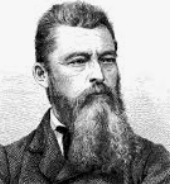
But like the desire for eternal life, the desire for omniscience and absolute perfection is merely an imaginary desire; and, as history and daily experience prove, the supposed human striving for unlimited knowledge and perfection is a myth. Man has no desire to know everything; he only wants to know the things to which he is particularly drawn.
▼
Source
source
Lecture XXX, Atheism alone a Positive View

3 months 4 days ago
What I have given in the second book on the nature and properties of curved lines, and the method of examining them, is, it seems to me, as far beyond the treatment in the ordinary geometry, as the rhetoric of Cicero is beyond the a, b, c of children.
▼
Source
source
Letter to Marin Mersenne (1637) as quoted by D. E. Smith & M. L. Latham Tr. The Geometry of René Descartes

2 months 1 week ago
The most momentous thing in human life is the art of winning the soul to good or to evil.
▼
Source
source
As quoted in Lives and Opinions of Eminent Philosophers, as translated by Robert Drew Hicks (1925)

3 months 3 weeks ago
The ancient philosophers... all of them assert that the elements, and those things which are called by them principles, are contraries, though they establish them without reason, as if they were compelled to assert this by truth itself. They differ, however... that some of them assume prior, and others posterior principles; and some of them things more known according to reason, but others such as are more known according to sense: for some establish the hot and the cold, others the moist and the dry, others the odd and the even, and others strife and friendship, as the causes of generation. ...in a certain respect they assert the same things, and speak differently from each other. They assert different things... but the same things, so far as they speak analogously. For they assume principles from the same co-ordination; since, of contraries, some contain, and others are contained.
2 months 3 weeks ago
The human body is essentially something other than an animal organism.
▼
Source
source
Letter on Humanism

1 month 1 week ago
The heart, oddly enough, seems to be the essential organ concerned. When we are in a hurry or doing something we dislike, we clench the heart, exactly like clenching a fist, and nothing can get in. When we are filled with a sense of multiplicity and excitement we somehow 'open' the heart and allow reality to flow in. But in that state we only need to entertain the shadow of some unpleasant thought for it to close again. And human beings are so naturally prone to mistrust that it is hard to maintain the openness for very long. Children on the other hand find it easy to slip into states of wonder and delight when the heart finally opens so wide that the whole world seems magical. the 'trick' of the peak experience lies in this ability to relax out of our usual defensive posture and to 'open the heart'.
▼
Source
source
p. 360

3 months 1 week ago
In order to enter into a real knowledge of your condition, consider it in this image: A man was cast by a tempest upon an unknown island, the inhabitants of which were in trouble to find their king, who was lost; and having a strong resemblance both in form and face to this king, he was taken for him, and acknowledged in this capacity by all the people.

7 months 2 days ago
If we merely wait for the appropriate moment we will never live to see it, because this [appropriate moment] cannot arrive without the subjective conditions of the maturity of the revolutionary force being fulfilled - it can only arrive after a series of failed attempts.

1 month 1 week ago
There is no greater fallacy than the belief that aims and purposes are one thing, while methods and tactics are another, This conception is a potent menace to social regeneration. All human experience teaches that methods and means cannot be separated from the ultimate aim. The means employed become, through individual habit and social practice, part and parcel of the final purpose; they influence it, modify it, and presently the aims and means become identical.
2 months 3 weeks ago
All the thoughts of a turtle are turtle.
▼
Source
source
1855
1 month 3 weeks ago
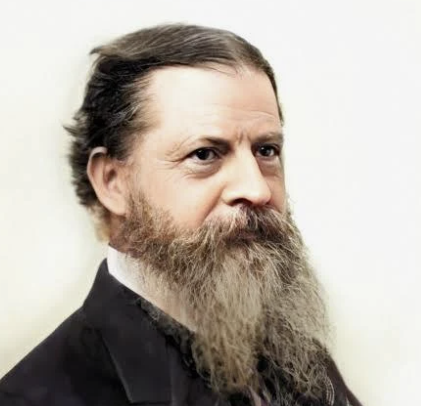
In an article published in The Monist for January, 1891, I endeavored to show what ideas ought to form the warp of a system of philosophy, and particularly emphasized that of absolute chance. In the number of April, 1892, I argued further in favor of that way of thinking, which it will be convenient to christen tychism (from τύχη, chance). A serious student of philosophy will be in no haste to accept or reject this doctrine; but he will see in it one of the chief attitudes which speculative thought may take, feeling that it is not for an individual, nor for an age, to pronounce upon a fundamental question of philosophy. That is a task for a whole era to work out. I have begun by showing that tychism must give birth to an evolutionary cosmology, in which all the regularities of nature and of mind are regarded as products of growth, and to a Schelling-fashioned idealism which holds matter to be mere specialized and partially deadened mind.
3 months 3 weeks ago
Liars ... when they speak the truth they are not believed.
2 months 3 weeks ago
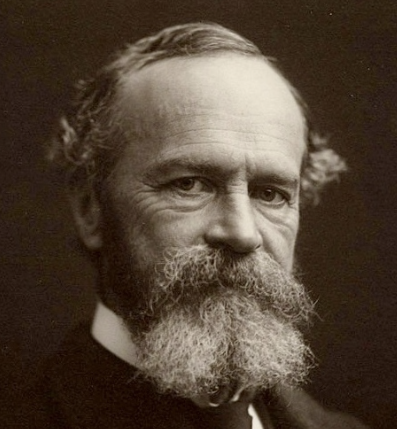
Who does not see that we are likely to ascertain the distinctive significance of religious melancholy and happiness, or of religious trances, far better by comparing them as conscientiously as we can with other varieties of melancholy, happiness, and trance, than by refusing to consider their place in any more general series, and treating them as if they were outside of nature's order altogether?
▼
Source
source
Lecture I, "Religion and Neurology"

1 month 2 weeks ago
The concept of labor is not peripheral in Hegel's system, but is the central notion through which he conceives the development of society. Driven by the insight that opened this dimension to him, Hegel describes the mode of integration prevailing in a commodity-producing society in terms that clearly fore-shadow Marx's critical approach.
▼
Source
source
P. 78
1 month 1 week ago
They certainly demonstrate that Seth, whether an aspect of Jane Robert's unconscious mind or a genuine "spirit," was of a high level of intelligence. Yet when Jane Roberts produced a book that purported to be the after-death journal of the philosopher William James, it was difficult to take it seriously. James's works are noted for their vigour and clarity of style; Jane Robert's "communicator" writes like an undergraduate . . . there is a clumsiness here that is quite unlike James's swift-moving, colloquial prose.
▼
Source
source
p. 390

2 months 3 weeks ago
The doctrine of the Second Coming teaches us that we do not and cannot know when the world drama will end. The curtain may be rung down at any moment: say, before you have finished reading this paragraph.

2 months 3 weeks ago
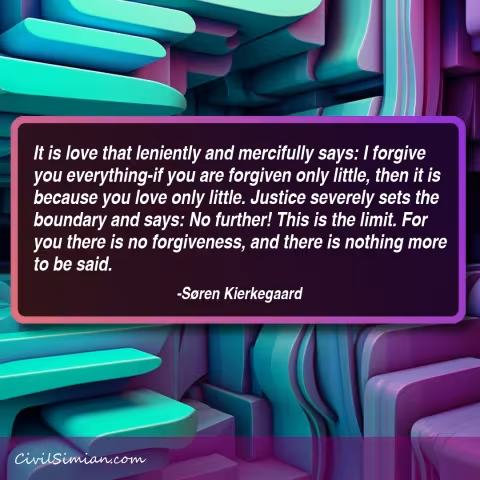
Sunshine cannot bleach the snow, Nor time unmake what poets know.
▼
Source
source
"The Test", as quoted in Emerson As A Poet (1883) by Joel Benton, p. 40
2 months 3 weeks ago
The best university that can be recommended to a man of ideas is the gauntlet of the mobs.
▼
Source
source
Eloquence
1 month 1 week ago
The life of Berdyaev spans the momentous events of the first half of the twentieth century in Europe. He was no ivory tower philosopher but was intimately affected by these events throughout his life and drew his inspirations from them regarding the nature of the human condition. His writings bear the imprint of the catastrophic situations within which he was destined to live.
▼
Source
source
Richard Schain, in In Love with Eternity : Philosophical Essays and Fragments (2005), Ch. 7 : Nikolai Alexandrovich Berdyaev - A Champion of the Spirit, p. 43
1 month 1 week ago
In training a child to activity of thought, above all things we must beware of what I will call "inert ideas"-that is to say, ideas that are merely received into the mind without being utilised, or tested, or thrown into fresh combinations.In the history of education, the most striking phenomenon is that schools of learning, which at one epoch are alive with a ferment of genius, in a succeeding generation exhibit merely pedantry and routine. The reason is, that they are overladen with inert ideas. Education with inert ideas is not only useless: it is, above all things, harmful.
6 days ago
Philosophy is an everlasting fire, sometimes damped down by setting itself limits, then flaring into new life as it consumes them. Every field of inquiry is limited, but philosophy has an essential relation to the question of limits, to its own limits.
▼
Source
source
Introduction, p. xiii
3 weeks 5 days ago
The whole plan of our order should be based on the idea of preparing men of firmness and virtue bound together by unity of conviction-aiming at the punishment of vice and folly, and patronizing talent and virtue: raising worthy men from the dust and attaching them to our Brotherhood. Only then will our order have the power unobtrusively to bind the hands of the protectors of disorder and to control them without their being aware of it. In a word, we must found a form of government holding universal sway, which should be diffused over the whole world without destroying the bonds of citizenship, and beside which all other governments can continue in their customary course and do everything except what impedes the great aim of our order, which is to obtain for virtue the victory over vice.
▼
Source
source
Book VI, Chapter VII
1 month 3 weeks ago
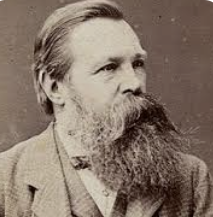
Lassalle. It would be a pity about the fellow because of his great ability, but these goings-on are really too bad. He was always a man one had to keep a devilish sharp eye on and as a real Jew from the Slav border was always to exploit anyone for his own private ends on party pretexts. And then his urge to push his way into polite society, de parvenir, if only for appearance's sake, to disguise the greasy Breslau Jew with all kinds of pomade and paint was always repulsive.
▼
Source
source
Letter to Karl Marx (7 March 1856), quoted in The Collected Works of Karl Marx and Friedrich Engels: Volume 40. Letters 1856-59 (2010), p. 27
1 month 1 week ago
Nietzsche's great concept of Yea-saying gave him a notion of purpose that is seen as positive.
▼
Source
source
Nietzsche, in short, was a religious mystic. p. 275
2 months 3 weeks ago
Every way of classifying a thing is but a way of handling it for some particular purpose.

2 months 4 weeks ago
How much education may reconcile young people to pain and sufference, the examples of Sparta do sufficiently shew; and they who have once brought themselves not to think bodily pain the greatest of evils, or that which they ought to stand most in fear of, have made no small advance toward virtue.
▼
Source
source
Sec. 115

2 months 2 weeks ago
If the world should break and fall on him, it would strike him fearless.
▼
Source
source
Book III, ode iii, line 7
1 week 2 days ago
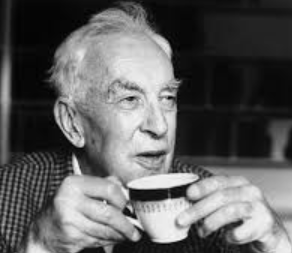
It is a paradoxical but profoundly true and important principle of life that the most likely way to reach a goal is to be aiming not at that goal itself but at some more ambitious goal beyond it.
▼
Source
source
Vol. 7 (1954). Also in Civilization on Trial (1957 ) p. 247
2 months 3 weeks ago
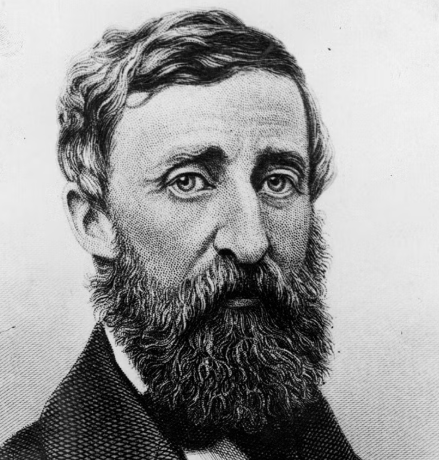
It is remarkable that, notwithstanding the universal favor with which the New Testament is outwardly received, and even the bigotry with which it is defended, there is no hospitality shown to, there is no appreciation of, the order of truth with which it deals.
1 month 3 weeks ago
We have an enemy, to whose virtues we can owe nothing; but on this occasion we are infinitely obliged to one of his vices. We owe more to his insolence than to our own precaution.
▼
Source
source
p.3

3 months ago
Whenever the legislature attempts to regulate the differences between masters and their workmen, its counsellors are always the masters. When the regulation, therefore, is in favor of the workmen, it is always just and equitable; but it is sometimes otherwise when in favor of the masters.
▼
Source
source
Chapter x, Part II, p. 168.
3 months 1 week ago
Yes, you see the Trinity if you see charity.
▼
Source
source
De Trinitate VIII 8,12.

2 months 3 weeks ago
Justice is what love looks like in public.
▼
Source
source
Brother West (2009), p. 232
CivilSimian.com created by AxiomaticPanic, CivilSimian, Kalokagathia