
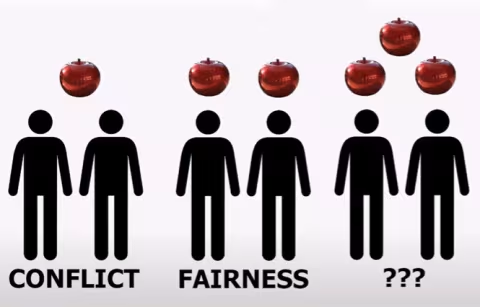
I started my YouTube channel to make this one video basically.
Universal Humanism
1. Survive.
2. Don't prevent another's survival.
3. Help the less fortunate.
https://youtu.be/UekDo_WVQAg


All the evolution we know of proceeds from the vague to the definite.
The man that does not know himself not to be at the mercy of other men, that does not feel that he is invulnerable to all the vicissitudes of fortune, is incapable of a constant and inflexible virtue.
This adoration, too, was not the same as the worship of God. In my opinion they did not yet recognize him as God, but they acted in keeping with the custom mentioned in Scripture, according to which Kings and important people were worshiped; this did not mean more than falling down before them at their feet and honoring them.

No protracted war can fail to endanger the freedom of a democratic country.
The third kind of life is the life of contemplation.
The purpose of the State is, as we have already shown in our last lecture, no other than that of the Human Race itself:-to order all its relations according to the Laws of Reason. It is only after the Age of Reason as Science shall have been traversed, and we shall have arrived at the Age of Reason as Art, that the State can reflect upon this purpose with clear consciousness. Till then it constantly promotes this purpose, but without its own knowledge, or free pre meditated design; prompted thereto by the natural law of the development of our Race, even while it has a totally different purpose in view;-with which purpose of its own, Nature has indissolubly bound up the purpose of the whole Race.

In the performance of an illocutionary act in the literal utterance of a sentence, the speaker intends to produce a certain effect by means of getting the hearer to recognize his intention to produce that effect; and furthermore, if he is using the words literally, he intends this recognition to be achieved in virtue of the fact that the rules for using the expressions he utters associate the expression with the production of that effect.
There never comes a point where a theory can be said to be true. The most that one can claim for any theory is that it has shared the successes of all its rivals and that it has passed at least one test which they have failed.
He has been named respectively, Jehovah, Allah, Brahma, Father in Heaven, Order of Heaven, First Cause, Supreme Being, Chance. Each name corresponds to a system of thought derived from the experiences of those who have used it.Among medieval and modern philosophers, anxious to establish the religious significance of God, an unfortunate habit has prevailed of paying Him metaphysical compliments. He has been conceived as the foundation of the metaphysical situation with its ultimate activity. If this conception be adhered to, there can be no alternative except to discern in Him the origin of all evil as well as of all good. He is then the supreme author of the play, and to Him must therefore be ascribed its shortcomings as well as its success.

Earth laughs in flowers to see her boastful boys Earth-proud, proud of the earth which is not theirs; Who steer the plough, but can not steer their feet Clear of the grave.
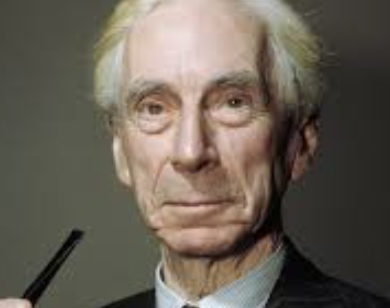
All human activity is prompted by desire. There is a wholly fallacious theory advanced by some earnest moralists to the effect that it is possible to resist desire in the interests of duty and moral principle. I say this is fallacious, not because no man ever acts from a sense of duty, but because duty has no hold on him unless he desires to be dutiful. If you wish to know what men will do, you must know not only, or principally, their material circumstances, but rather the whole system of their desires with their relative strengths.
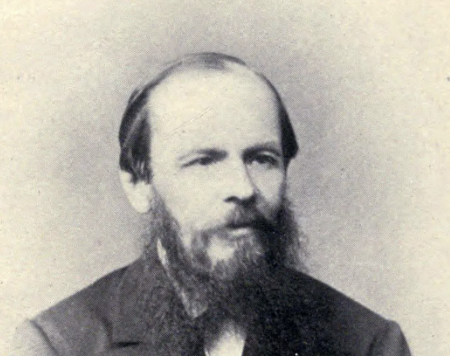
I go to spread the tidings, I want to spread the tidings - of what? Of the truth, for I have seen it, have seen it with my own eyes, have seen it in all its glory.

The best and greatest winning is a true friend; and the greatest loss is the loss of time.
The argument of this book is that we, and all other animals, are machines created by our genes.
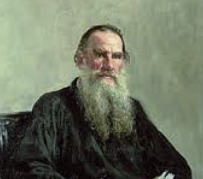
Government is violence, Christianity is meekness, non-resistance, love. And, therefore, government cannot be Christian, and a man who wishes to be a Christian must not serve government.

The exploration of oneself is usually also an exploration of the world at large, of other writers, a process of comparison with oneself with others, discoveries of kinships, gradual illumination of one's own potentialities.
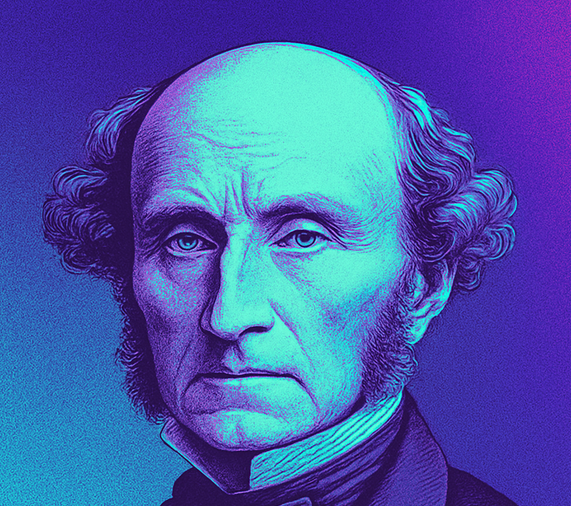
The writers by whom, more than by any others, a new mode of political thinking was brought home to me, were those of the St. Simonian school in France. In 1829 and 1830 I became acquainted with some of their writings. They were then only in the earlier stages of their speculations. They had not yet dressed out their philosophy as a religion, nor had they organized their scheme of Socialism. They were just beginning to question the principle of hereditary property. I was by no means prepared to go with them even this length; but I was greatly struck with the connected view which they for the first time presented to me, of the natural order of human progress; and especially with their division of all history into organic periods and critical periods.
Things added to things, as statistics, civil history, are inventories. Things used as language are inexhaustibly attractive.

Never stay up on the barren heights of cleverness, but come down into the green valleys of silliness.
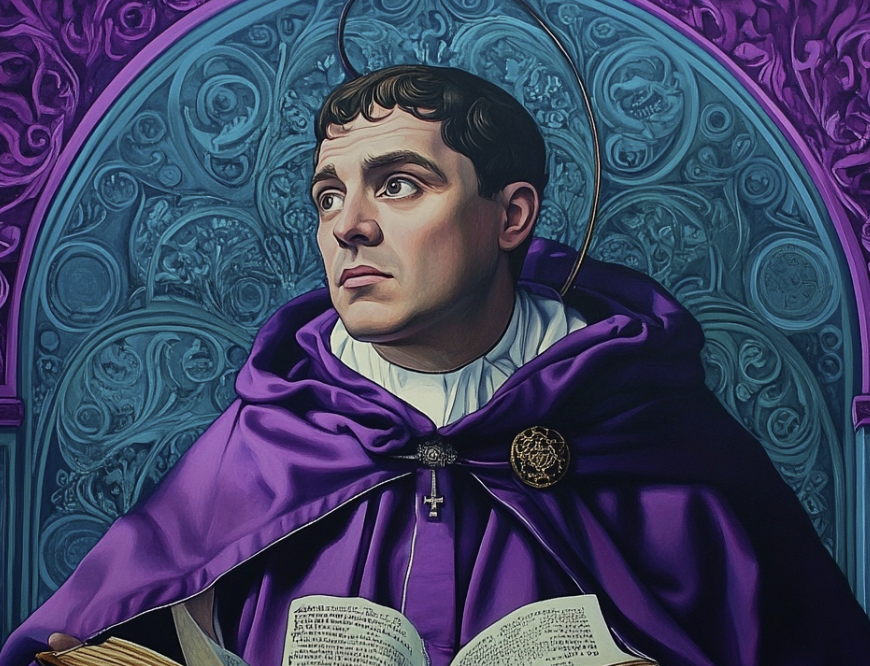
It must be said that charity can, in no way, exist along with mortal sin.
In the inescapable flux, there is something that abides; in the overwhelming permanence, there is an element that escapes into flux. Permanence can be snatched only out of flux; and the passing moment can find its adequate intensity only by its submission to permanence.
They should always be heard, and fairly and kindly answer'd, when they ask after any thing they would know, and desire to be informed about. Curiosity should be as carefully cherish'd in children, as other appetites suppress'd.
He is a fool who lets slip a bird in the hand for a bird in the bush.
If you say that this is absurd, that we cannot be in love with everyone at once, I merely point out to you that, as a matter of fact, certain persons do exist with an enormous capacity for friendship and for taking delight in other people's lives; and that such person know more of truth than if their hearts were not so big. The vice of ordinary Jack and Jill affection is not its intensity, but its exclusions and its jealousies. Leave those out, and you see that the ideal I am holding up before you, however impracticable to-day, yet contains nothing intrinsically absurd.

If man has learned to see and know what really is, he will act in accordance with truth, Epistemology is in itself ethics, and ethics is epistemology.
This is probably the fundamental dimension of 'ideology': ideology is not simply a 'false consciousness', an illusory representation of reality, it is rather this reality itself which is already to be conceived as 'ideological' - 'ideological' is a social reality whose very existence implies the non-knowledge of its participants as to its essence -that is, the social effectivity, the very reproduction of which implies that the individuals 'do not know what they are doing'. 'Ideological is not the false consciousness of a (social) being but this being itself in so far as it is supported by "false consciousness"'. Thus we have finally reached the dimension of the symptom, because one of its possible definitions would also be 'a formation whose very consistency implies a certain non-knowledge on the part of the subject': the subject can 'enjoy his symptom' only in so far as its logic escapes him - the measure of the success of its interpretation is precisely its dissolution.
Thus the universe is to be conceived as attaining the active self-expression of its own variety of opposites of its own freedom and its own necessity, of its own multiplicity and its own unity, of its own imperfection and its own perfection. All the opposites are elements in the nature of things, and are incorrigibly there. The concept of God is the way in which we understand this incredible fact that what cannot be, yet is.
The precepts "Love your enemies, do good to them which hate you, bless them that curse you" ... are born from the Gospel's profound spirit of individualism, which refuses to let one's own actions and conduct depend in any way on somebody else's acts. The Christian refuses to let his acts be mere reactions-such conduct would lower him to the level of his enemy. The act is to grow organically from the person, "as the fruit from the tree." ... What the Gospel demands is not a reaction which is the reverse of the natural reaction, as if it said: "Because he strikes you on the cheek, tend the other"-but a rejection of all reactive activity, of any participation in common and average ways of acting and standards of judgment.
No artist can develop without increasing his self-knowledge; but self-knowledge supposes a certain preoccupation with the meaning of human life and the destiny of man. A definite set of beliefs - Methodist Christianity, for example - may only be a hindrance to development; but it is not more so than Beckett's refusal to think at all. Shaw says somewhere that all intelligent men must be preoccupied with either religion, politics, or sex. (He seems to attribute T. E. Lawrence's tragedy to his refusal to come to grips with any of them.) It is hard to see how an artist could hope to achieve any degree of self-knowledge without being deeply concerned with at least one of the three.
He who bases or thinks he bases his conduct - his inward or his outward conduct, his feeling or his action - upon a dogma or a principle which he deems incontrovertible, runs the risk of becoming a fanatic, and moreover, the moment that this dogma is weakened or shattered, the morality based upon it gives way. If the earth that he thought firm begins to rock, he himself trembles at the earthquake, for we do not all come up to the standard of the ideal Stoic who remains undaunted among the ruins of a world shattered into atoms. Happily the stuff that is underneath a man's ideas will save him. For if a man should tell you that he does not defraud or cuckold his best friend only because he is afraid of hell, you may depend upon it that neither would he do so even if he were to cease to believe in hell, but that he would invent some other excuse instead. And this is all to the honor of the human race.
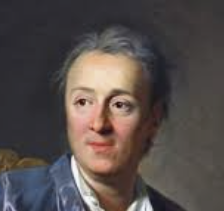
Justice is the first virtue of those who command, and stops the complaints of those who obey.
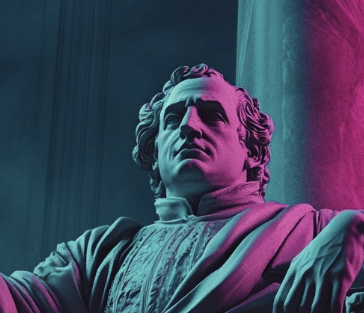
Here then we may learn the fallacy of the remark... that any particular state is weak, though fertile, populous, and well cultivated, merely because it wants money. It appears that the want of money can never injure any state within itself: For men and commodities are the real strength of any community. It is the simple manner of living which here hurts the public, by confining the gold and silver to few hands, and preventing its universal diffusion and circulation. On the contrary, industry and refinements of all kinds incorporate it with the whole state, however small its quantity may be: They digest it into every vein, so to speak; and make it enter into every transaction and contract.
The Age of Writing has passed. We must invent a new metaphor, restructure our thoughts and feelings.
Life is not so short but that there is always time enough for courtesy.
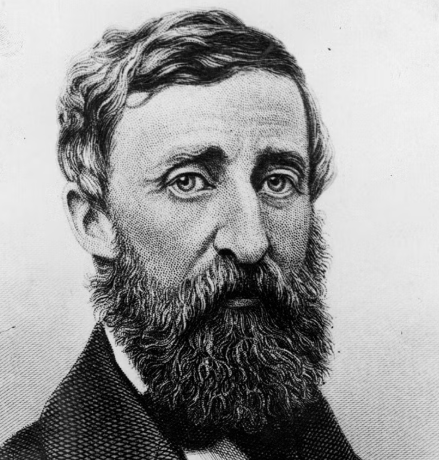
In the Hindoo scripture the idea of man is quite illimitable and sublime. There is nowhere a loftier conception of his destiny. He is at length lost in Brahma himself 'the divine male.' ... there is no grandeur conception of creation anywhere .... The very indistinctness of its theogeny implies a sublime truth.
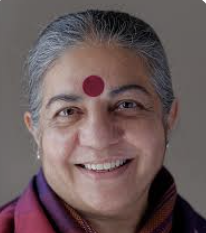
It is the indignity of being treated as disposable that pushes people towards religious fundamentalism in order to retrieve a sense of self, of meaning, of significance. This is why globalization breeds religious fundamentalism and free markets create terrorism and extremism, not democracy.
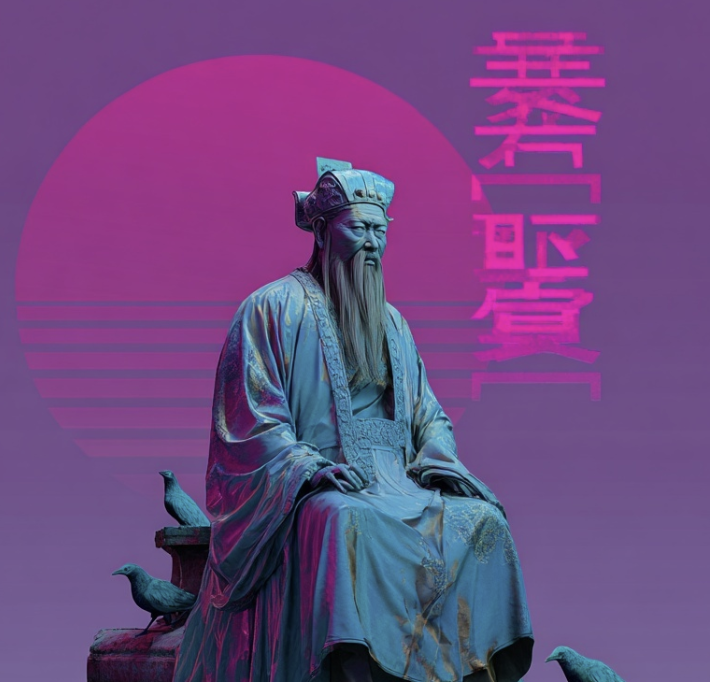
The superior man honors his virtuous nature, and maintains constant inquiry and study, seeking to carry it out to its breadth and greatness, so as to omit none of the more exquisite and minute points which it embraces, and to raise it to its greatest height and brilliancy, so as to pursue the course of the Mean. He cherishes his old knowledge, and is continually acquiring new. He exerts an honest, generous earnestness, in the esteem and practice of all propriety. Thus, when occupying a high situation he is not proud, and in a low situation he is not insubordinate. When the kingdom is well governed, he is sure by his words to rise; and when it is ill governed, he is sure by his silence to command forbearance to himself.
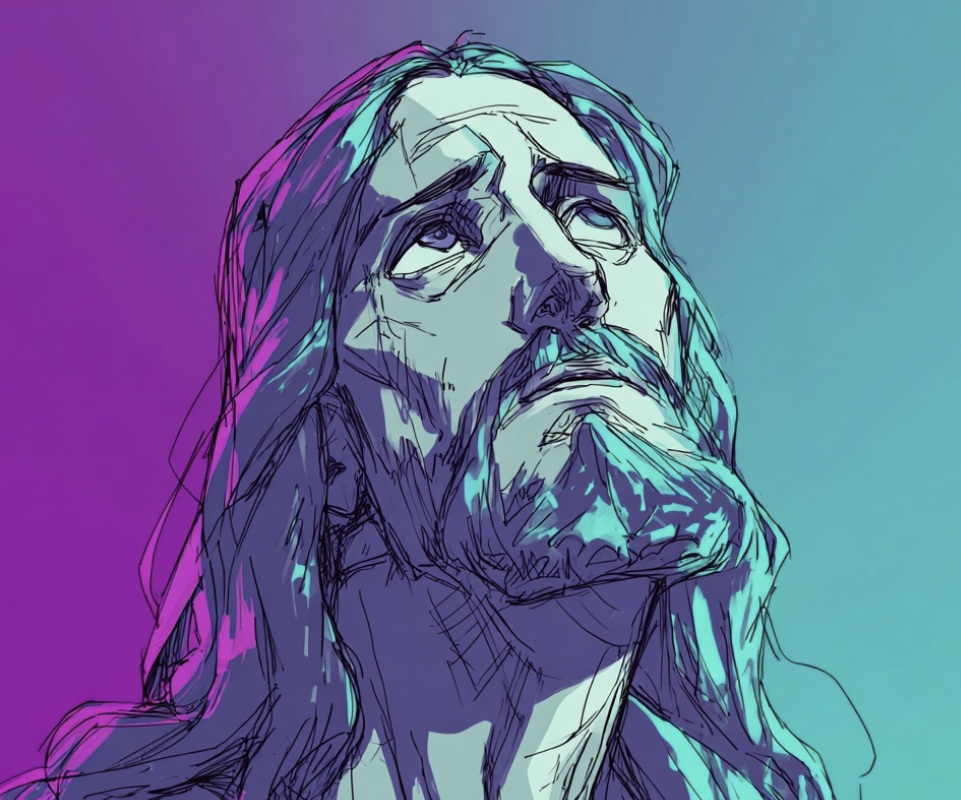
If you fast, you will give rise to sin for yourselves; and if you pray, you will be condemned; and if you give alms, you will do harm to your spirits. When you go into any land and walk about in the districts, if they receive you, eat what they will set before you, and heal the sick among them. For what goes into your mouth will not defile you, but that which issues from your mouth—it is that which will defile you.

Of course God knew what would happen if they used their freedom the wrong way: apparently He thought it worth the risk.
In philosophical anthropology, ... where the subject is man in his wholeness, the investigator cannot content himself, as in anthropology as an individual science, with considering man as another part of nature and with ignoring the fact that he, the investigator, is himself a man and experiences this humanity in his inner experience in a way that he simply cannot experience any part of nature.
The world is sacred because it gives an inkling of a meaning that escapes us.
Justice respects man as living in society, and is the common bond without which no society can subsist.
The universal and lasting establishment of peace constitutes not merely a part, but the whole final purpose and end of the science of right as viewed within the limits of reason.
An eternal purgatory, then, rather than a heaven of glory; an eternal ascent. If there is an end to all suffering, however pure and spiritualized we may suppose it to be, if there is an end to all desire, what is it that makes the blessed in paradise go on living? If in paradise they do not suffer for want of God, how shall they love Him? And if there, in the heaven of glory, while they behold God little by little and closer and closer, yet without ever wholly attaining Him, there does not always remain something more for them to know and desire, if there does not always remain a substratum of doubt, how shall they not fall asleep?
Philosophy, as I understand the word, is a positive theoretical science, and a science in an early stage of development. As such it has no more to do with belief than any other science. Indeed, I am bound to confess that it is at present in so unsettled a condition, that if the ordinary theorems of molecular physics and of archaeology are but the ghosts of beliefs, then to my mind, the doctrines of the philosophers are little better than the ghosts of ghosts. I know this is an extremely heretical opinion.
A purely disembodied human emotion is a nonentity.
That which is desirable on its own account and for the sake of knowing it is more of the nature of wisdom than that which is desirable on account of its results.
Political questions are far too serious to be left to the politicians.
In all ages of the world, priests have been enemies to liberty; and it is certain, that this steady conduct of theirs must have been founded on fixed reasons of interest and ambition. Liberty of thinking, and of expressing our thoughts, is always fatal to priestly power, and to those pious frauds, on which it is commonly founded; and, by an infallible connexion, which prevails among all kinds of liberty, this privilege can never be enjoyed, at least has never yet been enjoyed, but in a free government.
CivilSimian.com created by AxiomaticPanic, CivilSimian, Kalokagathia