

2 weeks 3 days ago
In all the areas of life where people have sought and found consolation through forbidding their desires-sex in particular, and taste in general-the habit of judgment is now to be stamped out.
▼
Source
source
"Rays of Hope" (p. 106)

2 months 3 weeks ago
The law of causality, I believe, like much that passes muster among philosophers, is a relic of a bygone age, surviving, like the monarchy, only because it is erroneously supposed to do no harm.
▼
Source
source
Ch. 9: On the Notion of Cause
2 months 6 days ago
Hope is the only good that is common to all men; those who have nothing else possess hope still.
▼
Source
source
A Dictionary of Thoughts (1908) by Tryon Edwards, p. 234



2 months 2 weeks ago
He who abhors and shuns the light of the Sun, He who refuses to behold with respect the living creation of God, He who leads the good to wickedness, He who makes the meadows waterless and the pastures desolate, He who lets fly his weapon against the innocent, An enemy of my faith, a destroyer of Thy principles is he, O Lord!
▼
Source
source
Ahunuvaiti Gatha; Yasna 32, 10.
1 month 1 week ago
A farewell does not dilute the presence of the past; it may make an even deeper presence.
2 months 3 weeks ago
Whatever happens, I cannot be a silent witness to murder or torture. Anyone who is a partner in this is a despicable individual. I am sorry I cannot be moderate about it...
▼
Source
source
Quoted in The New York Times Biographical Service, Vol. I (1970), p. 294, said by Russell "in the spring of 1967"
1 month 2 weeks ago
Imminent seems the collapse of that which for millennium has constituted man's universe. The new world which has arisen as an apparatus for supply of the necessaries of life compels everything and everyone to serve it. It annihilates whatever it has no place for person seems to be going undergoing absorption into that which is nothing more than a means to an end, into that which is devoid of purpose of significance.
1 month 3 weeks ago
It may be confidently asserted that no man chooses evil because it is evil; he only mistakes it for happiness, the good he seeks. And the desire of rectifying these mistakes, is the noble ambition of an enlightened understanding, the impulse of feelings that Philosophy invigorates.
▼
Source
source
A Vindication of the Rights of Men
2 months 2 weeks ago
Living a minimally acceptable ethical life involves using a substantial part of our spare resources to make the world a better place. Living a fully ethical life involves doing the most good we can.
▼
Source
source
Preface (p. vii)
3 months 1 week ago
To wisdom belongs the intellectual apprehension of things eternal; to knowledge, the rational apprehension of things temporal.
▼
Source
source
As quoted in The Anchor Book of Latin Quotations: with English translations (1990) by Norbert Guterman, p. 375
1 month 3 weeks ago
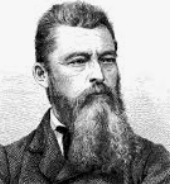
God, I have said, is the fulfiller, or the reality, of the human desires for happiness, perfection, and immortality. From this it may be inferred that to deprive man of God is to tear the heart out of his breast. But I contest the premises from which religion and theology deduce the necessity and existence of God, or of immortality, which is the same thing. I maintain that desires which are fulfilled only in the imagination, or from which the existence of an imaginary being is deduced, are imaginary desires, and not the real desires of the human heart; I maintain that the limitations which the religious imagination annuls in the idea of God or immortality, are necessary determinations of the human essence, which cannot be dissociated from it, and therefore no limitations at all, except precisely in man's imagination.
▼
Source
source
Lecture XXX, Atheism alone a Positive View
2 months 3 weeks ago
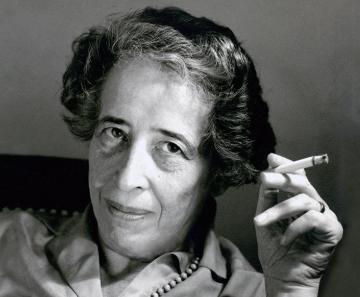
The most radical revolutionary will become a conservative the day after the revolution.
▼
Source
source
The New Yorker

1 month 2 weeks ago
When we are young, we take a certain pleasure in our infirmities. They seem so new, so rich! With age, they no longer surprise us, we know them too well. Now, without anything unexpected in them, they do not deserve to be endured.
2 months 3 weeks ago
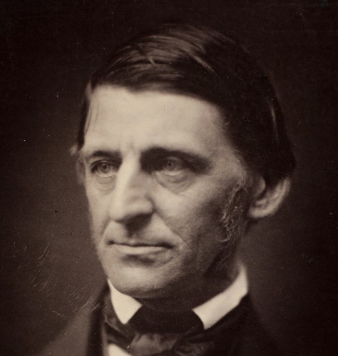
But genius looks forward: the eyes of men are set in his forehead, not in his hindhead: man hopes: genius creates.
▼
Source
source
par. 18
2 months 3 weeks ago
A religious creed differs from a scientific theory in claiming to embody eternal and absolutely certain truth, whereas science is always tentative, expecting that modification in its present theories will sooner or later be found necessary, and aware that its method is one which is logically incapable of arriving at a complete and final demonstration.
▼
Source
source
Religion and Science (1935), Ch. I: Ground of Conflict
1 month 2 weeks ago
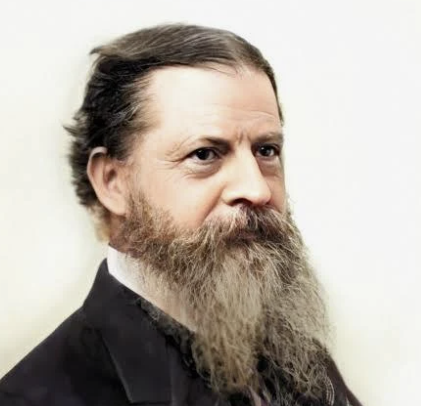
Mere imagination would indeed be mere trifling; only no imagination is mere.
▼
Source
source
Vol. VI, par. 286
2 months 1 week ago
Themistocles being asked whether he would rather be Achilles or Homer, said, "Which would you rather be,-a conqueror in the Olympic games, or the crier that proclaims who are conquerors?"
▼
Source
source
48 Themistocles

3 months 3 weeks ago
I have worked for this restlessness oriented toward inward deepening. But without authority. Instead of conceitedly making myself out to be a witness for the truth and causing others rashly to want to be the same, I am an unauthorized poet who influences by means of the ideas.
1 month 1 week ago
The history of the Romanovs is an Elizabethan tragedy that lasts for three centuries. Its keynote is cruelty, a barbaric, pointless kind of cruelty that has always been common in the East, but that came to Europe only recently, in the time of Hitler.
▼
Source
source
pp. 61-62
3 weeks 1 day ago
I don't explain-I explore.
2 months 2 weeks ago
Practice no sloth, so that the duty and good work, which it is necessary for thee to do, may not remain undone.
▼
Source
source
(p. 59)
1 month 3 weeks ago
What, then, is the animal? First of all, a system of plant-souls. The unity of those plant-souls, which unity nature itself produces, is the soul of the animal. Its world is therefore partly that of the plants - its nourishment, for instance, it receives partly through synthesis from vegetable, and through analysis from animal nature - and partly that of the animals, whereof we shall speak directly. Each product of nature is an organically in-itself completed totality in space, like the plant. Hence, the unknown x which we are looking for must also be such a whole or totality, and in so far it must also have a principle of organization, a sphere and central point of this organization ; in short, the same which we have called the soul of the plant, which thus remains common to both. ... The animal is a system of plant-souls, and the plant is a separated, isolated part of an animal. Both reciprocally affect each other.
▼
Source
source
P. 502, 503, 504
1 month 2 weeks ago
Our questions and answers are in part determined by the historical tradition in which we find ourselves. We apprehend truth from our own source within the historical tradition. The content of our truth depends upon our appropriating the historical foundation. Our own power of generation lies in the rebirth of what has been handed down to us. If we do not wish to slip back, nothing must be forgotten; but if philosophising is to be genuine our thoughts must arise from our own source. Hence all appropriation of tradition proceeds from the intentness of our own life. The more determinedly I exist, as myself, within the conditions of the time, the more clearly I shall hear the language of the past, the nearer I shall feel the glow of its life.
1 month 6 days ago
Only the person who has faith in himself is able to be faithful to others.
▼
Source
source
Ch. 4
2 months 3 weeks ago
Democracy is the process by which people choose the man who'll get the blame.
▼
Source
source
Attributed to Russell in Geary's Guide to the World's Great Aphorists (2007), p. 346

3 months 2 weeks ago
There is nothing more visible than what is secret, and nothing more manifest than what is minute. Therefore the superior man is watchful over himself, when he is alone.
2 weeks 3 days ago
Conservatism is itself a modernism, and in this lies the secret of its success.
▼
Source
source
"Eliot and Conservatism" (p. 194)
2 months 4 weeks ago
Thus there is nothing waste, nothing dead in the universe; no chaos, no confusions, save in appearence. We might compare this to the appearence of a pond in the distance, where we can see the confused movement and swarming of the fish, without distinguishing the fish themselves.Thus we are that each living body has a dominante entelechy, which in case of an animal is the soul, but the members of this living body are full of other living things, plants and animals, of which each has in turn ita dominant entelechy or soul.
▼
Source
source
Monadology (69-70).

1 month 4 weeks ago
In countries where associations are free, secret societies are unknown. In America there are factions, but no conspiracies.
▼
Source
source
Chapter XII.
3 months 3 weeks ago
If the love of money is the root of all evil, the need of money is most certainly the root of all despair.
1 month 4 weeks ago
The French are ... the most brilliant and the most dangerous nation of Europe, and the one that is surest to inspire admiration, hatred, terror, or pity, but never indifference.
▼
Source
source
p. 245
2 months 3 weeks ago
The bluebird carries the sky on his back.
▼
Source
source
April 3, 1852
2 months 4 weeks ago
The statesman who should attempt to direct people in what manner they ought to employ their capitals, would not only load himself with a most unnecessary attention, but assume an authority which could safely be trusted, not only to no single person, but to no council or senate whatever, and which would nowhere be so dangerous as in the hands of a man who had folly and presumption enough to fancy himself fit to exercise it.
▼
Source
source
Chapter II

3 months 3 weeks ago
Let's not beat around the bush; I love life, that's my real weakness. I love it so much that I am incapable of imagining what is not life.
1 month 2 weeks ago
Labor is a commodity, like any other, and its price is therefore determined by exactly the same laws that apply to other commodities. In a regime of big industry or of free competition - as we shall see, the two come to the same thing - the price of a commodity is, on the average, always equal to its cost of production. Hence, the price of labor is also equal to the cost of production of labor. But, the costs of production of labor consist of precisely the quantity of means of subsistence necessary to enable the worker to continue working, and to prevent the working class from dying out. The worker will therefore get no more for his labor than is necessary for this purpose; the price of labor, or the wage, will, in other words, be the lowest, the minimum, required for the maintenance of life.
3 weeks 3 days ago
A Frenchman is self-assured because he regards himself personally, both in mind and body, as irresistibly attractive to men and women. An Englishman is self-assured, as being a citizen of the best-organized state in the world, and therefore as an Englishman always knows what he should do and knows that all he does as an Englishman is undoubtedly correct. An Italian is self-assured because he is excitable and easily forgets himself and other people. A Russian is self-assured just because he knows nothing and does not want to know anything, since he does not believe that anything can be known. The German's self-assurance is worst of all, stronger and more repulsive than any other, because he imagines that he knows the truth - science - which he himself has invented but which is for him the absolute truth.
▼
Source
source
Bk. IX, ch. 10
3 days ago
Why expect a false theory of the world, i.e. classical physics, to yield a true account of consciousness?
▼
Source
source
Social Media Unsorted Postings 2016
3 months 3 weeks ago
The military mind remains unparalleled as a vehicle of creative stupidity.
3 months 3 weeks ago
A robot, the man had said, is logical but not reasonable.
1 month 3 weeks ago
It's easier for a Russian to become an atheist than for anyone else in the world.
▼
Source
source
Part 4, Chapter 7
1 month 3 weeks ago
The arrogance of age must submit to be taught by youth.
▼
Source
source
Letter to Frances Burney
1 month 4 days ago
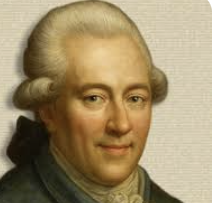
There exists a species of transcendental ventriloquism by means of which men can be made to believe that something said on earth comes from Heaven.
▼
Source
source
F 84
1 month 4 days ago
Nothing can contribute more to peace of soul than the lack of any opinion whatever.
▼
Source
source
E 11
1 week 6 days ago
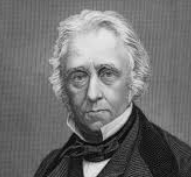
Your Constitution is all sail and no anchor.
▼
Source
source
Letter to H.S. Randall, author of a Life of Thomas Jefferson
1 month 1 week ago
The haste of day rules over the night as empty form.
3 months 2 weeks ago
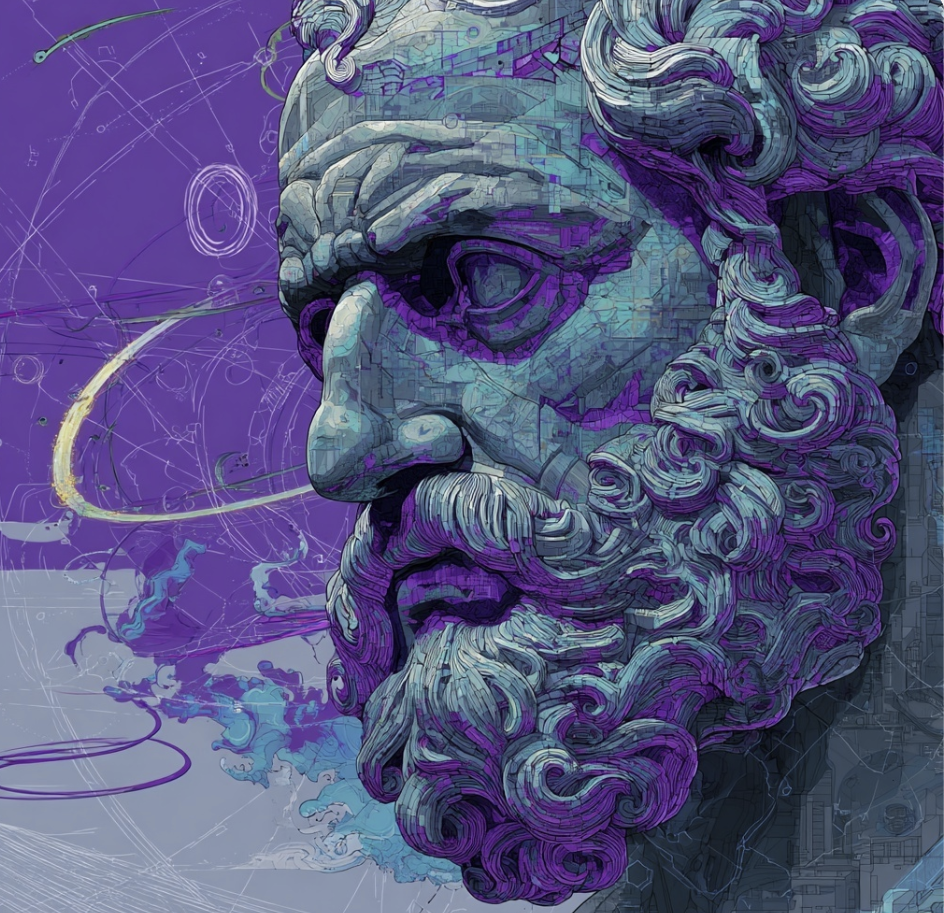
The best people renounce all for one goal, the eternal fame of mortals; but most people stuff themselves like cattle. For what sense or understanding have they? They follow minstrels and take the multitude for a teacher, not knowing that many are bad and few good. For the best men choose one thing above all immortal glory among mortals; but the masses stuff themselves like cattle.
CivilSimian.com created by AxiomaticPanic, CivilSimian, Kalokagathia