


1 month 2 weeks ago
No, you cannot expect people to understand the higher reaches of philosophy. Culture should be taken out of the hands of the dollar chasers. We need a national subsidy for literature. It is disgraceful that artists are treated like peddlers and that art works have to be sold like soap.
2 months 2 weeks ago
The goal of maximizing the welfare of all may be better achieved by an ethic that accepts our inclinations and harnesses them so that, taken as a whole, the system works to everyone's advantage.
▼
Source
source
Chapter 6, A New Understanding Of Ethics, p. 157

1 month 4 weeks ago
"The will of the nation" is one of those expressions which have been most profusely abused by the wily and the despotic of every age.
▼
Source
source
Chapter IV.

3 months 3 weeks ago
Let others complain that the age is wicked; my complaint is that it is paltry; for it lacks passion. Men's thoughts are thin and flimsy like lace, they are themselves pitiable like the lacemakers. The thoughts of their hearts are too paltry to be sinful. For a worm it might be regarded as a sin to harbor such thoughts, but not for a being made in the image of God. Their lusts are dull and sluggish, their passions sleepy. They do their duty, these shopkeeping souls, but they clip the coin a trifle, like the Jews; they think that even if the Lord keeps ever so careful a set of books, they may still cheat Him a little. Out upon them! This is the reason my soul always turns back to the Old Testament and to Shakespeare. I feel that those who speak there are at least human beings; they hate, they love, they murder their enemies, and curse their descendants throughout all generations, they sin.
2 weeks 5 days ago
One feature of our own society that seems decidedly anomalous is the matter of sexual advertisement. As we have seen, it is strongly to be expected on evolutionary grounds that, where the sexes differ, it should be the males that advertise and the females that are drab. Modern western man is undoubtedly exceptional in this respect. It is of course true that some men dress flamboyantly and some women dress drably but, on average, there can be no doubt that in our society the equivalent of the peacock's tail is exhibited by the female, not by the male. Women paint their faces and glue on false eyelashes. Apart from special cases, like actors, men do not. Ch. 9. Battle of the Sexes
1 month 3 weeks ago
The fundamental maxim of those who stand at the head of this Age, and therefore the principle of the Age, is this,-to accept nothing as really existing or obligatory, but that which they can understand and clearly comprehend. With regard to this fundamental principle, as we have now declared and adopted it without farther definition or limitation, this third Age is precisely similar to that which is to follow it, the fourth, or age of Reason as Science,-and by virtue of this similarity prepares the way for it. Before the tribunal of Science, too, nothing is accepted but the Conceivable. Only in the application of the principle there is this difference between the two Ages,-that the third, which we shall shortly name that of Empty Freedom, makes its fixed and previously acquired conceptions the measure of existence; while the fourth-that of Science-on the contrary, makes existence the measure, not of its acquired, but of its desiderated beliefs.
▼
Source
source
p. 19
1 month 3 weeks ago
The fact disclosed by a survey of the past that majorities have usually been wrong, must not blind us to the complementary fact that majorities have usually not been entirely wrong.
▼
Source
source
Pt. I, The Unknowable; Ch. I, Religion and Science
1 month 3 weeks ago
Man needed one moral constitution to fit him for his original state; he needs another to fit him for his present state; and he has been, is, and will long continue to be, in process of adaptation. And the belief in human perfectibility merely amounts to the belief that, in virtue of this process, man will eventually become completely suited to his mode of life. Progress, therefore, is not an accident, but a necessity. Instead of civilization being artificial, it is part of nature; all of a piece with the development of the embryo or the unfolding of a flower. The modifications mankind have undergone, and are still undergoing, result from a law underlying the whole organic creation; and provided the human race continues, and the constitution of things remains the same, those modifications must end in completeness.
▼
Source
source
Pt. I, Ch. 2 : The Evanescence of Evil, concluding paragraph

2 months 2 weeks ago
I don't feel that it is necessary to know exactly what I am. The main interest in life and work is to become someone else that you were not in the beginning. If you knew when you began a book what you would say at the end, do you think that you would have the courage to write it? What is true for writing and for a love relationship is true also for life. The game is worthwhile insofar as we don't know what will be the end. My field is the history of thought. Man is a thinking being.
▼
Source
source
Truth, Power, Self : An Interview with Michel Foucault
1 month 2 weeks ago
Everything ideal has a natural basis and everything natural an ideal development.
1 month 3 days ago
Here take back the stuff that I am, nature, knead it back into the dough of being, make of me a bush, a cloud, whatever you will, even a man, only no longer make me me.
▼
Source
source
B 37 "Speech of a suicide composed shortly before the act."
1 month 1 week ago
The thought of being under absolute compulsion, the plaything of another, is unendurable for a human being. Hence, if every way of escape from the constraint is taken from him, there is nothing left for him to do but to persuade himself that he does the things he is forced to do willingly, that is to say, to substitute devotion for obedience. ... It is by this twist that slavery debases the soul: this devotion is in fact based on a lie, since the reasons for it cannot bear investigation. ... Moreover, the master is deceived too by the fallacy of devotion.
▼
Source
source
p. 142

2 months 3 weeks ago
I remembered the way out suggested by a great princess when told that the peasants had no bread: "Well, let them eat cake".
▼
Source
source
This passage contains a statement Qu'ils mangent de la brioche that has usually come to be attributed to Marie Antoinette; this was written in 1766, when Marie Antoinette was 10
2 months 3 weeks ago
You, your families, your friends and your countries are to be exterminated by the common decision of a few brutal but powerful men. To please these men, all the private affections, all the public hopes, all that has been achieved in art, and knowledge and thought and all that might be achieved hereafter is to be wiped out forever. Our ruined lifeless planet will continue for countless ages to circle aimlessly round the sun unredeemed by the joys and loves, the occasional wisdom and the power to create beauty which have given value to human life.
▼
Source
source
Leaflet issued while Russell was in Brixton Prison, 1961
3 weeks 4 days ago
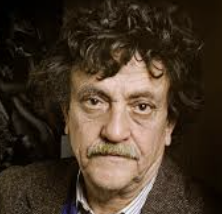
1. Find a subject you care about.2. Do not ramble, though.3. Keep it simple.4. Have the guts to cut.5. Sound like yourself.6. Say what you mean to say.7. Pity the readers.
▼
Source
source
As quoted in Science Fictionisms (1995), compiled by William Rotsler
2 months 3 weeks ago
To be without some of the things you want is an indispensable part of happiness.
2 months 3 weeks ago
The most essential characteristic of scientific technique is that it proceeds from experiment, not from tradition. The experimental habit of mind is a difficult one for most people to maintain; indeed, the science of one generation has already become the tradition of the next...
▼
Source
source
The Scientific Outlook, 1931
1 month 1 day ago
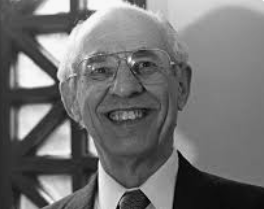
Philosophy was never just ontotheology, and even when philosophers were concerned with ontotheology, they were concerned with much more than that. That is the first reason that the idea of a fundamental "crisis" in philosophy and of the "end of philosophy" is deeply mistaken. And if the questions of philosophy are indeed "unsettleable," in the sense that they will always be with us, that is a wonderful thing, not something to be regretted.
▼
Source
source
Science and Philosophy
1 week 2 days ago
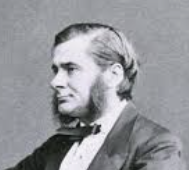
I neither deny nor affirm the immortality of man. I see no reason for believing in it, but, on the other hand, I have no means of disproving it.
1 month 3 weeks ago
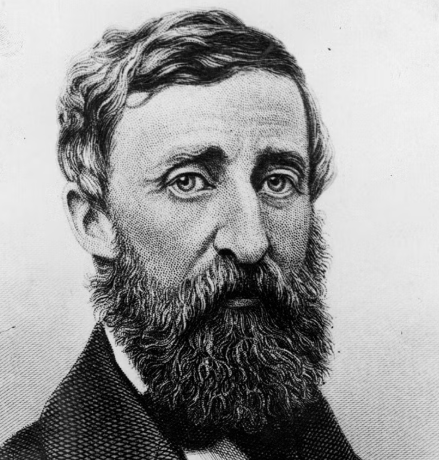
The determination to print them (his lectures), and to communicate them to the General Public, must also speak for itself; and should it not do so, any other recommendation of them would be thrown away. Thus, with respect to the appearance of this work, I have nothing further to say to the Public, than that I have nothing to say.
▼
Source
source
Preface
2 months 3 weeks ago
As if our birth had at first sundered things, and we had been thrust up through into nature like a wedge, and not till the wound heals and the scar disappears, do we begin to discover where we are, and that nature is one and continuous everywhere.
2 months 3 weeks ago
A poem is one undivided unimpeded expression fallen ripe into literature, and it is undividedly and unimpededly received by those for whom it was matured.
1 month 3 weeks ago
Women are systematically degraded by receiving the trivial attentions which men think it manly to pay to the sex, when, in fact, men are insultingly supporting their own superiority.
▼
Source
source
Ch. 4

3 months 3 weeks ago
Philosophy is the science of truth.
2 months 3 weeks ago
Olympian bards who sung Divine ideas below, Which always find us young And always keep us so.
▼
Source
source
Ode to Beauty, st. 2
2 weeks 2 days ago
Writers, poets, painters, musicians, philosophers, political thinkers, to name only a few of the categories affected, must woo their readers, viewers, listeners, from distraction. To this we must add, for simple realism demands it, that these same writers, painters, etc., are themselves the children of distraction. As such, they are peculiarly qualified to approach the distracted multitudes. They will have experienced the seductions as well as the destructiveness of the forces we have been considering here. This is the destructive element in which we do not need to be summoned to immerse ourselves, for we were born to it.
▼
Source
source
The Distracted Public (1990), p. 167
1 month 3 weeks ago
Circumstances (which with some gentlemen pass for nothing) give in reality to every political principle its distinguishing colour, and discriminating effect. The circumstances are what render every civil and political scheme beneficial or noxious to mankind.
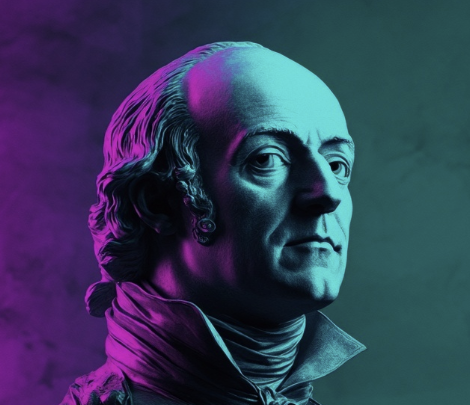
2 months 3 weeks ago
The world neither ever saw, nor ever will see, a perfectly fair lottery.
▼
Source
source
Chapter X, Part I.
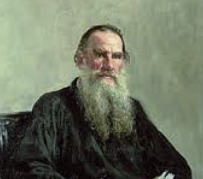
3 weeks 2 days ago
The attitude of the ruling classes to the laborers is that of a man who has felled his adversary to the earth and holds him down, not so much because he wants to hold him down, as because he knows that if he let him go, even for a second, he would himself be stabbed, for his adversary is infuriated and has a knife in his hand. And therefore, whether their conscience is tender or the reverse, our rich men cannot enjoy the wealth they have filched from the poor as the ancients did who believed in their right to it. Their whole life and all their enjoyments are embittered either by the stings of conscience or by terror.
▼
Source
source
Chapter V, Contradiction Between our Life and our Christian Conscience
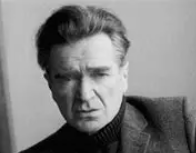
1 month 2 weeks ago
I long to be free - desperately free. Free as the stillborn are free.
2 days ago
The reason for sketching what's technically feasible with the tools of synthetic biology is that only after human complicity in the persistence of suffering in the biosphere is acknowledged can we hope to have an informed socio-political debate on the morality of its perpetuation. No serious ethical discussion of free-living animal suffering can begin in the absence of recognition of human responsibility for nonhuman well-being.
▼
Source
source
Compassionate Biology: How CRISPR-based gene drives" could cheaply, rapidly and sustainably reduce suffering throughout the living world", BLTC Research, 2016
2 months 3 weeks ago
He wanted to assume his entire condition, to carry the world on his shoulders and to become, in defiance of all, what all have made of him.
▼
Source
source
p. 384
1 month 3 weeks ago
The primary use of knowledge is for such guidance of conduct under all circumstances as shall make living complete. All other uses of knowledge are secondary.
▼
Source
source
Vol. 3, Ch. XV, The Americans
3 months 3 weeks ago
It belongs to the imperfection of everything human that man can only attain his desire by passing through its opposite.
1 week 2 days ago
Life is too short to occupy oneself with the slaying of the slain more than once. One of a series of exchanges when Richard Owen repeated generally repudiated claims about the Gorilla brain in a Royal Institution lecture.
▼
Source
source
Athenaeum (13 April 1861) p. 498; Browne Vol 2, p. 159

2 months 3 weeks ago
Though the Earth, and all inferior Creatures be common to all Men, yet every Man has a Property in his own Person. Thus no Body has any Right to but himself.
▼
Source
source
Second Treatise of Government, Ch. V, sec. 27
2 days ago
One should be wary of assuming that we're the folk who can properly look after ourselves, whereas our descendants, if they become genetically pre-programmed ecstatics, will get trapped in robot-serviced states of infantile dependence. For it shouldn't be forgotten that exuberantly happy people also have a fierce will to survive. They love life dearly. They take on daunting challenges against seemingly impossible odds. One of the hallmarks of many endogenous depressive states, on the other hand, is so-called behavioural despair. If one learns that apparently no amount of effort can rescue one from an aversive stimulus, then one tends to sink into a lethargic stupor. This syndrome of "learned helplessness" may persist even when the opportunity to escape from the nasty stimulus subsequently arises.
▼
Source
source
4. Objections, 4.2

3 months 1 week ago
I have read in Plato and Cicero sayings that are very wise and very beautiful; but I never read in either of them, "Come unto me, all ye that labor and are heavy laden."
▼
Source
source
p. 62
2 months 3 weeks ago
Instead of noble men, let us have noble villages of men. If it is necessary, omit one bridge over the river, round a little there and throw one arch at least over the darker gulf of ignorance which surrounds us.
▼
Source
source
Editorial, Andhra Granthalayam, vol. 1, no. 2 (1939) p. 6

3 months 1 day ago
The hair is the finest ornament women have. . . . I like women to let their hair fall down their back, it is a most agreeable sight.
▼
Source
source
-- Table Talk, quoted in Luther On "Woman"
1 month 3 weeks ago
Every other art,-as poetry, music, painting,-may be practised without the process showing forth the rules according to which it is conducted ;-but in the self-cognizant art of the philosopher, no step can be taken without declaring the grounds upon which it proceeds.
▼
Source
source
p. 14
2 months 2 weeks ago
What is more subjective is not necessarily more private. In general it is intersubjectively available. I assume that the intersubjective ideas of experience, of action, and of the self are in some sense public or common property. That is why the problems of mind and body, free will, and personal identity are not just problems about one's own case.
▼
Source
source
"Subjective and Objective" (1979), p. 207.

2 months 1 week ago
So live, my boys, as brave men; and if fortune is adverse, front its blows with brave hearts.
▼
Source
source
Book II, Satire II, Line 135-136 (trans. E. C. Wickham)

3 months 1 week ago
If names be not correct, language is not in accordance with the truth of things. Paraphrased as a chinese proverb stating "The beginning of wisdom is to call things by their proper name."
1 month 6 days ago
Is the child to be considered as an individuality, or as an object to be moulded according to the whims and fancies of those about it? This seems to me to be the most important question to be answered by parents and educators. And whether the child is to grow from within, whether all that craves expression will be permitted to come forth toward the light of day; or whether it is to be kneaded like dough through external forces, depends upon the proper answer to this vital question.

1 month 2 weeks ago
Peace be with you. Receive my peace unto yourselves. Beware that no one lead you astray saying Lo here or lo there! For the Son of Man is within you. Follow after Him! Those who seek Him will find Him. Go then and preach the gospel of the Kingdom. Do not lay down any rules beyond what I appointed you, and do not give a law like the lawgiver lest you be constrained by it.
▼
Source
source
Chapter 4. tion.
1 month 3 days ago
I have written a good number of drafts and small reflections. They are not waiting for the last touch but for the sunlight to wake them up.
▼
Source
source
B 29
3 months 1 week ago
To wisdom belongs the intellectual apprehension of things eternal; to knowledge, the rational apprehension of things temporal.
▼
Source
source
As quoted in The Anchor Book of Latin Quotations: with English translations (1990) by Norbert Guterman, p. 375
1 month 2 weeks ago
Your suffering like your fate is without motive. To suffer, truly to suffer, is to accept the invasion of ills without the excuse of causality, as a favor of demented nature, as a negative miracle...
2 months 1 week ago
The covetous man is ever in want.
▼
Source
source
Book I, epistle ii, line 56
CivilSimian.com created by AxiomaticPanic, CivilSimian, Kalokagathia