


2 months 3 weeks ago
Knowledge is in the end based on acknowledgement.
1 month 3 weeks ago
Our dignity is not in what we do, but in what we understand.
▼
Source
source
p. 50
2 weeks 1 day ago
Education is the instruction of the intellect in the laws of Nature, under which name I include not merely things and their forces, but men and their ways; and the fashioning of the affections and of the will into an earnest and loving desire to move in harmony with those laws. For me, education means neither more nor less than this. Anything which professes to call itself education must be tried by this standard, and if it fails to stand the test, I will not call it education, whatever may be the force of authority, or of numbers, upon the other side.
4 weeks 1 day ago
A man can live and be healthy without killing animals for food; therefore, if he eats meat, he participates in taking animal life merely for the sake of his appetite. And to act so is immoral.
▼
Source
source
Writings on Civil Disobedience and Nonviolence

3 months ago
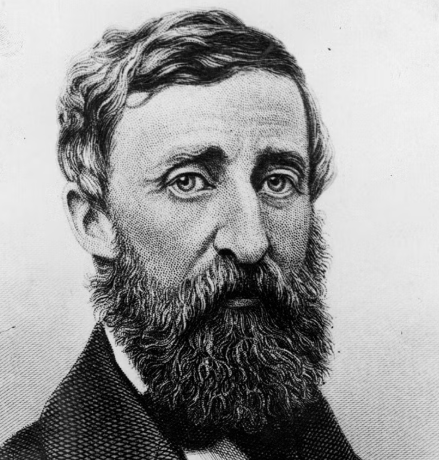
I did not know that mankind were suffering for want of gold. I have seen a little of it. I know that it is very malleable, but not so malleable as wit. A grain of gold will gild a great surface, but not so much as a grain of wisdom.
▼
Source
source
p. 488
1 month 3 weeks ago
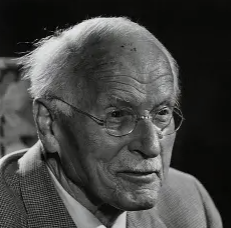
It is only natural that I should constantly have revolved in my mind the question of the relationship of the symbolism of the unconscious to Christianity as well as to other religions. Not only do I leave the door open for the Christian message, but I consider it of central importance for Western man. It needs, however, to be seen in a new light, in accordance with the changes wrought by the contemporary spirit.
3 months 2 weeks ago
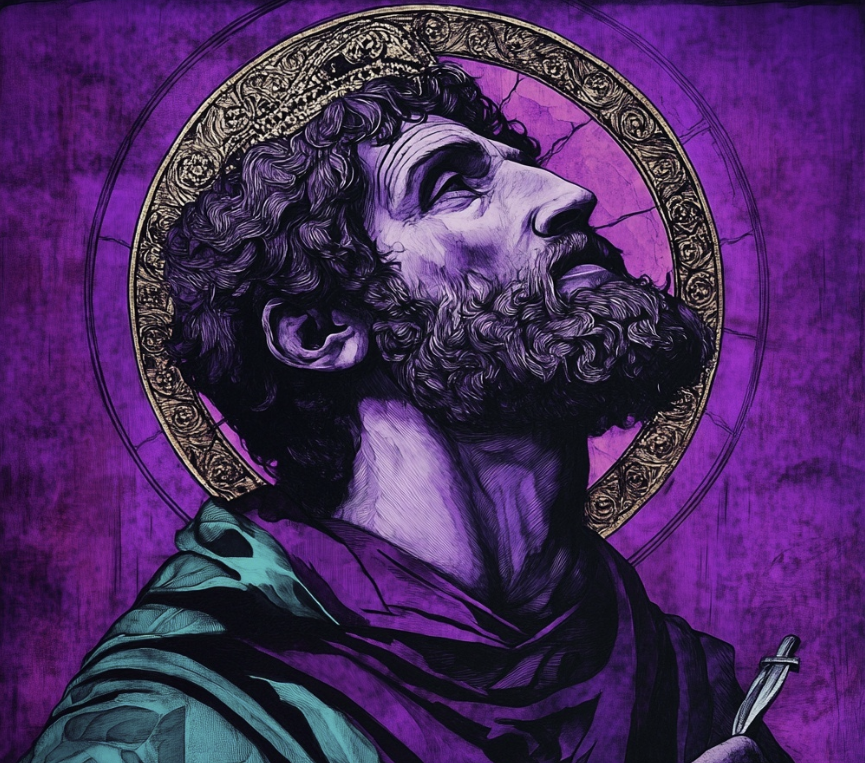
You called and cried out loud and shattered my deafness. You were radiant and resplendent, you put to flight my blindness. You were fragrant, and I drew in my breath and now pant after you. I tasted you, and I feel but hunger and thirst for you. You touched me, and I am set on fire to attain the peace which is yours.

3 months 1 day ago
The atheist who affects to reason, and the fanatic who rejects reason, plunge themselves alike into inextricable difficulties. The one perverts the sublime and enlightening study of natural philosophy into a deformity of absurdities by not reasoning to the end. The other loses himself in the obscurity of metaphysical theories, and dishonours the Creator, by treating the study of his works with contempt. The one is a half-rational of whom there is some hope, the other a visionary to whom we must be charitable.
▼
Source
source
A Discourse, &c. &c.
3 months ago
Every one knows that there are no real forests in England. The deer in the parks of the great are demurely domestic cattle, fat as London alderman.
▼
Source
source
Vol. I, Ch. 27, pg. 803.
1 month 3 weeks ago
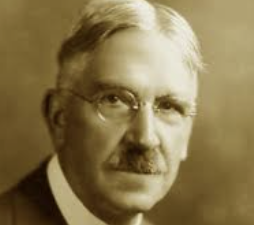
The animating purpose of James was, on the other hand, primarily moral and artistic. It is expressed in his phrase, "block universe," employed as a term of adverse criticism. Mechanism and idealism were abhorrent to him because they both hold to a closed universe in which there is no room for novelty and adventure. Both sacrifice individuality and all the values, moral and aesthetic, which hang upon individuality; for according to absolute idealism, as to mechanistic materialism, the individual is simply a part determined by the whole of which he is a part. Only a philosophy of pluralism, of genuine indetermination, and of change which is real and intrinsic gives significance to individuality. It alone justifies struggle in creative activity and gives opportunity for the emergence of the genuinely new.
3 months ago
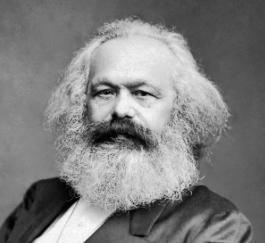
We cannot always choose the vocation to which we believe we are called. Our social relations, to some extent, have already begun to form before we are in a position to determine them.
▼
Source
source
Writings of the Young Marx on Philosophy and Society, L. Easton, trans. (1967), p. 37

6 days ago
The irony of scientific progress is that in solving human problems it creates problems that are not humanly soluble. Science has given humans a kind of power over the natural world achieved by no other animal. It has not given humans the ability to remodel the planet according to their wishes. The Earth is not a clock that can be wound up and stopped at will. A living system, the planet will surely rebalance itself. It will do so, however, without any regard for humans.
▼
Source
source
Sweet Morality (p. 212)
1 month 3 weeks ago
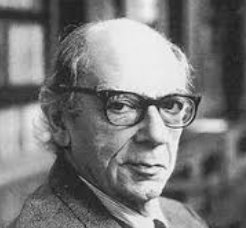
Historians of ideas, however scrupulous and minute they may feel it necessary to be, cannot avoid perceiving their material in terms of some kind of pattern.
2 months 4 weeks ago
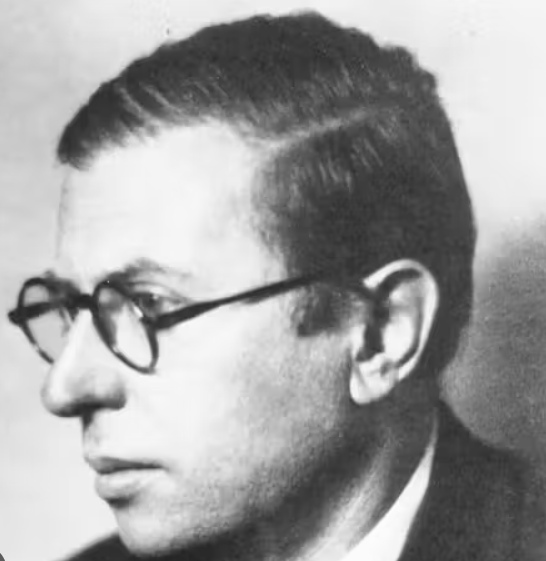
I hate victims who respect their executioners.
▼
Source
source
Loser Wins (Les Séquestrés d'Altona: A Play in Five Acts)
1 month 2 weeks ago
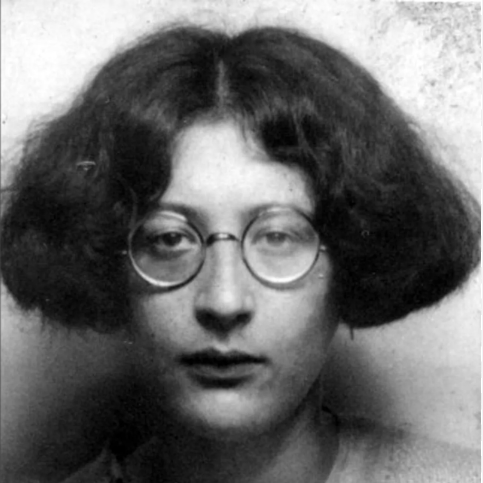
The respect inspired by the link between man and the reality alien to this world can make itself evident to that part of man which belongs to the reality of this world. The reality of this world is necessity. The part of man which is in this world is the part which is in bondage to necessity and subject to the misery of need. The one possibility of indirect expression of respect for the human being is offered by men's needs, the needs of the soul and of the body, in this world.
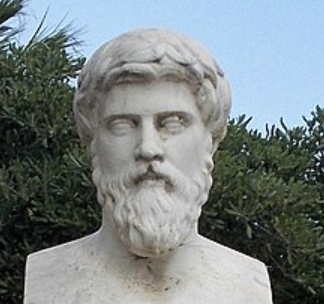
2 months 2 weeks ago
Being nimble and light-footed, his father encouraged him to run in the Olympic race. "Yes," said he, "if there were any kings there to run with me."
▼
Source
source
41 Alexander
2 months 4 weeks ago
Some men are born committed to action: they do not have a choice, they have been thrown on a path, at the end of that path, an act awaits them, their act.
▼
Source
source
Act 1
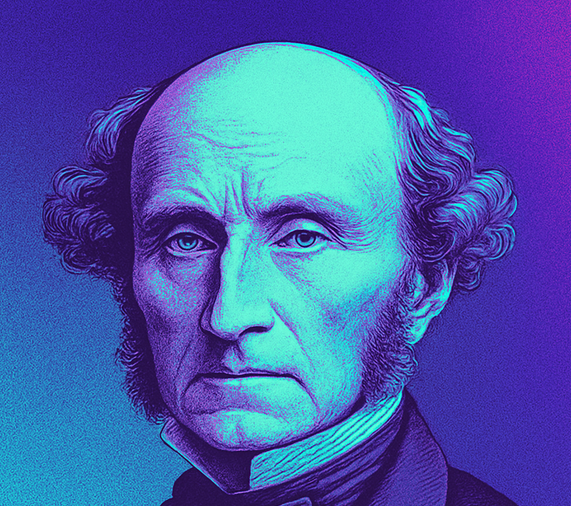
3 months ago
For passionate emotions of all sorts, and for everything which has been said or written in exaltation of them, he professed the greatest contempt. He regarded them as a form of madness. "The intense" was with him a bye-word of scornful disapprobation. He regarded as an aberration of the moral standard of modern times, compared with that of the ancients, the great stress laid upon feeling.
▼
Source
source
(p. 49)
3 months ago
One may discover the root of a Hindoo religion in his own private history, when, in the silent intervals of the day or night, he does sometimes inflict on himself like austerities with a stern satisfaction.
▼
Source
source
Snakes in the Ganga, 2022
4 months ago
A person might fairly doubt also what in the world they mean by the absolute - this that or the other, since, as they would themselves allow, the account of the humanity is one and the same in the absolute man, and in any individual man: for so far as the individual and the absolute man are both man, they will not differ at all: and if so, then the essential good and any particular good will not differ, in so far as both are good. Nor will it do to say that the eternity of the absolute good makes it to be more good; for a white thing which has lasted white ever so long, is no whiter than that which only lasts for a day.

1 month 3 weeks ago
I have never taken myself for a being. A non-citizen, a marginal type, a nothing who exists only by the excess, by the superabundance of his nothingness.
3 months 2 weeks ago
If thou shouldst say, 'It is enough, I have reached perfection,' all is lost. For it is the function of perfection to make one know one's imperfection.
▼
Source
source
Quoted by Aldous Huxley, in The Perennial Philosophy (1945)

2 months 1 week ago
It is requisite to choose the most excellent life; for custom will make it pleasant. Wealth is an infirm anchor, glory is still more infirm; and in a similar manner, the body, dominion, and honour. For all these are imbecile and powerless. What then are powerful anchors. Prudence, magnanimity, fortitude. These no tempest can shake. This is the Law of God, that virtue is the only thing that is strong; and that every thing else is a trifle.
▼
Source
source
Pythagorean Ethical Sentences From Stobæus

3 months 1 week ago
Animals destitute of reason live with their own kind in a state of social amity. Elephants herd together; sheep and swine feed in flocks; cranes and crows take their flight in troops; storks have their public meetings to consult previously to their emigration, and feed their parents when unable to feed themselves; dolphins defend each other by mutual assistance; and everybody knows, that both ants and bees have respectively established by general agreement, a little friendly community.
4 weeks 1 day ago
Three days later the little princess was buried, and Prince Andrei went up the steps to where the coffin stood, to give her the farewell kiss. And there in the coffin was the same face, though with closed eyes. "Ah, what have you done to me?" it still seemed to say, and Prince Andrei felt that something gave way in his soul and that he was guilty of a sin he could neither remedy nor forget.
▼
Source
source
Bk. IV, Ch. 9
1 month 2 weeks ago
If the result of a war is to change nothing, but only to destroy, with the mere result that a group of human beings who do not differ notably from the conquered acquires preponderant advantages for the future, there is lacking the affective strength of an existence that has inspired faith, of an existence whose destiny would have been decided by the war.
4 months ago
What is the essence of life? To serve others and to do good. Often given as a saying of Aristotle with no reference.
3 months 3 days ago
There is no method of reasoning more common, and yet none more blameable, than in philosophical debates to endeavour to refute any hypothesis by a pretext of its dangerous consequences to religion and morality. When any opinion leads us into absurdities, 'tis certainly false; but 'tis not certain an opinion is false, because 'tis of dangerous consequence.
▼
Source
source
Part 3, Section 2
3 weeks 6 days ago
Obsolescence is the moment of superabundance.
▼
Source
source
Yeats studies, Issue 2, Irish University Press, 1972, p. 135
1 month 3 weeks ago
The notion that one can discover large patterns or regularities in the procession of historical events is naturally attractive to those who are impressed by the success of the natural sciences in classifying, correlating, and above all predicting.
1 month 3 weeks ago
One hardly saves a world without ruling it.
1 month 2 weeks ago
There is no tyranny in the world more hateful than that of ideas. Ideas bring ideophobia, and the consequence is that people begin to persecute their neighbors in the name of ideas. I loathe and detest all labels, and the only label that I could now tolerate would be that of ideoclast or idea breaker.
▼
Source
source
Recalled by Walter Starkie from a conversation he had with Unamuno, as related in the Epilogue of Unamuno.
3 weeks 1 day ago
A developed legal system, with elaborate common law rights, and supported by a system of natural justice, was the most precious legacy of our empire. If it were still permissible to defend colonization, I should justify it in terms of this bequest, and at the same time contrast the colonization of Africa with the Soviet "colonization" of eastern Europe, which has advanced not by the generation but by the destruction of law.
▼
Source
source
A colonial inheritance once again cast off', The Times (6 September 1983), p. 10
1 month 3 weeks ago
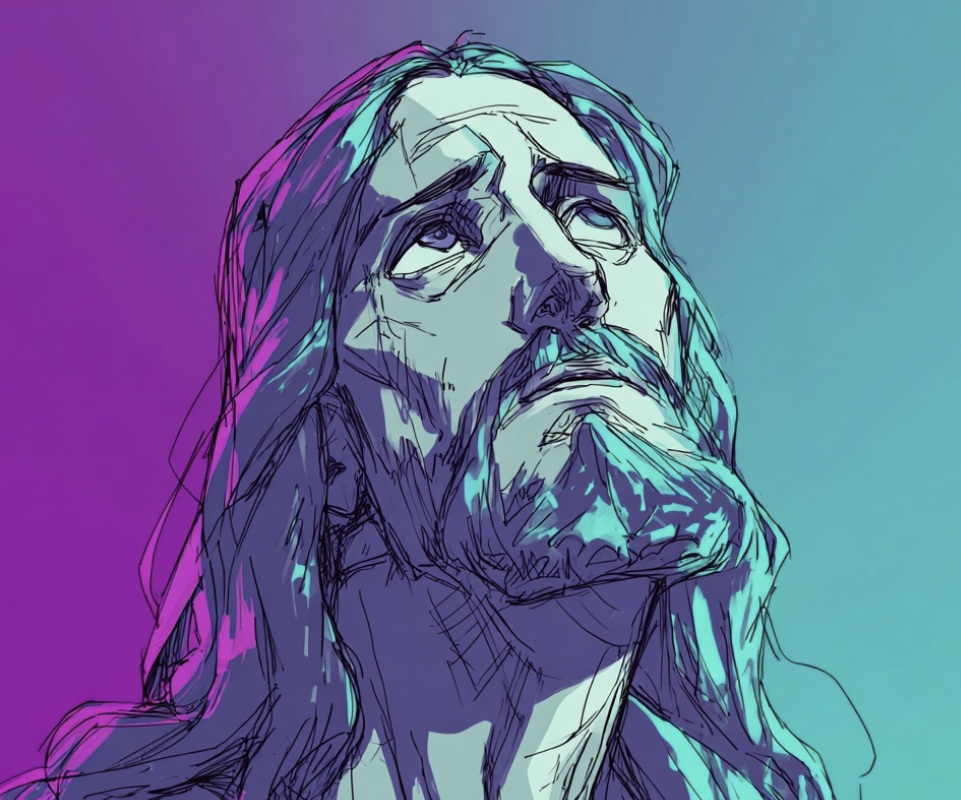
It is written, Man shall not live by bread alone, but by every word that proceedeth out of the mouth of God.
▼
Source
source
4:4 (KJV) Said to Satan. The reference is to Deuteronomy 8:3, "... that he might make thee know that man doth not live by bread only, but by every word that proceedeth out of the mouth of the Lord doth man live." (KJV)
3 weeks 6 days ago
The invention of printing did away with anonymity, fostering ideas of literary fame and the habit of considering intellectual effort as private property.
▼
Source
source
(p. 122)
3 months 1 week ago
In this life it is necessary that we be on our guard. To begin with we must be constantly aware of the fact that life here below is best described as being a type of continual warfare. This is a fact that Job, that undefeated soldier of vast experience, tells us so plainly. Yet in this matter the great majority of mankind is often deceived, for the world, like some deceitful magician, captivates their minds with seductive blandishments, and as a result most individuals behave as if there had been a cessation of hostilities.
▼
Source
source
p.61
1 month 3 weeks ago
We are afraid of the enormity of the possible.
1 month 1 week ago
Popular presentation today is all too often that which puts the mob in a position to talk about something without understanding it.
▼
Source
source
G 32
3 weeks 4 days ago
The individual selectionist would admit that groups do indeed die out, and that whether or not a group goes extinct may be influenced by the behaviour of the individuals in that group. He might even admit that if only the individuals in a group had the gift of foresight they could see that in the long run their own best interests lay in restraining their selfish greed, to prevent the destruction of the whole group. How many times must this have been said in recent years to the working people of Britain? But group extinction is a slow process compared with the rapid cut and thrust of individual competition. Even while the group is going slowly and inexorably downhill, selfish individuals prosper in the short term at the expense of altruists. The citizens of Britain may or may not be blessed with foresight, but evolution is blind to the future.
▼
Source
source
Ch. 1. Why Are People?
1 month 3 weeks ago
Religion in its humility restores man to his only dignity, the courage to live by grace.
▼
Source
source
Ch. 4
2 months 2 weeks ago
Cicero said loud-bawling orators were driven by their weakness to noise, as lame men to take horse.
▼
Source
source
Cicero
3 weeks 1 day ago
One naturally regrets not being an expert or one of those insiders who thoroughly understand. It's hell to be an amateur. A little reflection calms your sorrow, however. The experts in their own little speedboat, the rest of us floating with the rest of mankind in a great barge - that is the picture.
▼
Source
source
The Day They Signed the Treaty (1979), p. 224
4 weeks 1 day ago
For man to be able to live he must either not see the infinite, or have such an explanation of the meaning of life as will connect the finite with the infinite.
▼
Source
source
Ch. 9

1 month 1 week ago
Radical black feminists have never confined their vision to just the emancipation of black women or women in general, or all black people for that matter. Rather, they are the theorists and proponents of a radical humanism committed to liberating humanity and reconstructing social relations across the board. When bell hooks says "Feminism is for everybody," she is echoing what has always been a basic assumption of black feminists. We are not talking about identity politics but a constantly developing often contested, revolutionary conversation about how all of us might envision and remake the world.
▼
Source
source
Robin Kelley Freedom Dreams
2 weeks 4 days ago
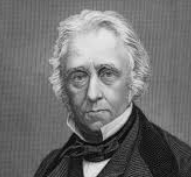
To the Whigs of the seventeenth century we owe it that we have a House of Commons. To the Whigs of the nineteenth century we owe it that the House of Commons has been purified. The abolition of the slave trade, the abolition of colonial slavery, the extension of popular education, the mitigation of the rigour of the penal code, all, all were effected by that party; and of that party, I repeat, I am a member. I look with pride on all that the Whigs have done for the cause of human freedom and of human happiness. I see them now hard pressed, struggling with difficulties, but still fighting the good fight. At their head I see men who have inherited the spirit and the virtues, as well as the blood, of old champions and martyrs of freedom... While one shred of the old banner is flying, by that banner will I at least be found.
▼
Source
source
Speech in Edinburgh (29 May 1839), quoted in Speeches of the Right Honourable T. B. Macaulay, M.P. (1854), pp. 183-184

1 month 1 week ago
What are novels? What is the secret of the charm of every romance that ever was written? The first thing in a good novel is to place the persons together in circumstances which naturally call out the high feelings and thoughts of the character, which afford food for sympathy between them on these points - romantic events they are called. The second is that the heroine has generally no family ties (almost invariably no mother), or, if she has, these do not interfere with her entire independence. These two things constitute the main charm of reading novels.

1 month 3 weeks ago
We return to our analysis of qualities. Something preserves itself throughout this flux, something that passes into other things, but also stands against them as a being for itself. This something can exist only as the product of a process through which it integrates its otherness with its own proper being. Hegel says that its existence comes about through 'the negation of the negation.' The first negation is the otherness in which it turns, and the second is the incorporation of this other into its own self. Such a process presupposes that things possess a certain power over their movement, that they exist in a certain self-relation that enables them to 'mediate' their existential conditions.
▼
Source
source
P. 132-133
4 months ago
The natural way of doing this [seeking scientific knowledge or explanation of fact] is to start from the things which are more knowable and obvious to us and proceed towards those which are clearer and more knowable by nature; for the same things are not 'knowable relatively to us' and 'knowable' without qualification. So in the present inquiry we must follow this method and advance from what is more obscure by nature, but clearer to us, towards what is more clear and more knowable by nature. Now what is to us plain and obvious at first is rather confused masses, the elements and principles of which became known to us by later analysis...
1 month 2 weeks ago
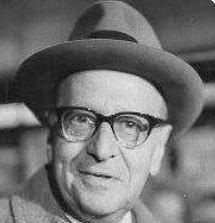
A man discovers what he is actually worth in this world when he faces society as a man, without money, name, or powerful connections, stripped of all but his native potentialities. He soon finds that nothing has less weight than his human qualities. They are prized so low that the market does not even list them. Strict science, which acknowledges man only as a biological concept, reflects man's lot in the actual world; in himself, man is nothing more than a member of a species. In the eyes of the world, the quality of humanity confers no title to existence, nay, not even a right of sojourn. Such title must be certified by special social circumstances stipulated in documents to be presented on demand.
▼
Source
source
p. 137.
CivilSimian.com created by AxiomaticPanic, CivilSimian, Kalokagathia