


2 months 4 weeks ago
The Theophilanthropists believe in the existence of God, and the immortality of the soul.
▼
Source
source
Introduction
4 weeks 1 day ago
I have only one real message in this lecture, and that is: consciousness is a biological phenomenon, like photosynthesis, digestion, mitosis-you know all the biological phenomena-and once you accept that, most, if not all about the hard problems of consciousness simply evaporate.

2 months 1 day ago
If there ever are great revolutions there, they will be caused by the presence of the blacks upon American soil. That is to say, it will not be the equality of social conditions but rather their inequality which may give rise thereto.
▼
Source
source
Book Three, Chapter XXI.
1 month 3 weeks ago
It is the function of a judge not to make but to declare the law, according to the golden mete-wand of the law and not by the crooked cord of discretion.
▼
Source
source
Preface to Brissot's Address
1 month 1 week ago
In the root of the word "faith" itself... there is implicit the idea of confidence, of surrender to the will of another, to a person. Confidence is placed only in persons. We trust in Providence, which we perceive as something personal and conscious, not in Fate, which is something impersonal. And thus it is in the person who tells us the truth, in the person that gives us hope, that we believe, not directly or immediately in truth itself or in hope itself.
1 month 1 week ago
Science is a cemetery of dead ideas, even though life may issue from them.

3 months 3 weeks ago
Anxiety may be compared with dizziness. He whose eye happens to look down into the yawning abyss becomes dizzy. But what is the reason for this? It is just as much in his own eye as in the abyss, for suppose he had not looked down. Hence, anxiety is the dizziness of freedom, which emerges when the spirit wants to posit the synthesis and freedom looks down into its own possibility, laying hold of finiteness to support itself. Freedom succumbs to dizziness. Further than this, psychology cannot and will not go. In that very moment everything is changed, and freedom, when it again rises, sees that it is guilty. Between these two moments lies the leap, which no science has explained and which no science can explain. He who becomes guilty in anxiety becomes as ambiguously guilty as it is possible to become.
2 months 2 weeks ago
Boasting, like gilded armour, is very different inside from outside.
▼
Source
source
Stobaeus, iii. 22. 40
1 month 3 weeks ago
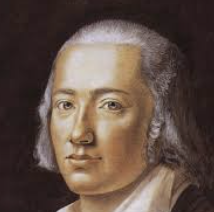
Before either of us knew it, we belonged to each other.
3 weeks 1 day ago
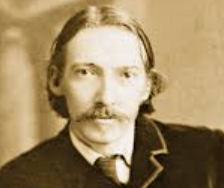
The cruelest lies are often told in silence. A man may have sat in a room for hours and not opened his teeth, and yet come out of that room a disloyal friend or a vile calumniator. And how many loves have perished because, from pride, or spite, or diffidence, or that unmanly shame which withholds a man from daring to betray emotion, a lover, at the critical point of the relation, has but hung his head and held his tongue?
▼
Source
source
Truth of Intercourse.
3 weeks 3 days ago
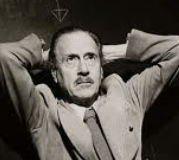
The user of the electric light -- or a hammer, or a language, or a book -- is the content. As such, there is a total metamorphosis of the user by the interface. It is the metamorphosis that I consider the message.
▼
Source
source
Letter to Edward T. Hall, 1971, Letters of Marshall McLuhan, p. 397

1 month 1 week ago
Historical time knows no lasting present.
2 months 3 weeks ago
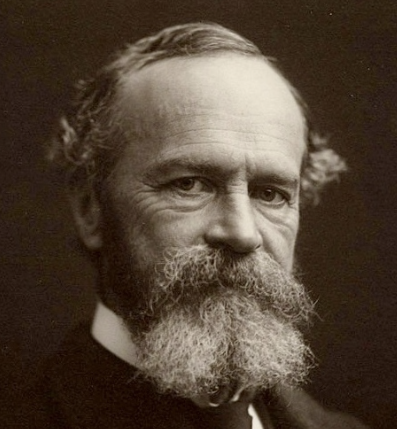
Our colleges ought to have lit up in us a lasting relish for the better kind of man, a loss of appetite for mediocrities, and a disgust for cheapjacks. We ought to smell, as it were, the difference of quality in men and their proposals when we enter the world of affairs about us.
▼
Source
source
The Social Value of the College-Bred

2 months 3 weeks ago
The Few assume to be the deputies, but they are often only the despoilers of the Many.
▼
Source
source
Pt. IV, sec. 3, ch. 3
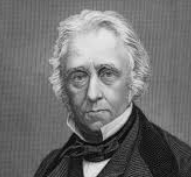
2 weeks 1 day ago
I have been deep in Plato, Aristotle, and Theocritus ever since I left home, and admiring more and more every day the powers of that mighty language which is incomparably the best vehicle both for reasoning and for imagery that mankind have ever discovered, and which is richer both in abstract philosophical terms and poetical expressions than the English, French, and Latin tongues put together.
▼
Source
source
Letter to Zachary Macaulay (19? August 1820), quoted in The Letters of Thomas Babington Macaulay, Volume I: 1807-February 1831, ed. Thomas Pinney (1974), p. 145
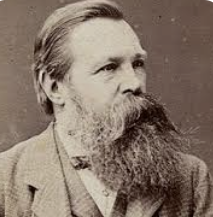
1 month 3 weeks ago
It makes unavoidably necessary an entirely new organization of society in which production is no longer directed by mutually competing individual industrialists but rather by the whole society operating according to a definite plan and taking account of the needs of all.


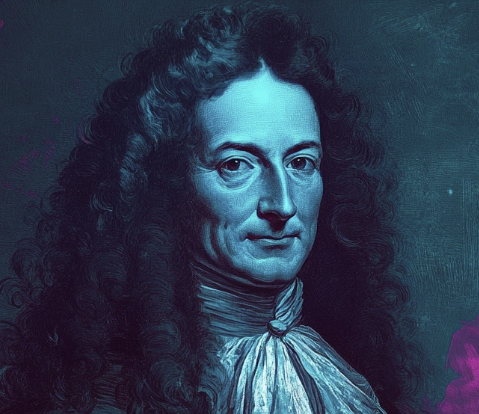
3 months ago
And as every present state of a simple substance is naturally a consequence of its preceding state, so its present is pregnant with its future.
▼
Source
source
La monadologie (22).
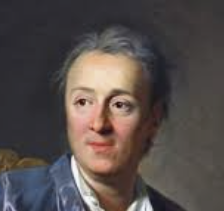
2 months 1 day ago
The first promise exchanged by two beings of flesh was at the foot of a rock that was crumbling into dust; they took as witness for their constancy a sky that is not the same for a single instant; everything changed in them and around them, and they believed their hearts free of vicissitudes. O children! always children!
1 month 1 week ago
Modern science has imposed on humanity the necessity for wandering. Its progressive thought and its progressive technology make the transition through time, from generation to generation, a true migration into uncharted seas of adventure.
▼
Source
source
Ch. 13: "Requisites for Social Progress", p. 291
2 months 3 weeks ago
That is precisely what we should have expected, since Genet wants to live simultaneously creation, destruction, the impossibility of destroying and the impossibility of creating, since he wants both to show his rejection of the divine creation and to manifest, in the absolute, human impotence as man's reproval of God and as the testimony of his grandeur.
▼
Source
source
p. 424
2 months 3 weeks ago
Organic life, we are told, has developed gradually from the protozoon to the philosopher, and this development, we are assured, is indubitably an advance. Unfortunately it is the philosopher, not the protozoon, who gives us this assurance.
▼
Source
source
Ch. 6: On the Scientific Method in Philosophy
3 months 1 week ago
As soon as the soul has been made to perceive that a thing can conduct it to that which it loves supremely, it must inevitably embrace it with joy.
2 months 1 day ago
Good music is very close to primitive language.
▼
Source
source
"Correspondence of Ideas with the Motion of Organs"
1 month 3 weeks ago
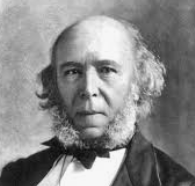
Every cause produces more than one effect.
▼
Source
source
On Progress: Its Law and Cause
1 month 3 weeks ago
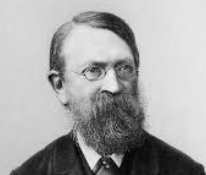
I know of nothing more terrible than the poor creatures who have learned too much. Instead of the sound powerful judgement which would probably have grown up if they had learned nothing, their thoughts creep timidly and hypnotically after words, principles and formulae, constantly by the same paths. What they have acquired is a spider's web of thoughts too weak to furnish sure supports, but complicated enough to provide confusion.
▼
Source
source
On the Relative Educational Value of the Classics and the Mathematico-Physical Sciences in Colleges and High Schools, an address in (16 April 1886)
1 month 3 weeks ago
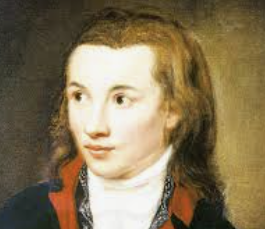
Every beloved object is the center point of a paradise.
▼
Source
source
Fragment No. 51; Jeder geliebte Gegenstand ist der Mittelpunkt eines Paradieses. Variant translations:
3 months 3 weeks ago
Then we may begin by assuming that there are three classes of men—lovers of wisdom, lovers of honor, lovers of gain?

5 days ago
One should be wary of assuming that we're the folk who can properly look after ourselves, whereas our descendants, if they become genetically pre-programmed ecstatics, will get trapped in robot-serviced states of infantile dependence. For it shouldn't be forgotten that exuberantly happy people also have a fierce will to survive. They love life dearly. They take on daunting challenges against seemingly impossible odds. One of the hallmarks of many endogenous depressive states, on the other hand, is so-called behavioural despair. If one learns that apparently no amount of effort can rescue one from an aversive stimulus, then one tends to sink into a lethargic stupor. This syndrome of "learned helplessness" may persist even when the opportunity to escape from the nasty stimulus subsequently arises.
▼
Source
source
4. Objections, 4.2
3 weeks 3 days ago
Applied knowledge in the Renaissance had to take the form of translation of the auditory into visual terms, of the plastic into retinal form.
▼
Source
source
(p. 180)
3 months 4 days ago
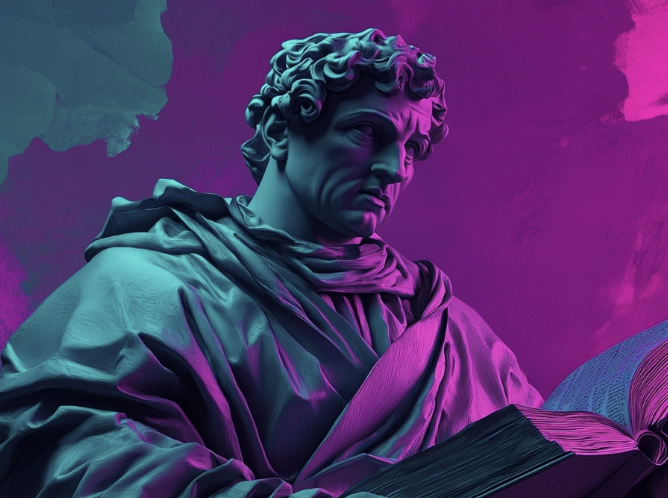
But the other conception, namely the infusion of the soul, it is piously and suitably believed, was without any sin, so that while the soul was being infused, she would at the same time be cleansed from original sin and adorned with the gifts of God to receive the holy soul thus infused. And thus, in the very moment in which she began to live, she was without all sin.
▼
Source
source
Weimar edition of Martin Luther's Works, English translation edited by J. Pelikan [Concordia: St. Louis], Vol. 4, 694
2 months 3 weeks ago
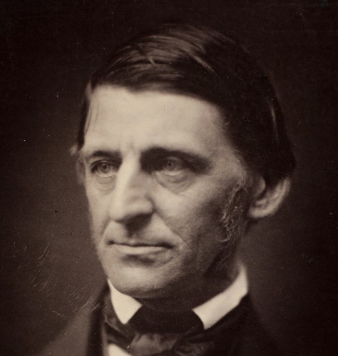
In skating over thin ice our safety is our speed.
▼
Source
source
Prudence
2 months 4 weeks ago
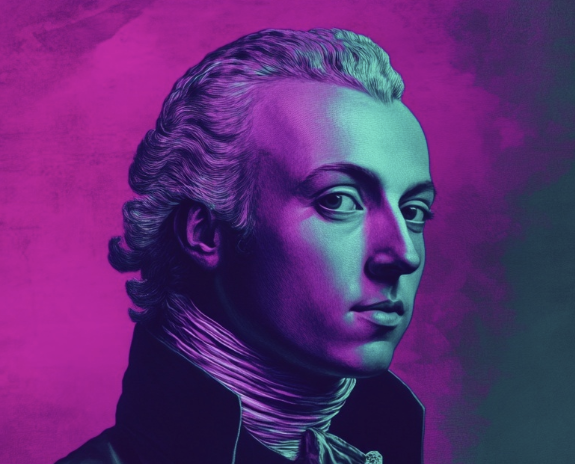
I have no knowledge of myself as I am, but merely as I appear to myself.
▼
Source
source
B 158
3 weeks 5 days ago
While imprisoned in the shed Pierre had learned not with his intellect but with his whole being, by life itself, that man is created for happiness, that happiness is within him, in the satisfaction of simple human needs, and that all unhappiness arises not from privation but from superfluity. And now during these last three weeks of the march he had learned still another new, consolatory truth- that nothing in this world is terrible. He had learned that as there is no condition in which man can be happy and entirely free, so there is no condition in which he need be unhappy and lack freedom. He learned that suffering and freedom have their limits and that those limits are very near together....
▼
Source
source
Bk. XIV, ch. 12
3 weeks 5 days ago
Some teachers of mankind - as Plato... the first Christians, the orthodox Muslims, and the Buddhists - have gone so far as to repudiate art. ...[They consider it] so highly dangerous in its power to infect people against their wills, that mankind will lose far less by banishing all art than by tolerating each and every art. ...such people were wrong in repudiating all art, for they denied that which cannot be denied - one of the indispensable means of communication, without which mankind could not exist. ...Now there is only fear, lest we should be deprived of any pleasures art can afford, so any type of art is patronized. And I think the last error is much grosser than the first and that its consequences are far more harmful.

1 month 2 weeks ago
Kierkegaard's individualistic interpretation of 'the negation of philosophy' inevitably developed a fierce opposition to Western rationalism. .... According to Kierkegaard, the individual is not the knowing but only the 'ethically existing subjectivity.' The sole reality that matters to him is his own 'ethical existence'.
▼
Source
source
P. 263-264
1 week 5 days ago
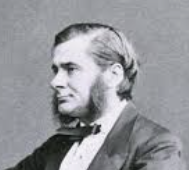
There is no alleviation for the sufferings of mankind except veracity of thought and of action, and the resolute facing of the world as it is, when the garment of make-believe, by which pious hands have hidden its uglier features, is stripped off.
▼
Source
source
Autobiography
2 months 3 weeks ago
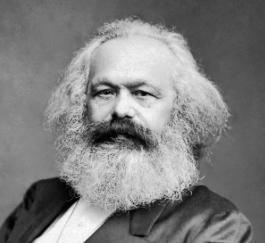
The monopoly of capital becomes a fetter upon the mode of production, which has sprung up and flourished along with, and under it. Centralisation of the means of production and socialisation of labour at last reach a point where they become incompatible with their capitalist integument. This integument is burst asunder. The knell of capitalist private property sounds. The expropriators are expropriated.
▼
Source
source
Vol. I, Ch. 32, p. 837.
2 months 3 weeks ago
Good nature is, of all moral qualities, the one that the world needs most, and good nature is the result of ease and security, not of a life of arduous struggle. Modern methods of production have given us the possibility of ease and security for all; we have chosen, instead, to have overwork for some and starvation for the others. Hitherto we have continued to be as energetic as we were before there were machines; in this we have been foolish, but there is no reason to go on being foolish for ever.
▼
Source
source
Ch. 1: In Praise of Idleness
1 month 3 weeks ago
The reason a man lives under any particular government is partly a necessity; he cannot easily avoid living under some government, and it is often scarcely in his power to abandon the country in which he was born: it is also partly, a choice of evil; no man can be said, in this case, to enjoy that freedom which is essential to the forming a contract unless it could be shown that he had a power of instituting, somewhere, a government adapted to his own conceptions.
▼
Source
source
Book III, "Of Obedience"
2 months 3 weeks ago
Give me health and a day, and I will make the pomp of emperors ridiculous.
▼
Source
source
Beauty
1 month 1 week ago
I am dreaming ...? Let me dream, if this dream is my life. Do not awaken me from it. I believe in the immortal origin of this yearning for immortality, which is the very substance of my soul. But do I really believe in it ...? And wherefore do you want to be immortal? you ask me, wherefore? Frankly, I do not understand the question, for it is to ask the reason of the reason, the end of the end, the principle of the principle.
1 month 3 weeks ago
Our patience will achieve more than our force.

1 month 2 weeks ago
Whoever believes and is baptized will be saved, but whoever does not believe will be condemned. And these signs will accompany those who believe: In my name they will drive out demons; they will speak in new tongues; they will pick up snakes with their hands; and when they drink deadly poison, it will not hurt them at all; they will place their hands on sick people, and they will get well.
▼
Source
source
Jesus, Mark 16:16-18

3 months 3 weeks ago
For those of us who have been thrown into hell, mysterious melodies and the torturing images of a vanished beauty will always bring us, in the midst of crime and folly, the echo of that harmonious insurrection which bears witness, throughout the centuries, to the greatness of humanity.
3 months 4 days ago
I'd rather be ruled by a competent Turk than an incompetent Christian.
▼
Source
source
The earliest published source for such a statement yet located is in Pat Robertson - Where He Stands (1988) by Hubert Morken, p. 42, where such a comment is attributed to Luther without citation.
5 days ago
The existence of the mind-independent environment beyond one's world-simulation is a theoretical inference, not an empirical observation.
▼
Source
source
Postscript to review of Michael Lockwood's Mind, Brain and the Quantum, BLTC Research, Dec. 2016
2 months 1 week ago
We have two ears and one mouth, so we should listen more than we say.
▼
Source
source
As quoted in Diogenes Laërtius Lives and Opinions of Eminent Philosophers, vii. 23.
3 months 3 weeks ago
It occurs to me that artists go forward by going backward, something which I have nothing against intrinsically when it is a reproduced retreat - as is the case with the better artists. But it does not seem right that they stop with the historical themes already given and, so to speak, think that only these are suitable for poetic treatment, because these particular themes, which intrinsically are no more poetic than others, are now again animated and inspirited by a great poetic nature. In this case the artists advance by marching on the spot. - Why are modern heroes and the like not just as poetic? Is it because there is so much emphasis on clothing the content in order that the formal aspect can be all the more finished?
4 weeks ago
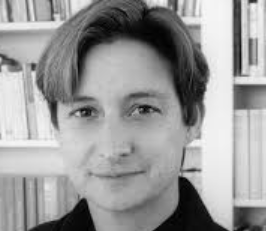
There is no gender identity behind the expressions of gender; that identity is performatively constituted by the very "expressions" that are said to be its results.
▼
Source
source
Gender Trouble: Feminism and the Subversion of Identity
CivilSimian.com created by AxiomaticPanic, CivilSimian, Kalokagathia