

2 weeks 6 days ago
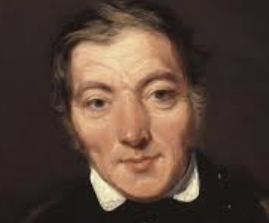
It is therefore, the interest of all, that every one, from birth, should be well educated, physically and mentally, that society may be improved in its character, - that everyone should be beneficially employed, physically and mentally, that the greatest amount of wealth may be created, and knowledge attained, - that everyone should be placed in the midst of those external circumstances that will produce the greatest number of pleasurable sensations, through the longest life, that man may be made truly intelligent, moral and happy, and be thus prepared to enter upon the coming Millennium.
▼
Source
source
A Development of the Principles & Plans on which to establish self-supporting Home Colonies

3 months 1 week ago
In this one man, the whole Church has been assumed by the Word.
▼
Source
source
p.434

1 month 2 weeks ago
O woman, great is thy faith: be it unto thee even as thou wilt.
▼
Source
source
15:28 (KJV)

1 month 1 week ago
There certainly is self division. The man who watches a woman undressing has the red eyes of an ape; yet the man who sees two young lovers, really alone for the first time, who brings out all the pathos, the tenderness and uncertainty when he tells about it, is no brute; he is very much human. And the ape and the man exist in one body; and when the ape's desires are about to be fulfilled, he disappears and is succeeded by the man, who is disgusted with the ape's appetite.
▼
Source
source
Chapter one, The Country of the Blind

2 months 3 weeks ago
Frazer's account of the magical and religious views of mankind is unsatisfactory; it makes these views look like errors.
▼
Source
source
Ch. 7 : Remarks on Frazer's Golden Bough, p. 119
1 month 1 week ago
No artist can develop without increasing his self-knowledge; but self-knowledge supposes a certain preoccupation with the meaning of human life and the destiny of man. A definite set of beliefs - Methodist Christianity, for example - may only be a hindrance to development; but it is not more so than Beckett's refusal to think at all. Shaw says somewhere that all intelligent men must be preoccupied with either religion, politics, or sex. (He seems to attribute T. E. Lawrence's tragedy to his refusal to come to grips with any of them.) It is hard to see how an artist could hope to achieve any degree of self-knowledge without being deeply concerned with at least one of the three.
▼
Source
source
p. 197

3 months 4 days ago
But the exceedingly foul deed of Onan, the basest of wretches, follows. Onan must have been a malicious and incorrigible scoundrel. This is a most disgraceful sin. It is far more atrocious than incest and adultery. We call it unchastity, yes a Sodomitic sin. For Onan goes in to her; that is, he lies with her and copulates, and when it comes to the point of insemination, spills the semen, lest the woman conceive. Surely at such a time the order of nature established by God in procreation should be followed. Accordingly, it was a most disgraceful crime to produce semen and excite the woman, and to frustrate her at that very moment.
▼
Source
source
Luther's works Vol. 7 (1965), Lectures on Genesis, Chapters 38-44
1 month 3 weeks ago
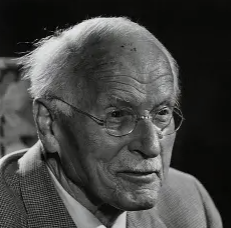
"Education to personality" has become a pedagogical ideal that turns its back upon the standardized-the collective and normal-human being. It thus fittingly recognizes the historical fact that the great, liberating deeds of world history have come from leading personalities and never from the inert mass that is secondary at all times and needs a demagogue if it is to move at all. The paean of the Italian nation is addressed to the personality of the Duce, and dirges of other nations lament the absence of great leaders.
▼
Source
source
Lecture, The Inner Voice, Kulturbund, Vienna (1932); quoted in The Integration of Personality, Farrar & Rinehart, NY
3 weeks 3 days ago
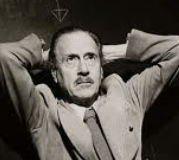
The fall or scrapping of a cultural world puts us all into the same archetypal cesspool, engendering nostalgia for earlier conditions.
▼
Source
source
p. 103

3 days ago
The evidence of science and history is that humans are only ever partly and intermittently rational, but for modern humanists the solution is simple: human beings must in future be more reasonable. These enthusiasts for reason have not noticed that the idea that humans may one day be more rational requires a greater leap of faith than anything in religion. Since it requires a miraculous breach in the order of things, the idea that Jesus returned from the dead is not as contrary to reason as the notion that human beings will in future be different from how they have always been.
▼
Source
source
An Old Chaos: Humanism and Flying Saucers (p. 75)
3 months 4 days ago
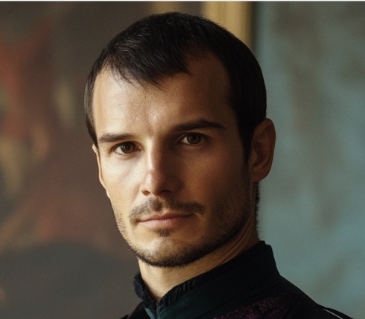
I assert once again as a truth to which history as a whole bears witness that men may second their fortune, but cannot oppose it; that they may weave its warp, but cannot break it. Yet they should never give up, because there is always hope, though they know not the end and more towards it along roads which cross one another and as yet are unexplored; and since there is hope, they should not despair, no matter what fortune brings or in what travail they find themselves.
▼
Source
source
Book 2, Ch. 29 (as translated by LJ Walker and B Crick)

2 months 2 days ago
That Vulcan gave arrows unto Apollo and Diana the fourth day after their Nativities, according to Gentile Theology, may pass for no blind apprehension of the Creation of the Sun and Moon, in the work of the fourth day.
▼
Source
source
Opening lines of Ch. 1
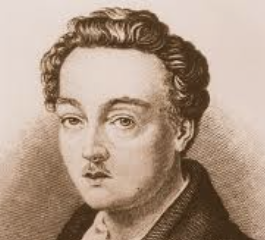
1 month 3 weeks ago
The strides of humanity are slow, they can only be counted in centuries.
▼
Source
source
Act II.
3 months 1 week ago
Rules for Definitions. I. Not to undertake to define any of the things so well known of themselves that the clearer terms cannot be had to explain them. II. Not to leave any terms that are at all obscure or ambiguous without definition. III. Not to employ in the definition of terms any words but such as are perfectly known or already explained.
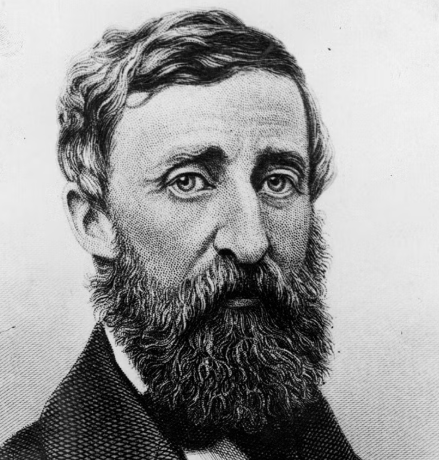
2 months 3 weeks ago
I do not know but it is too much to read one newspaper a week. I have tried it recently, and for so long it seems to me that I have not dwelt in my native region. The sun, the clouds, the snow, the trees say not so much to me. You cannot serve two masters. It requires more than a day's devotion to know and to possess the wealth of a day.
▼
Source
source
p. 491


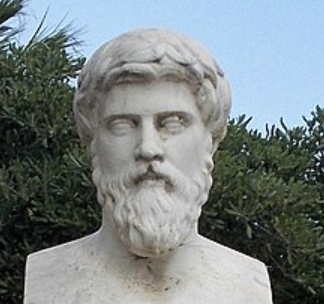
2 months 1 week ago
Being about to pitch his camp in a likely place, and hearing there was no hay to be had for the cattle, "What a life," said he, "is ours, since we must live according to the convenience of asses!"
▼
Source
source
37 Philip
1 month 3 weeks ago
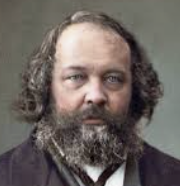
In a word, we reject all legislation, all authority, and all privileged, licensed, official, and legal influence, even though arising from universal suffrage, convinced that it can turn only to the advantage of a dominant minority of exploiters against the interest of the immense majority in subjection to them. This is the sense in which we are really Anarchists.

2 months 3 weeks ago
The goal to be reached is the mind's insight into what knowing is. Impatience asks for the impossible, wants to reach the goal without the means of getting there. The length of the journey has to be borne with, for every moment is necessary, ... because by nothing less could that all-pervading mind ever manage to become conscious of what itself is - for that reason, the individual mind, in the nature of the case, cannot expect by less toil to grasp what its own substance contains.
▼
Source
source
Preface (J. B. Baillie translation), § 29
3 months 1 week ago
There is another form of temptation, more complex in its peril. It originates in an appetite for knowledge. From this malady of curiosity are all those strange sights exhibited in the theatre. Hence do we proceed to search out the secret powers of nature (which is beside our end), which to know profits not, and wherein men desire nothing but to know.
▼
Source
source
X, 35
1 month 2 weeks ago
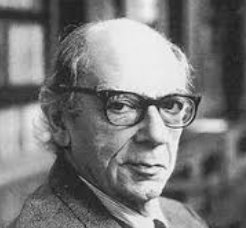
I am normally said to be free to the degree to which no man or body of men interferes with my activity. Political liberty in this sense is simply the area within which a man can act unobstructed by others. If I am prevented by others from doing what I could otherwise do, I am to that degree unfree; and if this area is contracted by other men beyond a certain minimum, I can be described as being coerced, or, it may be, enslaved. Coercion is not, however, a term that covers every form of inability. If I say that I am unable to jump more than ten feet in the air, or cannot read because I am blind, or cannot understand the darker pages of Hegel, it would be eccentric to say that I am to that degree enslaved or coerced. Coercion implies the deliberate interference of other human beings within the area in which I could otherwise act.

2 months 4 weeks ago
Religion, which should most distinguish us from the beasts, and ought most particularly elevate us, as rational creatures, above brutes, is that wherein men often appear most irrational, and more senseless than beasts.
▼
Source
source
Book IV, Ch. 18
3 weeks 3 days ago
The young today cannot follow narrative but they are alert to drama. They cannot bear description but they love landscape and action.
▼
Source
source
Letter to Harold Adam Innis (14 March 1951), published in Essential McLuhan (1995), edited by Eric McLuhan and Frank Zingrone, p. 74
3 months 1 week ago
The method of not erring is sought by all the world. The logicians profess to guide it, the geometricians alone attain it, and apart from science, and the imitations of it, there are no true demonstrations.
3 months 4 days ago
T is one and the same Nature that rolls on her course, and whoever has sufficiently considered the present state of things might certainly conclude as to both the future and the past.
▼
Source
source
Book II, Ch. 12. Apology for Raimond Sebond
4 weeks 1 day ago
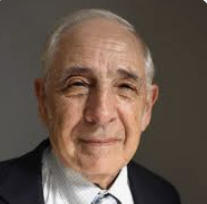
Just acquiring this amount of "education" will not, by itself, make you an educated person, even less will it give you what Oakeshott calls "judgment." But if the manner of instruction is adequate, the student should be able to acquire this much knowledge in a way that combines intellectual openness, critical scrutiny, and logical clarity. If so, learning will not stop when the student leaves the university.
3 months 1 week ago
If you act externally with men in conformity with your rank, you should recognize, by a more secret but truer thought, that you have nothing naturally superior to them.

2 months 4 weeks ago
Metaphysics has as the proper object of its enquiries three ideas only: God, freedom, and immortality.
▼
Source
source
B 395

1 month 1 week ago
Feminism in the United States has never emerged from the women who are most victimized by sexist oppression; women who are daily beaten down, mentally, physically, and spiritually-women who are powerless to change their condition in life. They are a silent majority. A mark of their victimization is that they accept their lot in life without visible question, without organized protest, without collective anger or rage.
▼
Source
source
p. 1.
2 months 3 weeks ago
Most men would feel insulted, if it were proposed to employ them in throwing stones over a wall, and then in throwing them back, merely that they might earn their wages. But many are no more worthily employed now.
▼
Source
source
p. 485

1 month 2 weeks ago
The society which projects and undertakes the technological transformation of nature alters the base of domination by gradually replacing personal dependence (of the slave on the master, the serf on the lord of the manor, the lord on the donor of the fief, etc.) with dependence on the "objective order of things" (on economic laws, the market etc.).
▼
Source
source
p. 144
2 months 3 weeks ago
It is so rare to meet with a man out-doors who cherishes a worthy thought in his mind, which is independent of the labor of his hands.
2 months 3 weeks ago
We see in tragedy the noblest men, after a long conflict and suffering, finally renounce forever all the pleasure of life and the aims till then pursued so keenly, or cheerfully and willingly give up life itself.
▼
Source
source
Book 1
1 month 1 week ago
It is a profoundly erroneous truism, repeated by all copy-books and by eminent people when they are making speeches, that we should cultivate the habit of thinking of what we are doing. The precise opposite is the case. Civilization advances by extending the number of important operations which we can perform without thinking about them. Operations of thought are like cavalry charges in a battle - they are strictly limited in number, they require fresh horses, and must only be made at decisive moments.
▼
Source
source
ch. 5.

1 month 3 weeks ago
Since it is difficult to approve the reasons people invoke, each time we leave one of our 'fellow men', the question which comes to mind is invariably the same: how does he keep from killing himself?
2 weeks 1 day ago
The Puritan hated bear-baiting, not because it gave pain to the bear, but because it gave pleasure to the spectators.
▼
Source
source
Vol. I, ch. 3
1 month 1 week ago
Man is as much a slave to his immediate surroundings now as he was when he lived in tree-huts. Give him the highest, the most exciting thoughts about man's place in the universe, the meaning of history; they can all be snuffed out in a moment if he wants his dinner, or feels irritated by a child squalling on a bus. He is bound by pettiness.
▼
Source
source
Chapter Two, World Without Values
3 weeks 1 day ago
Ignorance, to a scientist, is an itch that begs to be pleasurably scratched. Ignorance, if you are a theologian, is something to be washed away by shamelessly making something up.
▼
Source
source
The Intellectual and Moral Courage of Atheism
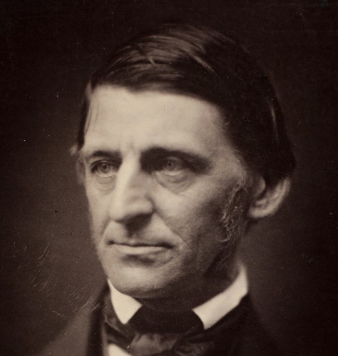
2 months 3 weeks ago
We are always getting ready to live, but never living.
▼
Source
source
April 12, 1834

3 months 3 weeks ago
You wanted God's ideas about what was best for you to coincide with your ideas, but you also wanted him to be the almighty Creator of heaven and earth so that he could properly fulfill your wish. And yet, if he were to share your ideas, he would cease to be the almighty Father.
1 month 1 week ago
The fierce willingness to repudiate domination in a holistic manner is the starting point for progressive cultural revolution.
▼
Source
source
Women, Art, and Society: Fourth Edition (2007) by Whitney Chadwick ISBN 0-500-20393-8
1 month 3 weeks ago
His power to adore is responsible for all his crimes: a man who loves a god unduly forces other men to love his god, eager to exterminate them if they refuse.
1 month 3 weeks ago
A good man with a good conscience doesn't walk so fast.
▼
Source
source
Scene X.

2 months 3 weeks ago
In France at least, the history of science and thought gives pride of place sciences, sciences of the necessary, all close to philosophy: one can observe in their history the almost uninterrupted emergence of truth and pure reason. The other disciplines, however - those, for example, that concern living beings, languages, or economic facts - are considered too tinged with empirical thought, too exposed to the vagaries of chance or imagery to age old traditions and external events, for it to be supposed that their history could be anything other irregular. At most, they are expected to provide evidence of a state of mind, an intellectual fashion, a mixture of archaism and bold conjecture, of intuition and blindness. But what if empirical knowledge, at a given time and in a given culture, did possess a well defined regularity.
▼
Source
source
Foreword to the English edition
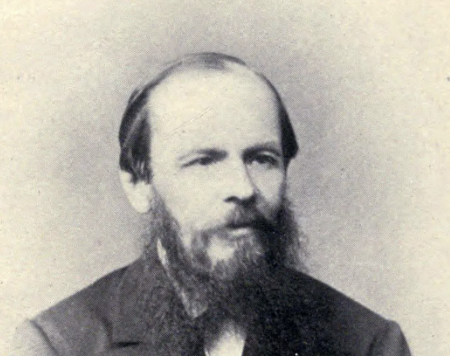
1 month 3 weeks ago
To study the meaning of man and of life - I am making significant progress here. I have faith in myself. Man is a mystery: if you spend your entire life trying to puzzle it out, then do not say that you have wasted your time. I occupy myself with this mystery, because I want to be a man.
▼
Source
source
Personal correspondence (1839), as quoted in Dostoevsky: His Life and Work (1971) by Konstantin Mochulski, as translated by Michael A. Minihan, p. 17
1 month 1 week ago
The individual begins that long effort as an Outsider; he may finish it as a saint.
▼
Source
source
Chapter Nine, Breaking the Circuit, final sentence

1 month 1 week ago
The eulogies of my intelligence are positively intended to evade the question "Is what she says true?"
▼
Source
source
Letter to her parents (1943), as quoted in the Introduction by Siân Miles p. 2

1 month 3 weeks ago
...what I look to with seriousness is the Phalanx of Party which exists in the body of the dissenters, who are, at the very least, nine tenths of them entirely devoted, some with greater some with less zeal, to the principles of the French Revolution.
▼
Source
source
Letter to the Home Secretary, Henry Dundas (30 September 1791), quoted in Alfred Cobban and Robert A. Smith (eds.), The Correspondence of Edmund Burke, Volume VI: July 1789-December 1791 (1967), p. 419
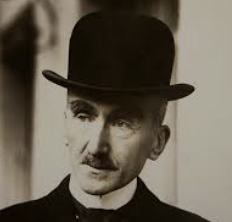
1 month 2 weeks ago
The spectacle of what religions have been in the past, of what certain religions still are to-day, is indeed humiliating for human intelligence. What a farrago of error and folly!'
▼
Source
source
Chapter II : Static Religion
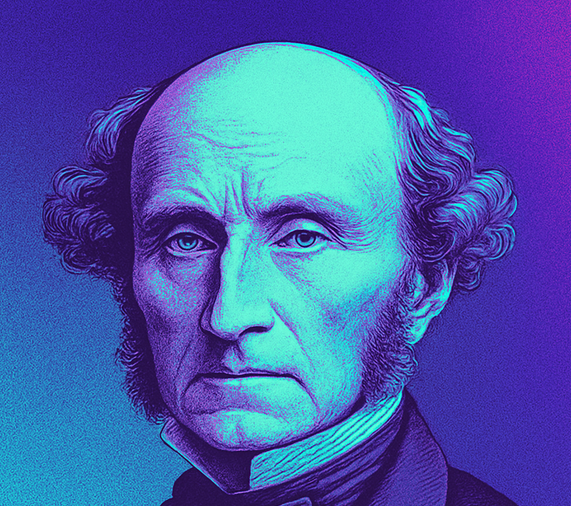
2 months 3 weeks ago
People are not aware how entirely, in former ages, the law of superior strength was the rule of life; how publicly and openly it was avowed, I do not say cynically or shamelessly - for these words imply a feeling that there was something in it to be ashamed of, and no such notion could find a place in the faculties of any person in those ages, except a philosopher or a saint.
▼
Source
source
Ch. 1
CivilSimian.com created by AxiomaticPanic, CivilSimian, Kalokagathia