

2 months 3 weeks ago
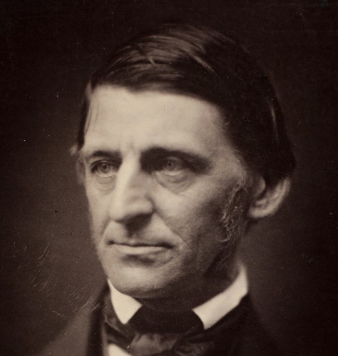
The best effect of fine persons is felt after we have left their presence.
▼
Source
source
1839
3 days ago
A created thing is never invented and it is never true: it is always and ever itself.
▼
Source
source
Creation
2 months 2 weeks ago
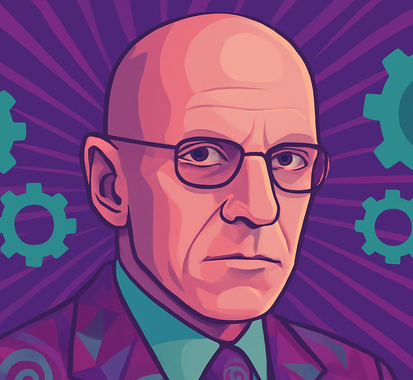
It is understandable then that tragic heroes, unlike the baroque characters who had preceded them, could never be mad, and that inversely madness could never take on the tragic value we have known since Nietzsche and Artaud. In the classical epoch, tragic characters and the mad face each other without any possible dialogue or common language, for the one can only pronounce the decisive language of being, where the truth of light and the depths of night meet in a flash, and the other repeats endlessly an indifferent murmur where the empty chatter of the day is cancelled out by the deceptive lies of the shadows.
▼
Source
source
Part Two: 2. The Transcendence of Delirium
2 weeks 3 days ago
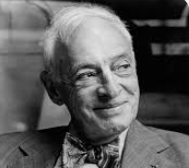
I think that New York is not the cultural center of America, but the business and administrative center of American culture.
▼
Source
source
BBC radio interview, The Listener
1 month 4 days ago
The human tendency to regard little things as important has produced very many great things. G 46 Variant translation: The inclination of people to consider small things as important has produced many great things.
2 months 2 weeks ago
Discourses are tactical elements or blocks operating in the field of force relations; there can exist different and even contradictory discourses within the same strategy; they can, on the contrary, circulate without changing their form from one strategy to another, opposing strategy.
▼
Source
source
Vol I, pp. 101-102
2 months 2 weeks ago
Becoming a vegetarian is not merely a symbolic gesture. Nor is it an attempt to isolate oneself from the ugly realities of the world, to keep oneself pure and so without responsibility for the cruelty and carnage all around. Becoming a vegetarian is a highly practical and effective step one can take toward ending both the killing of nonhuman animals and the infliction of suffering upon them.
▼
Source
source
Ch. 4: Becoming a Vegetarian
2 months 3 weeks ago
The man of principles has character. Of him we know definitely what to expect. He does not act on the basis of his instinct, but on the basis of his will. Therefore, without being redundant one can classify characteristics according to a person's faculty of desire (what is practical), as a) his nature, or natural talent, b) his temperament, or disposition, and c) his general character, or mode of thinking.
▼
Source
source
Kant, Immanuel (1996), page 195
2 weeks 3 days ago
The modern world gives proof at every point that it is far easier to destroy institutions than to create them. Nevertheless, few people seem to understand this truth.
▼
Source
source
Rousseau & the origins of liberalism, The New Criterion
3 months 1 week ago
If a person gave your body to any stranger he met on his way, you would certainly be angry. And do you feel no shame in handing over your own mind to be confused and mystified by anyone who happens to verbally attack you?
▼
Source
source
(28) [tr. Elizabeth Carter]

3 months 2 days ago
Women . . . have . . . small and narrow chests, and broad hips, to the end they should remain at home, sit still, keep house, and bear and bring up children. . . . A woman is, or at least should be, a friendly, courteous, and a merry companion in life . . . the honor and ornament of the house, and inclined to tenderness, for thereunto are they chiefly created, to bear children, and to be the pleasure, joy and solace of their husbands.
▼
Source
source
-- Table Talk, quoted in Luther On "Woman"
3 months 3 weeks ago
And surely to know what this good is, is of great importance for the conduct of life, for in that case we shall be like archers shooting at a definite mark, and shall be more likely to do what is right. But, if this is the case, we must try to comprehend, in outline at least, what it is and to which of the sciences it belongs.
1 month 1 week ago
It must be recognized that man in his limited and relative earthly life is capable of bringing about the beautiful and the valuable only when he believes in another life, unlimited, absolute, eternal. That is a law of his being. A contact with this mortal life exclusive of any other ends in the wearing-away of effective energy and a self-satisfaction that makes one useless and superficial. Only the spiritual man, striking his roots deep in infinite and eternal life, can be a true creator. But Humanism denied the spiritual man, handed over the eternal to the temporal, and took its stand by the natural man within the limited confines of the earth.
▼
Source
source
p. 34
3 weeks 1 day ago
If your parent is just, revere him; if not, bear with him.
▼
Source
source
Maxim 27
2 months 3 weeks ago
The activity of to-day and the assurance of to-morrow.
▼
Source
source
p. 215
3 months 3 weeks ago
The third kind of life is the life of contemplation.

2 months 2 weeks ago
He who has begun has half done. Dare to be wise; begin!
▼
Source
source
Book I, epistle ii, lines 40-41
2 months 1 week ago
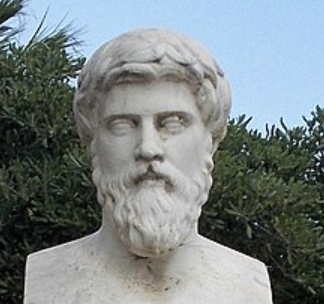
Valour, however unfortunate, commands great respect even from enemies: but the Romans despise cowardice, even though it be prosperous.
▼
Source
source
Aemilius Paulus 26 (Tr. Stewart and Long)
2 weeks 6 days ago
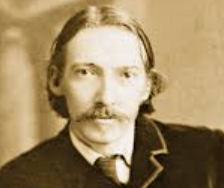
To hold the same views at forty as we held at twenty is to have been stupefied for a score of years, and take rank, not as a prophet, but as an unteachable brat, well birched and none the wiser. It is as if a ship captain should sail to India from the Port of London; and having brought a chart of the Thames on deck at his first setting out, should obstinately use no other for the whole voyage.
▼
Source
source
Crabbed Age and Youth.
1 month 2 weeks ago
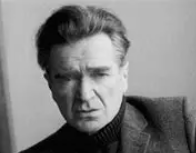
Impossible for me to know whether or not I take myself seriously. The drama of detachment is that we cannot measure its progress. We advance into a desert, and we never know where we are in it.
2 months 2 weeks ago
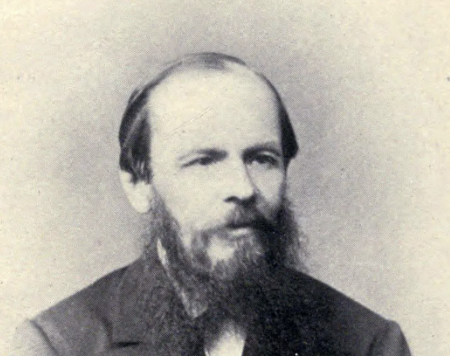
I regard Peter as one of the great moralists, because I suspect that more than anyone he has helped to change the attitudes of very many people to the sufferings of animals. Peter is a utilitarian in normative ethics, and a humane attitude to animals is a natural corollary of utilitarianism. Utilitarian concern for animals goes back to Bentham, who, presumably alluding to the Kantians, said that the question was not whether animals can reason, but whether they can suffer.
▼
Source
source
J. J. C. Smart, Reply to Singer, in Philip Pettit, Richard Sylvan and Jean Norman (eds.), Metaphysics and Morality: Essays in Honour of J. J. C. Smart, Oxford, 1987, p. 192
1 month 3 weeks ago
Faith is not in power but in truth.
1 month 2 weeks ago
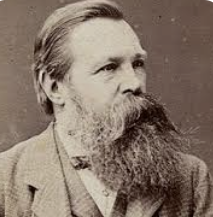
Labour is the source of all wealth, the political economists assert. And it really is the source -- next to nature, which supplies it with the material that it converts into wealth. But it is even infinitely more than this. It is the prime basic condition for all human existence, and this to such an extent that, in a sense, we have to say that labour created man himself.
▼
Source
source
The Part Played by Labour in the Transition from Ape to Man
3 days ago
Experience is what you get while looking for something else.
▼
Source
source
"Experience"

2 months 6 days ago
Time is the wisest of all things that are; for it brings everything to light.
▼
Source
source
As quoted in Diogenes Laërtius, The Lives and Opinions of Eminent Philosophers, I, 35

2 months 1 day ago
It is manifest... that every soul and spirit hath a certain continuity with the spirit of the universe, so that it must be understood to exist and to be included not only there where it liveth and feeleth, but it is also by its essence and substance diffused throughout immensity... The power of each soul is itself somehow present afar in the universe... Naught is mixed, yet is there some presence. Anything we take in the universe, because it has in itself that which is All in All, includes in its own way the entire soul of the world, which is entirely in any part of it.
3 weeks 1 day ago
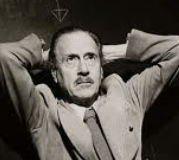
Logic is figure without a ground.
▼
Source
source
(p. 241)
1 month 1 week ago
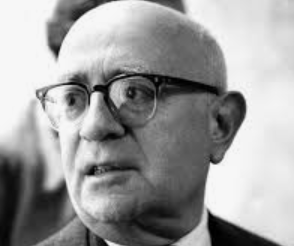
The phrase, the world wants to be deceived, has become truer than had ever been intended. People are not only, as the saying goes, falling for the swindle; if it guarantees them even the most fleeting gratification they desire a deception which is nonetheless transparent to them. They force their eyes shut and voice approval, in a kind of self-loathing, for what is meted out to them, knowing fully the purpose for which it is manufactured. Without admitting it they sense that their lives would be completely intolerable as soon as they no longer clung to satisfactions which are none at all.
▼
Source
source
Section 10
2 months 3 weeks ago
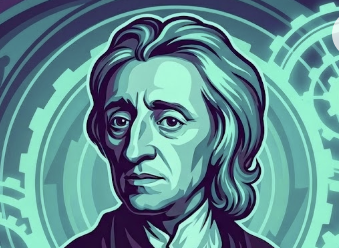
The next thing is by gentle degrees to accustom children to those things they are too much afraid of. But here great caution is to be used, that you do not make too much haste, nor attempt this cure too early, for fear lest you increase the mischief instead of remedying it.
▼
Source
source
Sec. 115
1 month 1 week ago
The Outsider is always unhappy, but he is an agent that ensures the happiness for millions of 'Insiders'.
▼
Source
source
Chapter Seven, The Great Synthesis…
1 month 2 weeks ago
No one commits suicide for external reasons, only because of inner disequilibrium. Under similar adverse circumstances, some are indifferent, some are moved, some are driven to suicide.
1 month 2 weeks ago
In the case of colors, there is a tridimensional spread of feelings. Originally all feelings may have been connected in the same way, and the presumption is that the number of dimensions was endless. For development essentially involves a limitation of possibilities. But given a number of dimensions of feeling, all possible varieties are obtainable by varying the intensities of the different elements.
1 month 3 weeks ago
The strides of humanity are slow, they can only be counted in centuries.
▼
Source
source
Act II.
1 month 3 days ago
Modem mainstream economic theory bravely assumes that people make their decisions in such a way as to maximize their utility. Accepting this assumption enables economics to predict a great deal of behavior (correctly or incorrectly) without ever making empirical studies of human actors.
▼
Source
source
Simon (1990) "Invariants of Human Behavior" in: Annu. Rev. Psychol. 41: p. 6.
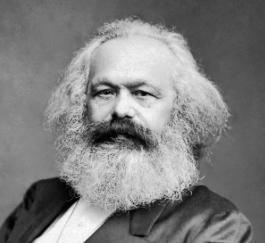
2 months 3 weeks ago
The labour-power is a commodity, not capital, in the hands of the labourer, and it constitutes for him a revenue so long as he can continuously repeat its sale; it functions as capital after its sale, in the hands of the capitalist, during the process of production itself.
▼
Source
source
Vol. II, Ch. XIX, p. 384.
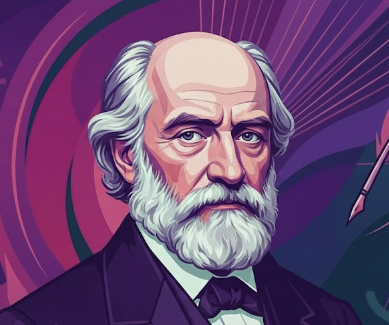
2 months 3 weeks ago
A man who has no mental needs, because his intellect is of the narrow and normal amount, is, in the strict sense of the word, what is called a philistine.
▼
Source
source
Personality; or, What a Man Is
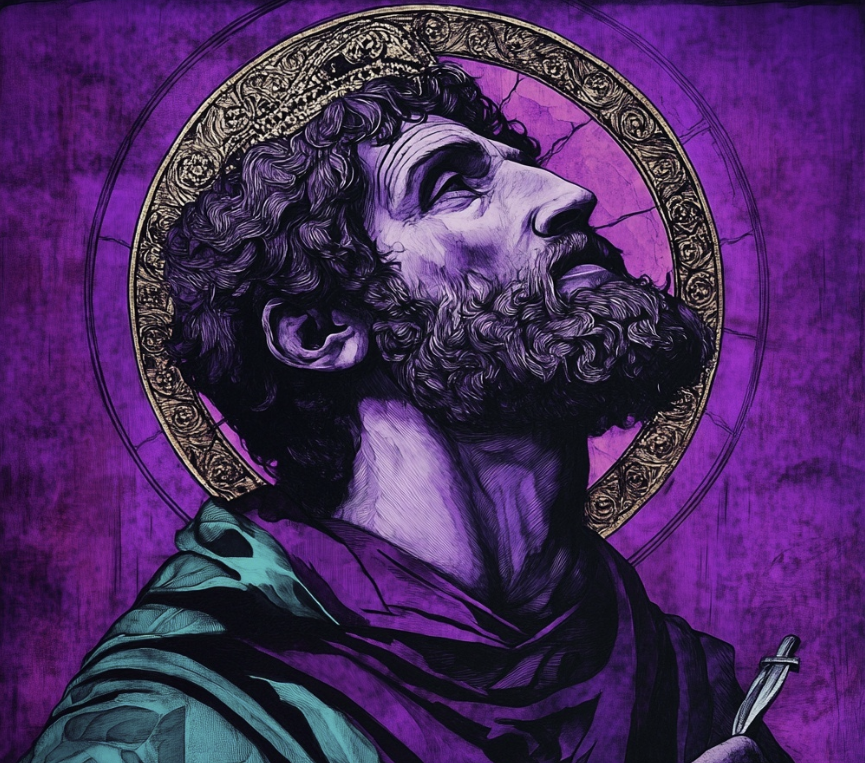
3 months 1 week ago
Therefore let every Christian, yea, let the whole body of Christ everywhere cry out, despite the tribulations it endures, despite temptations and countless scandals, saying: "Preserve my soul, for I am holy; save Thy servant, O my God, that trusteth in thee" (Ps. 85:2) No, this holy one is not proud, for he trusts in God.
▼
Source
source
p.429
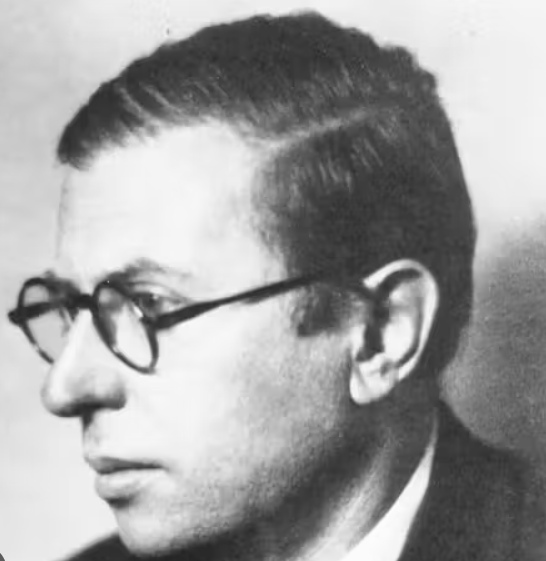
2 months 3 weeks ago
You take souls for vegetables.... The gardener can decide what will become of his carrots but no one can choose the good of others for them.
▼
Source
source
Heinrich, Act 5, sc. 3


2 months 3 weeks ago
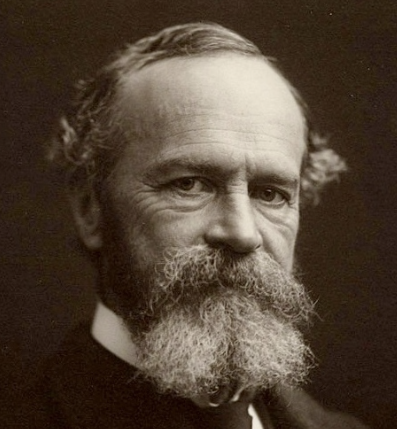
All our scientific and philosophic ideals are altars to unknown gods.
▼
Source
source
Lecture at the Harvard Divinity School (13 March 1884); published in the The Unitarian Review and Religious Magazine as The Dilemma of Determinism
1 month 1 week ago
In its solitariness the spirit asks, What, in the way of value, is the attainment of life? And it can find no such value till it has merged its individual claim with that of the objective universe.
▼
Source
source
Religion is world-loyalty. Religion in the Making (February 1926), Lecture II: "Religion and Dogma".
3 weeks 6 days ago
We live in a world where there is more and more information, and less and less meaning.
▼
Source
source
"The Implosion of Meaning in the Media," p. 79
2 months 3 weeks ago
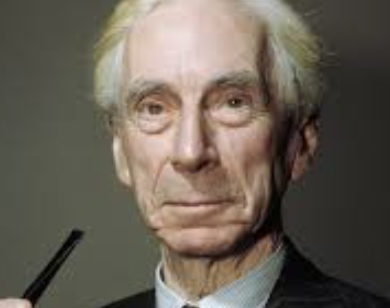
I dislike Communism because it is undemocratic, and capitalism because it favors exploitation.
▼
Source
source
Unarmed Victory (1963), p. 14
3 months 3 weeks ago
An optimistic view of the future would indicate that before long, the clear necessity of expanding humanity's horizons would cause ... space settlements to be built. The construction would also serve as a great project that not only would be clearly of great benefit, but might induce human cooperation in something large enough to fire the heart and mind, and make people forget the petty quarrels that have engaged them for thousands of years in wars over insignificant scraps of earthly territory.
3 weeks 1 day ago
He who is bent on doing evil can never want occasion.
▼
Source
source
Maxim 459
1 month 3 days ago
The fact that goals may be dependent for their force on other more distant ends leads to the arrangement of these goals in a hierarchy - each level to be considered as an end relative to the levels below it and as a mean to the levels above it.
▼
Source
source
p. 62.
2 months 2 weeks ago
This aristocratic thesis is... the demos, the people, are the most numerous... also comprised of the most ordinary, and... even the worst, citizens. Therefore... what is best for the demos cannot be what is best for the polis... the city.
2 months 4 weeks ago
The proposal of any new law or regulation of commerce which comes from this order, ought always to be listened to with great precaution, and ought never to be adopted till after having been long and carefully examined, not only with the most scrupulous, but with the most suspicious attention. It comes from an order of men, whose interest is never exactly the same with that of the public, who have generally an interest to deceive and even to oppress the public, and who accordingly have, upon many occasions, both deceived and oppressed it.
▼
Source
source
Chapter XI, Part III, Conclusion of the Chapter, p. 292.
3 weeks 6 days ago
The simulacrum now hides, not the truth, but the fact that there is none, that is to say, the continuation of Nothingness.
3 months 2 weeks ago
Character is destiny.
CivilSimian.com created by AxiomaticPanic, CivilSimian, Kalokagathia