

2 weeks 4 days ago
There is but one mode by which man can possess in perpetuity all the happiness which his nature is capable of enjoying, - that is by the union and co-operation of all for the benefit of each. Union and co-operation in war obviously increase the power of the individual a thousand fold. Is there the shadow of a reason why they should not produce equal effects in peace; why the principle of co-operation should not give to men the same superior powers, and advantages, (and much greater) in the creation, preservation, distribution and enjoyment of wealth?
2 months 3 weeks ago
Out of the crooked timber of humanity, no straight thing was ever made.
▼
Source
source
Idea for a General History with a Cosmopolitan Purpose (1784), Proposition 6.
2 months 3 weeks ago
It is not to be supposed that she was, or that any one, at the age at which I first saw her, could be, all that she afterwards became. Least of all could this be true of her, with whom self-improvement, progress in the highest and in all senses, was a law of her nature; a necessity equally from the ardour with which she sought it, and from the spontaneous tendency of faculties which could not receive an impression or an experience without making it the source or the occasion of an accession of wisdom. Up to the time when I first saw her, her rich and powerful nature had chiefly unfolded itself according to the received type of feminine genius. To her outer circle she was a beauty and a wit, with an air of natural distinction, felt by all who approached her: to the inner, a woman of deep and strong feeling, of penetrating and intuitive intelligence, and of an eminently meditative and poetic nature.
▼
Source
source
(p. 185)

2 months 3 weeks ago
If I had had more time, this letter would have been shorter.
▼
Source
source
Written by Voltaire in an over-long letter to a friend, quoted to A. P. Martinich in Philosophical Writing: An Introduction, Note to the Second Edition, 1996
2 months 3 weeks ago
A people that sells its own children is more condemnable than the buyer; this commerce demonstrates our superiority; he who gives himself a master was born to have one.
▼
Source
source
Essai sur les Moeurs et l'Espit des Nations (1753)
2 months 3 weeks ago
The word liberty in the mouth of Mr. Webster sounds like the word love in the mouth of a courtesan.
▼
Source
source
February 12, 1851; cf. the remark of John Wilkes about Samuel Johnson, "Liberty is as ridiculous in his mouth as Religion in mine" (20 March 1778), quoted in Boswell's Life of Johnson, 1791

3 months 3 weeks ago
Law could never, by determining exactly what is noblest and must just for one and all, enjoin upon them that which is best; for the differences of men and of actions and the fact that nothing, I may say, in human life is ever at rest, forbid any science whatsoever to promulgate any simple rule for everything and for all time. So, that which is persistently simple is inapplicable to things which are never simple.
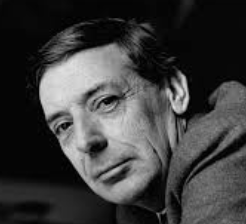
1 month 1 week ago
Deniers do not get their views just from simple mistakes about language and truth. Rather, they believe that there is something to worry about in important areas of our thought and in traditional interpretations of those areas; they sense that it has something to do with truth; and (no doubt driven by the familiar desire to say something at once hugely general, deeply important, and reassuringly simple) they extend their worry to the notion of truth itself.
▼
Source
source
p. 6
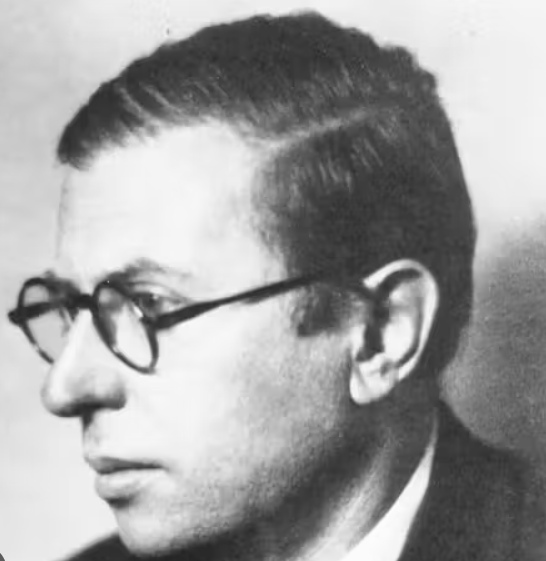
2 months 3 weeks ago
We will freedom for freedom's sake, in and through particular circumstances. And in thus willing freedom, we discover that it depends entirely upon the freedom of others and that the freedom of others depends upon our own. Obviously, freedom as the definition of a man does not depend upon others, but as soon as there is a commitment, I am obliged to will the liberty of others at the same time as my own. I cannot make liberty my aim unless I make that of others equally my aim.
▼
Source
source
p. 52


2 months 3 weeks ago
An honest man nearly always thinks justly.
▼
Source
source
As quoted in A Dictionary of Thoughts: Being a Cyclopedia of Laconic Quotations from the Best Authors of the World, Both Ancient and Modern (1908) by Tryon Edwards, p. 277.
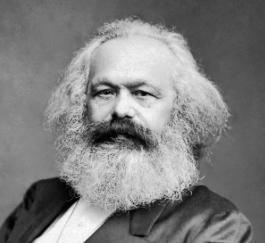
2 months 3 weeks ago
The Communists disdain to conceal their views and aims. They openly declare that their ends can be attained only by the forcible overthrow of all existing social conditions. Let the ruling classes tremble at a Communistic revolution. The proletarians have nothing to lose but their chains. They have a world to win. WORKING MEN OF ALL COUNTRIES, UNITE!
▼
Source
source
Section 4, paragraph 11 (last paragraph) Variant translation: Workers of the world, unite!

2 months 3 weeks ago
When He died in the Wounded World He died not for men, but for each man. If each man had been the only man made, He would have done no less. Each thing, from the single grain of Dust to the strongest eldil, is the end and the final cause of all creation and the mirror in which the beam of His brightness comes to rest and so returns to Him. Blessed be He!
1 month 3 weeks ago
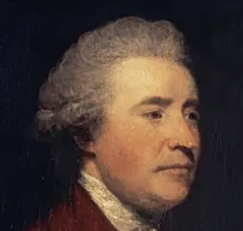
Never wholly separate in your Mind the merits of any Political Question from the Men who are concerned in it.
▼
Source
source
Letter to Charles-Jean-François Depont (November 1789), quoted in Alfred Cobban and Robert A. Smith (eds.), The Correspondence of Edmund Burke, Volume VI: July 1789-December 1791 (1967), p. 47

3 months 3 weeks ago
Concerning the generation of animals akin to them, as hornets and wasps, the facts in all cases are similar to a certain extent, but are devoid of the extraordinary features which characterize bees; this we should expect, for they have nothing divine about them as the bees have.
1 week 6 days ago
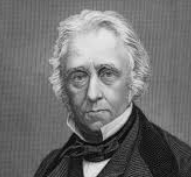
To have been a Sovereign, yet the champion of liberty,-a revolutionary leader, yet the supporter of social order, is the peculiar glory of William. Till his accession the British Constitution was in its Chaos. It had contained, from a very remote period, the simple elements of an harmonious government. But they were in a state not of amalgamation, but of conflict,-not of equilibrium but of alternate elevation and depression. The tyranny of Charles the first produced civil war and anarchy. Tyranny had now again produced resistance and revolution. And, but for the wisdom of the new King, it seems probable that the same cycle of misery would have been again described.
▼
Source
source
'Essay on the Life and Character of King William III' (1822), written for the Greaves Historical Prize at Cambridge, quoted in The Times Literary Supplement (1 May 1969), p. 469
2 months 3 weeks ago
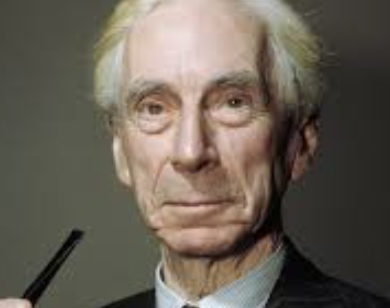
I found one day in school a boy of medium size ill-treating a smaller boy. I expostulated, but he replied: "The bigs hit me, so I hit the babies; that's fair." In these words he epitomized the history of the human race.
▼
Source
source
p. 31
1 month 3 weeks ago
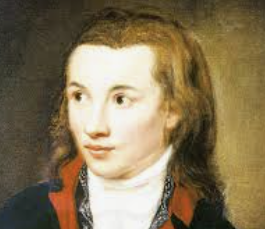
Poetry heals the wounds inflicted by reason.
▼
Source
source
As quoted in Quote, Unquote (1989) by Jonathan Williams, p. 136
2 months 1 week ago
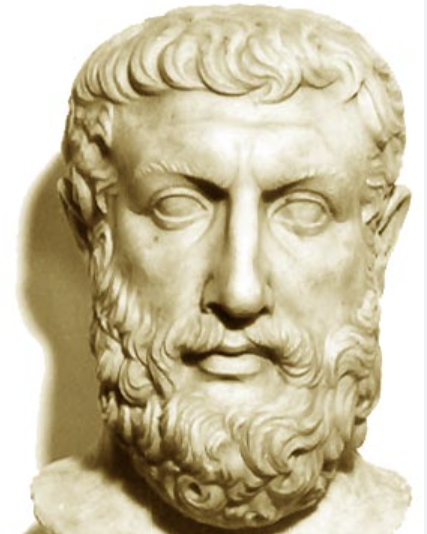
Do not let habit, born from experience, force you along this road, directing aimless eye and echoing ear and tongue; but judge by reason the much contested proof which I have spoken.
▼
Source
source
Frag. B 7.3-8.1, quoted by Sextus Empiricus, Against the Mathematicians, vii. 3
1 month 1 week ago
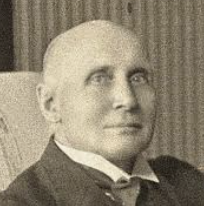
It belongs to the self-respect of intellect to pursue every tangle of thought to its final unravelment.
▼
Source
source
Ch. 12: "Religion and Science", p. 258
2 months 4 weeks ago
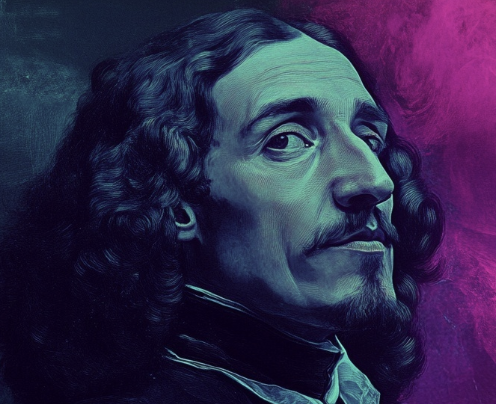
The order and connection of the thought is identical to with the order and connection of the things.
▼
Source
source
Part II, Prop. VII
3 weeks 3 days ago
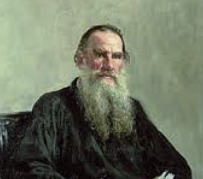
The error arises from the learned jurists deceiving themselves and others, by asserting that government is not what it really is, one set of men banded together to oppress another set of men, but, as shown by science, is the representation of the citizens in their collective capacity.
▼
Source
source
Chapter VI, Attitude of Men of the Present Day to War Variant translation: Government is an association of men who do violence to the rest of us.

3 months 2 weeks ago
Perfect is the virtue which is according to the Mean! Rare have they long been among the people, who could practice it!

3 months 2 days ago
Reason is the greatest enemy that faith has: it never comes to the aid of spiritual things, but--more frequently than not--struggles against the divine Word, treating with contempt all that emanates from God.
▼
Source
source
353

7 months ago
At the beginning of November 2001, there was a series of meetings between White House advisers and senior Hollywood executives with the aim of coordinating the war effort and establishing how Hollywood could help in the "war against terrorism" by getting the right ideological message across not only to Americans, but also to the Hollywood public around the globe — the ultimate empirical proof that Hollywood does in fact function as an "ideological state apparatus."
3 weeks 3 days ago
The recognition that love represents the highest morality was nowhere denied or contradicted, but this truth was so interwoven everywhere with all kinds of falsehoods which distorted it, that finally nothing of it remained but words. It was taught that this highest morality was only applicable to private life - for home use, as it were - but that in public life all forms of violence - such as imprisonment, executions, and wars - might be used for the protection of the majority against a minority of evildoers, though such means were diametrically opposed to any vestige of love.
▼
Source
source
III
1 month 3 weeks ago
All the time that this horrid scene was acting or avenging, as well as for some time before, and ever since, the wicked instigators of this unhappy multitude, guilty, with every aggravation, of all their crimes, and screened in a cowardly darkness from their punishment, continued without interruption, pity, or remorse, to blow up the blind rage of the populace, with a continued blast of pestilential libels, which infected and poisoned the very air we breathed in.
▼
Source
source
Speech at Bristol Previous to the Election, referring to the Gordon Riots (6 September 1780), quoted in The Works of the Right Honourable Edmund Burke, Vol. II (1855), pp. 158-159
2 months 4 weeks ago
There is no art which one government sooner learns of another than that of draining money from the pockets of the people.
▼
Source
source
Chapter II, Part II, Appendix to Articles I and II.

1 month 1 week ago
My life - I had lived in its heights and its depths, in bitter sorrow and ecstatic joy, in black despair and fervent hope. I had drunk the cup to the last drop. I had lived my life. Would I had the gift to paint the life I had lived!
▼
Source
source
chapter 56

3 months 3 weeks ago
At any street corner the feeling of absurdity can strike any man in the face.
3 months 3 weeks ago
Perception and knowledge could never be the same.
1 month 2 weeks ago
The empiricist thinks he believes only what he sees, but he is much better at believing than at seeing.
▼
Source
source
"Objections to Belief in Substance", p. 201
2 months 4 weeks ago
With the greater part of rich people, the chief enjoyment of riches consists in the parade of riches, which in their eye is never so complete as when they appear to possess those decisive marks of opulence which nobody can possess but themselves.
▼
Source
source
Chapter XI, Part II, p. 202 (See also Thorstein Veblen).

1 month 2 weeks ago
I have never taken myself for a being. A non-citizen, a marginal type, a nothing who exists only by the excess, by the superabundance of his nothingness.

1 month 3 weeks ago
It is imperative that we should not pare down the meaning of a dream to fit some narrow doctrine. ... No language exists that cannot be misused. It is hard to realize how badly we are fooled by the abuse of ideas, it even seems as if the unconscious had a way of strangling the physician in the coils of his own theory. p 11; this was originally listed here in a somewhat misleading form combining it with another statement on the interpretations of dreams on p. 14: No language exists that cannot be misused ... Every Interpretation is hypothetical, for it is a mere attempt to read an unfamiliar text.

2 months 3 weeks ago
The boundaries of the species, whereby men sort them, are made by men.
▼
Source
source
Book III, Ch. 6, sec. 37
1 month 1 week ago
The greatest invention of the nineteenth century was the invention of the method of invention.
▼
Source
source
Ch. 6: "The Nineteenth Century", p. 136

1 month 2 weeks ago
With men this is impossible; but with God all things are possible.
▼
Source
source
19:26 (KJV)
2 months 3 weeks ago
Criticism alone can sever the root of materialism, fatalism, atheism, free-thinking, fanaticism, and superstition, which can be injurious universally; as well as of idealism and skepticism, which are dangerous chiefly to the Schools, and hardly allow of being handed on to the public.
▼
Source
source
B xxxiv

1 month 1 week ago
Yet its essence was the certitude that his life was not totally at the mercy of chance. Somehow, it was more important than that. This sense of power inside his head - which he could intensify by pulling a face and wrinkling up the muscles of his forehead - aroused a glow of optimism, an expectation of exciting events. He knew that for him, fate held something special in store.
▼
Source
source
p. 26
1 month 1 week ago
Our minds are finite, and yet even in these circumstances of finitude we are surrounded by possibilities that are infinite, and the purpose of human life is to grasp as much as we can out of the infinitude.
▼
Source
source
Ch. 21, June 28, 1941.

3 months 2 days ago
Hath God obliged himself not to exceed the bounds of our knowledge?
▼
Source
source
Book II, Ch. 12

2 months 2 weeks ago
The Enlightenment worldview held by Du Bois is ultimately inadequate, and, in many ways, antiquated, for our time. The tragic plight and absurd predicament of Africans here and abroad requires a more profound interpretation of the human condition - one that goes beyond the false dichotomies of expert knowledge vs. mass ignorance, individual autonomy vs. dogmatic authority, and self-mastery vs. intolerant tradition.
▼
Source
source
The Future of the Race (1997) by Henry Louis Gates, Jr. and Cornel West, p. 64
2 months 3 weeks ago
The supreme maxim in scientific philosophising is this: wherever possible, logical constructions are to be substituted for inferred entities.
▼
Source
source
Quoted in Hawes The Logic of Contemporary English Realism (1923), p. 110
3 weeks 5 days ago
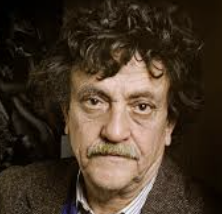
There is a similarity between writers and SDS [Students for a Democratic Society, a radical left-wing group]: Plenty of paranoia, but no ideas.
1 month 2 weeks ago
The multiplication of our kind borders on the obscene; the duty to love them, on the preposterous.
2 months 3 weeks ago
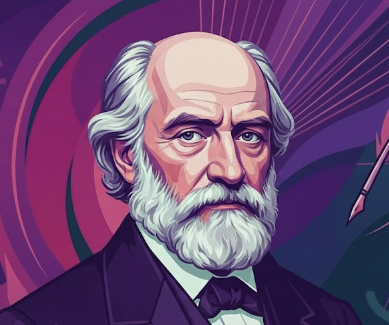
We see in tragedy the noblest men, after a long conflict and suffering, finally renounce forever all the pleasure of life and the aims till then pursued so keenly, or cheerfully and willingly give up life itself.
▼
Source
source
Book 1
2 months 3 weeks ago
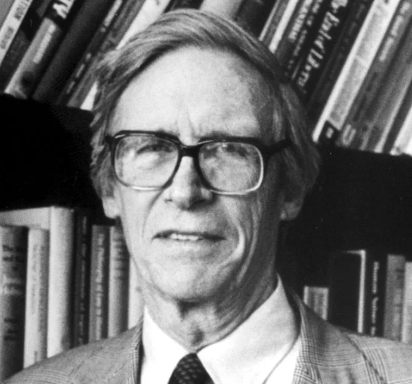
Justice is the first virtue of social institutions, as truth is of systems of thought. A theory however elegant and economical must be rejected or revised if it is untrue; likewise laws and institutions no matter how efficient and well-arranged must be reformed or abolished if they are unjust. Each person possesses an inviolability founded on justice that even the welfare of society as a whole cannot override. For this reason justice denies that the loss of freedom for some is made right by a greater good shared by others. It does not allow that the sacrifices imposed on a few are outweighed by the larger sum of advantages enjoyed by many. Therefore in a just society the liberties of equal citizenship are taken as settled; the rights secured by justice are not subject to political bargaining or to the calculus of social interests.
▼
Source
source
Chapter I, Section 1, pg. 3-4
CivilSimian.com created by AxiomaticPanic, CivilSimian, Kalokagathia