

1 month 1 week ago
If one assumes, as I do, that battery is caused by the belief permeating this culture that hierarchical rule and coercive authority are natural, then all our relationships tend to be based on power and domination, and thus all forms of battery are linked.

3 months 3 weeks ago
The tyrant dies and his rule is over; the martyr dies and his rule begins.

2 months 3 weeks ago
Natural religion supplies still all the facts which are disguised under the dogma of popular creeds. The progress of religion is steadily to its identity with morals.
▼
Source
source
p. 223
3 months 3 weeks ago
The Sophist demonstrates that everything is true and nothing is true.

1 month 2 weeks ago
As incompetent in life as in death, I loathe myself and in this loathing I dream of another life, another death. And for having sought to be a sage such as never was, I am only a madman among the mad.

2 months 3 weeks ago
Every poet and musician and artist, but for Grace, is drawn away from love of the thing he tells to love of the telling till, down in Deep Hell, they cannot be interested in God at all but only in what they say about Him.
▼
Source
source
Ch. 9

1 month 4 weeks ago
The power of the periodical press is second only to that of the people.
▼
Source
source
Chapter XI.
2 months 2 weeks ago
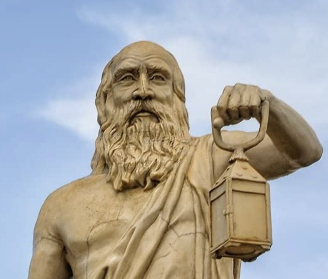
Other dogs bite only their enemies, whereas I bite also my friends in order to save them.
▼
Source
source
Stobaeus, iii. 13. 44
1 month 3 weeks ago
The dream is the small hidden door in the deepest and most intimate sanctum of the soul, which opens to that primeval cosmic night that was soul long before there was conscious ego and will be soul far beyond what a conscious ego could ever reach.
▼
Source
source
The Meaning of Psychology for Modern Man
1 month 2 weeks ago
The philosopher will ask himself ... if the criticism we are now suggesting is not the philosophy which presses to the limit that criticism of false gods which Christianity has introduced into our history.
▼
Source
source
p. 47
1 month 1 week ago
Implication is thus the very texture of our web of belief, and logic is the theory that traces it.
▼
Source
source
S. 41

3 days ago
Humans already massively intervene in Nature, whether through habitat destruction, captive breeding programs for big cats, "rewilding", etc. So the question is not whether humans should "interfere", but rather what ethical principles should govern our interventions.
▼
Source
source
The Antispeciesist Revolution, Institute for Ethics and Emerging Technologies, 26 Jul. 2013
3 months 1 week ago
I became evil for no reason. I had no motive for my wickedness except wickedness itself. It was foul, and I loved it. I loved the self-destruction, I loved my fall, not the object for which I had fallen but my fall itself. My depraved soul leaped down from your firmament to ruin. I was seeking not to gain anything by shameful means, but shame for its own sake.
▼
Source
source
II, 4
1 month 2 weeks ago
The skeptic is the least mysterious man in the world, and yet, starting from a certain moment, he no longer belongs to this world.
1 month 4 days ago
There exists a species of transcendental ventriloquism by means of which men can be made to believe that something said on earth comes from Heaven.
▼
Source
source
F 84
2 months 3 weeks ago
When He died in the Wounded World He died not for men, but for each man. If each man had been the only man made, He would have done no less. Each thing, from the single grain of Dust to the strongest eldil, is the end and the final cause of all creation and the mirror in which the beam of His brightness comes to rest and so returns to Him. Blessed be He!
1 month 2 weeks ago
Erosion of our being by our infirmities: the resulting void is filled by the presence of consciousness, what am I saying? - that void is consciousness itself.
1 month 4 weeks ago
The pit of a theatre is the one place where the tears of virtuous and wicked men alike are mingled.
2 months 3 weeks ago
Not from a vain or shallow thought His awful Jove young Phidias brought.
▼
Source
source
The Problem, st. 2
2 months 3 weeks ago
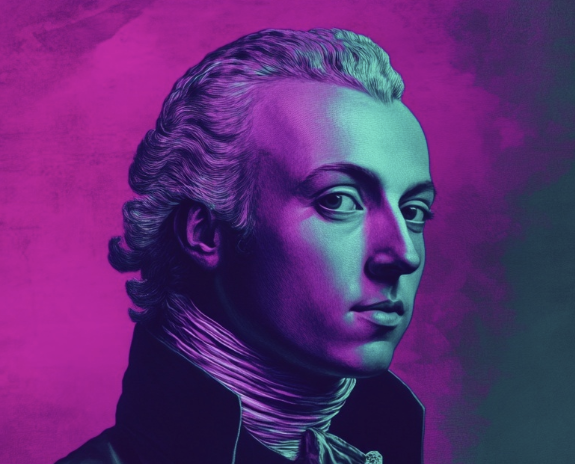
The man of principles has character. Of him we know definitely what to expect. He does not act on the basis of his instinct, but on the basis of his will. Therefore, without being redundant one can classify characteristics according to a person's faculty of desire (what is practical), as a) his nature, or natural talent, b) his temperament, or disposition, and c) his general character, or mode of thinking.
▼
Source
source
Kant, Immanuel (1996), page 195
3 months 3 weeks ago
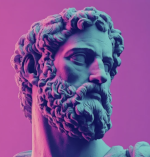
There are three lines of life which stand out prominently to view: the life of pleasure, the political life, and the life of reflection.
3 months 1 week ago
In order to understand the Scriptures, it is absolutely necessary to know the whole, complete Christ, that is, Head and members. For sometimes Christ speaks in the name of the Head alone, sometimes in the name of His body, which is the holy Church spread over the entire earth. And we are in His body, and we hear ourselves speaking in it, for the Apostle tells us: We are members of His body (Eph. 5:30). In many places does the Apostle tell us this.
▼
Source
source
p. 419
2 months 3 weeks ago
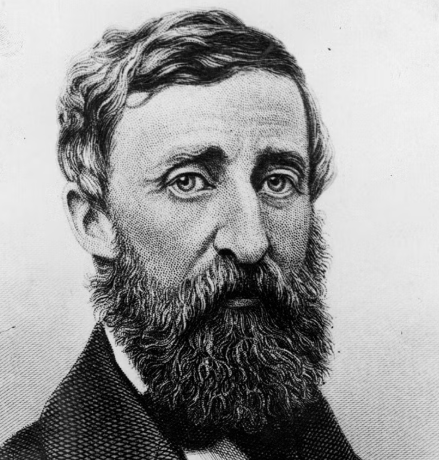
Men and boys are learning all kinds of trades but how to make men of themselves. They learn to make houses; but they are not so well housed, they are not so contented in their houses, as the woodchucks in their holes. What is the use of a house if you haven't got a tolerable planet to put it on? - If you cannot tolerate the planet that it is on? Grade the ground first. If a man believes and expects great things of himself, it makes no odds where you put him, or what you show him ... he will be surrounded by grandeur. He is in the condition of a healthy and hungry man, who says to himself, - How sweet this crust is!
▼
Source
source
Letter to Harrison Blake (20 May 1860); published in Familiar Letters, 1865
2 months 3 weeks ago
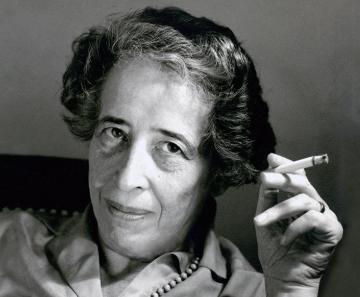
Real power begins where secrecy begins.
▼
Source
source
Part 3, Ch. 12, § 1
1 month 1 week ago
Whether or no it be for the general good, life is robbery. It is at this point that with life morals become acute. The robber requires justification.
3 weeks 1 day ago
The discarnate TV user lives in a world between fantasy and dream, and is in a typically hypnotic state, which is the ultimate form and level of participation.
▼
Source
source
"A Last Look at the Tube." New York Magazine, 17 March 1978, p. 45-48

3 months 2 days ago
The blame rests with the government. Why do they not put adulterers to death? Then I would not need to give such advice. Between two evils one is always the lesser, in this case allowing the adulterer to remarry in a distant land in order to avoid fornication . . .


3 months 3 weeks ago
Modesty is an unnatural attitude, and one which is only with difficulty taught to children.
1 month 2 weeks ago
Power as is really divided, and as dangerously to all purposes, by sharing with another an Indirect Power, as a Direct one.
▼
Source
source
The Third Part, Chapter 42, p. 315

3 months 2 weeks ago
It is said in the Book of Poetry, "In silence is the offering presented, and the spirit approached to; there is not the slightest contention." Therefore the superior man does not use rewards, and the people are stimulated to virtue. He does not show anger, and the people are awed more than by hatchets and battle-axes.
2 months 1 week ago
When Eudæmonidas heard a philosopher arguing that only a wise man can be a good general, "This is a wonderful speech," said he; "but he that saith it never heard the sound of trumpets."
▼
Source
source
62 Eudæmonidas
1 month 2 weeks ago
With the disintegration of all that Nietzsche had revered, existence, to him, had become a desert in which only one thing remained, namely that which had relentlessly forced him into this path: truthfulness that knows no limits and is not subject to any condition.
▼
Source
source
p. 45
1 month 2 weeks ago
It is not politics that can bring true liberty to the soul; that must be achieved, if at all, by philosophy;
▼
Source
source
"The Irony of Liberalism"

2 months 4 weeks ago
People who invented the word charity, and used it in a good sense, inculcated more clearly, and much more efficaciously, the precept, Be charitable, than any pretended legislator or prophet, who should insert such a maxim in his writings.
▼
Source
source
Part I, Essay 22: Of the Standard of Taste
1 month 4 weeks ago
The most formidable of all the ills that threaten the future of the Union arises from the presence of a black population upon its territory; and in contemplating the cause of the present embarrassments, or the future dangers of the United States, the observer is invariably led to this as a primary fact.
▼
Source
source
Chapter XVIII.
2 months 3 weeks ago
But perhaps I lack the gift. I see I've described her as being like a sword. That's true as far as it goes. But utterly inadequate by itself, and misleading. I ought to have said 'But also like a garden. Like a nest of gardens, wall within wall, hedge within hedge, more secret, more full of fragrant and fertile life, the further you explore.' And then, of her, and every created thing I praise, I should say 'in some way, in its unique way, like Him who made it.' Thus up from the garden to the Gardener, from the sword to the Smith. to the life-giving Life and the Beauty that makes beautiful.
1 month 1 week ago
Positivism ... implies the double falsehood that no interpretation is needed, and that it is not needed because the story which the positivist writer tells, such as it is, is obvious. The story he or she tells is usually a bad one, and its being obvious only means that it is familiar.
▼
Source
source
p. 12
1 month 1 week ago
I realize the malady of the oppressed and disinherited masses only too well, but I refuse to prescribe the usual ridiculous palliatives which allow the patient neither to die nor to recover. One cannot be too extreme in dealing with social ills; besides, the extreme thing is generally the true thing. My lack of faith in the majority is dictated by my faith in the potentialities of the individual. Only when the latter becomes free to choose his associates for a common purpose, can we hope for order and harmony out of this world of chaos and inequality.
1 month 2 weeks ago
Unto whomsoever much is given, of him shall be much required: and to whom men have committed much, of him they will ask the more.
▼
Source
source
12:48
1 month 3 weeks ago
Faith is not in power but in truth.
2 months 3 weeks ago
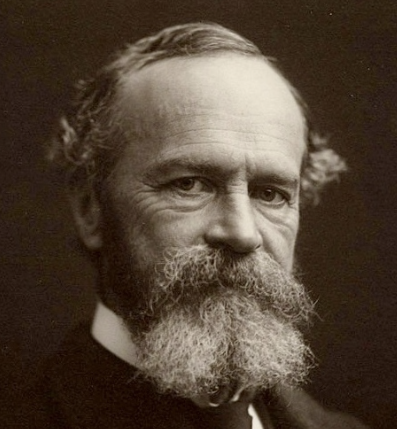
The union of the mathematician with the poet, fervor with measure, passion with correctness, this surely is the ideal.
▼
Source
source
Ch. 11 - Clifford's Lectures and Essays, 1879
2 months 3 weeks ago
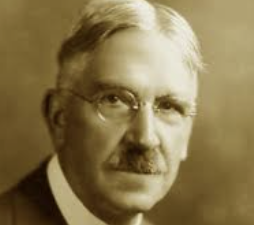
There are other letters for the child to learn than those which Cadmus invented.
1 month 2 weeks ago
Classical science was based upon the belief that it is possible to formulate both the position and velocity at one time of any given particle. It followed that knowledge of the position and velocity of a given number of particles would enable the future behavior of the whole collection to be accurately predicted. The principle of Heisenberg is that given the determination of position, its velocity can be stated only as of a certain order of probability, while if its velocity is determined the correlative factor of position can be stated only as of a certain order of probability. Both cannot be determined at once, from which it follows necessarily that the future of the whole collection cannot possibly be foretold except in terms of some order of probability.
1 month 3 days ago
We are organization watchers in our role as citizens. Increasing attention has been fixed in recent years upon the functioning of society's organizations: its large corporations and its governments. Hence this could also be described as a book for Everyman-for it proposes a way of thinking about organizational issues that concern us all.
▼
Source
source
Simon (1975, p. ix); As cited in Stefano Franchi(2006) "Herbert simon, anti-philosopher." Computing and Philosophy. p. 34.
2 months 3 weeks ago
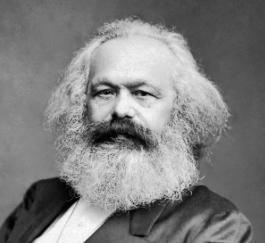
Lincoln's place in the history of the United States and of mankind will, nevertheless, be next to that of Washington!
3 months 3 weeks ago
For as only one thing is necessary, and as the theme of the talk is the willing of only one thing: hence the consciousness before God of one's eternal responsibility to be an individual is that one thing necessary.
1 month 2 weeks ago
O faithless and perverse generation, how long shall I be with you? how long shall I suffer you? bring him hither to me.
▼
Source
source
17:17 (KJV)
1 month 1 week ago
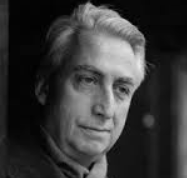
The politician being interviewed clearly takes a great deal of trouble to imagine an ending to his sentence: and if he stopped short? His entire policy would be jeopardized!
▼
Source
source
Sentence, in The Pleasure of the Text
CivilSimian.com created by AxiomaticPanic, CivilSimian, Kalokagathia