

7 months 2 weeks ago
Art expresses, it does not state; it is concerned with existences in their perceived qualities, not with conceptions symbolized in terms.
▼
Source
source
p. 139

9 months 3 weeks ago
Blessed are the hearts that can bend; they shall never be broken.
9 months 4 weeks ago
Is Wagner a human being at all? Is he not rather a disease? He contaminates everything he touches - he has made music sick.
6 months 4 weeks ago
The real is not only what can be reproduced, but that which is already reproduced, the hyper-real.
▼
Source
source
Simulations (1983), New York: Semiotext, p. 146


5 months 5 days ago
I make known unto thee how He hath provided for the bodily health of us all, by having produced Æsculapius, the Preserver of the universe; and how he hath communicated to us virtue of every kind, by sending down Aphrodite in company with Athene for our guardian; having made it all but a law that no one should use copulation except for the end of generating his like. For this reason truly, according to his revolutions and seasons, do the various vegetable and animal races feel themselves stirred towards the generation of their kind. What need is there to magnify the glory of his rays, and of his light? A night without moon, and without stars, how terrible is it! Let anyone reflect on this, in order that he may estimate how great a blessing is the light we derive from the Sun!
7 months 2 weeks ago
Although the formulations of science now offer the most advanced knowledge of nature, men continue to use obsolete forms of thought long discarded by scientific theory. In so far as these obsolete forms are superfluous for science, the fact that they persist violated the principle of the economy of thought, that characteristic trait of the bourgeois temper.
▼
Source
source
p. 133.
4 months 3 weeks ago
Does anything genuinely beautiful need supplementing? No more than justice does-or truth, or kindness, or humility. Are any of those improved by being praised? Or damaged by contempt? Is an emerald suddenly flawed if no one admires it? Or gold, or ivory, or purple? Lyres? Knives? Flowers? Bushes?
▼
Source
source
(Hays translation) IV, 20

6 months 6 days ago
Our bodies are perishable, wealth is not at all permanent and death is always nearby. Therefore we must immediately engage in acts of merit.

7 months 2 weeks ago
Sleep on now, and take your rest: behold, the hour is at hand, and the Son of man is betrayed into the hands of sinners. Rise, let us be going: behold, he is at hand that doth betray me.
▼
Source
source
26:45-46 (KJV)
7 months 2 weeks ago
Of all passions, that which inclineth men least to break the laws is fear.
▼
Source
source
The Second Part, Chapter 27

7 months 3 weeks ago
We replace God as best we can; for every god is good, provided he perpetuates in eternity our desire for a crucial solitude. . . .
4 months 3 weeks ago
The universe is flux, life is opinion. The universe is (constant) change, life is (mere) presumption.
▼
Source
source
(Analogous translation) The universe is transformation: life is opinion. (Translation by George Long)
8 months 3 weeks ago
Unlike the masses, intellectuals have a taste for rationality and an interest in facts.
▼
Source
source
Chapter 5 (p. 43)
6 months 3 weeks ago
Violence is the effort to maintain and restore a weakened psyche.
▼
Source
source
(p. 377)
6 months 4 weeks ago
One of the great American tragedies is to have participated in a just war. It's been possible for politicians and movie-makers to encourage us we're always good guys. The Second World War absolutely had to be fought. I wouldn't have missed it for the world. But we never talk about the people we kill. This is never spoken of.
▼
Source
source
Interviewed by Roger Friedman, "God Bless You, Mr. Vonnegut", FoxNews.com

9 months 2 weeks ago
The order of authority derives from God, as the Apostle says [in Romans 13:1-7]. For this reason, the duty of obedience is, for the Christian, a consequence of this derivation of authority from God, and ceases when that ceases. But, as we have already said, authority may fail to derive from God for two reasons: either because of the way in which authority has been obtained, or in consequence of the use which is made of it. There are two ways in which the first may occur. Either because of a defect in the person, if he is unworthy; or because of some defect in the way itself by which power was acquired, if, for example, through violence, or simony or some other illegal method.
▼
Source
source
in Aquinas: Selected Political Writings (Basil Blackwell: 1974), p. 183
9 months 3 weeks ago
Trantor could win even such a war, but perhaps not without paying a price that would make victory only a pleasanter name for defeat.
5 months 6 days ago
Modern mind has become more and more calculating. The calculative exactness of practical life which the money economy has brought about corresponds to the ideal of natural science: to transform the world into an arithmetic problem, to fix every part of the world by mathematical formulas. Only money economy has filled the days of so many people with weighing, calculating, with numerical determinations, with a reduction of qualitative values to quantitative ones.
▼
Source
source
p. 414
5 months 1 week ago
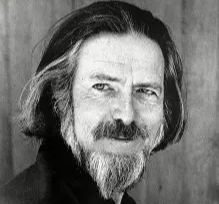
For several years I have referred to this, hitherto, rare and inaccessible work as the I-told-you-so-book, because it has often been implied that I have invented my explanations of Buddhism out of thin air, thus falsifying its authentic teachings... Yet, despite the occultist flavor of its title, The Secret Oral Teachings in the Tibetan Buddhist Sects is the most direct, no-nonsense, and down-to-earth explanation of Mahayana Buddhism which has thus far been written.
▼
Source
source
Watts' Foreward to The Secret Oral Teachings in the Tibetan Buddhist Sects (1964)], by Alexandra David Neel
6 months 4 weeks ago
People hate it when they're tickled because laughter is not pleasant, if it goes on too long. I think it's a desperate sort of convulsion in desperate circumstances, which helps a little.
▼
Source
source
Interview Public Radio International
7 months 2 weeks ago
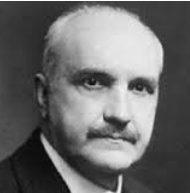
Persons who feel themselves to be exiles in this world-and what noble mind, from Empedocles down, has not had that feeling?-are mightily inclined to believe themselves citizens of another.
▼
Source
source
pp. 39-40
8 months 3 weeks ago
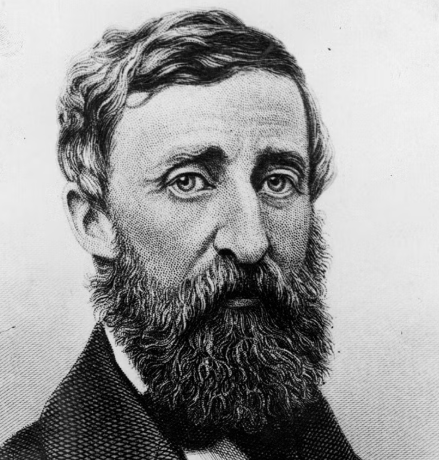
Instead of noble men, let us have noble villages of men. If it is necessary, omit one bridge over the river, round a little there and throw one arch at least over the darker gulf of ignorance which surrounds us.
▼
Source
source
Editorial, Andhra Granthalayam, vol. 1, no. 2 (1939) p. 6


8 months 2 weeks ago
Strength and beauty are the blessings of youth; temperance, however, is the flower of old age.
▼
Source
source
Fragment quoted in H. Diels and W. Kranz (eds.) Die Fragmente der Vorsokratiker, Vol. II (1952), no. 294

7 months 1 week ago
Plagued by Western habits of either-or, dualistic thinking, we all may fail to understand that race, class and gender interconnect to sustain a corporate ruling class. In the language of African-American essayist bell hooks, they are interlocking systems of oppression. Neither Latina nor Anglo women should yield to the temptation of making a hierarchy of oppressions where battles are fought over whether racism is "worse" than sexism, or class oppression is "deeper" than racism, etc. Instead of hierarchies we need bridges which, after all, exist to make two ends meet.
▼
Source
source
Elizabeth Martinez, De Colores Means All of Us
7 months 2 weeks ago
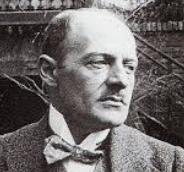
Antiquity believed that the forces of love in the universe were limited. Therefore they were to be used sparingly,and everyone was to be loved only according to his value.
▼
Source
source
L. Coser, trans. (1961), p. 94
4 months 3 weeks ago
Socrates used to call the opinions of the many by the name of Lamiae, bugbears to frighten children.
▼
Source
source
XI, 23
9 months 4 days ago
If you don't know how to die, don't worry; Nature will tell you what to do on the spot, fully and adequately. She will do this job perfectly for you; don't bother your head about it.
9 months 3 weeks ago
All men by nature desire to know. An indication of this is the delight we take in our senses; for even apart from their usefulness they are loved for themselves; and above all others the sense of sight. For not only with a view to action, but even when we are not going to do anything, we prefer sight to almost everything else. The reason is that this, most of all the senses, makes us know and brings to light many differences between things.

7 months 1 week ago
If we want a love which will protect the soul from wounds we must love something other than God.
▼
Source
source
p. 62
5 months 2 weeks ago
Nature ... is inexorable and immutable; she never transgresses the laws imposed upon her, or cares a whit whether her abstruse reasons and methods of operation are understandable to men. For that reason it appears that nothing physical which sense-experience sets before our eyes, or which necessary demonstrations prove to us, ought to be called in question (much less condemned) upon the testimony of biblical passages which may have some different meaning beneath their words. For the Bible is not chained in every expression to conditions as strict as those which govern all physical effects; nor is God any less excellently revealed in Nature's actions than in the sacred statements of the Bible.

5 months 2 weeks ago
What you see, yet can not see over, is as good as infinite.
▼
Source
source
Bk. II, ch. 1.
8 months 2 days ago
Not to be content with Life is the unsatisfactory state of those which destroy themselves; who being afraid to live, run blindly upon their own Death, which no Man fears by Experience.
9 months 4 days ago
By the law is the knowledge of sin [Rom 3:20], so the word of grace comes only to those who are distressed by a sense of sin and tempted to despair.
▼
Source
source
p. 168
8 months 3 weeks ago
When the rich make war, it's the poor that die.
6 months 3 weeks ago
Remember then: there is only one time that is important-Now! It is the most important time because it is the only time when we have any power. The most necessary man is he with whom you are, for no man knows whether he will ever have dealings with any one else: and the most important affair is, to do him good, because for that purpose alone was man sent into this life!
▼
Source
source
Part VII: Stories Given to Aid Persecuted Jews (1903) "Three Questions", translated by Louise and Aylmer Maude, p271.
7 months 3 weeks ago
The future use and the whole effect, if not the very existence, of the process of an impeachment of high crimes and misdemeanors before the peers of this kingdom upon the charge of the Commons will very much be decided by your judgment in this cause... For we must not deceive ourselves: whatever does not stand with credit cannot stand long. And if the Constitution should be deprived, I do not mean in form, but virtually, of this resource, it is virtually deprived of everything else that is valuable in it. For this process is the cement which binds the whole together; this is the individuating principle that makes England what England is.
▼
Source
source
Speech in opening the impeachment of Warren Hastings (15 February 1788), quoted in The Works of the Right Honourable Edmund Burke, Volume the Ninth (1899), p. 332
8 months 3 weeks ago
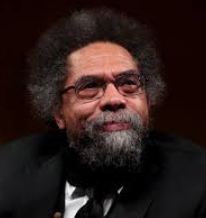
The paradox of race in America is that our common destiny is more pronounced and imperiled precisely when our divisions are deeper.
▼
Source
source
(p4)

8 months 2 weeks ago
If it is in our power to prevent something bad from happening, without thereby sacrificing anything of comparable moral importance, we ought, morally, to do it.
8 months 3 weeks ago
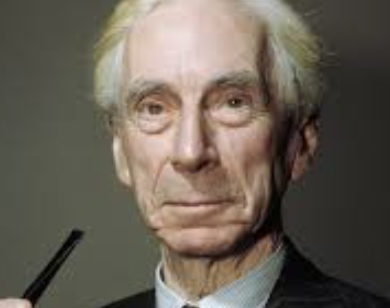
The governors of the world believe, and have always believed, that virtue can only be taught by teaching falsehood, and that any man who knew the truth would be wicked. I disbelieve this, absolutely and entirely. I believe that love of truth is the basis of all real virtue, and that virtues based upon lies can only do harm.
8 months 3 weeks ago
Facts do not cease to exist because they are ignored.
▼
Source
source
"Note on Dogma"

8 months 1 week ago
It is requisite to defend those who are unjustly accused of having acted injuriously, but to praise those who excel in a certain good.
▼
Source
source
Pythagorean Ethical Sentences From Stobæus

8 months 3 weeks ago
It is likely that America will be more important during the next century or two, but after that it may well be the turn of China.
▼
Source
source
Letter to Rachel Gleason Brooks, May 5, 1930
5 months 2 weeks ago
From the point of view of the development of Marx's theories, his early journalistic writings are important for two main reasons. In his sharp attacks on the censorship law he spoke out unequivocally for the freedom of the Press, against the levelling effect of government restriction ('You don't expect a rose to smell like a violet; why then should the human spirit, the richest thing we have, exist only in a single form?'), and also expressed views concerning the whole nature of the state and the essence of freedom. Pointing out that the vagueness and ambiguity of the Press law placed arbitrary power in the hands of officials, Marx went on to argue that censorship was contrary not only to the purposes of the Press, but to the nature of the state as such.
▼
Source
source
(pp. 120-1)
4 months 3 weeks ago
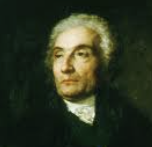
Why so many laws? Because there is no legislator. What have these so-called legislators done in six years? Nothing, for to destroy is not to make.
7 months 2 weeks ago
So that in the first place, I put for a general inclination of all mankind a perpetual and restless desire of Power after power, that ceaseth only in Death. And the cause of this is not always that a man hopes for a more intensive delight than he has already attained to, or that he cannot be content with a moderate power: but because he cannot assure the power and means to live well, which he hath present, without the acquisition of more.
▼
Source
source
The First Part, Chapter 11, p. 47
8 months 3 weeks ago
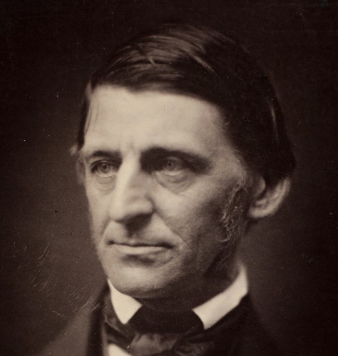
Keep cool: it will be all one a hundred years hence.
▼
Source
source
Montaigne; or, The Skeptic
CivilSimian.com created by AxiomaticPanic, CivilSimian, Kalokagathia