

3 weeks 1 day ago
Any loss of identity prompts people to seek reassurance and rediscovery of themselves by testing, and even by violence. Today, the electric revolution, the wired planet, and the information environment involve everybody in everybody to the point of individual extinction.
▼
Source
source
Letter to Clare Westcott, November 26 1975. Letters of Marshall McLuhan, p. 514
3 weeks 1 day ago
Another theme of the Wake that helps in the understanding of the paradoxical shift from cliché to archetype is "pastimes are past times". The dominant technologies of one age become the games and pastimes of a later age. In the twentieth century the number of past times that are simultaneously available is so vast as to create cultural anarchy. When all the cultures of the world are simultaneously present, the work of the artist in the elucidation of form takes on new scope and new urgency. Most men are pushed into the artist role. The artist cannot dispense with the principle of doubleness and interplay since this kind of hendiadys-dialogue is essential to the very structure of consciousness, awareness, and autonomy.
▼
Source
source
(p.99)
2 months 3 weeks ago
The second is the partiality for unity proper to the philosophical mind, whence this wide-spread canon has flown forth: principles are not to be multiplied beyond supreme necessity, to which we give in our adhesion, not because we have insight into causal unity in the world either by reason or experience, but as seeking it by an impulse of the intellect which seems to itself to have by thus much advanced in the explication of phenomena, by as much as it is granted to it to descend from the same principle to a greater number of consequences,
1 month 2 weeks ago
One disgust, then another - to the point of losing the use of speech and even of the mind...The greatest exploit of my life is to be still alive.
3 months 3 weeks ago
Korell is that frequent phenomenon in history: the republic whose ruler has every attribute of the absolute monarch but the name. It therefore enjoyed the usual despotism unrestrained even by those two moderating influences in the legitimate monarchies: regal, honor and court etiquette.
1 month 3 weeks ago
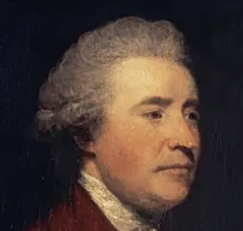
I assert, that the ancient Whigs held doctrines, totally different from those I have last mentioned. I assert, that the foundations laid down by the Commons, on the trial of Doctor Sacheverel, for justifying the revolution of 1688, are the very same laid down in Mr. Burke's Reflections; that is to say,-a breach of the original contract, implied and expressed in the constitution of this country, as a scheme of government fundamentally and inviolably fixed in King, Lords, and Commons.-That the fundamental subversion of this antient constitution, by one of its parts, having been attempted, and in effect accomplished, justified the Revolution. That it was justified only upon the necessity of the case; as the only means left for the recovery of that antient constitution, formed by the original contract of the British state; as well as for the future preservation of the same government. These are, the points to be proved.
▼
Source
source
p. 411
1 month 3 weeks ago
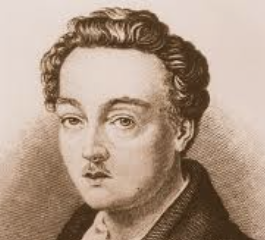
People like us are unhappy in this world and in the next, I guess if we made it to heaven, we'd have to help make it thunder.
▼
Source
source
Scene VI.
3 months 1 week ago
Christ is not valued at all unless He be valued above all.
▼
Source
source
p. 395
3 days ago
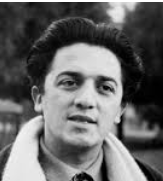
The public has lost the habit of movie-going because the cinema no longer possesses the charm, the hypnotic charisma, the authority it once commanded. The image it once held for us all - that of a dream we dreamt with our eyes open - has disappeared. Is it still possible that one thousand people might group together in the dark and experience the dream that a single individual has directed?
▼
Source
source
"Decline of Cinema"

2 months 3 weeks ago
For it is extremely absurd to expect to be enlightened by reason, and yet to prescribe to her beforehand on which side she must incline.
▼
Source
source
A 747, B 775; as translated by F. Max Mueller

2 months 3 weeks ago
What the English call "comfortable" is something endless and inexhaustible. Every condition of comfort reveals in turn its discomfort, and these discoveries go on for ever. Hence the new want is not so much a want of those who have it directly, but is created by those who hope to make profit from it.
▼
Source
source
S. Dyde, trans. (1896), § 191
2 weeks 4 days ago
Women will be no longer made the slaves of, or dependent upon men ... They will be equal in education, rights, privileges and personal liberty.
▼
Source
source
Sixth Part
1 month 1 week ago
When we resist impermanence, the self intensifies.
1 month 2 weeks ago
Progress is the injustice each generation commits with regard to its predecessor.
1 month 2 weeks ago
What can be said, lacks reality. Only what fails to make its way into words exists and counts.
1 month 2 weeks ago
The Son of man shall be betrayed into the hands of men: And they shall kill him, and the third day he shall be raised again.
▼
Source
source
17:22-23 (KJV)
2 months 3 weeks ago
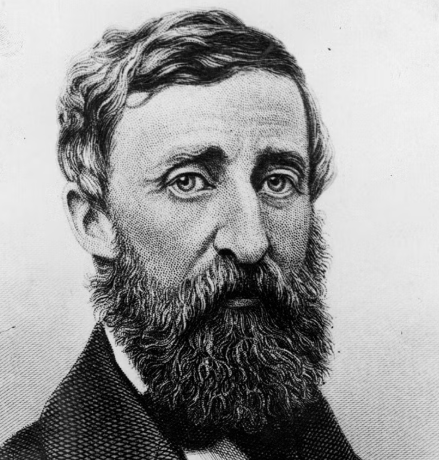
Have no mean hours, but be grateful for every hour, and accept what it brings. The reality will make any sincere record respectable. No day will have been wholly misspent, if one sincere, thoughtful page has been written. Let the daily tide leave some deposit on these pages, as it leaves sand and shells on the shore. So much increase of terra firma. this may be a calendar of the ebbs and flows of the soul; and on these sheets as a beach, the waves may cast up pearls and seaweed.
▼
Source
source
July 6, 1840
1 month 2 weeks ago
This is how I recognize an authentic poet: by frequenting him, living a long time in the intimacy of his work, something changes in myself, not so much my inclinations or my tastes as my very blood, as if a subtle disease had been injected to alter its course, its density and nature. To live around a true poet is to feel your blood run thin, to dream a paradise of anemia, and to hear, in your veins, the rustle of tears.
3 months 3 weeks ago
In my fiction I am careful to make everything probable and to tie up all loose ends. Real life is not hampered by such considerations.
3 days ago
Too many of our preferences reflect nasty behaviours and states of mind that were genetically adaptive in the ancestral environment. Instead, wouldn't it be better if we rewrote our own corrupt code?
▼
Source
source
The Abolitionist Project, Talks given at the FHI (Oxford University) and the Charity International Happiness Conference, 2007
3 months 2 days ago
No matter that we may mount on stilts, we still must walk on our own legs. And on the highest throne in the world, we still sit only on our own bottom.
▼
Source
source
Ch. 13
1 month 2 weeks ago
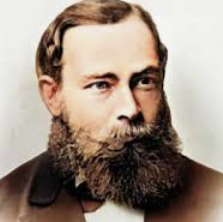
I hope I may claim in the present work to have made it probable that the laws of arithmetic are analytic judgments and consequently a priori. Arithmetic thus becomes simply a development of logic, and every proposition of arithmetic a law of logic, albeit a derivative one. To apply arithmetic in the physical sciences is to bring logic to bear on observed facts; calculation becomes deduction.
▼
Source
source
Gottlob Frege (1950 ). The Foundations of Arithmetic. p. 99.
3 weeks 1 day ago
Sentimentality, like pornography, is fragmented emotion; a natural consequence of a high visual gradient in any culture.
1 month 3 weeks ago
France had for some time been guilty of a continued series of hostile acts against this country, both external and internal: first, she directed her pursuits to universal empire, under the name of fraternity, in order to overturn the fabric of our laws and government.
▼
Source
source
Speech in the House of Commons (12 February 1793)
1 month 1 week ago
Nothing is more impressive than the fact that as mathematics withdrew increasingly into the upper regions of ever greater extremes of abstract thought, it returned back to earth with a corresponding growth of importance for the analysis of concrete fact. ...The paradox is now fully established that the utmost abstractions are the true weapons with which to control our thought of concrete fact.
▼
Source
source
Ch. 2: "Mathematics as an Element in the History of Thought", p. 46

2 months 6 days ago
As long as Man continues to be the ruthless destroyer of lower living beings, he will never know health or peace. For as long as men massacre animals, they will kill each other. Indeed, he who sows the seed of murder and pain cannot reap joy and love.
▼
Source
source
Attribution to Pythagoras by Ovid, as quoted in The Extended Circle: A Dictionary of Humane Thought (1985) by Jon Wynne-Tyson, p. 260; also in Vegetarian Times, No. 168 (August 1991), p. 4
1 month 4 days ago
Do not commence your exercises in philosophy in those regions where an error can deliver you over to the executioner.
▼
Source
source
C 16
2 months 1 day ago
Your god is too small.
▼
Source
source
Attributed to Bruno in episode 1 of Cosmos: A Spacetime Odyssey (2014). Earliest use of this phrase appears to be in Your God is Too Small (1961) by English priest John Bertram Phillips.
2 months 3 weeks ago
Certainly one may, with as much reason and decency, plead for murder, robbery, lewdness, and barbarity, as for this practice: They are not more contrary to the natural dictates of Conscience, and feelings of Humanity; nay, they are all comprehended in it.
1 month 2 weeks ago
The soul, too, has her virginity and must bleed a little before bearing fruit.
▼
Source
source
"Normal Madness," Ch. 3, P. 56
1 month 4 days ago
Once the good man was dead, one wore his hat and another his sword as he had worn them, a third had himself barbered as he had, a fourth walked as he did, but the honest man that he was - nobody any longer wanted to be that.
▼
Source
source
C 36
1 month 6 days ago
Law is the continuous manifestation of God's presence - not reason for believing him absent. Great confusion arises from our using the same word law in two totally distinct senses ... as the cause and the effect. It is said that to "explain away" everything by law is to enable us to do without God. But law is no explanation of anything; law is simply a generalization, a category of facts. Law is neither a cause, nor a reason, nor a power, nor a coercive force. It is nothing but a general formula, a statistical table. Law brings us continually back to God instead of carrying us away from him.
▼
Source
source
Suggestions for Thought : Selections and Commentaries (1994), edited by Michael D. Calabria and Janet A. MacRae, p. 41
1 month 2 weeks ago
The next day as they were leaving Bethany, Jesus was hungry. Seeing in the distance a fig tree in leaf, he went to find out if it had any fruit. When he reached it, he found nothing but leaves, because it was not the season for figs. Then he said to the tree, “May no one ever eat fruit from you again.” And his disciples heard him say it. The next day when they came out from Bethany, He was hungry. After seeing in the distance a fig tree with leaves, He went to find out if there was anything on it. When He came to it, He found nothing but leaves, because it was not the season for figs. He said to it, "May no one ever eat fruit from you again!"
▼
Source
source
Mark 11:12-14 11:12-14
1 month 2 weeks ago
To win the guilty kiss of a saint, I'd welcome the plague as a blessing
1 month 3 weeks ago
The saying that beauty is but skin deep is but a skin-deep saying.
▼
Source
source
Vol. 2, Ch. XIV, Personal Beauty
1 week 6 days ago
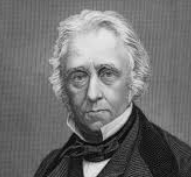
From the poetry of Lord Byron they drew a system of ethics, compounded of misanthropy and voluptuousness, a system in which the two great commandments were, to hate your neighbour, and to love your neighbour's wife.
▼
Source
source
p. 351

1 month 1 week ago
And the central assertion of his philosophy is that this inner realm is the 'spiritual world' and that once man has learned to enter this realm, he realizes that it is not a mere imaginative reflection of the external world, but a world that possesses its own independent reality.
▼
Source
source
p. 161

1 month 4 weeks ago
When an opinion has taken root in a democracy and established itself in the minds of the majority, it afterward persists by itself, needing no effort to maintain it since no one attacks it. Those who at first rejected it as false come in the end to adopt it as accepted, and even those who still at the bottom of their hearts oppose it keep their views to themselves, taking great care to avoid a dangerous and futile contest.
▼
Source
source
Book Three, Chapter XXI.
3 months 1 day ago
It ought to be remembered that there is nothing more difficult to take in hand, more perilous to conduct, or more uncertain in its success, than to take the lead in the introduction of a new order of things. Because the innovator has for enemies all those who have done well under the old conditions, and lukewarm defenders in those who may do well under the new. This coolness arises partly from fear of the opponents, who have the laws on their side, and partly from the incredulity of men, who do not readily believe in new things until they have had a long experience of them.
▼
Source
source
The Prince (1513), Ch. 6; translated by W. K. Marriott
2 months 1 week ago
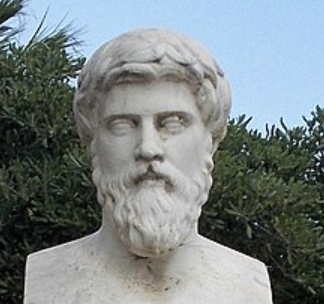
After he routed Pharnaces Ponticus at the first assault, he wrote thus to his friends: "I came, I saw, I conquered."
▼
Source
source
Cæsar
2 months 3 weeks ago
A man's body and the needs of his body are now everywhere treated with a tender indulgence. Is the thinking mind then, to be the only thing that is never to obtain the slightest measure of consideration or protection, to say nothing of respect?
▼
Source
source
"On Noise"
3 months 2 days ago
Once conform, once do what others do because they do it, and a kind of lethargy steals over all the finer senses of the soul.
1 month 2 weeks ago
It is the man of science, eager to have his every opinion regenerated, his every idea rationalized, by drinking at the fountain of fact, and devoting all the energies of his life to the cult of truth, not as he understands it, but as he does not yet understand it, that ought properly to be called a philosopher. To an earlier age knowledge was power - merely that and nothing more; to us it is life and the summum bonum. Emancipation from the bonds of self, of one's own prepossessions, importunately sought at the hands of that rational power before which all must ultimately bow, - this is the characteristic that distinguishes all the great figures of nineteenth-century science from those of former periods.
▼
Source
source
"The Century's Great Men in Science" in The 19th Century : A Review of Progress During the Past One Hundred Years in the Chief Departments of Human Activity (1901), published by G. P. Putnam's Sons.

1 day ago
Humanists today, who claim to take a wholly secular view of things, scoff at mysticism and religion. But the unique status of humans is hard to defend, and even to understand, when it is cut off from any idea of transcendence. In a strictly naturalistic view - one in which the world is taken on its own terms, without reference to a creator or any spiritual realm - there is no hierarchy of value with humans at the top. There are simply multifarious animals, each with their own needs. Human uniqueness is a myth inherited from religion, which humanists have recycled into science.
▼
Source
source
An Old Chaos: Humanism and Flying Saucers (p. 77)
2 months 3 weeks ago
In this third period (as it may be termed) of my mental progress, which now went hand in hand with hers, my opinions gained equally in breadth and depth, I understood more things, and those which I had understood before, I now understood more thoroughly. I had now completely turned back from what there had been of excess in my reaction against Benthamism. I had, at the height of that reaction, certainly become much more indulgent to the common opinions of society and the world, and more willing to be content with seconding the superficial improvement which had begun to take place in those common opinions, than became one whose convictions on so many points, differed fundamentally from them. I was much more inclined, than I can now approve, to put in abeyance the more decidedly heretical part of my opinions, which I now look upon as almost the only ones, the assertion of which tends in any way to regenerate society.
▼
Source
source
(p. 229)
1 month 4 days ago
If it were true what in the end would be gained? Nothing but another truth. Is this such a mighty advantage? We have enough old truths still to digest, and even these we would be quite unable to endure if we did not sometimes flavor them with lies.
▼
Source
source
E 10
3 months 1 week ago
Is God willing to prevent evil, but not able? Then he is not omnipotent. Is he able, but not willing? Then he is malevolent. Is he both able and willing? Then whence cometh evil? Is he neither able nor willing? Then why call him God?
1 month 1 week ago
Anarchism is the only philosophy which brings to man the consciousness of himself; which maintains that God, the State, and society are non-existent, that their promises are null and void, since they can be fulfilled only through man's subordination.
CivilSimian.com created by AxiomaticPanic, CivilSimian, Kalokagathia