


3 months 3 days ago
The most disadvantageous peace is better than the most just war.
▼
Source
source
Adagia, 1508
1 month 2 weeks ago
To call war the soil of courage and virtue is like calling debauchery the soil of love.
▼
Source
source
Ch. III: Industry, Government, the peasants

3 weeks 3 days ago
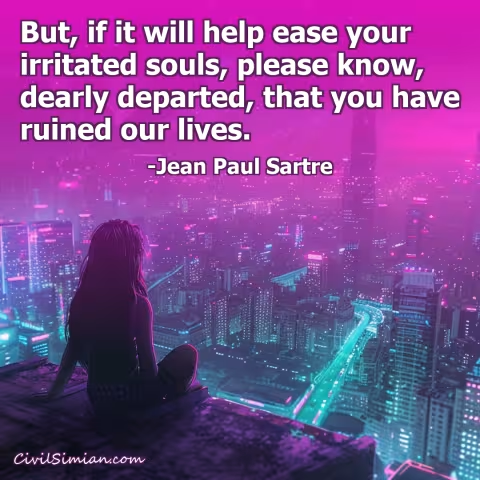
Saying that what we call our "selves" consist only of our bodies and that reason, soul, and love arise only from the body, is like saying that what we call our body is equivalent to the food that feeds the body. It is true that my body is only made up of digested food and that my body would not exist without food, but my body is not the same as food. Food is what the body needs for life, but it is not the body itself. The same thing is true of my soul. It is true that without my body there would not be that which I call my soul, but my soul is not my body. The soul may need the body, but the body is not the soul.
▼
Source
source
p. 12
3 weeks 3 days ago
The Quakers sent me books, from which I learnt how they had, years ago, established beyond doubt the duty for a Christian of fulfilling the command of non-resistance to evil by force, and had exposed the error of the Church's teaching in allowing war and capital punishment.
▼
Source
source
Chapter I, The Doctrine of Non-resistance to Evil by Force has been Professed by a Minority of Men from the Very Foundation of Christianity
1 month 3 days ago
At the time of its initial publication, Public Administration helped to define this field of study and practice by introducing two major new emphases: an orientation toward human behavior and human relations in organizations, and an emphasis on the interaction between administration, politics, and policy. Without neglecting more traditional concerns with organization structure, Simon, Thompson, and Smithburg viewed administration in its behavioral and political contexts. The viewpoints they express still are at the center of public administration's concerns.
▼
Source
source
Book abstract, 1991

3 months 1 week ago
There is no order between created being and non-being, but there is between created and uncreated being.
▼
Source
source
q. 7, art. 9, ad 8
2 months 3 weeks ago
This freedom from absolute, arbitrary power, is so necessary to, and closely joined with a man's preservation, that he cannot part with it, but by what forfeits his preservation and life together: for a man, not having the power of his own life, cannot, by compact, or his own consent, enslave himself to any one, nor put himself under the absolute, arbitrary power of another, to take away his life, when he pleases.
▼
Source
source
Second Treatise of Civil Government, Ch. IV, sec. 23
2 months 3 weeks ago
They should always be heard, and fairly and kindly answer'd, when they ask after any thing they would know, and desire to be informed about. Curiosity should be as carefully cherish'd in children, as other appetites suppress'd.
▼
Source
source
Sec. 108
2 months 3 weeks ago
It is asserted that beasts have no rights; the illusion is harboured that our conduct, so far as they are concerned, has no moral significance, or, as it is put in the language of these codes, that "there are no duties to be fulfilled towards animals." Such a view is one of revolting coarseness, a barbarism of the West, whose source is Judaism. In philosophy, however, it rests on the assumption, despite all evidence to the contrary, of the radical difference between man and beast,-a doctrine which, as is well known, was proclaimed with more trenchant emphasis by Descartes than by any one else: it was indeed the necessary consequence of his mistakes.
▼
Source
source
Part III, Ch. VIII, 7, p. 218
1 month 4 days ago
We say that someone occupies an official position, whereas it is the official position that occupies him.
▼
Source
source
F 47

2 months 2 weeks ago
Do the essences of proposition and of the truth determine themselves from out of the essence of the thing, or does the essence of the thing determine itself from out of the essence of the proposition? The question is posed as an either/or. However does this either/or itself suffice? Are the essence of the thing and the essence of the proposition only built as mirror images because both of them together determine themselves from out of the same but deeper lying root? However, what and where can be this common ground for the essence of the thing and of the proposition and of their origin? The unconditioned (Unbedingt)? We stated at the beginning that what conditions the essense of the thing in its thingness can no longer itself be thing and conditioned, it must be an unconditioned (Un-bedingtes).
▼
Source
source
p. 47
2 months 4 weeks ago
There is no art which one government sooner learns of another than that of draining money from the pockets of the people.
▼
Source
source
Chapter II, Part II, Appendix to Articles I and II.

2 months 3 weeks ago
On the stage on which we are observing it, - Universal History - Spirit displays itself in its most concrete reality.
1 month 2 weeks ago
Are not five sparrows sold for two farthings, and not one of them is forgotten before God? But even the very hairs of your head are all numbered. Fear not therefore: ye are of more value than many sparrows.
▼
Source
source
12:6-7

2 months 2 weeks ago
A host is like a general: calamities often reveal his genius.
▼
Source
source
Book II, satire viii, lines 73-74
1 month 3 weeks ago
Frugality is founded on the principle that all riches have limits.
3 weeks 1 day ago
Mass man is a phenomenon of electric speed, not of physical quantity.
▼
Source
source
Access, Issues 165-176, National Citizens Committee for Broadcasting, 1984, p. xxiii
3 weeks 1 day ago
The new media are not bridges between man and nature - they are nature...The new media are not ways of relating us to the old world; they are the real world and they reshape what remains of the old world at will.
▼
Source
source
Media as the New Nature, 1969, p. 14
1 month 2 weeks ago
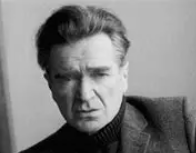
His power to adore is responsible for all his crimes: a man who loves a god unduly forces other men to love his god, eager to exterminate them if they refuse.
1 month 3 weeks ago
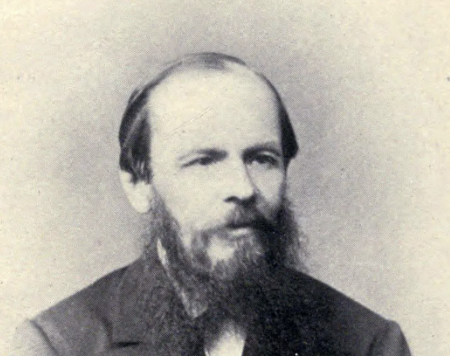
If there is no immortality, there is no virtue. ... Without God and immortal life? All things are lawful then, they can do what they like?
▼
Source
source
Quoted in M. M. Bakhtin, Problems of Dostoevsky's Poetics, trans. R. W. Rotsel (Ann Arbor, MI: Ardis, 1973) p. 70
3 months 2 days ago
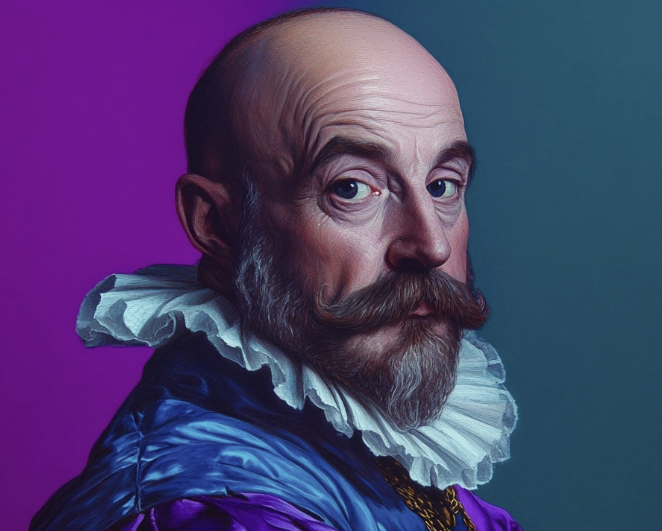
I do myself a greater injury in lying than I do him of whom I tell a lie.
▼
Source
source
Book II, Ch. 17
1 month 2 weeks ago
Miracles are propitious accidents, the natural causes of which are too complicated to be readily understood.
3 months 2 days ago
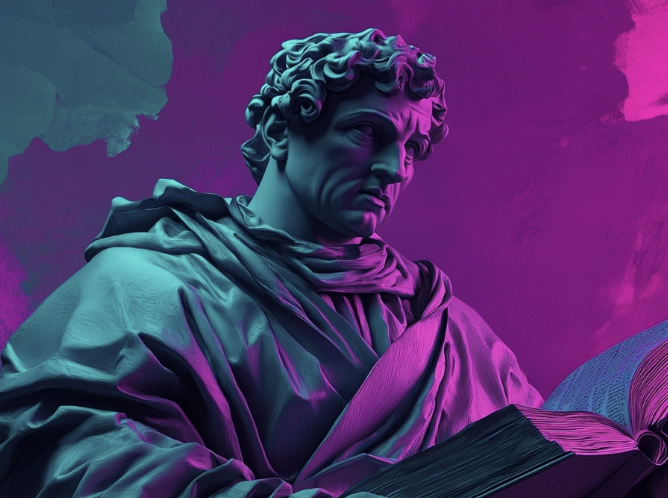
Women . . . have . . . small and narrow chests, and broad hips, to the end they should remain at home, sit still, keep house, and bear and bring up children. . . . A woman is, or at least should be, a friendly, courteous, and a merry companion in life . . . the honor and ornament of the house, and inclined to tenderness, for thereunto are they chiefly created, to bear children, and to be the pleasure, joy and solace of their husbands.
▼
Source
source
-- Table Talk, quoted in Luther On "Woman"
1 month 1 week ago
Bourgeois society is ruled by equivalence. It makes the dissimilar comparable by reducing it to abstract quantities. To the enlightenment, that which does not reduce to numbers, and ultimately to the one, becomes illusion.
▼
Source
source
John Cumming trans., p. 7

1 month 2 weeks ago
Time is heavy sometimes; imagine how heavy eternity must be.
3 months 2 weeks ago
They who know the truth are not equal to those who love it, and they who love it are not equal to those who delight in it.
2 months 2 weeks ago
To one who asked what was the proper time for lunch, he said, "If a rich man, when you will; if a poor man, when you can." Diogenes Laërtius, vi. 40
3 months 3 weeks ago
A nihilist is not one who believes in nothing, but one who does not believe in what exists.
3 weeks 1 day ago
Nothing can be done at once hastily and prudently.
▼
Source
source
Maxim 557
3 months 2 weeks ago
Fine words and an insinuating appearance are seldom associated with true virtue.
▼
Source
source
Variant: Someone who is a clever speaker and maintains a 'too-smiley' face is seldom considered a humane person.
1 month 2 weeks ago
Nature consists of the elements given by the senses. Primitive man first takes out of them certain complexes of these elements that present themselves with a certain stability and are most important to him. The first and oldest words are names for "things". ... The sensations are no "symbols of things". On the contrary the "thing" is a mental symbol for a sensation-complex of relative stability. Not the things, the bodies, but colours, sounds, pressures, times (what we usually call sensations) are the true elements of the world.
▼
Source
source
p. 23, as quoted in Lenin as Philosopher: A Critical Examination of the Philosophical Basis of Leninism (1948) by Anton Pannekoek, p. 454
1 month 2 weeks ago
The need to devour oneself absolves one of the need to believe.
1 month 1 week ago
Rightness of limitation is essential for growth of reality.Unlimited possibility and abstract creativity can procure nothing. The limitation, and the basis arising from what is already actual, are both of them necessary and interconnected.
▼
Source
source
Religion in the Making (February 1926), Lecture IV: "Truth and Criticism".
2 months 3 weeks ago
The softer you find your child is, the more you are to seek occasions, at fit times, thus to harden him. The great art in this is, to begin with what is but very little painful, and to proceed by insensible degrees, when you are playing, and in good humour with him, and speaking well of him: and when you have once got him to think himself made amends for his suffering by the praise is given him for his courage; when he can take pride in giving such marks of his manliness, and can prefer the reputation of being brave and stout, to the avoiding a little pain, or the shrinking under it; you need nor despair in time and by the assistance of his growing reason, to master his timorousness, and mend the weakness of his constitution.
▼
Source
source
Sec. 115
1 month 1 week ago
The STATE IDEA, the authoritarian principle, has been proven bankrupt by the experience of the Russian Revolution. If I were to sum up my whole argument in one sentence I should say: The inherent tendency of the State is to concentrate, to narrow, and monopolize all social activities; the nature of revolution is, on the contrary, to grow, to broaden, and disseminate itself in ever-wider circles. In other words, the State is institutional and static; revolution is fluent, dynamic. These two tendencies are incompatible and mutually destructive. The State idea killed the Russian Revolution and it must have the same result in all other revolutions, unless the libertarian idea prevail.
2 months 1 week ago
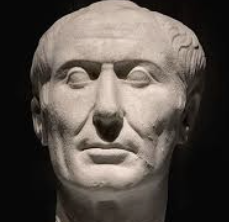
As Cæsar was at supper the discourse was of death,-which sort was the best. "That," said he, "which is unexpected."
▼
Source
source
Cæsar
3 months 2 weeks ago
See a person's means (of getting things). Observe his motives. Examine that in which he rests. How can a person conceal his character? See a person's "being", observe his motive, notice his result. How can a person conceal his character?
1 month 1 week ago
In the study of ideas, it is necessary to remember that insistence on hard-headed clarity issues from sentimental feeling, as if it were a mist, cloaking the perplexities of fact. Insistence on clarity at all costs is based on sheer superstition as to the mode in which human intelligence functions. Our reasoning grasps at straws for premises and floats on gossamer for deductions.
▼
Source
source
p. 91.
3 months 2 weeks ago
It is characteristic of the most entire sincerity to be able to foreknow. When a nation or family is about to flourish, there are sure to be happy omens; and when it is about to perish, there are sure to be unlucky omens.
2 months 3 weeks ago
A public can only arrive at enlightenment slowly. Through revolution, the abandonment of personal despotism may be engendered and the end of profit-seeking and domineering oppression may occur, but never a true reform of the state of mind. Instead, new prejudices, just like the old ones, will serve as the guiding reins of the great, unthinking mass. All that is required for this enlightenment is freedom; and particularly the least harmful of all that may be called freedom, namely, the freedom for man to make public use of his reason in all matters. But I hear people clamor on all sides: Don't argue! The officer says: Don't argue, drill! The tax collector: Don't argue, pay! The pastor: Don't argue, believe!
2 months 3 weeks ago
Wit makes its own welcome, and levels all distinctions. No dignity, no learning, and no force of character can make any stand against good wit.
▼
Source
source
The Comic
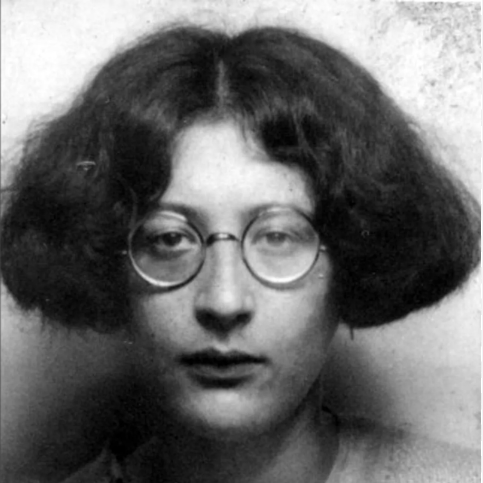
1 month 1 week ago
Attention consists of suspending our thought, leaving it detached, empty, and ready to be penetrated by the object; it means holding in our minds, within reach of this thought, but on a lower level and not in contact with it, the diverse knowledge we have acquired which we are forced to make use of.
1 month 1 week ago
As man loses touch with his 'inner being', his instinctive depths, he finds himself trapped in the world of consciousness, that is to say, in the world of other people. Any poet knows this truth; when other people sicken him, he turns to hidden resources of power inside himself, and he knows then that other people don't matter a damn. He knows the 'secret life' inside him is the reality; other people are mere shadows in comparison. but the 'shadows' themselves cling to one another. 'Man is a political animal', said Aristotle, telling one of the greatest lies in human history. Man has more in common with the hills, or with the stars, than with other men.
▼
Source
source
p. 170
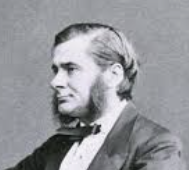
1 week 3 days ago
M. Comte's philosophy, in practice, might be compendiously described as Catholicism minus Christianity.
▼
Source
source
On the Physical Basis of Life
3 months 2 days ago
The mad mob does not ask how it could be better, only that it be different. And when it then becomes worse, it must change again. Thus they get bees for flies, and at last hornets for bees. Whether Soldiers Can Also Be in a State of Grace
▼
Source
source
1526
3 months 3 weeks ago
The ancients, even though they believed in destiny, believed primarily in nature, in which they participated wholeheartedly. To rebel against nature amounted to rebelling against oneself.
CivilSimian.com created by AxiomaticPanic, CivilSimian, Kalokagathia