


1 month 4 weeks ago
There is only one passion, the passion for happiness.
▼
Source
source
"Will, Freedom"
3 weeks ago
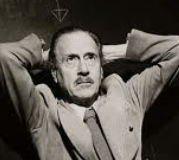
With Gutenberg Europe enters the technological phase of progress, when change itself becomes the archetypal norm of social life.
▼
Source
source
(p. 177)
3 months 1 week ago
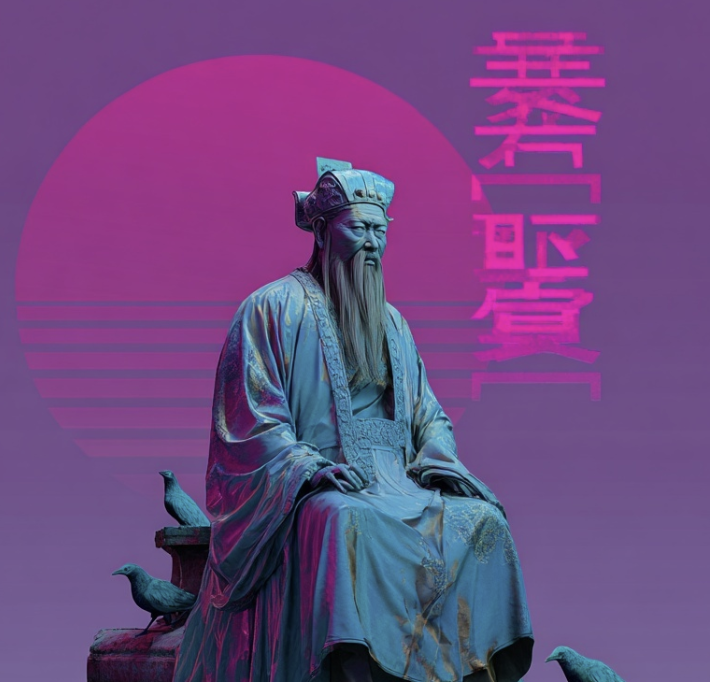
The administration of government lies in getting proper men. Such men are to be got by means of the ruler's own character. That character is to be cultivated by his treading in the ways of duty. And the treading those ways of duty is to be cultivated by the cherishing of benevolence.

2 days ago
What right have humans to impose our values on members of another race or species? The charge is seductive but misplaced. There is no anthropomorphism here, no imposition of human values on alien minds. Human and nonhuman animals are alike in an ethically critical respect. The pleasure-pain axis is universal to sentient life. No sentient being wants to be harmed - to be asphyxiated, dismembered, or eaten alive. The wishes of a terrified toddler or a fleeing zebra to flourish unmolested are not open to doubt even in the absence of the verbal capacity to say so.
▼
Source
source
"The Radical Plan to Phase out Earth's Predatory Species", io9, 30 Jul. 2014

1 month 6 days ago
Corruption of politics has nothing to do with the morals, or the laxity of morals, of various political personalities. Its cause is altogether a material one. Politics is the reflex of the business and industrial world, the mottos of which are: "To take is more blessed than to give"; "buy cheap and sell dear"; "one soiled hand washes the other." There is no hope even that woman, with her right to vote, will ever purify politics.

1 month 2 weeks ago
Whether or not there exists a solution to problems troubles only a minority; that the emotions have no outcome, lead to nothing, vanish into themselves - that is the great unconscious drama, the affective insolubility everyone suffers without even thinking about it.

2 months 5 days ago
Hear gladly!
2 months 3 weeks ago
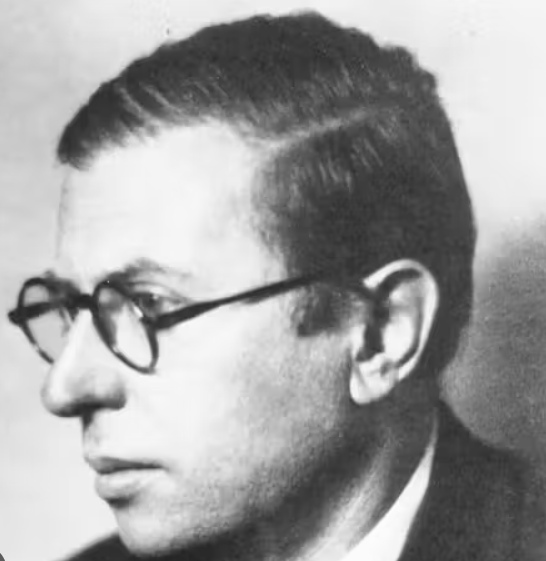
Existentialism is nothing else but an attempt to draw the full conclusions from a consistently atheistic position. Its intention is not in the least that of plunging men into despair. And if by despair one means as the Christians do - any attitude of unbelief, the despair of the existentialists is something different. Existentialism is not atheist in the sense that it would exhaust itself in demonstrations of the non-existence of God. It declares, rather, that even if God existed that would make no difference from its point of view. Not that we believe God does exist, but we think that the real problem is not that of His existence; what man needs is to find himself again and to understand that nothing can save him from himself, not even a valid proof of the existence of God. In this sense existentialism is optimistic. It is a doctrine of action, and it is only by self-deception, by confining their own despair with ours that Christians can describe us as without hope.
▼
Source
source
p. 56
1 month 3 weeks ago
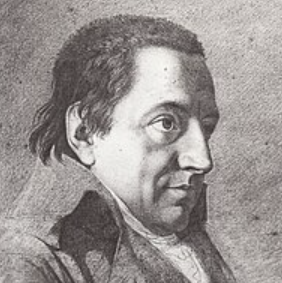
By means of the new education we want to mould the Germans into a corporate body, which shall be stimulated and animated in all its individual members by the same interest.
▼
Source
source
Introduction p. 15

6 days ago
The supreme accomplishment is to blur the line between work and play.
▼
Source
source
In Ellen J. Langer (ed.) Mindfulness (Merloyd Lawrence Books, 1989) p. 133

2 months 3 weeks ago
We must therefore glean up our experiments in this science from a cautious observation of human life, and take them as they appear in the common course of the world, by men's behaviour in company, in affairs, and in their pleasures. Where experiments of this kind are judiciously collected and compared, we may hope to establish on them a science, which will not be inferior in certainty, and will be much superior in utility to any other of human comprehension.
▼
Source
source
Introduction
1 month 1 week ago
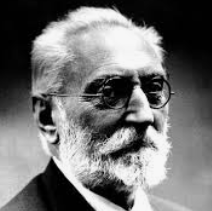
Is there not therefore rational necessity, but vital anguish that impels us to believe in God. And to believe in God - I must reiterate it yet again - is, before all and above all, to feel a hunger for God, a hunger for divinity, to be sensible to his lack and absence, to wish that God may exist. And it is the wish to save the human finality of the Universe. For one might even come to resign oneself to being absorbed by God, if it be that our consciousness is based upon Consciousness, if consciousness is the end of the Universe.

1 month 5 days ago
Passion, intellect, moral activity - these three have never been satisfied in a woman. In this cold and oppressive conventional atmosphere, they cannot be satisfied. To say more on this subject would be to enter into the whole history of society, of the present state of civilisation.
2 months 3 weeks ago
Every true thinker for himself is so far like a monarch; he is absolute, and recognises nobody above him. His judgments, like the decrees of a monarch, spring from his own sovereign power and proceed directly from himself. He takes as little notice of authority as a monarch does of a command; nothing is valid unless he has himself authorised it. On the other hand, those of vulgar minds, who are swayed by all kinds of current opinions, authorities, and prejudices, are like the people which in silence obey the law and commands.
▼
Source
source
"Thinking for Oneself," H. Dirks, trans.

3 weeks 4 days ago
One might expect that a consideration of grievability pertains only to those who are dead, but my contention is that grievability is already operative in life, and that it is a characteristic attributed to living creatures, marking their value within a differential scheme of values and bearing directly on the question of whether or not they are treated equally and in a just way. To be grievable is to be interpellated in such a way that you know your life matters; that the loss of your life would matter; that your body is treated as one that should be able to live and thrive, whose precarity should be minimized, for which provisions for flourishing should be available. The presumption of equal grievability would be not only a conviction or attitude with which another person greets you, but a principle that organizes the social organization of health, food, shelter, employment, sexual life, and civic life.
▼
Source
source
p. 59
1 month 5 days ago
The sick individual finds himself at home with all other similarly sick individuals. The whole culture is geared to this kind of pathology. The result is that the average individual does not experience the separateness and isolation the fully schizophrenic person feels. He feels at ease among those who suffer from the same deformation; in fact, it is the fully sane person who feels isolated in the insane society - and he may suffer so much from the incapacity to communicate that it is he who may become psychotic. In the context of this study the crucial question is whether the hypothesis of a quasi-autistic or of low-grade schizophrenic disturbance would help us to explain some of the violence spreading today.
▼
Source
source
p. 395
2 months 3 weeks ago
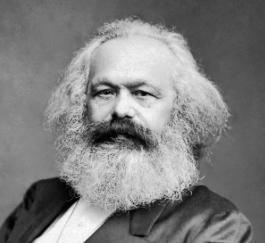
Everything great glitters, glitter begets ambition, and ambition can easily have caused the inspiration or what we thought to be inspiration. But reason can no longer restrain one who is lured by the fury of ambition. He tumbles where his vehement drive calls him; no longer does he choose his position, but rather chance and luster determine it.
2 months 3 weeks ago
A young man before he leaves the shelter of his father's house, and the guard of a tutor, should be fortify'd with resolution, and made acquainted with men, to secure his virtues, lest he should be led into some ruinous course, or fatal precipice, before he is sufficiently acquainted with the dangers of conversation, and his steadiness enough not to yield to every temptation.
▼
Source
source
Sec. 70
1 month 2 weeks ago
There is always someone above you: beyond God Himself rises Nothingness.
1 month 1 week ago
Warmth, warmth, more warmth! for we are dying of cold and not of darkness. It is not the night that kills, but the frost.

1 month 3 weeks ago
If I understand at all the true Spirit of the present contest, We are engaged in a Civil War ... I consider the Royalists of France, or, as they are (perhaps more properly) called, the Aristocrates, as of the party which we have taken in this civil war.
▼
Source
source
Letter to Sir Gilbert Elliot (22 September 1793), quoted in P. J. Marshall and John A. Woods (eds.)

2 months ago
Few men think; yet all have opinions.
▼
Source
source
Philonous to Hylas. The Second Dialogue. This appears in a passage first added in the third edition
3 months 1 week ago
If names be not correct, language is not in accordance with the truth of things. Paraphrased as a chinese proverb stating "The beginning of wisdom is to call things by their proper name."
1 month 3 weeks ago
...for stones, plants, and animals there is no God, but only for man.

3 months 1 week ago
Philosophers do not claim that God does not know particulars; they rather claim that He does not know them the way humans do. God knows particulars as their Creator whereas humans know them as a privileged creations of God might know them.

6 months 4 weeks ago

3 months 1 week ago
Woman, compared to other creatures, is the image of God, for she bears dominion over them. But compared unto man, she may not be called the image of God, for she bears not rule and lordship over man, but ought to obey him. The woman shall be subject to man as unto Christ. For woman, has not her example from the body and from the flesh, that so she shall be subject to man, as the flesh is unto the Spirit, because that the flesh in the weakness and mortality of this life lusts and strives against the Spirit, and therefore would not the Holy Ghost give example of subjection to the woman of any such thing.
▼
Source
source
As quoted by John Knox The First Blast to Awaken Women Degenerate (1558)

2 months 3 weeks ago
Now, to-day, this moment, is our chance to choose the right side. God is holding back to give us that chance. It will not last for ever. We must take it or leave it.
▼
Source
source
Book II, Chapter 5, "The Practical Conclusion"

3 months 6 days ago
Love with delight discourses in my mind Upon my lady's admirable gifts...Beyond the range of human intellect.
▼
Source
source
Trattato Terzo, line 1.
3 weeks ago
TV is not good at covering single events. It needs a ritual, a rhythm, and a pattern...[TV] tends to fosters patterns rather than events.
2 months 3 weeks ago
We may well be ashamed to tell what things we have read or heard in our day. I do not know why my news should be so trivial, - considering what one's dreams and expectations are, why the developments should be so paltry. The news we hear, for the most part, is not news to our genius. It is the stalest repetition.
▼
Source
source
p. 491
1 month 1 week ago
A further turn is to be found in some "unmasking" accounts of natural science, which aim to show that its pretensions to deliver the truth are unfounded, because of social forces that control its activities. Unlike the case of history, these do not use truths of the same kind; they do not apply science to the criticism of science. They apply the social sciences, and typically depend on the remarkable assumption that the sociology of knowledge is in a better position to deliver truth about science than science is to deliver truth about the world.
▼
Source
source
p. 2
3 months 6 days ago
If we do not secure the foundation, we cannot secure the edifice.
1 month 1 week ago
Consciousness, the craving for more, more, always more, hunger of eternity and thirst of infinity, appetite for God - these are never satisfied. Each consciousness seeks to be itself and all other consciousnesses without ceasing to be itself; it seeks to be God. And matter, unconsciousness, tends to be less and less, tends to be nothing, its thirst being a thirst for repose. Spirit says: I wish to be! and matter answers: I wish not to be!

1 week ago
I think we have reached a stage now where we need to find solutions to economic injustice in the same place and in the same ways that we find solutions to sustainability. Sustainability on environmental grounds and justice in terms of everyone having a place in the production and consumption system - these are two aspects of the same issue. They have been artificially separated and have to be put back again in the Western way of thinking.
▼
Source
source
1998

1 month 6 days ago
Whatever is merely positive is lifeless. Negativity is essential to vitality.
3 months 6 days ago
I make no doubt... that these rules are simple, artless, and natural.
1 month 1 week ago
To believe in God is to long for His existence and, further, it is to act as if he existed; it is to live by this longing and to make it the inner spring of our action. This longing or hunger for divinity begets hope, hope begets faith, and faith and hope beget charity. Of this divine longing is born our sense of beauty, of finality, of goodness.
3 weeks 2 days ago
Giving alms is only a virtuous deed when you give money that you yourself worked to get.
▼
Source
source
p. 83
2 months ago
Seeing therefore they are both [heat and pain] immediately perceived at the same time, and the fire affects you only with one simple, or uncompounded idea, it follows that this same simple idea is both the intense heat immediately perceived, and the pain; and consequently, that the intense heat immediately perceived, is nothing distinct from a particular sort of pain.
▼
Source
source
Philonous to Hylas
1 month 2 weeks ago
If, at the limit, you can rule without crime, you cannot do so without injustices.

3 months 3 weeks ago
These people who have fled inward for their freedom also have to live outwardly, become visible, let themselves be seen; they are united with mankind through countless ties of blood, residence, education, fatherland, chance, the importunity of others; they are likewise presupposed to harbour countless opinions simply because these are the ruling opinions of the time; every gesture which is not clearly a denial counts as agreement.
2 months 3 weeks ago
When He died in the Wounded World He died not for men, but for each man. If each man had been the only man made, He would have done no less. Each thing, from the single grain of Dust to the strongest eldil, is the end and the final cause of all creation and the mirror in which the beam of His brightness comes to rest and so returns to Him. Blessed be He!
1 month 5 days ago
Chronic boredom - compensated or uncompensated - constitutes one of the major psychopathological phenomena in contemporary technotronic society, although it is only recently that it has found some recognition.
▼
Source
source
p. 273
2 months 3 weeks ago
It must not be supposed that this conflict is, on the part of the Teuton, aggressive in substance, whatever it may be in form. In substance it is defensive, the attempt to preserve Central Europe for a type of civilisation indubitably higher and of more value to mankind than that of any Slav State. The existence of the Russian menace on the Eastern border is, quite legitimately, a nightmare to Germany.
▼
Source
source
War: The Offspring of Fear (1914), quoted in Ray Monk, Bertrand Russell: The Spirit of Solitude, 1872-1921 (1996), p. 373
3 weeks ago
Technologies themselves, regardless of content, produce a hemispheric bias in the users.
▼
Source
source
p. 71

3 months 3 weeks ago
It is true that in the confessional it is the pastor who preaches; but the true preacher is still the secret-sharer in your inner being. The pastor can preach only in vague generalities; the preacher in your inner being is just the opposite; he speaks simply and solely about you, to you, and within you.

1 month 6 days ago
Now he saw the problem with great clarity. If he lived here, life would be pleasant and safe. But it would also be predictable. A child could be born here, grow up here, die here, without ever experiencing the excitement of discovery. Why did Dona question him endlessly about his life in the burrow and his journey to the country of the ants? Because for her, it represented a world that was dangerous and full of fascinating possibilities. For the children of this underground city, life was a matter of repetition, of habit. And this, he suddenly realized, was the heart of the problem. Habit. Habit was a stifling, warm blanket that threatened you with suffocation and lulled the mind into a state of perpetual nagging dissatisfaction. Habit meant the inability to escape from yourself, to change and develop . . .
▼
Source
source
pp. 132-133

1 month 1 week ago
When I first read The Wretched of the Earth I heard a new history spoken-the voice of the decolonised subject raised in resistance. That voice . . . articulated a yearning for freedom that was so intense and a quality of emotional hunger that was so fierce that it was overwhelming. Dying into the text, I abandoned and forgot myself. The lust for freedom in those pages awakened and resurrected me.
▼
Source
source
Gender and Decolonization in the Congo (2010) ISBN 978-0-230-11040-3
1 month 3 weeks ago
I considerd a general War against Jacobins and Jacobinism, as the only possible chance of saving Europe, (and England as included in Europe) from a truly frightful revolution. ... It is my Protest against the delusion, by which some have been taught to look upon this Jacobin contest at home as an ordinary party squabble about place or Patronage; and to regard this Jacobin War abroad as a common War about Trade, or Territorial Boundaries, or about a political Balance of power among Rival or jealous States.
▼
Source
source
Letter to the Duke of Portland (29 September 1793), quoted in P. J. Marshall and John A. Woods (eds.)
CivilSimian.com created by AxiomaticPanic, CivilSimian, Kalokagathia