

1 month 1 week ago
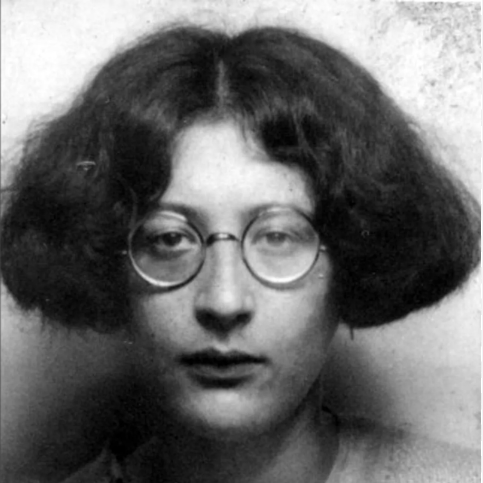
Rome is the Great Beast of atheism and materialism, adoring nothing but itself. Israel is the Great Beast of religion. Neither one nor the other is likable. The Great Beast is always repulsive.
▼
Source
source
p. 123
1 month 3 days ago
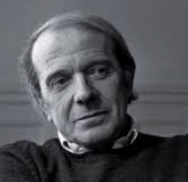
We're tired of trees. We should stop believing in trees, roots, and radicles. They've made us suffer too much. All of arborescent culture is founded on them, from biology to linguistics. Nothing is beautiful or loving or political aside from underground stems and aerial root, adventitious growths and rhizomes.
▼
Source
source
from A Thousand Plateaus: capitalism and schizophrenia, p. 15
3 weeks ago
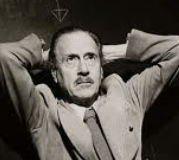
Each new technology is a reprogramming of sensory life.
▼
Source
source
(p. 33)
1 month 2 days ago
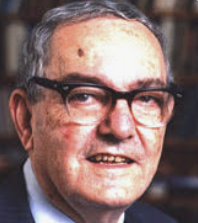
The function of knowledge in the decision-making process is to determine which consequences follow upon which of the alternative strategies.
▼
Source
source
p. 75
3 months 3 weeks ago
[T]he first philosophers, in investigating the truth and the nature of things, wandered, as if led by ignorance, into a certain... path. Hence, they say that no being is either generated or corrupted, because it is necessary that what is generated should be generated either from being or non-being: but both these are impossible; for neither can being be generated, since it already is; and from nothing, nothing can be generated... And thus... they said that there were not many things, but that being alone had a subsistence. ...the ancient philosophers ...through this ignorance added so much to their want of knowledge, as to fancy that nothing else was generated or had a being; but they subverted all generation.
3 months 3 weeks ago
It is only afterward that a new idea seems reasonable. To begin with, it usually seems unreasonable.
3 weeks 5 days ago
Materialism ends up denying the existence of any irreducible subjective qualitative states of sentience or awareness.
▼
Source
source
Consciousness and Language (2002) p. 47.

1 month 2 weeks ago
The way in which a society organizes the life of its members ... is one "project" of realization among others. But once the project has become operative in the basic institutions and relations, it tends to become exclusive and to determine the development of the society as a whole.
▼
Source
source
p. xlviii

1 month 2 weeks ago
The source of an emotion is very difficult to grasp, but it comes to just that. That holds for all phenomena, for faith, etc. Why did it begin, how did it develop? and so forth-only he who has the gift of divination can perceive where it really comes from. But it is not accessible to reflection.
3 months 1 week ago
Look now, this is the starting point of philosophy: the recognition that different people have conflicting opinions, the rejection of mere opinion so that it comes to be viewed with mistrust, an investigation of opinion to determine whether it is rightly held, and the discovery of a standard of judgement, comparable to the balance that we have devised for the determining of weights, or the carpenter's rule for determining whether things are straight or crooked.
▼
Source
source
Book II, ch. 11, 13.
1 week 5 days ago
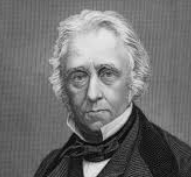
The conformation of his mind was such that whatever was little seemed to him great, and whatever was great seemed to him little. Serious business was a trifle to him, and trifles were his serious business.
▼
Source
source
'Horace Walpole', The Edinburgh Review (October 1833), quoted in T. B. Macaulay, Critical and Historical Essays Contributed to The Edinburgh Review, Vol. II (1843), p. 99
3 weeks ago
My main theme is the extension of the nervous system in the electric age, and thus, the complete break with five thousand years of mechanical technology. This I state over and over again. I do not say whether it is a good or bad thing. To do so would be meaningless and arrogant.
▼
Source
source
Letter to Robert Fulford, 1964. Letters of Marshall McLuhan (1987), p. 300
1 month 3 weeks ago
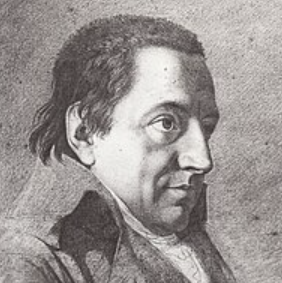
My immediate consciousness, my absolute perception, cannot go beyond myself, - I have immediate knowledge only of myself, whatever I know further I know only by reasoning, in the same manner in which I have come to those conclusions concerning the original powers of Nature, which certainly do not lie within the circle of my perceptions. I, however, - that which I call myself, - am not the man-forming power of Nature, but only one of its manifestations ; and only of this manifestation am I conscious, not of that power, whose existence I have only discovered from the necessity of explaining my own.
▼
Source
source
Jane Sinnett, trans 1846 p. 13
1 month 2 weeks ago
Nothing surpasses the pleasures of idleness: even if the end of the world were to come, I would not leave my bed at an ungodly hour.
2 months 3 weeks ago
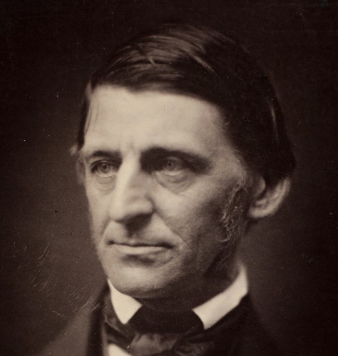
Life is not so short but that there is always time enough for courtesy.
▼
Source
source
Social Aims
2 months 3 weeks ago
The imitator dooms himself to hopeless mediocrity. The inventor did it because it was natural to him, and so in him it has a charm. In the imitator something else is natural, and he bereaves himself of his own beauty, to come short of another man's.
▼
Source
source
p. 26
2 months 3 weeks ago
If the whole of natural theology, as some people seem to maintain, resolves itself into one simple, though somewhat ambiguous, at least undefined proposition, that the cause or causes of order in the universe probably bear some remote analogy to human intelligence: If this proposition be not capable of extension, variation, or more particular explication: If it affords no inference that affects human life, or can be the source of any action or forbearance: And if the analogy, imperfect as it is, can be carried no farther than to the human intelligence, and cannot be transferred, with any appearance of probability, to the other qualities of the mind; if this really be the case, what can the most inquisitive, contemplative, and religious man do more than give a plain, philosophical assent to the proposition, as often as it occurs, and believe that the arguments on which it is established exceed the objections which lie against it?
▼
Source
source
Philo to Cleanthes, Part XII
2 months 3 weeks ago
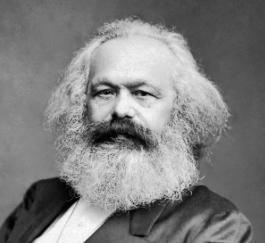
In the United States of North America, every independent movement of the workers was paralysed so long as slavery disfigured a part of the Republic. Labour cannot emancipate itself in the white skin where in the black it is branded.
▼
Source
source
Vol. I, Ch. 10, Section 7, pg. 329.
1 month 3 days ago
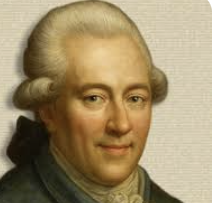
A schoolteacher or professor cannot educate individuals, he educates only species.
▼
Source
source
J 10
3 weeks ago
With Gutenberg Europe enters the technological phase of progress, when change itself becomes the archetypal norm of social life.
▼
Source
source
(p. 177)

1 month 5 days ago
People do not go into the company of their fellow-creatures for what would seem a very sufficient reason, namely, that they have something to say to them, or something that they want to hear from them; but in the vague hope that they may find something to say.
3 weeks ago
Since Sputnik there is no Nature. Nature is an item contained in a man-made environment of satellites and information.
1 month 2 weeks ago
The guiding question of Marx's analysis was, How does capitalist society supply its members with the necessary use-values? And the answer disclosed a process of blind necessity, chance, anarchy and frustration. The introduction of the category of use-value was the introduction of a forgotten factor, forgotten, that is, by the classical political economy which was occupied only with the phenomenon of exchange value. In the Marxian theory, this factor becomes an instrument that cuts through the mystifying reification of the commodity world.
▼
Source
source
P. 304
1 month 2 weeks ago
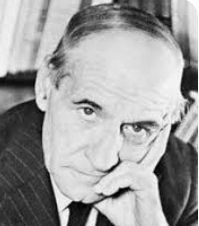
Whether he be an original or a plagiarist, man is the novelist of himself.
▼
Source
source
"Man has no nature"

2 months 3 weeks ago
The love of power is a part of human nature, but power-philosophies are, in a certain precise sense, insane. The existence of the external world, both that of matter and of other human beings, is a datum, which may be humiliating to a certain kind of pride, but can only be denied by a madman. Men who allow their love of power to give them a distorted view of the world are to be found in every asylum: one man will think he is Governor of the Bank of England, another will think he is the King, and yet another will think he is God. Highly similar delusions, if expressed by educated men in obscure language, lead to professorships in philosophy; and if expressed by emotional men in eloquent language, lead to dictatorships. Certified lunatics are shut up because of the proneness to violence when their pretensions are questioned; the uncertified variety are given control of powerful armies, and can inflict death and disaster upon all sane men within their reach.
▼
Source
source
Ch. 16: Power philosophies
3 weeks 4 days ago
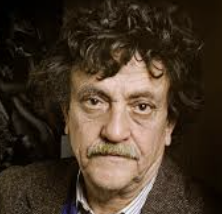
Well, I've worried some about, you know, why write books ... why are we teaching people to write books when presidents and senators do not read them, and generals do not read them. And it's been the university experience that taught me that there is a very good reason, that you catch people before they become generals and presidents and so forth and you poison their minds with ... humanity, and however you want to poison their minds, it's presumably to encourage them to make a better world.
▼
Source
source
"A Talk with Kurt Vonnegut. Jr." by Robert Scholes in The Vonnegut Statement (1973) edited by Jerome Klinkowitz and John Somer October 1966), later published in Conversations With Kurt Vonnegut (1988), p. 123
1 month 3 weeks ago
Falsehood and delusion are allowed in no case whatever: But, as in the exercise of all the virtues, there is an œconomy of truth. It is a sort of temperance, by which a man speaks truth with measure that he may speak it the longer.
1 month 2 weeks ago
The manufacturing worker almost always lives in the countryside and in a more or less patriarchal relation to his landlord or employer; the proletarian lives, for the most part, in the city and his relation to his employer is purely a cash relation. The manufacturing worker is torn out of his patriarchal relation by big industry, loses whatever property he still has, and in this way becomes a proletarian.
3 weeks 2 days ago
The unhappiness of our life; patch up our false way of life as we will, propping it up by the aid of the sciences and arts - that life becomes feebler, sicklier, and more tormenting every year; every year the number of suicides and the avoidance of motherhood increases; every year the people of that class become feebler; every year we feel the increasing gloom of our lives. Evidently salvation is not to be found by increasing the comforts and pleasures of life, medical treatments, artificial teeth and hair, breathing exercises, massage, and so forth;...It is impossible to remedy this by any amusements, comforts, or powders - it can only be remedied by a change of life.

2 months 3 weeks ago
"Ah, Psyche," I said, "have I made you so little happy as that?"
▼
Source
source
Orual
3 months 3 weeks ago
Science fiction writers foresee the inevitable, and although problems and catastrophes may be inevitable, solutions are not.

1 month 6 days ago
In conclusion, I wish to say that my attitude to the whole tragic question is not dictated by my Jewish antecedents. It is motivated by my abhorrence of injustice, and man's inhumanity to man. It is because of this that I have fought all my life for anarchism which alone will do away with the horrors of the capitalist régime and place all races and peoples, including the Jews, on a free and equal basis. Until then I consider it highly inconsistent for socialists and anarchists to discriminate in any shape or form against the Jews.
1 month 3 weeks ago
Whoever does not philosophize for the sake of philosophy, but rather uses philosophy as a means, is a sophist.
▼
Source
source
"Selected Aphorisms from the Athenaeum (1798)", Dialogue on Poetry and Literary Aphorisms, Ernst Behler and Roman Struc, trans. (Pennsylvania University Press:1968) #96
1 month 2 days ago
We need to augment and amend the existing body of classical and neoclassical economic theory to achieve a more realistic picture of economic process.
▼
Source
source
Herbert A. Simon (1986) in Preface to: Gilad & Kaish (eds.), Handbook of Behavioral Economics, p. xvi.
1 month 6 days ago
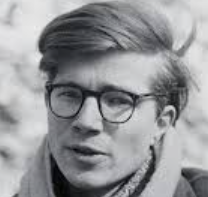
What can characterize the Outsider is a sense of strangeness, or unreality.
▼
Source
source
Chapter one, The Country of the Blind

2 months 3 weeks ago
Among the Romans in Christian times Mithras-worship as very widely spread, and so late as the Middle Ages we meet with a secret Mithras-worship ostensibly connected with the order of the Knights-Templars. Mithras thrusting the knife into the neck of the ox is a figurative representation belonging essentially to the cult of Mithras, of which examples have been frequently found in Europe. Hegel, Georg Wilhelm Friedrich, Lectures on the philosophy of religion, together with a work on the proofs of the existence of God.
▼
Source
source
Vol 2 Translated from the 2d German ed. 1895 Ebenezer Brown Speirs 1854-1900, and J Burdon Sanderson p. 81-82
1 month 2 weeks ago
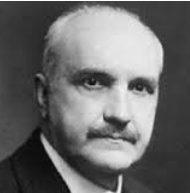
Our dignity is not in what we do, but in what we understand.
▼
Source
source
p. 50
2 months 3 weeks ago
The first thing to realize, if you wish to become a philosopher, is that most people go through life with a whole world of beliefs that have no sort of rational justification, and that one man's world of beliefs is apt to be incompatible with another man's, so that they cannot both be right. People's opinions are mainly designed to make them feel comfortable; truth, for most people is a secondary consideration.
▼
Source
source
"How to Become a Philosopher" (1942), in The Art of Philosophizing, and Other Essays (New York: Philosophical Library, 1968), p. 2
3 weeks 2 days ago
Art is not, as the metaphysicians say, the manifestation of some mysterious Idea of beauty or God; it is not, as the aesthetical physiologists say, [play or] a game in which one releases surplus energy, ...not the production of pleasing objects, and is above all, not pleasure itself, but it is the means of union among mankind, joining them in the same feelings, and necessary for the life and progress toward the good of the individual and of humanity.
2 months 1 week ago
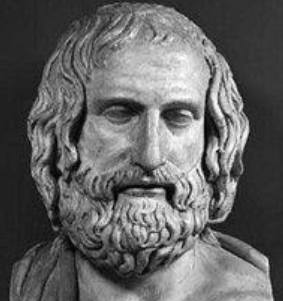
Wrongly do the Greeks suppose that aught begins or ceases to be; for nothing comes into being or is destroyed; but all is an aggregation or secretion of pre-existent things: so that all-becoming might more correctly be called becoming-mixed, and all corruption, becoming-separate.
▼
Source
source
quoted in Heinrich Ritter, Tr. from German by Alexander James William Morrison, The History of Ancient Philosophy, Vol.1
2 months 3 weeks ago
If a workman can conveniently spare those three halfpence, he buys a pot of porter. If he cannot, he contents himself with a pint, and, as a penny saved is a penny got, he thus gains a farthing by his temperance.
▼
Source
source
Chapter II, Part II, Article IV, p. 951.
1 month 6 days ago
The key to understanding Crowley is the same as the key to understanding the Marquis de Sade. Both wasted an immense amount of energy screaming defiance at the authority they resented so much, and lacked the insight to see that they were shaking their fists at an abstraction.
▼
Source
source
p. 29
1 week 2 days ago
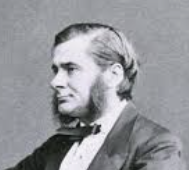
Every living creature commences its existence under a form different from, and simpler than, that which it eventually attains.
▼
Source
source
Ch.2, p. 74
3 months 3 weeks ago
Socrates: I think the most likely view is, that these ideas exist in nature as patterns, and the other things resemble them and are imitations of them; their participation in ideas is assimilation to them, that and nothing else.Parmenides: It is impossible that anything be like the idea, or the idea like anything; for if they are alike, some further idea, in addition to the first, will always appear, and if that is like anything, still another, and a new idea will always be arising, if the idea is like that which partakes of it.
2 months 3 weeks ago
All religions promise a reward for excellences of the will or heart, but none for excellences of the head or understanding.
▼
Source
source
E. Payne, trans., vol. 2, p. 230
1 month 2 weeks ago
Put up again thy sword into his place: for all they that take the sword shall perish with the sword. Thinkest thou that I cannot now pray to my Father, and he shall presently give me more than twelve legions of angels? But how then shall the scriptures be fulfilled, that thus it must be?

1 month 4 weeks ago
Not only does democracy make every man forget his ancestors, but also clouds their view of their descendants and isolates them from their contemporaries. Each man is for ever thrown back on himself alone, and there is danger that he may be shut up in the solitude of his own heart.
▼
Source
source
Book Two, Chapter II.
1 month 2 weeks ago
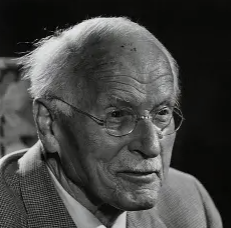
A more or less superficial layer of the unconscious is undoubtedly personal. I call it the "personal unconscious". But this personal layer rests upon a deeper layer, which does not derive from personal experience and is not a personal acquisition but is inborn. This deeper layer I call the "collective unconscious". I have chosen the term "collective" because this part of the unconscious is not individual but universal; in contrast to the personal psyche, it has contents and modes of behaviour that are more or less the same everywhere and in all individuals.
▼
Source
source
p. 3-4
1 month 3 weeks ago
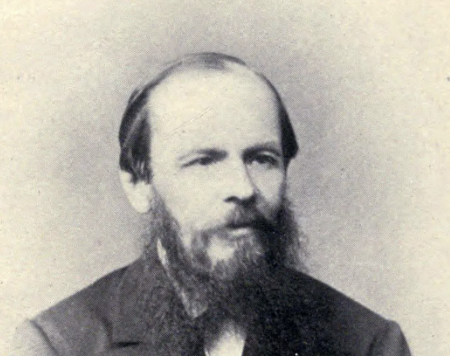
For socialism is not merely the labour question, it is before all things the atheistic question, the question of the form taken by atheism to-day, the question of the tower of Babel built without God, not to mount to heaven from earth but to set up heaven on earth.
2 months 2 weeks ago
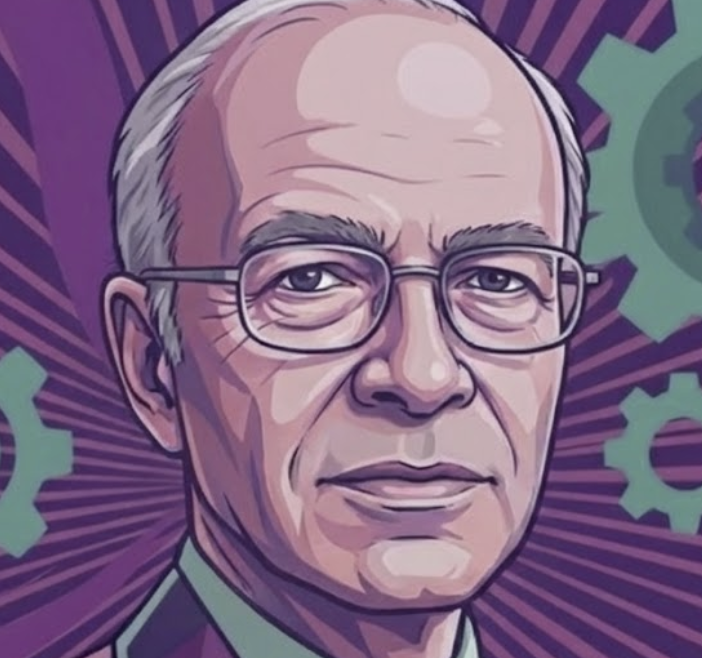
People do not feel in any way ashamed or guilty about spending money on new clothes or a new car instead of giving it to famine relief. (Indeed, the alternative does not occur to them.) This way of looking at the matter cannot be justified. When we buy new clothes not to keep ourselves warm but to look "well-dressed" we are not providing for any important need. We would not be sacrificing anything significant if we were to continue to wear our old clothes, and give the money to famine relief. By doing so, we would be preventing another person from starving. It follows from what I have said earlier that we ought to give money away, rather than spend it on clothes which we do not need to keep us warm. To do so is not charitable, or generous. Nor is it the kind of act which philosophers and theologians have called "supererogatory" - an act which it would be good to do, but not wrong not to do. On the contrary, we ought to give the money away, and it is wrong not to do so.
CivilSimian.com created by AxiomaticPanic, CivilSimian, Kalokagathia