


4 months 4 days ago
To turn one's eyes away from Jesus means to turn them to the Law.
▼
Source
source
Chapter 2
3 months 3 weeks ago
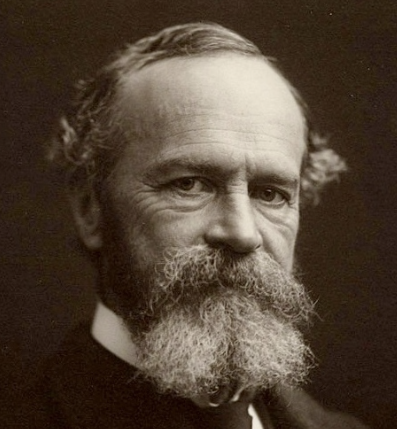
Conversion is in its essence a normal adolescent phenomenon, incidental to the passage from the child's small universe to the wider intellectual and spiritual life of maturity.
▼
Source
source
Lecture IX, "Conversion"
3 months 2 weeks ago
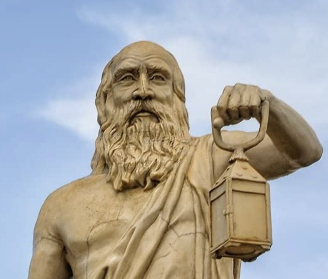
He once begged alms of a statue, and, when asked why he did so, replied, "To get practice in being refused."
▼
Source
source
Diogenes Laërtius, vi. 49
2 months 6 days ago
The journalists have constructed for themselves a little wooden chapel, which they also call the Temple of Fame, in which they put up and take down portraits all day long and make such a hammering you can't hear yourself speak.
▼
Source
source
D 20

3 months 3 weeks ago
What potent blood hath modest May!
▼
Source
source
May-Day

2 months 2 weeks ago
Many, and I think the determining, constitutive facts remain outside the reach of the operational concept. And by virtue of this limitation-this methodological injunction against transitive concepts which might show the facts in their true light and call them by their true name-the descriptive analysis of the facts blocks the apprehension of facts and becomes an element of the ideology that sustains the facts. Proclaiming the existing social reality as its own norm, this sociology fortifies in the individuals the "faithless faith" in the reality whose victims they are.
▼
Source
source
p. 119
1 month 3 weeks ago
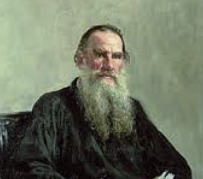
The man is making preparations for a year, and does not know that he will die before evening. And I remembered God's second saying, "Learn what is not given to man." 'What dwells in man" I already knew. Now I learnt what is not given him. It is not given to man to know his own needs.
▼
Source
source
Ch. XI


2 months 2 weeks ago
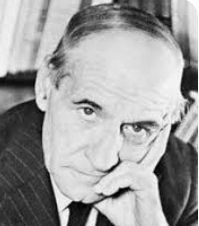
Man does not exercise his thought because he finds it amusing, but because, obliged as he is to live immersed in the world and to force his way among things, he finds himself under the necessity of organizing his psychic activities, which are not very different from those of the anthropoid, in the form of thought - which is what the animal does not do.
▼
Source
source
p. 28

4 months 3 weeks ago
A person can perhaps succeed in hiding his sins from the world, he can perhaps be foolishly happy that he succeeds, or yet, a little more honest, admit that it is a deplorable weakness and cowardliness that he does not have the courage to become open-but a person cannot hide his sins from himself.
2 months 2 weeks ago
Whatever be the substance which takes possession of such a soul, it will produce the same result, and will change into a pretext for not conforming to any concrete purpose. If it appears as reactionary or anti-liberal it will be in order to affirm that the salvation of the State gives a right to level down all other standards, and to manhandle one's neighbour, above all if one's neighbour is an outstanding personality. But the same happens if it decides to act the revolutionary; the apparent enthusiasm for the manual worker, for the afflicted and for social justice, serves as a mask to facilitate the refusal of all obligations, such as courtesy, truthfulness and, above all, respect or esteem for superior individuals. ... As regards other kinds of Dictatorship, we have seen only too well how they flatter the mass-man, by trampling on everything that appeared to be above the common level.
▼
Source
source
Chapter XV: We Arrive At The Real Question
2 months 1 week ago
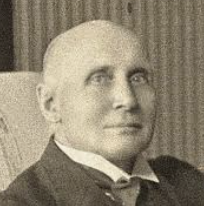
Often things realised in thought are more vivid than than the same things in inattentive physical experience. But the things apprehended as mental are always subject to the condition that we come to a stop when we come to explore ever higher grades of complexity in their realised relationships. We always find tat we have thought of just this - whatever it may be - and of no more.
▼
Source
source
Ch. 10: "Abstraction", p. 239

3 months 2 days ago
This reasonable moderator, and equal piece of justice, Death.
▼
Source
source
Section 38
2 months 3 weeks ago
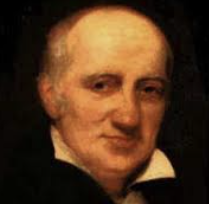
The political freedom of conscience and of the press, so far from being as it is commonly supposed an extension, is a new case of the limitation of rights and discretion. Conscience and the press ought to be unrestrained, not because men have a right to deviate from the exact line that duty prescribes, but because society, the aggregate of individuals, has no right to assume the prerogative of an infallible judge, and to undertake authoritatively to prescribe to its members in matters of pure speculation.
▼
Source
source
Vol. 1, bk 2 : Principles of Society , Ch. 5 : Of Rights

3 months 4 weeks ago
The universe is the bible of a true Theophilanthropist. It is there that he reads of God. It is there that the proofs of his existence are to be sought and to be found. As to written or printed books, by whatever name they are called, they are the works of man's hands, and carry no evidence in themselves that God is the author of any of them. It must be in something that man could not make, that we must seek evidence for our belief, and that something is the universe; the true bible; the inimitable word, of God.
▼
Source
source
A Discourse, &c. &c.
4 months 4 days ago
In Matthew 12:23 Christ says: "Either make the tree good, and its fruit good; or make the tree bad and its fruit bad," as if to say: "Let the one who wishes to have good fruit begin by planting a good tree." Therefore, let the person who wishes to do good works being not with the works but with the believing, for this alone makes a person good.
▼
Source
source
p. 76
3 months 4 weeks ago
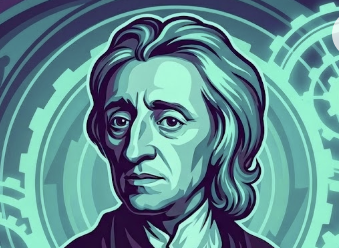
For wherever violence is used, and injury done, though by hands appointed to administer Justice, it is still violence and injury, however colour'd with the Name, Pretences, or Forms of Law, the end whereof being to protect and redress the innocent, by an unbiassed application of it, to all who are under it; wherever that is not bona fide done, War is made upon the Sufferers, who having no appeal on Earth to right them, they are left to the only remedy in such Cases, an appeal to Heaven.
▼
Source
source
Two Treatises of Government. The Second Treatise. Chapter 3: The State of War, §20 p. 281 books.google

4 months 3 weeks ago
Well, then, arrest him. You can accuse him of something or other afterward.
2 months 1 week ago
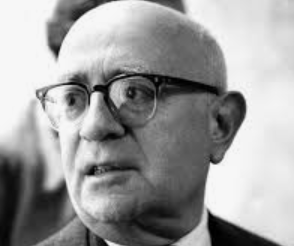
The metaphysical apologia at least betrayed the injustice of the established order through the incongruence of concept and reality. The impartiality of scientific language deprived what was powerless of the strength to make itself heard and merely provided the existing order with a neutral sign for itself. Such neutrality is more metaphysical than metaphysics.
▼
Source
source
E. Jephcott, trans., p. 17
3 months 3 weeks ago
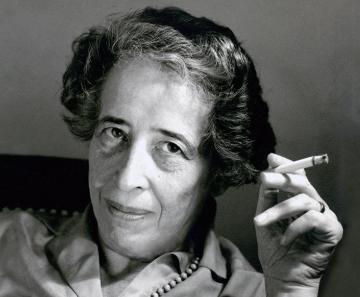
The cultural treasures of the past, believed to be dead, are being made to speak, in the course of which it turns out that they propose things altogether different than what had been thought.
▼
Source
source
"Martin Heidegger at Eighty," in Heidegger and Modern Philosophy: Critical Essays (1978) by Michael Murray, p. 294
3 months 4 weeks ago
The Managers of that Trade themselves, and others, testify, that many of these African nations inhabit fertile countries, are industrious farmers, enjoy plenty, and lived quietly, averse to war, before the Europeans debauched them with liquors, and bribing them against one another; and that these inoffensive people are brought into slavery, by stealing them, tempting Kings to sell subjects, which they can have no right to do, and hiring one tribe to war against another, in order to catch prisoners. By such wicked and inhuman ways the English are said to enslave towards one hundred thousand yearly; of which thirty thousand are supposed to die by barbarous treatment in the first year; besides all that are slain in the unnatural wars excited to take them. So much innocent blood have the Managers and Supporters of this inhuman Trade to answer for to the common Lord of all!
3 months 3 weeks ago
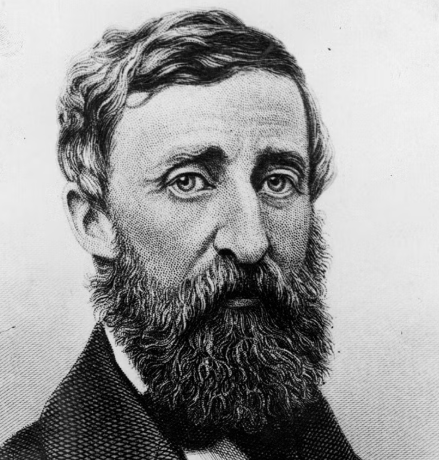
The soldier is applauded who refuses to serve in an unjust war by those who do not refuse to sustain the unjust government which makes the war; is applauded by those whose own act and authority he disregards and sets at naught; as if the state were penitent to that degree that it hired one to scourge it while it sinned, but not to that degree that it left off sinning for a moment.
2 months 3 weeks ago
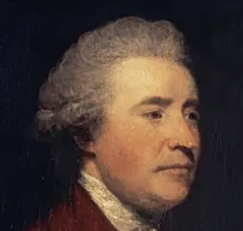
In doing good, we are generally cold, and languid, and sluggish; and of all things afraid of being too much in the right. But the works of malice and injustice are quite in another style. They are finished with a bold, masterly hand; touched as they are with the spirit of those vehement passions that call forth all our energies, whenever we oppress and persecute.
▼
Source
source
Speech at Bristol Previous to the Election (6 September 1780), quoted in The Works of the Right Honourable Edmund Burke, Vol. II (1855), pp. 158-159
2 months 3 weeks ago
What has always made the state a hell on earth has been precisely that man has tried to make it heaven.
1 week 4 days ago
The one is ready even to sacrifice itself for the good of others, the other to plunge into peril provided it drags others with it.
2 months 3 weeks ago
The difference between a pessimistic and an optimistic mind is of such controlling importance in regard to every intellectual function, and especially for the conduct of life, that it is out of the question to admit that both are normal, and the great majority of mankind are naturally optimistic.
▼
Source
source
V
3 months 3 weeks ago
Justice is the first virtue of social institutions, as truth is of systems of thought. A theory however elegant and economical must be rejected or revised if it is untrue; likewise laws and institutions no matter how efficient and well-arranged must be reformed or abolished if they are unjust. Each person possesses an inviolability founded on justice that even the welfare of society as a whole cannot override. For this reason justice denies that the loss of freedom for some is made right by a greater good shared by others. It does not allow that the sacrifices imposed on a few are outweighed by the larger sum of advantages enjoyed by many. Therefore in a just society the liberties of equal citizenship are taken as settled; the rights secured by justice are not subject to political bargaining or to the calculus of social interests.
▼
Source
source
Chapter I, Section 1, pg. 3-4
3 months 4 weeks ago
Many of these were not prisoners of war, and redeemed from savage conquerors, as some plead; and they who were such prisoners, the English, who promote the war for that very end, are the guilty authors of their being so; and if they were redeemed, as is alleged, they would owe nothing to the redeemer but what he paid for them.

4 months 5 days ago
Cato said the best way to keep good acts in memory was to refresh them with new.
▼
Source
source
No. 247

4 months 1 week ago
The steady drip of water causes stone to hollow and yield.
▼
Source
source
Book I, line 313 (tr. Stallings) Variant translation: Continual dropping wears away a stone. Compare: "The soft droppes of rain pierce the hard marble; many strokes overthrow the tallest oaks", John Lyly, Euphues, 1579 (Arber's reprint), p. 81

3 months 4 weeks ago
The institution of religion exists only to keep mankind in order, and to make men merit the goodness of God by their virtue. Everything in a religion which does not tend towards this goal must be considered foreign or dangerous.
▼
Source
source
"The Ecclesiastical Ministry"
4 months 3 weeks ago
How could one speak properly about love if you were forgotten, you God of love, source of all love in heaven and on earth; you who spared nothing but in love gave everything; you who are love, so that one who loves is what he is only by being in you.

3 months 3 weeks ago
The idea that in order to get clear about the meaning of a general term one had to find the common element in all its applications has shackled philosophical investigation; for it has not only led to no result, but also made the philosopher dismiss as irrelevant the concrete cases, which alone could have helped him understand the usage of the general term.
▼
Source
source
p. 19
1 month 4 weeks ago
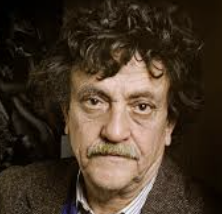
I was taught that the human brain was the crowning glory of evolution so far, but I think it's a very poor scheme for survival.
▼
Source
source
As quoted in The Observer [London]
3 months 3 weeks ago
Children are all foreigners.
▼
Source
source
September 25, 1839
1 month 1 week ago
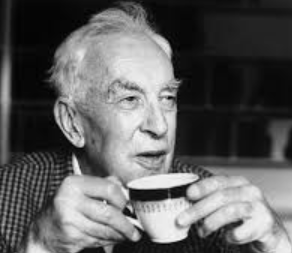
Now who are the individuals who are the greatest benefactors of the living generation of mankind? I should say: Confucius and Lao-Tse; the Buddha; the Prophets of Israel and Judah; Zoroaster, Jesus, Muhammad; and Socrates.
▼
Source
source
Ch. 8: Civilization on Trial
1 week 5 days ago
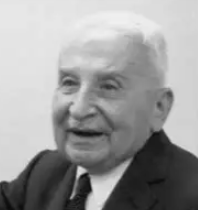
As the liberal sees it, the task of the state consists solely and exclusively in guaranteeing the protection of life, health, liberty, and private property against violent attacks. Everything that goes beyond this is an evil. A government that, instead of fulfilling its task, sought to go so far as actually to infringe on personal security of life and health, freedom, and property would, of course, be altogether bad.
▼
Source
source
Ch. 1 : The Foundations of Liberal Policy § 11. The Limits of Governmental Activity
1 week 5 days ago
You have the courage to tell the masses what no politician told them: you are inferior and all the improvements in your conditions which you simply take for granted you owe to the effort of men who are better than you. If this be arrogance, as some of your critics observed, it is still the truth that had to said in the age of the Welfare State.
▼
Source
source
Mises' letter to Ayn Rand praising Atlas Shrugged,(23 January 1958), quoted in Mises: The Last Knight of Liberalism (2007).

3 weeks ago
It is hard to see how the discarding of liberal values is going to lead to anything in the long term other than increasing social conflict and ultimately a return to violence as a means of resolving differences.
2 months 3 weeks ago
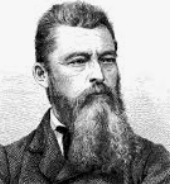
But like the desire for eternal life, the desire for omniscience and absolute perfection is merely an imaginary desire; and, as history and daily experience prove, the supposed human striving for unlimited knowledge and perfection is a myth. Man has no desire to know everything; he only wants to know the things to which he is particularly drawn.
▼
Source
source
Lecture XXX, Atheism alone a Positive View

2 months 3 weeks ago
The revolution must end and the republic must begin. In our constitution, right must take the place of duty, welfare that of virtue, and self-defense that of punishment. Everyone must be able to prevail and to live according to one's own nature.
▼
Source
source
Act I.

2 months 1 week ago
But many of us seek community solely to escape the fear of being alone. Knowing how to be solitary is central to the art of loving. When we can be alone, we can be with others without using them as a means of escape.
▼
Source
source
All About Love: New Visions, 1999
2 months 1 week ago
The phrase, the world wants to be deceived, has become truer than had ever been intended. People are not only, as the saying goes, falling for the swindle; if it guarantees them even the most fleeting gratification they desire a deception which is nonetheless transparent to them. They force their eyes shut and voice approval, in a kind of self-loathing, for what is meted out to them, knowing fully the purpose for which it is manufactured. Without admitting it they sense that their lives would be completely intolerable as soon as they no longer clung to satisfactions which are none at all.
▼
Source
source
Section 10
2 months 1 week ago
Every intellectual revolution which has ever stirred humanity into greatness has been a passionate protest against inert ideas. Then, alas, with pathetic ignorance of human psychology, it has proceeded by some educational scheme to bind humanity afresh with inert ideas of its own fashioning.
1 month ago
Some people steal from others, or defraud them, or enslave them, seizing their product and preventing them from living as they choose, or forcibly exclude others from competing in exchanges. None of these are permissible modes of transition from one situation to another.
▼
Source
source
Ch. 7 : Distributive Justice, Section I, The Entitlement Theory, p. 152
2 months 3 weeks ago
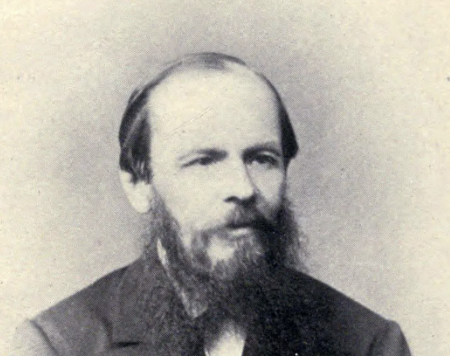
A dream! What is a dream? And is not our life a dream? I will say more. Suppose that this paradise will never come to pass (that I understand), yet I shall go on preaching it. And yet how simple it is: in one day, in one hour everything could be arranged at once! The chief thing is to love others like yourself, that's the chief thing, and that's everything; nothing else is wanted - you will find out at once how to arrange it all. And yet it's an old truth which has been told and retold a billion times - but it has not formed part of our lives! The consciousness of life is higher than life, the knowledge of the laws of happiness is higher than happiness - that is what one must contend against. And I shall. If only everyone wants it, it can be arranged at once.
2 months 6 days ago
Body and soul: a horse harnessed beside an ox.
▼
Source
source
D 103

4 months 2 weeks ago
Suppose a person entering a house were to feel heat on the porch, and going further, were to feel the heat increasing, the more they penetrated within. Doubtless, such a person would believe there was a fire in the house, even though they did not see the fire that must be causing all this heat. A similar thing will happen to anyone who considers this world in detail: one will observe that all things are arranged according to their degrees of beauty and excellence, and that the nearer they are to God, the more beautiful and better they are.
▼
Source
source
Art. 1
CivilSimian.com created by AxiomaticPanic, CivilSimian, Kalokagathia