


2 months 1 week ago
In refusing to face evil, Sinclair has gained nothing and lost a great deal; the Buddhist scripture expenses it: those who refuse to discriminate might as well be dead.
▼
Source
source
Chapter Three, The Romantic Outsider
4 months 3 weeks ago
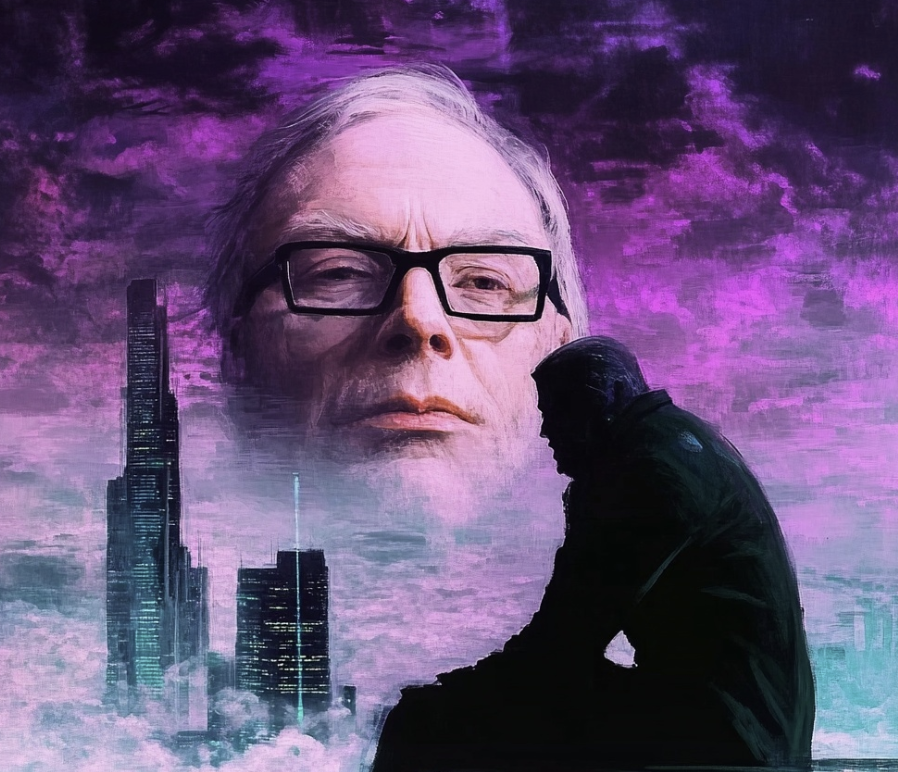
There can never be a man so lost as one who is lost in the vast and intricate corrdiors of his own lonely mind, where none may reach and none may save. There never was a man so helpless as one who cannot remember.
1 month 4 weeks ago
Simulation is no longer that of a territory, a referential being or substance. It is a generation by models of a real without origin or reality: a hyperreal.
▼
Source
source
"The Precession of Simulacra," p. 1

4 months 5 days ago
The very elements themselves, though repugnant in their nature, yet, by a happy equilibrium, preserve eternal peace; and amid the discordancy of their constituent principles, cherish, by a friendly intercourse and coalition, an uninterrupted concord.
3 months 3 weeks ago
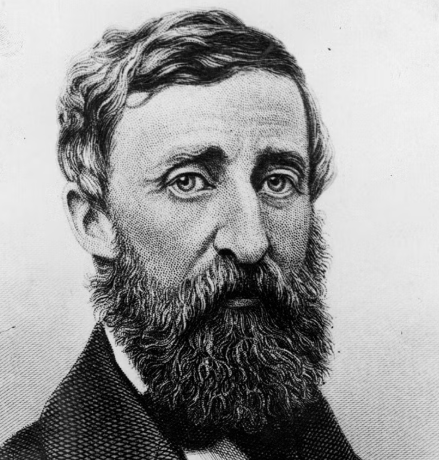
What is called politics is comparatively something so superficial and inhuman, that, practically, I have never fairly recognized that it concerns me at all. The newspapers, I perceive, devote some of their columns specially to politics or government without charge; and this, one would say, is all that saves it; but, as I love literature, and, to some extent, the truth also, I never read those columns at any rate. I do not wish to blunt my sense of right so much.
▼
Source
source
p. 494

3 months 2 days ago
Who knows whether the best of men be known, or whether there be not more remarkable persons forgot, than any that stand remembered in the known account of time? Without the favour of the everlasting register, the first man had been as unknown as the last, and Methuselah's long life had been his only chronicle.Oblivion is not to be hired. The greater part must be content to be as though they had not been, to be found in the register of God, not in the record of man. Twenty seven names make up the first story before the flood, and the recorded names ever since contain not one living century. The number of the dead long exceedeth all that shall live. The night of time far surpasseth the day, and who knows when was the Æquinox? Every hour adds unto that current arithmetick, which scarce stands one moment.
▼
Source
source
Chapter V

3 months 4 weeks ago
He thinks like a philosopher, but governs like a king.
▼
Source
source
Of Frederick the Great XII

1 month 4 weeks ago
Nonviolence does not necessarily emerge from a pacific or calm part of the soul. Very often it is an expression of rage, indignation, and aggression.
▼
Source
source
p. 21

3 months 3 weeks ago
He begins to think for himself and meets Nineteenth-century Rationalism Which can explain away religion by any number of methods.
▼
Source
source
Pilgrim's Regress 19-20
3 months 3 weeks ago
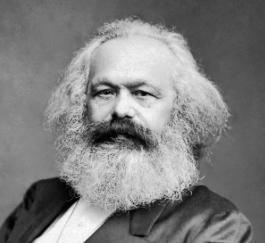
It appears then, that capitalist production comprises conditions independent of good or bad will, conditions which permit the working-class to enjoy that relative prosperity only momentarily, and at that always only as the harbinger of a coming crisis.
▼
Source
source
Vol. II, Ch. XX, p. 415.

4 months 2 weeks ago
All teems with symbol; the wise man is the man who in any one thing can read another.
4 months 1 week ago
Incomprehensible and immutable is the love wherewith God loves. He did not begin to love us only on the day we were reconciled to Him by the blood of His Son; He loved us before the world was made, that we too might become His sons together with His Only-begotten Son, long before we had any existence.
▼
Source
source
p.435
3 months 2 weeks ago
Human beings are social animals. We were social before we were human.
▼
Source
source
Chapter 1, The Origins Of Altruism, p. 3
4 months 4 days ago
All of the days go toward death and the last one arrives there.
▼
Source
source
Ch. 20. Of the Force of Imagination
3 months 3 weeks ago
We can pool information about experiences, but never the experiences themselves. From family to nation, every human group is a society of island universes.
▼
Source
source
Page 159
3 months 3 weeks ago
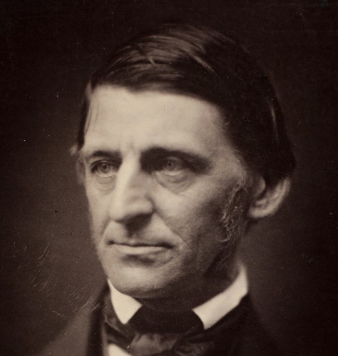
God said, I am tired of kings, I suffer them no more; Up to my ear the morning brings The outrage of the poor.
▼
Source
source
Boston Hymn, st. 2
1 week ago
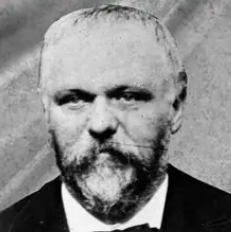
Myths are not descriptions of things, but expressions of a determination to act... A myth cannot be refuted since it is, at bottom, identical with the convictions of a group, being the expression of these convictions in the language of movement.
▼
Source
source
p. 28-29 (Letter to Daniel Halevy)
2 months 1 week ago
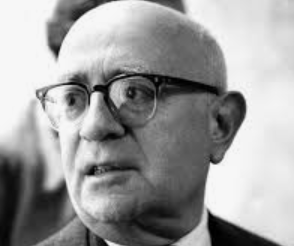
Traditional philosophy's claim to totality, culminating in the thesis that the real is rational, is indistinguishable from apologetics.
▼
Source
source
p. 7

4 months 3 weeks ago
I have never definitely broken with Christianity nor renounced it. To attack it has never been my thought. No, from the time when there could be any question of the employment of my powers, I was firmly determined to employ them all to defend Christianity, or in any case to present it in its true form.
4 months 3 weeks ago
She has forgotten speech and language and the restlessness of thoughts, has forgotten what is even greater restlessness, this self, has forgotten herself-she, the lost woman, who is now lost in her Savior, who, lost in him, rests at his feet-like a picture. He speaks about her; he says: Her many sins are forgiven her, because she loved much. Although she is present, it is almost as if she were absent; it is almost as if he changed her into a picture, a parable.

2 months 2 weeks ago
It is the sphere farthest removed from the concreteness of society which may show most clearly the extent of the conquest of thought by society.
▼
Source
source
p. 104

3 months 2 weeks ago
Do you count your birthdays with gratitude?
▼
Source
source
Book II, epistle ii, line 210

2 months 1 week ago
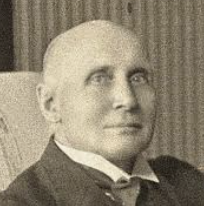
A race preserves its vigour so long as it harbours a real contrast between what has been and what may be, and so long as it is nerved by the vigour to adventure beyond the safeties of the past. Without adventure, civilization is in full decay.
▼
Source
source
p. 360.
2 months 2 weeks ago
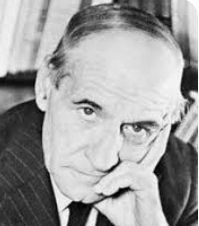
That science is incapable of solving in its own way those fundamental questions is no sufficient reason for slighting them.
▼
Source
source
p. 14
3 months 3 weeks ago
But capitalist production begets,with the inexorability of a law of Nature,its own negation. It is the negation of negation.
▼
Source
source
Vol. I, Ch. 32, p. 837.

2 weeks 3 days ago
There is endless merit in a man's knowing when to have done.
▼
Source
source
Dr. Francia (1845).
4 months ago
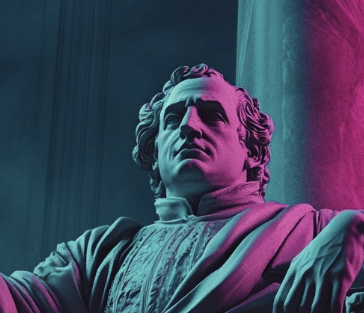
As to the Approbation or Esteem of those Blockheads who call themselves the Public, & whom a Bookseller, a Lord, a Priest, or a Party can guide, I do most heartily despise it.
▼
Source
source
Letter 138, To Gilbert Elliot of Minto; August 9, 1757
2 months 1 week ago
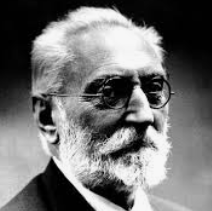
I would say that teleology is theology, and that God is not a "because," but rather an "in order to."
2 months 2 weeks ago
Sudden Glory, is the passion which maketh those Grimaces called LAUGHTER.
▼
Source
source
The First Part, Chapter 6, p. 27 (italics and spelling as per text)
4 months ago
The sneaking arts of underling tradesmen are thus erected into political maxims for the conduct of a great empire; for it is the most underling tradesmen only who make it a rule to employ chiefly their own customers. A great trader purchases his good always where they are cheapest and best, without regard to any little interest of this kind.
▼
Source
source
Chapter III, Part II, p. 530.
4 months 3 weeks ago
Junz found revulsion growing strong within him. A planet full of people meant nothing against the dictates of economic necessity!
3 months 3 weeks ago
We see then, commodities are in love with money, but "the course of true love never did run smooth".
▼
Source
source
Vol. I, Ch. 3, Section 2, pg. 121.
1 month 4 weeks ago
This realistic image, however, does not catch at all what really is, but what should not be - death and misery - what should not exist, from our moral and humanistic point of view. And at the same time making an aesthetic and commercial, perfectly immoral use and abuse of this misery. Images that actually testify, behind their pretended "objectivity", of a deep denial of the real, and of an equal denial of the image - assigned to present what does not even want to be represented, assigned to the rape of the real by burglary.

3 weeks 1 day ago
The old form of trade union, which was born in the nineteenth century and aimed primarily at negotiating wages for a specific trade is no longer sufficient. First of all, as we have been arguing, the old trade unions are not able to represent the unemployed, the poor, or even the mobile and flexible post-Fordist workers with short term contracts, all of whom participate actively in social production and increase social wealth. Second, the old unions are divided according to the various products and tasks defined in the heyday of industrial production - a miners' union, a pipefitters' union, a machinists' union and so forth. Today, insofar as the conditions and the relations of labor are becoming common, these traditional divisions (or even newly defined divisions) no longer make sense and serve only as an obstacle. Finally the old unions have become purely economic, not political, organization.
▼
Source
source
136
2 months 3 weeks ago
The secret of Hegel's dialectic lies ultimately in this alone, that it negates theology through philosophy in order then to negate philosophy through theology. Both the beginning and the end are constituted by theology; philosophy stands in the middle as the negation of the first positedness, but the negation of the negation is again theology. At first everything is overthrown, but then everything is reinstated in its old place, as in Descartes. The Hegelian philosophy is the last grand attempt to restore a lost and defunct Christianity through philosophy, and, of course, as is characteristic of the modern era, by identifying the negation of Christianity with Christianity itself.
▼
Source
source
Part II, Section 21
1 week ago
If wandering is the liberation from every given point in space, and thus the conceptional opposite to fixation at such a point, the sociological form of the "stranger" presents the unity, as it were, of these two characteristics.
▼
Source
source
p. 402; Opening line.

2 weeks 3 days ago
The scientific enterprise as a whole does from time to time prove useful, open up new territory, display order, and test long-accepted belief. Nevertheless, the individual engaged on a normal research problem is almost never doing any one of these things. Once engaged, his motivation is of a rather different sort. What then challenges him is the conviction that, if only he is skillful enough, he will succeed in solving a puzzle that no one before has solved or solved so well.
▼
Source
source
p. 38.
2 months 3 weeks ago
Do a man dirt, yourself you hurt.

2 months 1 week ago
With Puritanism as the constant check upon American life, neither truth nor sincerity is possible. Nothing but gloom and mediocrity to dictate human conduct, curtail natural expression, and stifle our best impulses.

3 months 3 weeks ago
Why in the world shouldn't they have regarded with awe and reverence that act by which the human race is perpetuated. Not every religion has to have St. Augustine's attitude to sex. Why even in our culture marriages are celebrated in a church, everyone present knows what is going to happen that night, but that doesn't prevent it being a religious ceremony.
▼
Source
source
Intentionality, and Romanticism (1997) by Richard Thomas Eldridge, p. 130
4 months 4 days ago
Things are not so painful and difficult of themselves, but our weakness or cowardice makes them so.
▼
Source
source
Ch. 14, tr. Cotton, rev. W. Carew Hazlitt, 1877
2 months 3 weeks ago
I am convinced that we have a degree of delight, and that no small one, in the real misfortunes and pains of others.
▼
Source
source
Part I Section XIV

2 months 1 week ago
Power is more 'spacious' than violence. And violence becomes power if it 'gives itself more time.' Looked at from this perspective, power rests on an excess of space and time.
3 months 3 weeks ago
Some of your hurts you have cured, And the sharpest you still have survived, But what torments of grief you endured From evils which never arrived!
▼
Source
source
Borrowing From the French

3 months 4 weeks ago
The plea is, in a great measure, false; they had no permission to catch and enslave people who never injured them.
1 month 1 week ago
I have learned by some experience, by many examples, and by the writings of countless others before me, also occupied in the search, that certain environments, certain modes of life, certain rules of conduct are more conducive to inner and outer harmony than others. There are, in fact, certain roads that one may follow. Simplification of life is one of them.
2 months 1 week ago
A philosopher of imposing stature doesn't think in a vacuum. Even his most abstract ideas are, to some extent, conditioned by what is or is not known in the time when he lives.
▼
Source
source
Ch. 29, June 10, 1943.

4 months 4 weeks ago
Our destiny exercises its influence over us even when, as yet, we have not learned its nature: it is our future that lays down the law of our today.
CivilSimian.com created by AxiomaticPanic, CivilSimian, Kalokagathia