

5 months 3 days ago
Does anything genuinely beautiful need supplementing? No more than justice does-or truth, or kindness, or humility. Are any of those improved by being praised? Or damaged by contempt? Is an emerald suddenly flawed if no one admires it? Or gold, or ivory, or purple? Lyres? Knives? Flowers? Bushes?
▼
Source
source
(Hays translation) IV, 20
9 months 6 days ago
Be gentle with them, Timothy. They want to be free, but they don't know how. Teach them. Reassure them.
▼
Source
source
Reported to be Huxley's last words to Timothy Leary, which Huxley whispered from his deathbed. Quoted in Leary, Timothy (1990) . "Life on a Grounded Space Colony".

10 months 4 days ago
It is the nature of science that answers automatically pose new and more subtle questions.
9 months 6 days ago
The tool, as we have seen, is not exterminated by the machine.
▼
Source
source
Vol. I, Ch. 15, Section 2, pg. 422.
8 months 1 day ago
People think they have taken quite an extraordinarily bold step forward when they have rid themselves of belief in hereditary monarchy and swear by the democratic republic. In reality, however, the state is nothing but a machine for the oppression of one class by another, and indeed in the democratic republic no less than in the monarchy.
▼
Source
source
Introduction to 1891 edition of Karl Marx's, The Civil War in France

5 months 3 weeks ago
Flimsy, desultory readers, who fly from foolish book to foolish book, and get good of none, and mischief of all-are not these as foolish, unhealthy eaters, who mistake their superficial false desire after spiceries and confectioneries for their real appetite, of which even they are not destitute, though it lies far deeper, far quieter, after solid nutritive food?

5 months 2 days ago
I cannot conceive, how a body, destitute of understanding and sense, truly so called, can moderate and determine its own motions; especially so as to make them conformable to laws that it has no knowledge of.
▼
Source
source
Sect.1.
8 months 2 days ago
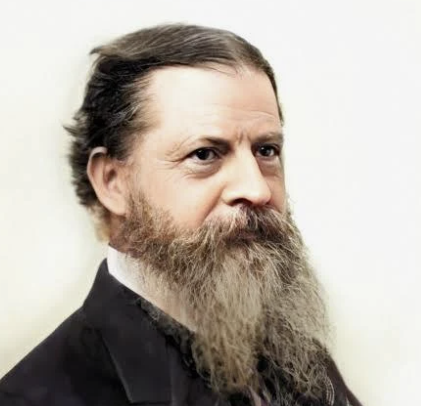
Accordingly, time logically supposes a continuous range of intensity of feeling. It follows then, from the definition of continuity, that when any particular kind of feeling is present, an infinitesimal continuum of all feelings differing infinitesimally from that, is present.

7 months 4 weeks ago
The revolution, Stahl declared, is the 'world-historic mark of our age.' It would found 'the entire State on the will of man instead of on the commandment and ordinance of God.'
▼
Source
source
p. 364
9 months 1 week ago
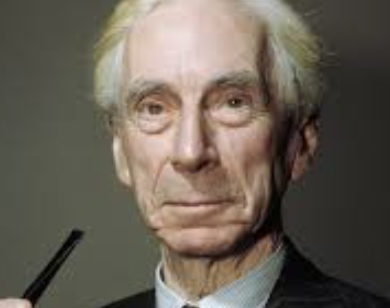
Mysticism is, in essence, little more than a certain intensity and depth of feeling in regard to what is believed about the universe.
▼
Source
source
Ch. 1: Mysticism and Logic
5 months 3 days ago
Art thou angry with him whose arm-pits stink? art thou angry with him whose mouth smells foul? What good will this anger do thee?
▼
Source
source
V, 28
7 months ago
They would receive the same care and attention as those who belong to the establishment. Nor will there be any distinction made between the children of those parents who are deemed the worst, and of those who may be esteemed the best members of society: indeed I would prefer to receive the offspring of the worst, if they shall be sent at an early age; because they really require more of our care and pity and by well-training these, society will be more essentially benefited than if the like attention were paid to those whose parents are educating them in comparatively good habits. On educating children of the poor, and of neighboring communities.
9 months 1 week ago
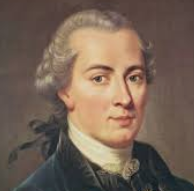
Out of the crooked timber of humanity, no straight thing was ever made.
▼
Source
source
Idea for a General History with a Cosmopolitan Purpose (1784), Proposition 6.
10 months 3 days ago
The world evades us because it becomes itself again. That stage scenery masked by habit becomes what it is. It withdraws at a distance from us.
7 months 4 weeks ago
A whole dimension of human activity and passivity has been de-eroticized. The environment from which the individual could obtain pleasure-which he could cathect as gratifying almost as an extended zone of the body-has been rigidly reduced. Consequently, the "universe" of libidinous cathexis is likewise reduced. The effect is a localization and contraction of libido, the reduction of erotic to sexual experience and satisfaction.
▼
Source
source
p. 73
9 months 6 days ago
Born for success he seemed, With grace to win, with heart to hold, With shining gifts that took all eyes.
▼
Source
source
In Memoriam E. B. E.
5 months 6 days ago
There is in the true man of science a desire stronger than the wish to have his beliefs upheld; namely, the desire to have them true.
▼
Source
source
[Lectures and essays (1879), vol. 2, p. 311]

6 months 1 week ago
Human knowledge increases, while human irrationality stays the same. Scientific inquiry may be an embodiment of reason, but what such inquiry demonstrates is that humans are not rational animals. The fact that humanists refuse to accept the demonstration only confirms its truth.
▼
Source
source
An Old Chaos: Humanism and Flying Saucers (p. 81)
7 months 2 weeks ago
Much can be inferred about a man from his mistress: in her one beholds his weaknesses and his dreams.
▼
Source
source
F 88


9 months 1 week ago
History, is a conscious, self-mediating process - Spirit emptied out into Time; but this externalization, this kenosis, is equally an externalization of itself; the negative is the negative of itself. ... Thus absorbed in itself, it is sunk in the night of its self-consciousness; but in that night its vanished outer existence is perserved, and this transformed existence - the former one, but now reborn of the Spirit's knowledge - is the new existence, a new world and a new shape of Spirit.
5 months 3 weeks ago
The weakest living creature, by concentrating his powers on a single object, can accomplish something. The strongest, by dispensing his over many, may fail to accomplish anything. The drop, by continually falling, bores its passage through the hardest rock. The hasty torrent rushes over it with hideous uproar, and leaves no trace behind.
▼
Source
source
The life of Friedrich Schiller: Comprehending an examination of his works (1825).
9 months 5 days ago
In justice as fairness society is interpreted as a cooperative venture for mutual advantage.
▼
Source
source
Chapter II, Section 14, pg. 84

9 months 1 week ago
The right of voting for representatives is the primary right by which other rights are protected. To take away this right is to reduce a man to slavery, for slavery consists in being subject to the will of another, and he that has not a vote in the election of representatives is in this case.

9 months 5 days ago
When equality is treated not as a medicine or a safety-gadget, but as an ideal, we begin to breed that stunted and envious sort of mind which hates all superiority. That mind is the special disease of democracy, as cruelty and servility are the special diseases of privileged societies. It will kill us all if it grows unchecked. The man who cannot conceive a joyful and loyal obedience on the one hand, nor an unembarrassed and noble acceptance of that obedience on the other - the man who has never even wanted to kneel or to bow - is a prosaic barbarian. But it would be wicked folly to restore these old inequalities on the legal or external plane. Their proper place is elsewhere.

9 months 1 day ago
This book, admirable in so many respects, power in its break and style, is even more intimidating for me in that, having formely had the good fortune to study under Michel Foucault, I retain the consciousness of an admiring and grateful disciple. Now, the disciple's consciousness, when he starts, I would not say to dispute, but to engage in dialogue with the master or, better, to articulate the interminable and silent dialogue which made him into a disciple-this disciple's consciousness is an unhappy consciousness.
▼
Source
source
Cogito and The History of Madness (Routledge classics edition)
5 months 3 weeks ago
Burns's Brother Gilbert, a man of much sense and worth, has told me that Robert, in his young days, in spite of their hardship, was usually the gayest of speech; a fellow of infinite frolic, laughter, sense and heart; far pleasanter to hear there, stript cutting peats in the bog, or such like, than he ever afterwards knew him. I can well believe it. This basis of mirth, a primal element of sunshine and joyfulness, coupled with his other deep and earnest qualities, is one of the most attractive characteristics of Burns. A large fund of Hope dwells in him; spite of his tragical history, he is not a mourning man. He shakes his sorrows gallantly aside; bounds forth victorious over them.
9 months 5 days ago
It is the magician's bargain: give up our soul, get power in return. But once our souls, that is, ourselves, have been given up, the power thus conferred will not belong to us. We shall in fact be the slaves and puppets of that to which we have given our souls.

7 months 1 week ago
There is no gender identity behind the expressions of gender; that identity is performatively constituted by the very "expressions" that are said to be its results.
▼
Source
source
Gender Trouble: Feminism and the Subversion of Identity
8 months 2 days ago
The seat of faith, however, is not consciousness but spontaneous religious experience, which brings the individual's faith into immediate relation with God. Here we must ask: Have I any religious experience and immediate relation to God, and hence that certainty which will keep me, as an individual, from dissolving in the crowd?
▼
Source
source
p 85
9 months 3 weeks ago
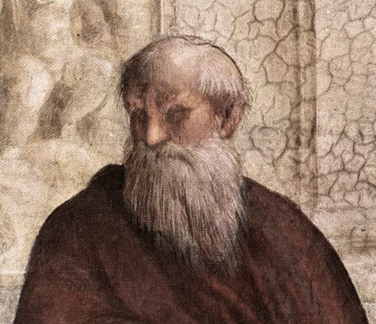
Hence, as Narcissus, by catching at the shadow, plunged himself in the stream and disappeared, so he who is captivated by beautiful bodies, and does not depart from their embrace, is precipitated, not with his body, but with his soul, into a darkness profound and repugnant to intellect (the higher soul), through which, remaining blind both here and in Hades, he associates with shadows.
7 months 4 weeks ago
The idea of Christ is much older than Christianity.
▼
Source
source
The Idea of Christ in the Gospels

9 months 1 week ago
I have no knowledge of myself as I am, but merely as I appear to myself.
▼
Source
source
B 158
10 months 4 days ago
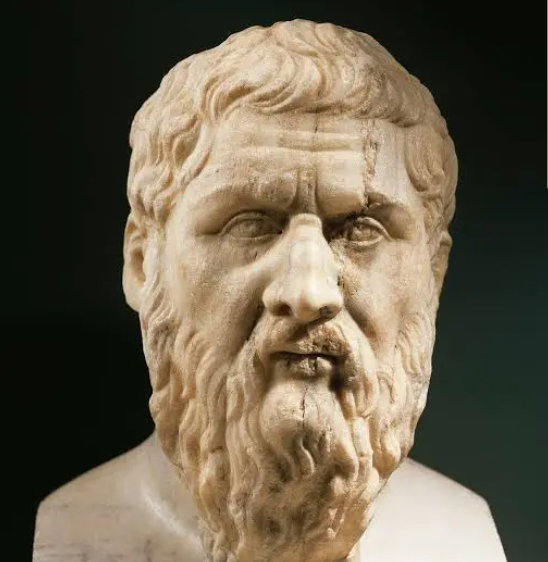
For once touched by love, everyone becomes a poet.
9 months 1 week ago
A person who already displays ... cruelty to animals is also no less hardened towards men. We can already know the human heart, even in regard to animals.
▼
Source
source
Part II, p. 212
5 months 3 weeks ago
To a shower of gold most things are penetrable.
▼
Source
source
Pt. I, Bk. III, ch. 7.
10 months 1 week ago
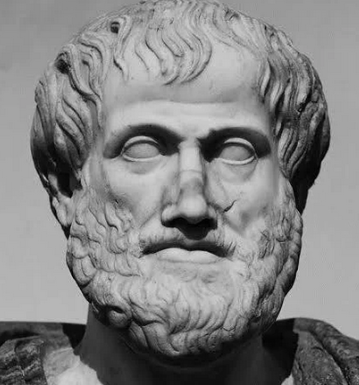
Now the mass of mankind are plainly... choosing a life like that of brute animals...
6 months 2 weeks ago
Cinema is an old whore, like circus and variety, who knows how to give many kinds of pleasure. Besides, you can't teach old fleas new dogs.
▼
Source
source
As quoted in in The Atlantic
5 months 3 days ago
Then what should we work for? Only this: proper understanding; unselfish action; truthful speech. A resolve to accept whatever happens as necessary and familiar, flowing like water from that same source and spring.
▼
Source
source
(Hays translation) IV, 33
5 months 2 weeks ago
In recent times it has been fashionable to talk of the levelling of nations, of the disappearance of different races in the melting-pot of contemporary civilization. I do not agree with this opinion, but its discussion remains another question. Here it is merely fitting to say that the disappearance of nations would have impoverished us no less than if all men had become alike, with one personality and one face. Nations are the wealth of mankind, its collective personalities; the very least of them wears its own special colours and bears within itself a special facet of divine intention.

5 months 6 days ago
Commerce with all nations, alliance with none, should be our motto.
▼
Source
source
Letter to Thomas Lomax
8 months 2 days ago
The farther men get from God, the farther they advance into the knowledge of religions.
9 months 1 week ago
My father impressed upon me from the first, that the manner in which the world came into existence was a subject on which nothing was known: that the question, "Who made me?" cannot be answered, because we have no experience or authentic information from which to answer it; and that any answer only throws the difficulty a step further back, since the question immediately presents itself, "Who made God?"
▼
Source
source
(pp. 42-43)

8 months 2 days ago
The poor, by thinking unceasingly of money, reach the point of losing the spiritual advantages of non-possession, thereby sinking as low as the rich.
9 months 2 weeks ago
Do not fight against these harmful spells. For you do not know what God wants with them. You do not know the greater divine plan behind it all.
▼
Source
source
As attributed by Kai Lehmann, curator of the exhibition "Luther und die Hexen" ("Luther and the witches"). (2013) in "Interview with Dr. Kai Lehmann, curator of the exhibition "Luther und die Hexen" ("Luther and the witches")"
9 months 1 week ago
It is also a study peculiarly adapted to an early stage in the education of philosophical students, since it does not presuppose the slow process of acquiring, by experience and reflection, valuable thoughts of their own.
▼
Source
source
(pp. 19-20)
CivilSimian.com created by AxiomaticPanic, CivilSimian, Kalokagathia