Well...I hope we can do better than this....


Forgiveness is the key to action and freedom.
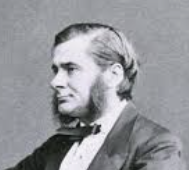
Perhaps the most valuable result of all education is the ability to make yourself do the thing you have to do, when it ought to be done, whether you like it or not; it is the first lesson that ought to be learned; and, however early a man's training begins, it is probably the last lesson that he learns thoroughly.
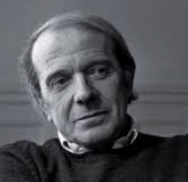
There's no need to fear or hope, but only to look for new weapons.
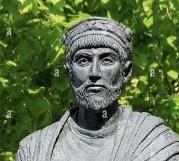
They are irreverent to the gods and disobedient to our edicts, lenient as they are. For we allow none of them to be dragged to the altars unwillingly...It is therefore my pleasure to announce and publish to all the people by this edict, that they must not abet the seditions of the clergy...They may hold their meetings, if they wish, and offer prayers according to their established use...and for the future, let all people live in harmony...Men should be taught and won over by reason, not by blows, insults, and corporal punishments. I therefore most earnestly admonish the adherents of the true religion not to injure or insult the Galilaeans in any way...Those who are in the wrong in matters of supreme importance are objects of pity rather than of hate...
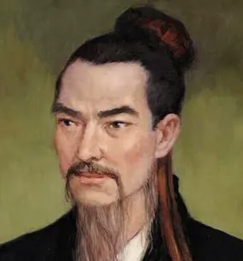
When feudal lords love one another there will be no more war; when heads of houses love one another there will be no more mutual usurpation; when individuals love one another there will be no more mutual injury. When ruler and ruled love each other they will be gracious and loyal; when father and son love each other they will be affectionate and filial; when older and younger brothers love each other they will be harmonious. When all the people in the world love one another, then the strong will not overpower the weak, the many will not oppress the few, the wealthy will not mock the poor, the honoured will not disdain the humble, and the cunning will not deceive the simple. And it is all due to mutual love that calamities, strife, complaints, and hatred are prevented from arising. Therefore the benevolent exalt it.
The empiricist thinks he believes only what he sees, but he is much better at believing than at seeing.
To conclude: there are two well-known minor ways in which language has mattered to philosophy. On the one hand there is a belief that if only we produce good definitions, often marking out different senses of words that are confused in common speech, we will avoid the conceptual traps that ensnared our forefathers. On the other hand is a belief that if only we attend sufficiently closely to our mother tongue and make explicit the distinctions there implicit, we shall avoid the conceptual traps. One or the other of these curiously contrary beliefs may nowadays be most often thought of as an answer to the question Why does language matter to philosophy? Neither seems to me enough.

Where we find a difficulty we may always expect that a discovery awaits us. Where there is cover we hope for game.
As long as the state is a political entity this requirement for internal peace compels it in critical situations to decide also upon the domestic enemy. Every state provides, therefore, some kind of formula for the declaration of an internal enemy.
People praise virtue, but they hate it, they run away from it. It freezes you to death, and in this world you've got to keep your feet warm.
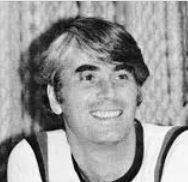
One persistent strand in utopian thinking, as we have often mentioned, is the feeling that there is some set of principles obvious enough to be accepted by all men of good will, precise enough to give unambiguous guidance in particular situations, clear enough so that all will realize its dictates, and complete enough to cover all problems which actually arise. Since I do not assume that there are such principles, I do not presume that the political realm will whither away. The messiness of the details of a political apparatus and the details of how it is to be controlled and limited do not fit easily into one's hopes for a sleek, simple utopian scheme.
"And yet, it was not, not now, she that really counted. Or if she counted (and, oh, gloriously she did) it was for another's sake. The earth and stars and sun, all that was or will be, existed for his sake. And he was coming. The most dreadful, the most beautiful, the only dread and beauty there is, was coming. The pillars on the far side of the pool flushed with his approach. I cast down my eyes."
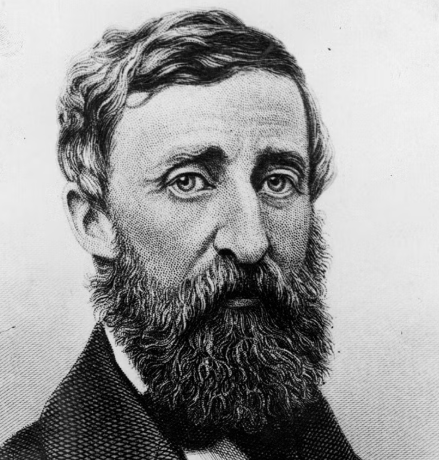
Go where we will on the surface of things, men have been there before us.

To detach yourself elegantly from the world; to give contour and grace to sadness; a solitude in style; a walk that gives cadence to memories; stepping towards the intangible; with the breath in the trembling margins of things; the past reborn in the overflow of fragrances; the smell, through which we conquer time; the contour of the invisible things; the forms of the immaterial; to deepen yourself in the intangible; to touch the world airborne by smell; aerial dialogue and gliding dissolution; to bathe in your own reflecting fragmentation...
I do not wish to force my thoughts upon you, but I feel forced myself. Little as I know of Captain Brown, I would fain do my part to correct the tone and the statements of the newspapers, and of my countrymen generally, respecting his character and actions. It costs us nothing to be just. We can at least express our sympathy with, and admiration of, him and his companions, and that is what I now propose to do.
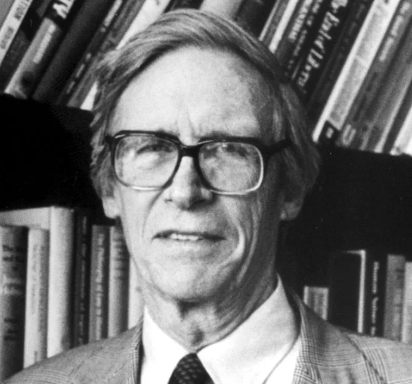
If A were not allowed his better position, B would be even worse off than he is.
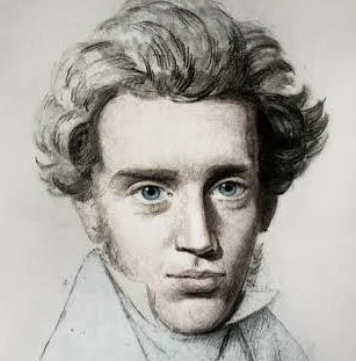
Alas, time comes and time goes, it subtracts little by little; then it deprives a person of a good, the loss of which he indeed feels, and his pain is great. Alas, and he does not discover that long ago it has already taken away from him the most important thing of all-the capacity to make a resolution-and it has made him so familiar with this condition that there is no consternation over it, the last thing that could help gain new power for renewed resolution!
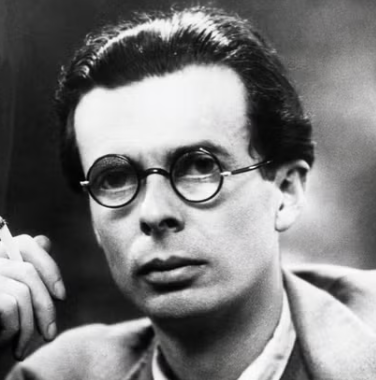
The poet is, etymologically, the maker. Like all makers, he requires a stock of raw materials - in his case, experience. Now experience is not a matter of having actually swum the Hellespont, or danced with the dervishes, or slept in a doss-house. It is a matter of sensibility and intuition, of seeing and hearing the significant things, of paying attention at the right moments, of understanding and co-ordinating. Experience is not what happens to a man; it is what a man does with what happens to him. It is a gift for dealing with the accidents of existence, not the accidents themselves. By a happy dispensation of nature, the poet generally possesses the gift of experience in conjunction with that of expression. What he says so well is therefore intrinsically of value.
When we know what words are worth, the amazing thing is that we try to say anything at all, and that we manage to do so. This requires, it is true, a supernatural nerve.
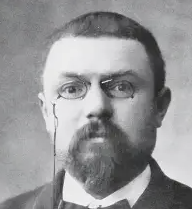
To doubt everything or to believe everything are two equally convenient solutions; both dispense with the necessity of reflection.

It is easy to see that the existing generation are conspiring with a beneficence, which, in its working for coming generations, sacrifices the passing one, which infatuates the most selfish men to act against their private interest for the public welfare. We build railroads, we know not for what or for whom; but one thing is certain, that we who build will receive the very smallest share of benefit. Benefit will accrue; they are essential to the country, but that will be felt not until we are no longer countrymen. We do the like in all matters: - 'Man's heart the Almighty to the Future setBy secret and inviolable springs.'
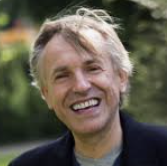
There is no fundamental biological reason why the human genome can't be rewritten to allow everyone to be "in" love with everyone else - if we should so choose. But simply loving each other will be miraculous enough; and will probably suffice. An empty religious piety can be transformed into a biological reality.
At this very moment, I am suffering - as we say in French, j'ai mal. This event, crucial for me, is nonexistent, even inconceivable for anyone else, for everyone else. Except for God, if that word can have a meaning.
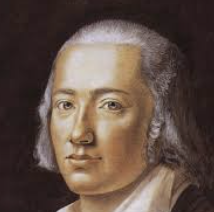
I call on Fate to give me back my soul.
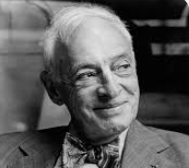
It's hard for writers to get on with their work if they are convinced that they owe a concrete debt to experience and cannot allow themselves the privilege of ranging freely through social classes and professional specialties. A certain pride in their own experience, perhaps a sense of the property rights of others in their experience, holds them back.

When the wise man opens his mouth, the beauties of his soul present themselves to the view, like the statues in a temple.
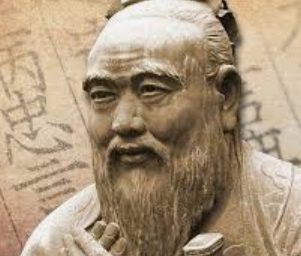
The superior man accords with the course of the Mean. Though he may be all unknown, unregarded by the world, he feels no regret. It is only the sage who is able for this.
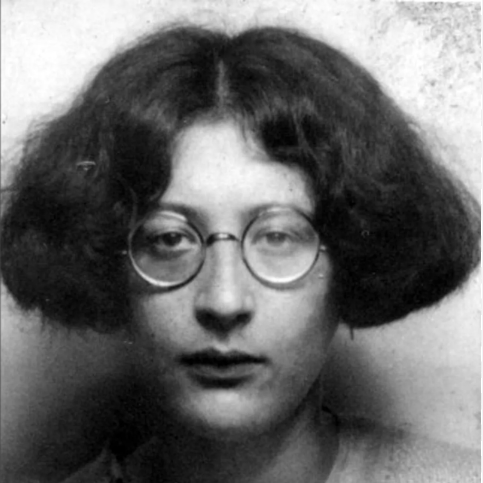
The key to a Christian conception of studies is the realization that prayer consists of attention. It is the orientation of all the attention of which the soul is capable toward God. The quality of the attention counts for much in the quality of the prayer. Warmth of heart cannot make up for it.
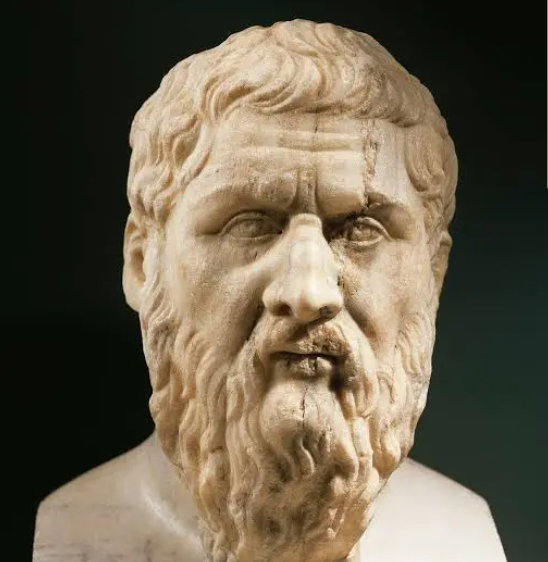
The beginning in every task is the chief thing.
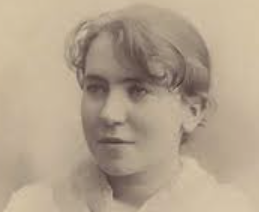
I hope I shall never live to see Anarchism become thoroughly respectable, for then I shall have to look for a new ideal.
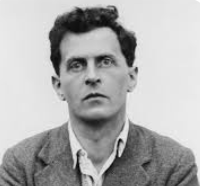
You won't - I really believe - get too much out of reading it. Because you won't understand it; the content will seem strange to you. In reality, it isn't strange to you, for the point is ethical. I once wanted to give a few words in the foreword which now actually are not in it, which, however, I'll write to you now because they might be a key for you: I wanted to write that my work consists of two parts: of the one which is here, and of everything which I have not written. And precisely this second part is the important one.
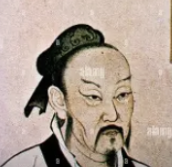
The virtues are not poured into us, they are natural. Seek, and you will find them: neglect, and you will lose them.

I should say sincerity, a deep, great, genuine sincerity, is the first characteristic of all men in any way heroic.

Homosexuality appears as one of the forms of sexuality when it was transposed from the practice of sodomy onto a kind of interior androgyny, a hermaphroditism of the soul. The sodomite had been a temporary aberration; the homosexual was now a species.

Superstition is the religion of feeble minds.
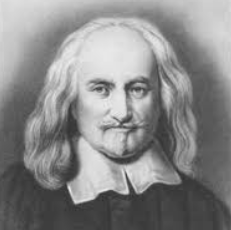
Understanding being nothing else, but conception caused by Speech.
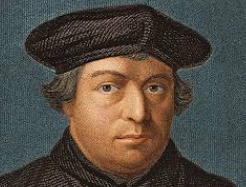
I'd rather be ruled by a competent Turk than an incompetent Christian.
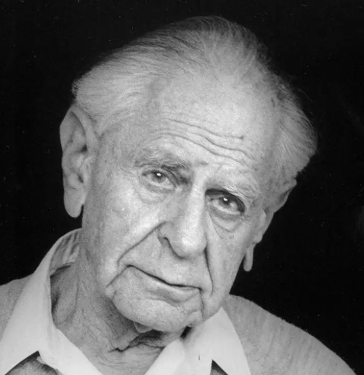
It seems to me that I may be living too long. Indeed: my nearest relations have all died, and so have some of my best friends, and even some of my best pupils. However, I do not have a reason to complain. I am grateful and happy to be alive, and still be able to continue with my work, if only just. My work seems to me more important than ever.
A Covenant not to defend my selfe from force, by force, is always voyd.
It is because we are predominantly purposeful beings that we are perpetually correcting our immediate sensations. But men are free not to be utilitarianly purposeful. They can sometime be artists, for example. In which case they may like to accept the immediate sensation uncorrected, because it happens to be beautiful.
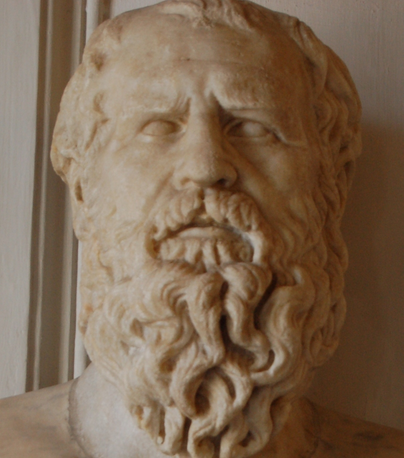
Men are at variance with the one thing with which they are in the most unbroken communion, the reason that administers the whole universe.
The prejudices of the second species, since they impose upon the intellect by the sensual conditions restricting the mind if it wishes in certain cases to attain to what is intellectual, lurk more deeply. One of them is that which affects knowledge of quantity, the other that affecting knowledge of qualities generally. The former is: every actual multiplicity can be given numerically, and hence, every infinite quantity; the latter, whatever is impossible contradicts itself. In either of them the concept of time, it is true, does not enter into the very notion of the predicate, nor is it attributed as a qualification to the subject. But yet it serves as a means for forming an idea of the predicate, and thus, being a condition, affects the intellectual concept of the subject to the extent that the latter is only attained by its aid.
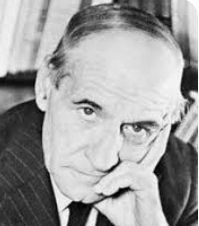
This fighting-shy of every obligation partly explains the phenomenon, half ridiculous, half disgraceful, Of the setting-up in our days of the platform of "youth" as youth. ... In comic fashion people call themselves "young," because they have heard that youth has more rights than obligations, since it can put off the fulfilment of these latter to the Greek Kalends of maturity. ...[T]he astounding thing at present is that these take it as an effective right precisely in order to claim for themselves all those other rights which only belong to the man who has already done something.
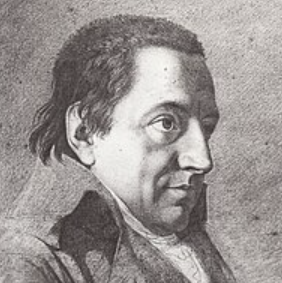
Only through blind Instinct, in which the only possible guidance of the Imperative is awanting, does the Power in Intuition remain undetermined; where it is schematised as absolute it becomes infinite; and where it is presented in a determinate form, as a principle, it becomes at least manifold. By the above-mentioned act of Intelligising, the Power liberates itself from Instinct, to direct itself towards Unity.
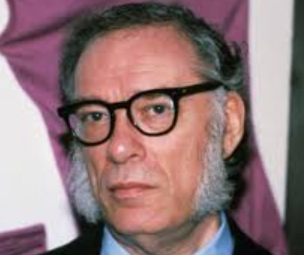
Junz found revulsion growing strong within him. A planet full of people meant nothing against the dictates of economic necessity!
CivilSimian.com created by AxiomaticPanic, CivilSimian, Kalokagathia