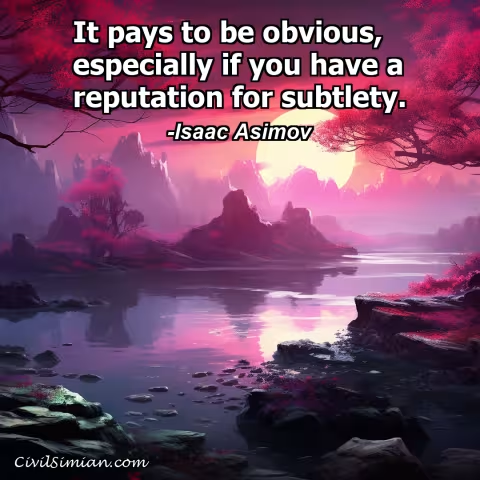
Being>identity. Existence>essence.


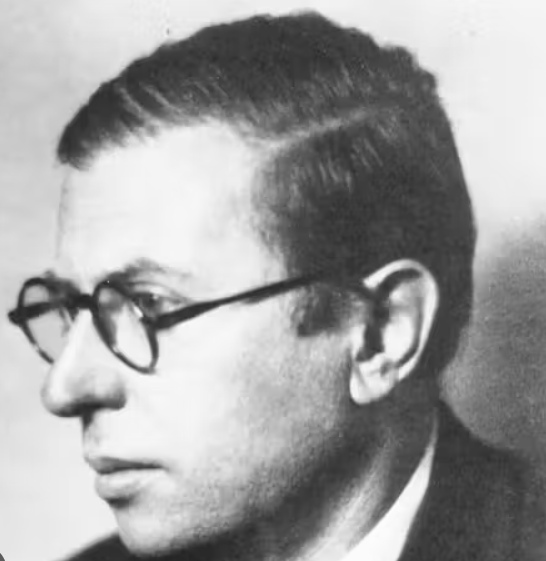
I say a murder is abstract. You pull the trigger and after that you do not understand anything that happens.
See ye not all these things? verily I say unto you, There shall not be left here one stone upon another, that shall not be thrown down.
The condition of life to which people of the well-to-do classes are accustomed is that of an abundant production of various articles necessary for their comfort and pleasure, and these things are obtained only thanks to the existence of factories and works organized as at present. And, therefore, discussing the improvement of the workers' position, the men of science belonging to the well- to-do classes always have in view only such improvements as will not do away with the system of factory-production and those conveniences of which they avail themselves.

Nothing proves that we are more than nothing.

Revolution is indeed a violent process. But if it is to result only in a change of dictatorship, in a shifting of names and political personalities, then it is hardly worth while. It is surely not worth all the struggle and sacrifice, the stupendous loss in human life and cultural values that result from every revolution. If such a revolution were even to bring greater social well being (which has not been the case in Russia) then it would also not be worth the terrific price paid: mere improvement can be brought about without bloody revolution.
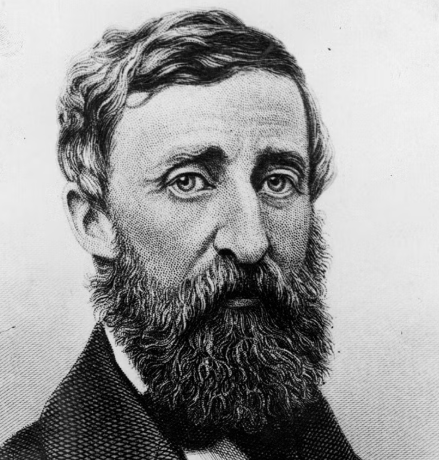
The violence of love is as much to be dreaded as that of hate. When it is durable, it is serene and equable. Even its famous pains begin only with the ebb of love, for few are indeed lovers, though all would fain be.
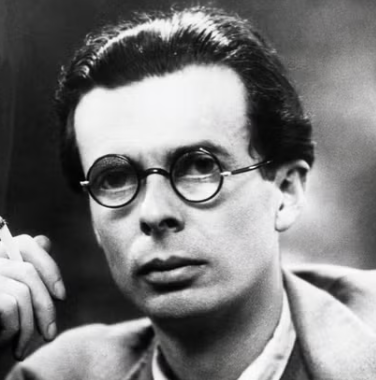
There's only one corner of the universe you can be certain of improving, and that's your own self.

Educate the children and it won't be necessary to punish the men.

The wheel may be one of those cases where the engineering solution can be seen in plain view, yet be unattainable in evolution because it lies on the other side of a deep valley, cutting unbridgeably across the massif of Mount Improbable.
Hooks is a contentious writer, and I don't always agree with her contentions, but Ain't I a Woman has an intellectual vitality and daring that should set new standards for the discussion of race and sex.
To every action there is always opposed an equal reaction; or, the mutual actions of two bodies upon each other are always equal, and directed to contrary parts.
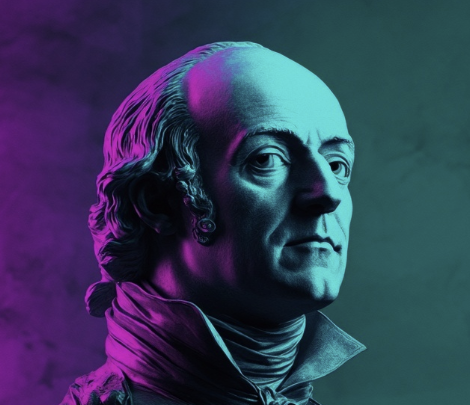
In manufactures, a very small advantage will enable foreigners to undersell our own workmen, even in the home market. It will require a very great one to enable them to do so in the rude produce of the soil. If the free importation of foreign manufactures were permitted, several of the home manufactures would probably suffer, and some of them, perhaps, go to ruin altogether, and a considerable part of the stock and industry at present employed in them, would be forced to find out some other employment. But the freest importation of the rude produce of the soil could have no such effect upon the agriculture of the country.

The characteristic of the really great writer is the ability of his mind to to suddenly leap beyond his ordinary human values, into sudden perception of universal values.
Notwithstanding their attacks on the basic conception of rationalism, on synthetic a priori judgments, that is, material propositions that cannot be contradicted by any experience, the empiricist posits the forms of being as constant.
I think of so many people who are no more, and I pity them. Yet they are not so much to be pitied, for they have solved every problem, beginning with the problem of death.
Instinctively we divide mankind into friends and foes - friends, towards whom we have the morality of co-operation; foes, towards whom we have that of competition. But this division is constantly changing; at one moment a man hates his business competitor, at another, when both are threatened by Socialism or by an external enemy, he suddenly begins to view him as a brother. Always when we pass beyond the limits of the family it is the external enemy which supplies the cohesive force. In times of safety we can afford to hate our neighbour, but in times of danger we must love him.
A life which does not go into action is a failure.


Form displays the relation itself as the state of original comportment toward beings, the festive state in which the being itself in its essence is celebrated and thus for the first time placed in the open.
A punishment that penalizes without forestalling is indeed called revenge.
Means at our disposal should be regarded as a bulwark against the many evils and misfortunes that can occur. We should not regard such wealth as a permission or even an obligation to procure for ourselves the pleasures of the world.

It is time to be old, To take in sail: - The god of bounds, Who sets to seas a shore, Came to me in his fatal rounds, And said: 'No more!

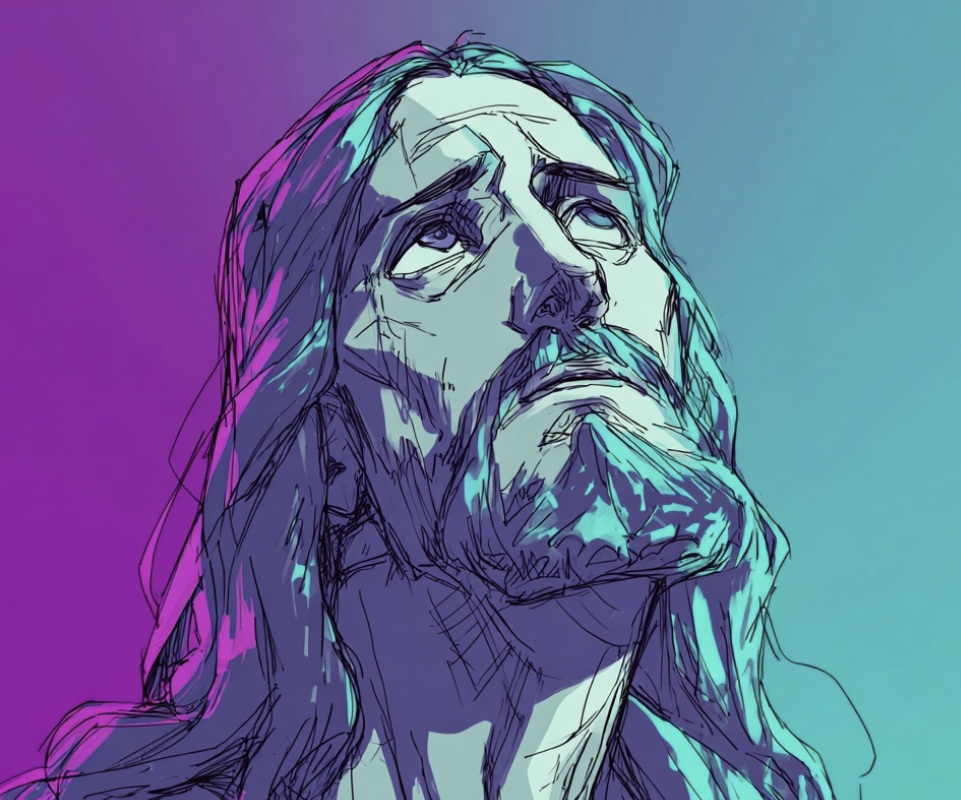
Lord Jesus Christ, the birds had nests, the foxes had dens, and you had no place where you could lay your head. You were homeless in the world-yet you yourself were a hiding place, the only place where the sinner could flee. And so even this very day you are a hiding place. When the sinner flees to you, hides himself with you, is hidden in you, he is eternally kept safe, since love hides a multitude of sins.
Born for success he seemed, With grace to win, with heart to hold, With shining gifts that took all eyes.
An untempted woman cannot boast of her chastity.
A belief in hell and the knowledge that every ambition is doomed to frustration at the hands of a skeleton have never prevented the majority of human beings from behaving as though death were no more than an unfounded rumour, and survival a thing beyond the bounds of possibility.
The source of every Crime, is some defect of the Understanding; or some error in Reasoning, or some sudden force of the Passions. Defect in the Understanding, is Ignorance; in Reasoning, Erroneous Opinion.
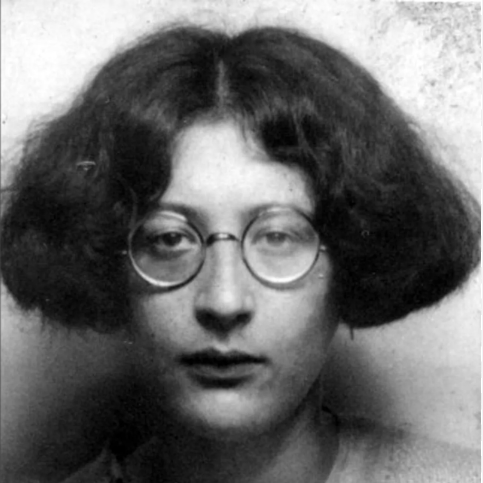
The miser deprives himself of his treasure because of his desire for it.

The most important feature of natural selection is that it is a process of drift. Evolution has no end-point or direction, so if the development of society is an evolutionary process it is one that is going nowhere.
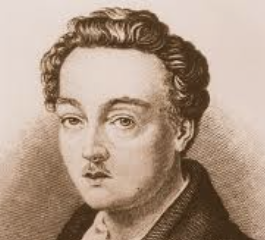
Revolution is like the daughters of Pelias: it cuts humanity to pieces in order to rejuvenate it.
Good nature is, of all moral qualities, the one that the world needs most, and good nature is the result of ease and security, not of a life of arduous struggle. Modern methods of production have given us the possibility of ease and security for all; we have chosen, instead, to have overwork for some and starvation for the others. Hitherto we have continued to be as energetic as we were before there were machines; in this we have been foolish, but there is no reason to go on being foolish for ever.

Discord which appears at first to be a lamentable breach and dissolution of the unity of a party, is really the crowning proof of its success.
Another theme of the Wake that helps in the understanding of the paradoxical shift from cliché to archetype is "pastimes are past times". The dominant technologies of one age become the games and pastimes of a later age. In the twentieth century the number of past times that are simultaneously available is so vast as to create cultural anarchy. When all the cultures of the world are simultaneously present, the work of the artist in the elucidation of form takes on new scope and new urgency. Most men are pushed into the artist role. The artist cannot dispense with the principle of doubleness and interplay since this kind of hendiadys-dialogue is essential to the very structure of consciousness, awareness, and autonomy.
You will know that wretched men are the cause of their own suffering, who neither see nor hear the good that is near them, and few are the ones who know how to secure release from their troubles. Such is the fate that harms their minds; like pebbles they are tossed about from one thing to another with cares unceasing. For the dread companion Strife harms them unawares, whom one must not walk behind, but withdraw from and flee.
Felicity is a continual progress of the desire from one object to another, the attaining of the former being still but the way to the latter.The cause whereof is that the object of man's desire is not to enjoy once only, and for one instant of time, but to assure forever the way of his future desire. And therefore the voluntary actions and inclinations of all men tend not only to the procuring, but also to the assuring of a contented life, and differ only in the way, which ariseth partly from the diversity of passions in diverse men, and partly from the difference of the knowledge or opinion each one has of the causes which produce the effect desired.
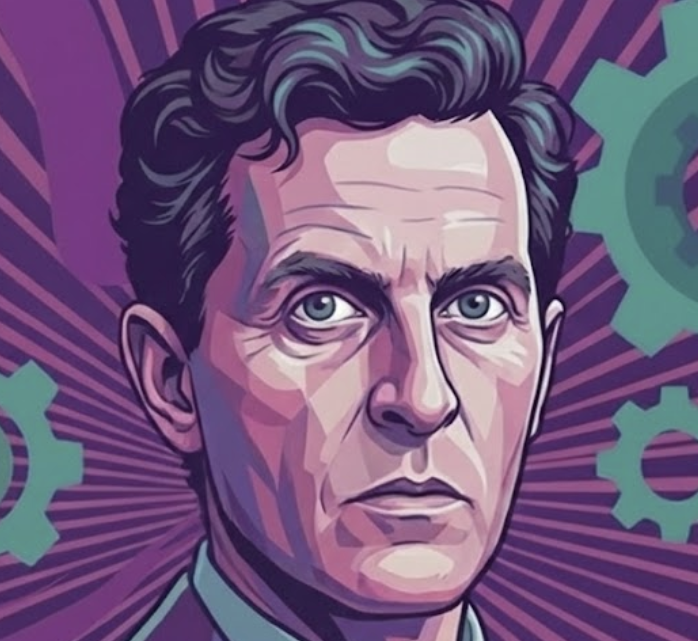
"Everything is already there in...." How does it come about that [an] arrow points? Doesn't it seem to carry in it something besides itself? - "No, not the dead line on paper; only the psychical thing, the meaning, can do that." - That is both true and false. The arrow points only in the application that a living being makes of it.
It is the good children, Madame, who make the most terrible revolutionaries. They say nothing, they do not hide under the table, they eat only one sweet at a time, but later on, they make Society pay dearly for it!
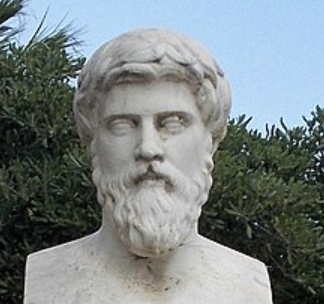
When Darius offered him ten thousand talents, and to divide Asia equally with him, "I would accept it," said Parmenio, "were I Alexander." "And so truly would I," said Alexander, "if I were Parmenio." But he answered Darius that the earth could not bear two suns, nor Asia two kings.
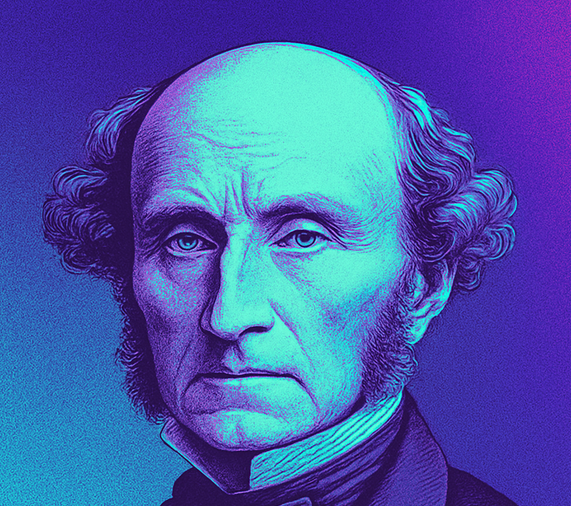
Everybody knows that the same sum of money is of much greater value to a poor man that to a rich one. Give £10 a year to the man who has but £10 a year, you double his income, and you nearly double his enjoyments. Add £10 more, you do not add to his enjoyments so much as you did by the first £10. The third £10 is less valuable than the second, and the fourth less valuable than the third. To the possessor of £1,000 a year the addition of £10 would be scarcely perceptible; to the possessor of £10,000 it would not be worth slooping for.The richer a man is the less he is benefited by any further addition to his income. The man of £4,000 a year has four times the income of the man who has but £1,000; but does anybody suppose that he has four times the happiness?
To be without some of the things you want is an indispensable part of happiness.
...inversion...is an outlet that a child discovers when he is suffocating.
I tell you in truth: all men are Prophets or else God does not exist.
That the sun will not rise to-morrow is no less intelligible a proposition, and implies no contradiction, than the affirmation, that it will rise.
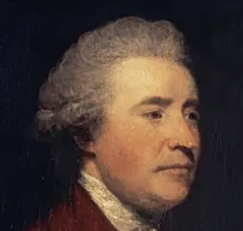
Early and provident fear is the mother of safety.
Is not the minimal state, the framework for utopia, an inspiring vision? The minimal state treats us as inviolate individuals, who may not be used in certain ways by others as means or tools or instruments or resources; it treats us as persons having individual right with the dignity this constitutes. Treating us with respect by respecting our rights, it allows us, individually or with whom we please, to choose our life and to realize our ends and our conception of ourselves, insofar as we can, aided by the voluntary cooperation of other individuals possessing the same dignity. How dare any state or group of individuals do more. Or less.
The reward in heaven is the perpetual bait, a bait that has caught man in an iron net, a strait-jacket which does not let him expand or grow. All pioneers of truth have been, and still are, reviled; they have been, and still are, persecuted. But did they ask humanity to pay the price? Did they seek to bribe mankind to accept their ideas? They knew too well that he who accepts a truth because of the bribe, will soon barter it away to a higher bidder...Proud and self-reliant characters prefer hatred to such sickening artificial love. Not because of any reward does a free spirit take his stand for a great truth, nor has such a one ever been deterred because of fear of punishment.
Nature flies from the infinite, for the infinite is unending or imperfect, and Nature ever seeks an end.
With Leibnitz the extent to which thoughts advance is the extent of the universe; where comprehension ceases, the universe ceases, and God begins: so that later it was even maintained that to be comprehended was derogatory to God, because He was thus degraded into finitude. In that procedure a beginning is made from the determinate, this and that are stated to be necessary; but since in the next place the unity of these moments is not comprehended, it is transferred to God. God is therefore, as it were, the waste channel into which all contradictions flow: Leibnitz's Théodicée is just a popular summing up such as this.
CivilSimian.com created by AxiomaticPanic, CivilSimian, Kalokagathia