

3 weeks 5 days ago
Art is a human activity consisting in this, that one consciously, by means of certain external symbols, conveys to others the feelings one has experienced, whereby people so infected by these feelings, also experience them.
3 weeks 1 day ago
Every man is his own doctor of divinity, in the last resort.
▼
Source
source
An Inland Voyage (1878).
1 month 2 weeks ago
It is a familiar and significant saying that a problem well-put is half-solved.
▼
Source
source
"The Pattern of Inquiry"
2 months 3 weeks ago
Diet, injections, and injunctions will combine, from a very early age, to produce the sort of character and the sort of beliefs that the authorities consider desirable, and any serious criticism of the powers that be will become psychologically impossible. Even if all are miserable, all will believe themselves happy, because the government will tell them that they are so.
3 months 1 week ago
Who is this that cries from the ends of the earth? Who is this one man who reaches to the extremities of the universe? He is one, but that one is unity. He is one, not one in a single place, but the cry of this one man comes from the remotest ends of the earth. But how can this one man cry out from the ends of the earth, unless he be one in all?
▼
Source
source
p.423
3 months 3 weeks ago
What is the essence of life? To serve others and to do good. Often given as a saying of Aristotle with no reference.
3 months 4 days ago
Age imprints more wrinkles in the mind than it does on the face.
▼
Source
source
Book III, Ch. 2
1 month 6 days ago
Man loves company - even if it is only that of a small burning candle.
▼
Source
source
K 40
1 month 2 weeks ago
At midday the daily food of all Spaniards was the puchero or cocido, as the dish is really called which the foreigners call pot-pourri or olla podrida. This contains principally yellow chick-peas, with a little bacon, some potatoes or other vegetables and normally also small pieces of beef or sausage, all boiled in one pot at a very slow fire; the liquid of the same makes the substantial broth that is served first.
▼
Source
source
p. 14
1 month 1 week ago
Our argument is not flatly circular, but something like it. It has the form, figuratively speaking, of a closed curve in space.
▼
Source
source
"Two Dogmas of Empiricism", p. 26
3 weeks 3 days ago
The more you make people alike, the more competition you have. Competition is based on the principle of conformity.
▼
Source
source
(p. 135)

2 months 3 weeks ago
I have known only one person in my life who claimed to have seen a ghost. It was a woman; and the interesting thing is that she disbelieved in the immortality of the soul before seeing the ghost and still disbelieves after having seen it. She thinks it was a hallucination. In other words, seeing is not believing. This is the first thing to get clear in talking about miracles.
▼
Source
source
"Miracles" (1942), p. 25

2 months 1 week ago
Holding fast to these things, you will know the worlds of gods and mortals which permeates and governs everything. And you will know, as is right, nature similar in all respects, so that you will neither entertain unreasonable hopes nor be neglectful of anything.
▼
Source
source
As quoted in Divine Harmony: The Life and Teachings of Pythagoras by John Strohmeier and Peter Westbrook.
2 months 1 day ago
I believe in God, although I live very happily with atheists... It is very important not to mistake hemlock for parsley; but not at all so to believe or not in God.
▼
Source
source
As quoted in Against the Faith (1985) by Jim Herrick, p. 75

2 months 3 weeks ago
To convince someone of the truth, it is not enough to state it, but rather one must find the path from error to truth.
▼
Source
source
Ch. 7 : Remarks on Frazer's Golden Bough, p. 119
1 month 2 weeks ago
You do not attain to knowledge by remaining on the shore and watching the foaming waves, you must make the venture and cast yourself in, you must swim, alert and with all your force, even if a moment comes when you think you are losing consciousness; in this way, and in no other, do you reach anthropological insight.
▼
Source
source
p. 148

1 month 2 weeks ago
He also said to them, "You completely invalidate God's command in order to maintain your tradition! For Moses said: Honor your father and your mother; and, Whoever speaks evil of father or mother must be put to death.
▼
Source
source
7:9-10
2 months 3 weeks ago
The first statement of the two principles reads as follows. First: each person is to have an equal right to the most extensive basic liberty compatible with a similar liberty for others. Second: social and economic inequalities are to be arranged so that they are both (a)reasonably expected to be to everyone's advantage, and (b) attached to positions and offices open to all.
▼
Source
source
Chapter II, Section 11, pg. 60
2 months 4 weeks ago
The cheapest sort of pride is national pride; for if a man is proud of his own nation, it argues that he has no qualities of his own of which he can be proud; otherwise he would not have recourse to those which he shares with so many millions of his fellowmen. The man who is endowed with important personal qualities will be only too ready to see clearly in what respects his own nation falls short, since their failings will be constantly before his eyes. But every miserable fool who has nothing at all of which he can be proud adopts, as a last resource, pride in the nation to which he belongs; he is ready and glad to defend all its faults and follies tooth and nail, thus reimbursing himself for his own inferiority.
▼
Source
source
Vol. 1, Ch. 3, Section 2: Pride
5 days ago
Negative-utilitarianism is only one particular denomination of a broad church to which the reader may well in any case not subscribe. Fortunately, the program can be defended on grounds that utilitarians of all stripes can agree on. So a defence will be mounted against critics of the theory and application of a utilitarian ethic in general. For in practice the most potent and effective means of curing unpleasantness is to ensure that a defining aspect of future states of mind is their permeation with the molecular chemistry of ecstasy: both genetically precoded and pharmacologically fine-tuned. Orthodox utilitarians will doubtless find the cornucopian abundance of bliss this strategy delivers is itself an extra source of moral value. Future generations of native ecstatics are unlikely to disagree.
▼
Source
source
2.7 Why Be Negative?
3 months 1 week ago
People travel to wonder at the height of mountains, at the huge waves of the sea, at the long courses of rivers, at the vast compass of the ocean, at the circular motion of the stars; and they pass by themselves without wondering.
▼
Source
source
Variant: Men go abroad to admire the heights of mountains, the mighty billows of the sea, the broad tides of rivers, the compass of the ocean, and the circuits of the stars, and pass themselves by. X
1 month 3 weeks ago
I: My consciousness of the object is only a yet unrecognised consciousness of my production of the representation of an object. Of this production I know no more than that it is I who produce, and thus is all consciousness no more than a consciousness of myself, and so far perfectly comprehensible. Am I in the right? Spirit. Perfectly so ; but whence then is derived the necessity and universality thou hast ascribed to these propositions, to that of causality for instance?
▼
Source
source
Jane Sinnett, trans 1846 p. 47
1 month 2 weeks ago
Pragmatism, in trying to turn experimental physics into a prototype of all science and to model all spheres of intellectual life after the techniques of the laboratory, is the counterpart of modern industrialism, for which the factory is the prototype of human existence, and which models all branches of culture after production on the conveyor belt.
▼
Source
source
p. 50.
3 months 4 days ago
That which is good for the enemy harms you, and that which is good for you harms the enemy.
▼
Source
source
Rule 1 from Machiavelli's Lord Fabrizio Colonna: libro settimo (Book 7) (Modern Italian uses nemico instead of nimico.)

1 month 3 weeks ago
An anxious man constructs his terrors, then installs himself within them: a stay-at-home in a yawning chasm.
1 month 2 weeks ago
Science is the knowledge of Consequences, and dependence of one fact upon another: by which, out of that we can presently do, we know how to do something else when we will, or the like, another time.
▼
Source
source
The First Part, Chapter 5, p. 21
3 months 4 days ago
Like rowers, who advance backward.
▼
Source
source
Book III, Ch. 1. Of Profit and Honesty
2 weeks 5 days ago
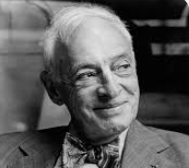
In an age of enormities, the emotions are naturally weakened. We are continually called upon to have feelings - about genocide, for instance, or about famine or the blowing up of passenger planes - and we are all aware that we are incapable of reacting appropriately. A guilty consciousness of emotional inadequacy or impotence makes people doubt their own human weight.
▼
Source
source
"The Distracted Public" (1990), p. 156
1 month 3 weeks ago
Crime in full glory consolidates authority by the sacred fear it inspires.
2 weeks 1 day ago
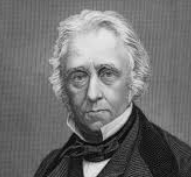
No doubt a tumult caused by local and temporary irritation ought to be suppressed with promptitude and vigour. Such disturbances, for example, as those which Lord George Gordon raised in 1780, should be instantly put down with the strong hand. But woe to the Government which cannot distinguish between a nation and a mob! Woe to the Government which thinks that a great, a steady, a long continued movement of the public mind is to be stopped like a street riot! This error has been twice fatal to the great House of Bourbon. God be praised, our rulers have been wiser. The golden opportunity which, if once suffered to escape, might never have been retrieved, has been seized. Nothing, I firmly believe, can now prevent the passing of this noble law, this second Bill of Rights.
▼
Source
source
Speech in the House of Commons on the Reform Bill (5 July 1831), quoted in Speeches of the Right Honourable T. B. Macaulay, M.P. (1854), pp. 34-35
1 month 4 days ago
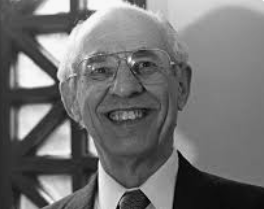
In summary, then, the set theoretic 'needs' of physics are surprisingly similar to the set theoretic needs of pure logic. Both disciplines need some set theory to function at all. Both disciplines can 'live' - but live badly - on the meager diet of only predicative sets. Both can live extremely happily on the rich diet of impredicative sets. Insofar, then, as the indispensability of quantification over sets is any argument for their existence - and we will discuss why it is in the next section - we may say that it is a strong argument for the existence of at least predicative sets, and a pretty strong, but not as strong, argument for the existence of impredicative sets.
▼
Source
source
Philosophy of Logic
3 weeks 1 day ago
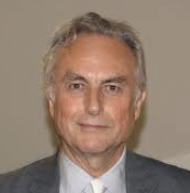
For the first half of geological time our ancestors were bacteria. Most creatures still are bacteria, and each one of our trillions of cells is a colony of bacteria.
3 weeks 3 days ago
The method of the twentieth century is to use not single but multiple models for experimental exploration - the technique of the suspended judgement.
▼
Source
source
(p. 81)
1 month 3 weeks ago
To theology, ... only what it holds sacred is true, whereas to philosophy, only what holds true is sacred.
▼
Source
source
Lecture II, R. Manheim, trans. (1967), p. 11

3 months ago
If nature has been frugal in her gifts and endowments, there is the more need of art to supply her defects. If she has been generous and liberal, know that she still expects industry and application on our part, and revenges herself in proportion to our negligent ingratitude. The richest genius, like the most fertile soil, when uncultivated, shoots up into the rankest weeds; and instead of vines and olives for the pleasure and use of man, produces, to its slothful owner, the most abundant crop of poisons.
▼
Source
source
Part I, Essay 16: The Stoic
3 weeks 5 days ago
Ivan Ilych saw that he was dying, and he was in continual despair. In the depth of his heart he knew he was dying, but not only was he not accustomed to the thought, he simply did not and could not grasp it. The syllogism he had learnt from Kiesewetter's Logic: "Caius is a man, men are mortal, therefore Caius is mortal," had always seemed to him correct as applied to Caius, but certainly not as applied to himself. That Caius - man in the abstract - was mortal, was perfectly correct, but he was not Caius, not an abstract man, but a creature quite, quite separate from all others.
▼
Source
source
Ch. VI
1 week 3 days ago
The system of technological production that we have today has been justified in terms of creating more goods to feed more people and to meet more needs. But it actually destroys more of the resources that we need in order to meet those multiple needs. If we shift to an ecological perception, a diversity perception, we realize that some of the instruments of which we are very proud are actually extremely primitive for dealing with nature. To me that is the great lesson of ecological awareness at the turn of the millennium.
▼
Source
source
1998
1 month 1 week ago
My purpose here is to denounce an idea which seems to be dangerous and false. ... Revolutionary trade unionists and orthodox communists are at one in considering everything that is purely theoretical as bourgeois. ... The culture of a socialist society would be a synthesis of theory and practice; but to synthesize is not the same as to confuse together; it is only contraries that can be synthesized. ... Marx's principal glory is to have rescued the study of societies not only from Utopianism but also and at the same time from empiricism. ... Humanity cannot progress by importing into theoretical study the processes of blind routine and haphazard experiment by which production has so long been dominated. ... The true relation between theory and application only appears when theoretical research has been purged of all empiricism.
▼
Source
source
"The teaching of mathematics," p. 71-72
2 months 3 weeks ago
While there are manners and compliments we do not meet, we do not teach one another the lessons of honesty and sincerity that the brutes do, or of steadiness and solidity that the rocks do. The fault is commonly mutual, however; for we do not habitually demand any more of each other.
▼
Source
source
p. 490
2 months 3 weeks ago
If, when a man writes a poem or commits a murder, the bodily movements involved in his act result solely from physical causes, it would seem absurd to put up a statue to him in the one case and to hang him in the other.
▼
Source
source
"The Doctrine of Free Will"
1 month 1 week ago
His concept of the anal character as one that has not reached maturity is in fact a sharp criticism of bourgeois society of the nineteenth century, in which the qualities of the anal character constituted the norm for moral behavior.
▼
Source
source
To Have or to Be? (2005) p. 68
2 months 3 weeks ago
He begins to think for himself and meets Nineteenth-century Rationalism Which can explain away religion by any number of methods.
▼
Source
source
Pilgrim's Regress 19-20
2 months 3 weeks ago
...the reality of society involves the socialization of certain unrealities.
▼
Source
source
p. 455

3 months 2 weeks ago
Charity, by which God and neighbor are loved, is the most perfect friendship.
▼
Source
source
Disputed Questions: On Charity, c. 1270

2 months 3 weeks ago
In how many churches, by how many prophets, tell me, is man made sensible that he is an infinite Soul; that the earth and heavens are passing into his mind; that he is drinking forever the soul of God?
▼
Source
source
p. 18
3 months 4 days ago
What if he has borrowed the matter and spoiled the form, as it oft falls out?
▼
Source
source
Book III, Ch. 8. Of the Art of Conversation
3 weeks 3 days ago
When reason rules, money is a blessing.
▼
Source
source
Maxim 50
3 months 4 days ago
Women are the most charitable creatures, and the most troublesome. He who shuns women passes up the trouble, but also the benefits. He who puts up with them gains the benefits, but also the trouble. As the saying goes, there's no honey without bees.
▼
Source
source
Act III, scene iv
1 month 2 weeks ago
When there were gathered together an innumerable multitude of people, insomuch that they trode one upon another, he began to say unto his disciples first of all, Beware ye of the leaven of the Pharisees, which is hypocrisy. For there is nothing covered, that shall not be revealed; neither hid, that shall not be known. Therefore whatsoever ye have spoken in darkness shall be heard in the light; and that which ye have spoken in the ear in closets shall be proclaimed upon the housetops. And I say unto you my friends, Be not afraid of them that kill the body, and after that have no more that they can do. But I will forewarn you whom ye shall fear: Fear him, which after he hath killed hath power to cast into hell; yea, I say unto you, Fear him.
▼
Source
source
12:1-5
1 month 3 weeks ago
The first thinker was, without a doubt, the first man obsessed by why. An unaccustomed mania, not at all contagious: rare indeed are those who suffer from it, who are a prey to questioning, and who can accept no given because they were born in consternation.
CivilSimian.com created by AxiomaticPanic, CivilSimian, Kalokagathia