

1 month 1 week ago
The eros-driven soul produces beautiful things, and, above all, beautiful actions, which have a universal value.
3 months 3 weeks ago
Artistic creation is a demand for unity and a rejection of the world.
3 weeks 3 days ago
The unformulated message of an assembly of news items from every quarter of the globe is that the world today is one city. All war is civil war. All suffering is our own.
▼
Source
source
p. 291
2 weeks 5 days ago
Conservatism is a philosophy of inheritance and stewardship; it does not squander resources but strives to enhance them and pass them on.
▼
Source
source
Stand up for the real meaning of freedom, The Spectator
1 month 3 weeks ago
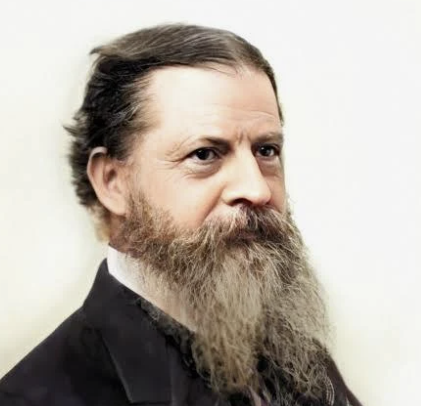
From these two immediate perceptions, we gain a mediate, or inferential perception of the relation of all four instants. This mediate perception is objectively, or as to the object being represented, spread over the four instants; but subjectively, or as itself the subject of duration, it is completely embraced in the second moment. (The reader will observe that I use the word instant to mean a point in time, and moment to mean an infinitesimal duration.
2 months 1 day ago
Thus the social position of women is in this respect very similar to that of philosophers and of the working classes. And we now see why these three elements should be united. It is their combined action which constitutes the moral or modifying force of society.
▼
Source
source
p. 235
2 months 3 weeks ago
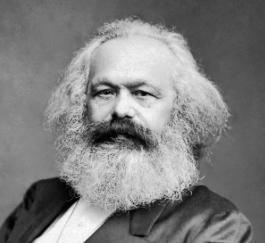
As the chosen people bore in their features the sign manual of Jehovah, so the division of labour brands the manufacturing workman as the property of capital.
▼
Source
source
Vol. I, Ch. 14, Section 5, pg. 396.
2 months 3 weeks ago
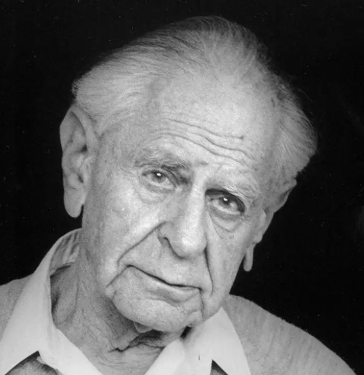
Besides, we should never attempt to balance anybody's misery against somebody else's happiness.
▼
Source
source
pp. 486-487
2 months 3 weeks ago
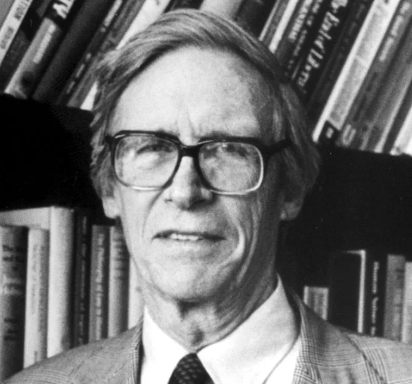
An individual who finds that he enjoys seeing others in positions of lesser liberty understands that he has no claim whatever to this enjoyment.
▼
Source
source
Chapter I, Section 6, pg. 31
2 weeks 1 day ago
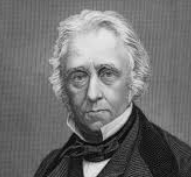
To have been a Sovereign, yet the champion of liberty,-a revolutionary leader, yet the supporter of social order, is the peculiar glory of William. Till his accession the British Constitution was in its Chaos. It had contained, from a very remote period, the simple elements of an harmonious government. But they were in a state not of amalgamation, but of conflict,-not of equilibrium but of alternate elevation and depression. The tyranny of Charles the first produced civil war and anarchy. Tyranny had now again produced resistance and revolution. And, but for the wisdom of the new King, it seems probable that the same cycle of misery would have been again described.
▼
Source
source
'Essay on the Life and Character of King William III' (1822), written for the Greaves Historical Prize at Cambridge, quoted in The Times Literary Supplement (1 May 1969), p. 469
2 months 3 weeks ago
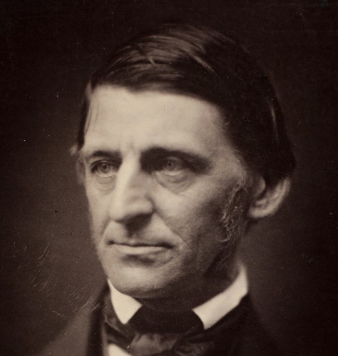
Wit makes its own welcome, and levels all distinctions. No dignity, no learning, and no force of character can make any stand against good wit.
▼
Source
source
The Comic


Meijer for entrapping and arresting a disabled employee
Target
Meijer
Rationale
An autistic 16 year old was taking food from the deli over 3 months. They tracked how much he took, and when he had crossed a certain threshold, the had him arrested. There was another employee who was also part of the entrapment scheme.
The general vibe around the boycott is, these are poor workers, scraping by on minimum level wages. The multi billion dollar corporation follows the law absolutely when it comes to you, but we all know it's not so cut and dry at the top.
Search: Meijers, autistic 16 year old, entrapment
The general vibe around the boycott is, these are poor workers, scraping by on minimum level wages. The multi billion dollar corporation follows the law absolutely when it comes to you, but we all know it's not so cut and dry at the top.
Search: Meijers, autistic 16 year old, entrapment
Target End Date
{1056} days left
1 month 3 weeks ago
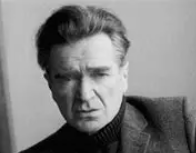
The only profound thinkers are the ones who do not suffer from a sense of the ridiculous.
1 month 3 weeks ago
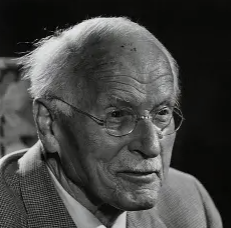
No one can flatter himself that he is immune to the spirit of his own epoch, or even that he possesses a full understanding of it. Irrespective of our conscious convictions, each one of us, without exception, being a particle of the general mass, is somewhere attached to, colored by, or even undermined by the spirit which goes through the mass. Freedom stretches only as far as the limits of our consciousness.
▼
Source
source
Paracelsus the Physician
1 month 2 weeks ago
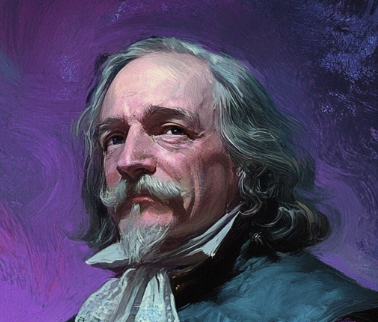
And when all the world is overcharged with Inhabitants, then the last remedy of all is Warre, which provideth for every man, by Victory or Death.
▼
Source
source
The Second Part, Chapter 30, p. 181
1 month 6 days ago
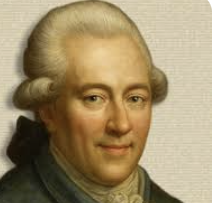
The journalists have constructed for themselves a little wooden chapel, which they also call the Temple of Fame, in which they put up and take down portraits all day long and make such a hammering you can't hear yourself speak.
▼
Source
source
D 20
1 month 3 weeks ago
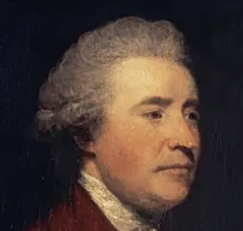
A great profusion of things, which are splendid or valuable in themselves, is magnificent. The starry heaven, though it occurs so very frequently to our view, never fails to excite an idea of grandeur. This cannot be owing to the stars themselves, separately considered. The number is certainly the cause. The apparent disorder augments the grandeur, for the appearance of care is highly contrary to our idea of magnificence. Besides, the stars lie in such apparent confusion, as makes it impossible on ordinary occasions to reckon them. This gives them the advantage of a sort of infinity.
▼
Source
source
Part II Section XIII
3 months 3 weeks ago
A nihilist is not one who believes in nothing, but one who does not believe in what exists.
1 month 3 weeks ago
He had no failings which were not owing to a noble cause; to an ardent, generous, perhaps an immoderate passion for fame; a passion which is the instinct of all great souls.
▼
Source
source
The reference is to Charles Townshend
3 weeks 3 days ago
I don't explain-I explore.
1 week 5 days ago
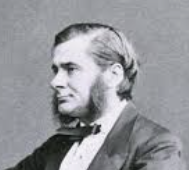
A small beginning has led us to a great ending. If I were to put the bit of chalk with which we started into the hot but obscure flame of burning hydrogen, it would presently shine like the sun. It seems to me that this physical metamorphosis is no false image of what has been the result of our subjecting it to a jet of fervent, though nowise brilliant, thought to-night. It has become luminous, and its clear rays, penetrating the abyss of the remote past, have brought within our ken some stages of the evolution of the earth. And in the shifting "without haste, but without rest" of the land and sea, as in the endless variation of the forms assumed by living beings, we have observed nothing but the natural product of the forces originally possessed by the substance of the universe.
Just now
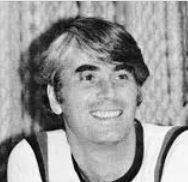
In a free system any large, popular, revolutionary movement should be able to bring about its ends by such a voluntary process. As more and more people see how it works more and more will wish to participate in or support it. And so it will grow, without being necessary to force everyone or a majority or anyone into the pattern.
▼
Source
source
Ch. 10 : A Framework for Utopia; Utopian Means and Ends, p. 327
1 month 3 weeks ago
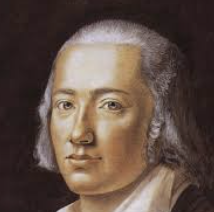
Being at one is god-like and good, but human, too human, the mania Which insists there is only the One, one country, one truth, and one way.
▼
Source
source
"The Root of All Evil" as translated by Michael Hamburger
1 month 1 week ago
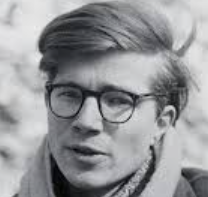
That passivity was the essence of the problem. The human being was intended to be passive only in a condition of fatigue, and not always then. Too much passivity of body produced surplus fat, short-windedness, indigestion: passivity of mind produced the same symptoms on the mental level. a feeling of spiritual dyspepsia. Since the average human being has no purposes that are not connected with the activities of keeping alive, the black room was bound to produce passivity, increasing dullness, a state in which the mind is at once awake and static, motionless, stagnant. This sense of dullness was nothing less than the collapse of the sense of reality and of values, the retreat into one's inner world.
▼
Source
source
p. 72
1 month 2 weeks ago
To look at a work of art in order to see how well certain rules are observed and canons conformed to impoverished perception. But to strive to note the ways in which certain conditions are fulfilled, such as the organic means by which the media is made to express and carry definite parts, or how the problem of adequate individualization is solved, sharpens esthetic perception and enriches its content.
▼
Source
source
p. 213
3 months ago
The Christian Religion not only was at first attended with miracles, but even at this day cannot be believed by any reasonable person without one. Mere reason is insufficient to convince us of its veracity: and whoever is moved by Faith to assent to it, is conscious of a continued miracle in his own person, which subverts all the principles of his understanding, and gives him a determination to believe what is most contrary to custom and experience.
▼
Source
source
Section 10 : Of Miracles Pt. 2
1 month 1 week ago
By relieving the brain of all unnecessary work, a good notation sets it free to concentrate on more advanced problems, and in effect increases the mental power of the race..
▼
Source
source
ch. 5
2 months 2 weeks ago
Scilurus on his death-bed, being about to leave four-score sons surviving, offered a bundle of darts to each of them, and bade them break them. When all refused, drawing out one by one, he easily broke them,-thus teaching them that if they held together, they would continue strong; but if they fell out and were divided, they would become weak.
▼
Source
source
31 Scilurus
1 month 3 weeks ago
"What do you do from morning to night?" "I endure myself."
1 month 6 days ago
It is almost impossible to bear the torch of truth through a crowd without singeing somebody's beard. G 4 Variant translations: It is almost impossible to carry the torch of wisdom through a crowd without singeing someone's beard. It is virtually impossible to carry the torch of truth through a crowd, without singeing someone's beard
1 month 3 weeks ago
Arms are not yet taken up; but virtually, you are in a civil war. You are not people of differing opinions in a public council;-you are enemies, that must subdue or be subdued, on the one side or the other. If your hands are not on your swords, their knives will be at your throats. There is no medium,-there is no temperament,-there is no compromise with Jacobinism.
▼
Source
source
Letter to William Windham (30 December 1794), quoted in R. B. McDowell (ed.)
3 weeks 1 day ago
There is no foreign land; it is the traveller only that is foreign, and now and again, by a flash of recollection, lights up the contrasts of the ear.
▼
Source
source
Pt. II, ch. III.
3 months 2 weeks ago
It is better to conceal ignorance than to expose it.

1 month 1 week ago
In its mad passion for power, the Communist State even sought to strengthen and deepen the very ideas and conceptions which the Revolution had come to destroy. It supported and encouraged all the worst antisocial qualities and systematically destroyed the already awakened conception of the new revolutionary values.The sense of justice and equality, the love of liberty and of human brotherhood - these fundamentals of the real regeneration of society - the Communist State suppressed to the point of extermination. Man's instinctive sense of equity was branded as weak sentimentality; human dignity and liberty became a bourgeois superstition; the sanctity of life, which is the very essence of social reconstruction, was condemned as unrevolutionary, almost counter-revolutionary. This fearful perversion of fundamental values bore within itself the seed of destruction.
2 months 4 weeks ago
Reason, if consulted with, would advise, that their children's time should be spent in acquiring what might be useful to them when they come to be men, rather than to have their heads stuff'd with a deal of trash, a great part whereof they usually never do ('tis certain they never need to) think on again as long as they live: and so much of it as does stick by them they are only the worse for.
▼
Source
source
Sec. 94
3 months 2 weeks ago
Better a diamond with a flaw than a pebble without.
3 weeks 1 day ago
If wine is to withdraw its most poetic countenance, the sun of the white dinner-cloth, a deity to be invoked by two or three, all fervent, hushing their talk, degusting tenderly, and storing reminiscences-for a bottle of good wine, like a good act, shines ever in the retrospect-if wine is to desert us, go thy ways, old Jack!
▼
Source
source
Pt. I, ch. III
1 month 1 week ago
The art of progress is to preserve order amid change, and to preserve change amid order.
1 month 1 week ago
I believe government, organized authority, or the State is necessary only to maintain or protect property and monopoly. It has proven efficient in that function only. As a promoter of individual liberty, human well-being and social harmony, which alone constitute real order, government stands condemned by all the great men of the world...I believe - indeed, I know - that whatever is fine and beautiful in the human expresses and asserts itself in spite of government, and not because of it.
2 months 3 weeks ago
In the part of this universe that we know there is great injustice, and often the good suffer, and often the wicked prosper, and one hardly knows which of those is the more annoying.
▼
Source
source
"The Argument for the Remedying of Injustice"
2 months 2 weeks ago
It is now generally accepted that the roots of our ethics lie in patterns of behavior that evolved among our pre-human ancestors, the social mammals and that we retain within our biological nature elements of these evolved responses. We have learned considerably more about these responses, and we are beginning to to understand how they interact with our capacity to reason.
▼
Source
source
Preface To The 2011 edition, p. xi
1 month 3 weeks ago
Duty is that mode of action which constitutes the best application of the capacity of the individual to the general advantage. Right is the claim of the individual to his share of the benefit arising from his neighbors' discharge of their several duties.
▼
Source
source
"Summary of Principles". 1.5
2 months 3 weeks ago
I've got a one-dimensional mind.
▼
Source
source
Said to Rupert Crawshay-Williams; Russell Remembered (1970), p. 31
1 month 1 week ago
Words of the jargon sound as if they said something higher than what they mean.
▼
Source
source
p. 9
1 month 3 weeks ago
The Protestant churches generally hold that the elements of the sacrament are flesh and blood only in a tropical sense; they nourish our souls as meat and the juice of it would our bodies. But the Catholics maintain that they are literally just that; although they possess all the sensible qualities of wafer-cakes and diluted wine. But we can have no conception of wine except what may enter into a belief, either -
1 month 3 weeks ago
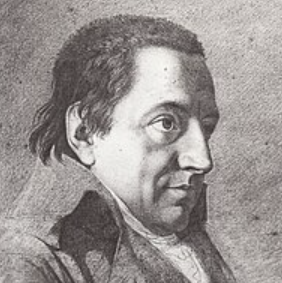
An act of the mind of which we are conscious, as such, is called freedom. An act without consciousness of action is called spontaneity. I by no means assume as necessary any immediate consciousness of the act, but merely, that on subsequent reflection thou shouldst perceive it to be an act. The higher question of what it is that prevents any such state of indecision, or any consciousness of the act, we may perhaps subsequently be able to solve. This act of the mind is called thought and it is said that thought is a spontaneous act, to distinguish it from sensation, in which the mind is merely receptive and passive.
▼
Source
source
Jane Sinnett, trans 1846 p. 44
3 months 3 weeks ago
Hypocrisy is a universal phenomenon. It ends with death, but not before.
2 months 3 weeks ago
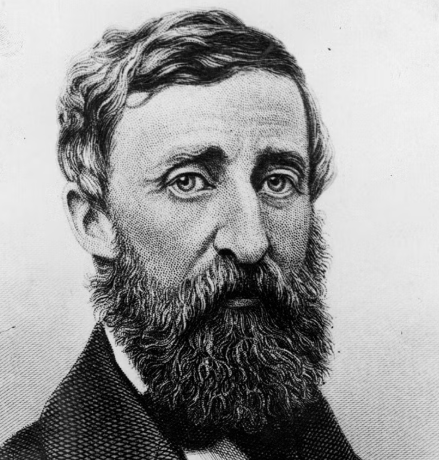
That man is the richest whose pleasures are the cheapest.
▼
Source
source
March 11, 1856
3 months 4 days ago
For the history of the centuries that have passed since the birth of Christ nowhere reveals conditions like those of the present. There has never been such building and planting in the world. There has never been such gluttonous and varied eating and drinking as now. Wearing apparel has reached its limit in costliness. Who has ever heard of such commerce as now encircles the earth? There have arisen all kinds of art and sculpture, embroidery and engraving, the like of which has not been seen during the whole Christian era. In addition men are so delving into the mysteries of things that today a boy of twenty knows more than twenty doctors formerly knew.
▼
Source
source
Sermon for the Second Sunday in Advent, Luke 21:25-36 (1522), as translated in The Precious and Sacred Writings of Martin Luther (1905) edited by John Nicholas Lenker
3 months 1 week ago
Those of our pleasures which come most rarely give the greatest delight.
▼
Source
source
Fragment 33 (Oldfather translation)
CivilSimian.com created by AxiomaticPanic, CivilSimian, Kalokagathia