

2 months 2 weeks ago
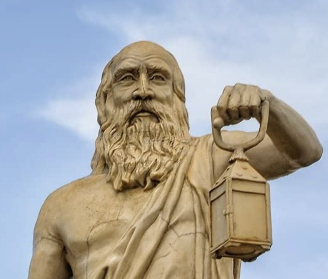
Plato had defined Man as an animal, biped and featherless, and was applauded. Diogenes plucked a fowl and brought it into the lecture-room with the words, "Behold Plato's man!"
▼
Source
source
Diogenes Laërtius, vi. 40
3 weeks 4 days ago
Art is a human activity having for its purpose the transmission to others of the highest and best feelings to which men have risen.
▼
Source
source
Ch. 8
3 weeks 2 days ago
Until writing was invented, man lived in acoustic space: boundless, directionless, horizonless, in the dark of the mind, in the world of emotion, by primordial intuition, terror. Speech is a social chart of this bog.
▼
Source
source
(p. 48)
1 month 1 week ago
The philosophical thought of Kant, the supreme flower of the Germanic people, has its roots in the religious feeling of Luther, and it is not possible for Kantism, especially the practical part of it, to take root and bring forth flower and fruit in peoples who have not undergone the experience of the Reformation and who perhaps were incapable of experiencing it. Kantism is Protestant, and we Spaniards are fundamentally Catholic. And if Krause struck some roots here - more numerous and more permanent than is commonly supposed - it is because Krause has roots in pietism, and pietism, as Ritschl has demonstrated in his Geschichte des Pietismus, has specifically Catholic roots and may be described as the irruption, or rather the persistence of Catholic mysticism in the heart of Protestant rationalism. And this explains why not a few Catholic thinkers in Spain became followers of Krause.

3 months 3 weeks ago
The two guides call out to a man early and late. And yet, no, for when remorse calls to a man it is always late. The call to find the way again by seeking out God in the confession of sins is always at the eleventh hour. Whether you are young or old, whether you have sinned much or little, whether you have offended much or neglected much, the guilt makes this call come at the eleventh hour. The inner agitation of the heart understands what remorse insists upon, that the eleventh hour has come. For in the sense of time, the old man's age is the eleventh hour; and the instant of death, the final moment in the eleventh hour. The indolent youth speaks of a long life that lies before him. The indolent old man hopes that his death is still a long way off. But repentance and remorse belong to the eternal in a man.
1 month 1 week ago
Intolerance is the besetting sin of moral fervour.
▼
Source
source
p. 63, Ch. 4
2 months 3 weeks ago
A bureaucracy always tends to become a pedantocracy.
▼
Source
source
Ch. VI: Of the Infirmities and Dangers to Which Representative Government Is Liable (p. 234)

4 days ago
The existence of the mind-independent environment beyond one's world-simulation is a theoretical inference, not an empirical observation.
▼
Source
source
Postscript to review of Michael Lockwood's Mind, Brain and the Quantum, BLTC Research, Dec. 2016
1 month 1 week ago
The most authentic Catholic ethic, monastic asceticism, is an ethic of eschatology, directed to the salvation of the individual soul rather than to the maintenance of society. And in the cult of virginity may there not perhaps be a certain obscure idea that to perpetuate ourselves in others hinders our own personal perpetuation?

2 months 3 weeks ago
It is generally admitted that most grown-up people, however regrettably, will try to have a good time.

3 months 3 weeks ago
For man to become successful, for man to establish himself as the ruler of the planet, it was necessary for him to use his brain as something more than a device to make the daily routine of getting food and evading enemies a little more efficient. Man had to learn to control his environment.
4 days ago
The educated man is the man who does not live in immediate intuition, but in his recollection so that little is new to him any longer.
▼
Source
source
Chapter 4, Philosophy As Writing: The Case Of Hegel, p. 74

3 months 3 weeks ago
The inexperienced in wisdom and virtue, ever occupied with feasting and such, are carried downward, and there, as is fitting, they wander their whole life long, neither ever looking upward to the truth above them nor rising toward it, nor tasting pure and lasting pleasures. Like cattle, always looking downward with their heads bent toward the ground and the banquet tables, they feed, fatten, and fornicate. In order to increase their possessions they kick and butt with horns and hoofs of steel and kill each other, insatiable as they are.

2 months 3 weeks ago
There is no knowledge that is not power.
▼
Source
source
Old Age

3 weeks ago
But perhaps the rest of us could have separate classes in science appreciation, the wonder of science, scientific ways of thinking, and the history of scientific ideas, rather than laboratory experience.

1 month 3 weeks ago
Consciousness is nature's nightmare.
1 month 3 weeks ago
By all evidence we are in the world to do nothing.
2 months 3 weeks ago
I frequently asked myself, if I could, or if I was bound to go on living, when life must be passed in this manner. I generally answered to myself, that I did not think I could possibly bear it beyond a year.
▼
Source
source
(p. 140)

2 months 1 week ago
Every good thing is gentle and consistent, progressing in good order and not going beyond what is right.
▼
Source
source
2, 39, 4
1 month 1 week ago
Neither is the longing for immortality saved, but rather dissolved and submerged, by agnosticism, or the doctrine of the unknowable. ...The unknowable, if it is something more than the merely hitherto unknown, is but a purely negative concept, a concept of limitation. And upon this foundation no human feeling can be built up.
1 month 1 week ago
The power of God is the worship He inspires. The worship of God is not a rule of safety - it is an adventure of the spirit, a flight after the unattainable. The death of religion comes with the repression of the high hope of adventure.
▼
Source
source
Ch. 12: "Religion and Science", pp. 268-269

2 months 2 weeks ago
Of all things the worst to teach the young is dalliance, for it is this that is the parent of those pleasures from which wickedness springs.

1 month 1 week ago
The process begins with the individual woman's acceptance that American women, without exception, are socialized to be racist, classist and sexist, in varying degrees, and that labeling ourselves feminists does not change the fact that we must consciously work to rid ourselves of the legacy of negative socialization.

1 month 3 weeks ago
Strange incongruities must ever perplex those, who confound the unhappiness of civil dissensions with the crime of treason.

1 month 2 weeks ago
It is more blessed to give than to receive.
▼
Source
source
Acts 20:35b
1 month 1 week ago
Your own philosophy condemns you and supports us.
▼
Source
source
Salbatore Mitxelena (1958): Unamuno eta Abendats, Baiona: Darracq
2 months 3 weeks ago
It is entirely clear that there is only one way in which great wars can be permanently prevented, and that is the establishment of an international government with a monopoly of serious armed force.
▼
Source
source
"The Atomic Bomb and the Prevention of War" in the Bulletin of the Atomic Scientists, 10/1/1945

3 months 4 weeks ago
Where there have been powerful governments, societies, religions, public opinions, in short wherever there has been tyranny, there the solitary philosopher has been hated; for philosophy offers an asylum to a man into which no tyranny can force it way, the inward cave, the labyrinth of the heart.
2 months 3 weeks ago
Now shall we say that only the first men were well alive, and the existing generation is invalided and degenerate? ... A more subtle and severe criticism might suggest that some dislocation has befallen the race; that men are off their centre; that multitudes of men do not live with Nature, but behold it as exiles. People go out to look at sunrises and sunsets who do not recognize their own quietly and happily, but know that it is foreign to them. As they do by books, so they quote the sunset and the star, and do not make them theirs. Worse yet, they live as foreigners in the world of truth, and quote thoughts, and thus disown them. Quotation confesses inferiority.
▼
Source
source
Quotation and Originality

3 months 3 weeks ago
The absurd does not liberate; it binds. It does not authorize all actions. "Everything is permitted" does not mean that nothing is forbidden.

1 month 1 week ago
With the conception that the Revolution was only a means of securing political power, it was inevitable that all revolutionary values should be subordinated to the needs of the Socialist State; indeed, exploited to further the security of the newly acquired governmental power.
3 months 3 weeks ago
If the love of money is the root of all evil, the need of money is most certainly the root of all despair.

1 month 1 week ago
Nietzsche's great concept of Yea-saying gave him a notion of purpose that is seen as positive.
▼
Source
source
Nietzsche, in short, was a religious mystic. p. 275
1 month 3 weeks ago
In dreams you sometimes fall from a height, or are stabbed, or beaten, but you never feel pain unless, perhaps, you really bruise yourself against the bedstead, then you feel pain and almost always wake up from it. It was the same in my dream. I did not feel any pain, but it seemed as though with my shot everything within me was shaken and everything was suddenly dimmed, and it grew horribly black around me. I seemed to be blinded, and it benumbed, and I was lying on something hard, stretched on my back; I saw nothing, and could not make the slightest movement.


1 month 3 weeks ago
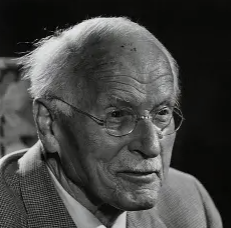
Loneliness does not come from having no people about one, but from being unable to communicate the things that seem important to oneself, or from holding certain views which others find inadmissible.
▼
Source
source
p.356
2 months 3 weeks ago
None shall rule but the humble, And none but Toil shall have.
▼
Source
source
Boston Hymn
2 months 2 weeks ago
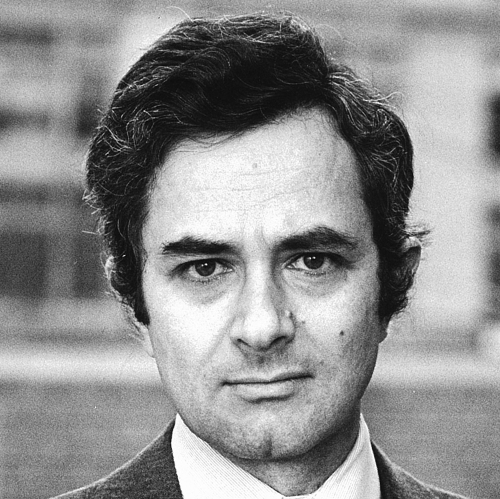
I do not believe that the source of value is unitary - displaying apparent multiplicity only in its application to the world. I believe that value has fundamentally different kinds of sources, and that they are reflected in the classification of values into types. Not all values represent the pursuit of some single good in a variety of settings.
▼
Source
source
"The Fragmentation of Value" (1977), pp. 131-132.
3 weeks 4 days ago
The revolutionaries say: "The government organization is bad in this and that respect; it must be destroyed and replaced by this and that." But a Christian says: "I know nothing about the governmental organization, or in how far it is good or bad, and for the same reason I do not want to support it."
▼
Source
source
Chapter IX, The Acceptance of the Christian Conception of Life will Emancipate Men from the Miseries of our Pagan Life

2 months 3 weeks ago
"They have an engine called the Press whereby the people are deceived."
▼
Source
source
Ch. 13 : They Have Pulled Down Deep Heaven on Their Heads

2 months 3 weeks ago
Does man think because he has found that thinking pays? Does he bring his children up because he has found it pays?
▼
Source
source
§ 467
1 month 3 weeks ago
Prejudice is of ready application in the emergency; it previously engages the mind in a steady course of wisdom and virtue and does not leave the man hesitating in the moment of decision sceptical, puzzled, and unresolved. Prejudice renders a man's virtue his habit, and not a series of unconnected acts. Through just prejudice, his duty becomes a part of his nature.

3 months 4 days ago
If thou shalt aspire after the glorious acts of men, thy working shall be accompanied with compunction and strife, and thy remembrance followed with distaste and upbraidings; and justly doth it come to pass towards thee, O man, that since thou, which art God's work, doest him no reason in yielding him well-pleasing service, even thine own works also should reward thee with the like fruit of bitterness.
▼
Source
source
Of The Works Of God and Man

3 months 3 days ago
Furthermore, how will you endure [the Romanists'] terrible idolatries? It was not enough that they venerated the saints and praised God in them, but they actually made them into gods. They put that noble child, the mother Mary, right into the place of Christ. They fashioned Christ into a judge and thus devised a tyrant for anguished consciences, so that all comfort and confidence was transferred from Christ to Mary, and then everyone turned from Christ to his particular saint. Can anyone deny this? Is it not true?
▼
Source
source
Luther's Works, 47:45; cf. also Anderson, Stafford & Burgess (1992), p. 29

2 months 2 weeks ago
In... "The Education of Children"... Plutarch gives an anecdote of Theocritus, a sophist, as an example of athuroglossos... he is... "a giant in impudence"... strong not because of his reason, or his rhetorical ability... or his ability to pronounce the truth, but only because he is arrogant. ...His fourth trait is... "putting his confidence in bluster." He is confident in thorubos... the noise made by a strong voice, by a scream, a clamor, or uproar. ...The final characteristic ...his confidence in ..."ignorant outspokenness..." ... it lacks mathesis ...-learning or wisdom.
▼
Source
source
Ref: Plutarch, "The Education of Children", Moralia (1927) Vol. 1, Tr. Frank Cole Babbit, p. 4, The Loeb Classical Library, Harvard University Press.

2 weeks 5 days ago
The working classes may be injuriously degraded and oppressed in three ways: 1st - When they are neglected in infancy 2nd - When they are overworked by their employer, and are thus rendered incompetent from ignorance to make a good use of high wages when they can procure them. 3rd - When they are paid low wages for their labour.
▼
Source
source
Two Memorials on Behalf of the Working Classes
3 weeks 1 day ago
You could give Aristotle a tutorial. And you could thrill him to the core of his being. Aristotle was an encyclopedic polymath, an all time intellect. Yet not only can you know more than him about the world, you also can have a deeper understanding of how everything works. Such is the privilege of living after Newton, Darwin, Einstein, Planck, Watson, Crick and their colleagues.
2 months 2 weeks ago
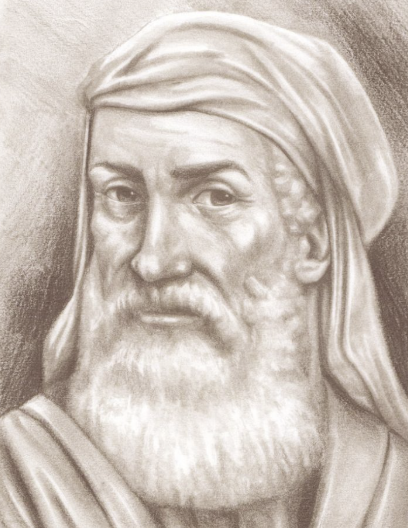
A law there is, an oracle of Doom, Of old enacted by the assembled gods, That if a Daemon-such as live for ages- Defile himself with foul and sinful murder, He must for seasons thrice ten thousand roam Far from the Blest; such is the path I tread, I too a wanderer and exile from heaven.
▼
Source
source
tr. Phillip H. De Lacy and Benedict Einarson. Cf. full quotation at Leonard p. 54-55 fr. 115, as paraphrased in Plutarch's Moralia
1 month 4 days ago
The principle of bounded rationality [is] the capacity of the human mind for formulating and solving complex problems is very small compared with the size of the problems whose solution is required for objectively rational behavior in the real world - or even for a reasonable approximation to such objective rationality.
▼
Source
source
p. 198.
1 month 2 weeks ago
If thou wilt be perfect, go and sell that thou hast, and give to the poor, and thou shalt have treasure in heaven: and come and follow me.
▼
Source
source
19:21 (KJV)
CivilSimian.com created by AxiomaticPanic, CivilSimian, Kalokagathia