

1 month 2 weeks ago
And, being assembled together with them, commanded them that they should not depart from Jerusalem, but wait for the promise of the Father, which, saith he, ye have heard of me. For John truly baptized with water; but ye shall be baptized with the Holy Ghost not many days hence.
▼
Source
source
1:4-5 (KJV)

2 months 3 weeks ago
I trust a good deal to common fame, as we all must. If a man has good corn, or wood, or boards, or pigs, to sell, or can make better chairs or knives, crucibles or church organs, than anybody else, you will find a broad hard-beaten road to his house, though it be in the woods.
▼
Source
source
February 1855
1 month 1 week ago
Among most Christians the Old Testament is little read in comparison to the New Testament. Furthermore, much of what is read is often distorted by prejudice. Frequently the Old Testament is believed to express exclusively the principles of justice and revenge, in contrast to the New Testament, which represents those of love and mercy; even the sentence, "Love your neighbor as yourself," is thought by many to derive from the New, not the Old Testament. Or the Old Testament is believed to have been written exclusively in the spirit of narrow nationalism and to contain nothing of supranational universalism so characteristic of the New Testament.
▼
Source
source
You Shall Be as Gods: A Radical Interpretation of the Old Testament and Its Tradition (1966) "Introduction"

2 months 4 weeks ago
The supreme enjoyment is in satisfaction with oneself ; it is in order to deserve this satisfaction that we are placed on earth and endowed with freedom.
▼
Source
source
As quoted in Dreamer of Democracy by James Miller and Jim Miller, p. 194.
2 months 3 weeks ago
The person who screams, or uses the superlative degree, or converses with heat, puts whole drawing-rooms to flight. If you wish to be loved, love measure. You must have genius or a prodigious usefulness if you will hide the want of measure.
▼
Source
source
p. 167
3 months 3 days ago
Of all human and ancient opinions concerning religion, that seems to me the most likely and most excusable, that acknowledged God as an incomprehensible power, the original and preserver of all things, all goodness, all perfection, receiving and taking in good part the honour and reverence that man paid him, under what method, name, or ceremonies soever
▼
Source
source
Ch. 12

3 months 3 weeks ago
The papers were always talking about the debt owed to society. According to them, it had to be paid. But that doesn't speak to the imagination. What really counted was the possibility of escape, a leap to freedom, out of the implacable ritual, a wild run for it that would give whatever chance for hope there was. Of course, hope meant being cut down on some street corner, as you ran like mad, by a random bullet. But when I really thought it through, nothing was going to allow me such a luxury. Everything was against it; I would just be caught up in the machinery again.
3 months 2 weeks ago
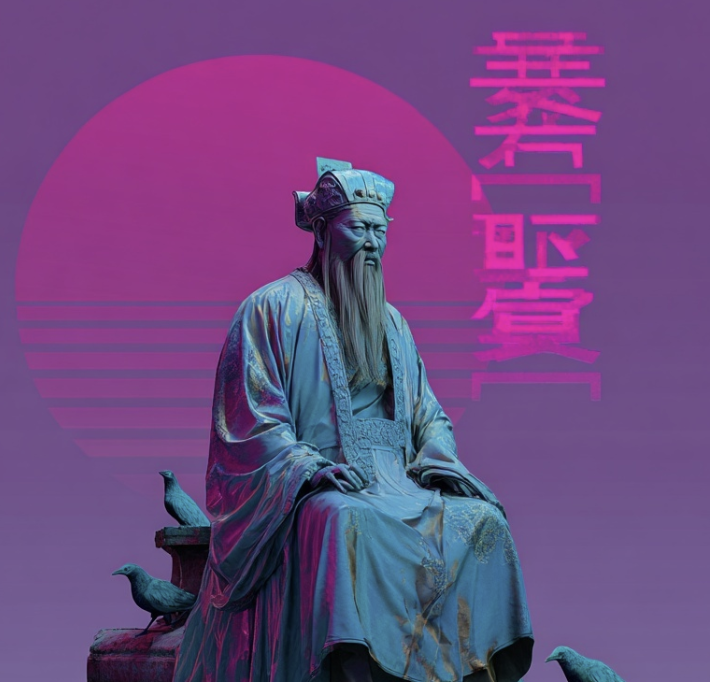
The wise find pleasure in water; the virtuous find pleasure in hills. The wise are active; the virtuous are tranquil. The wise are joyful; the virtuous are long-lived.
2 months 3 weeks ago
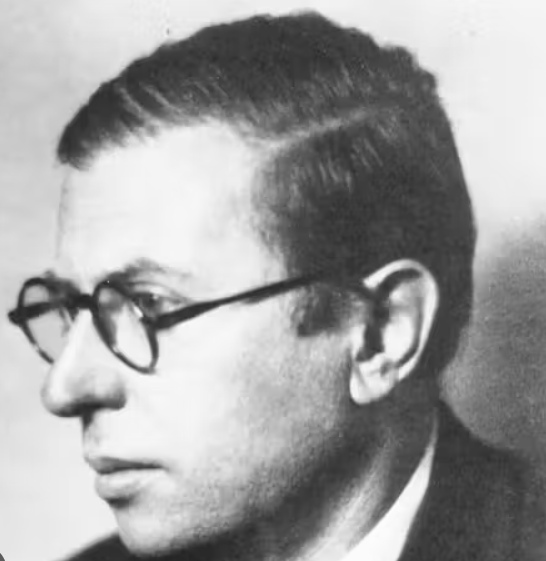
Three o'clock is always too late or too early for anything you want to do.
2 months 4 weeks ago
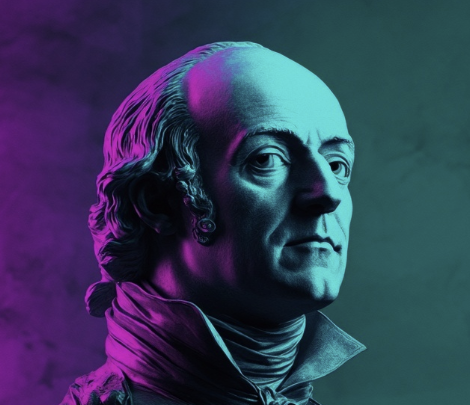
It cannot be very difficult to determine who have been the contrivers of this whole mercantile system; not the consumers, we may believe, whose interest has been entirely neglected; but the producers, whose interests has been so carefully attended to; and among this later class our merchants and manufactures have been by far the principal architects. In the mercantile regulations, which have been taken notice of in this chapter, the interest of our manufacturers has been most peculiarly attended to;and the interest, not so much of the consumers, as that of some other sets of producers, has been sacrificed to it.
▼
Source
source
Chapter VIII, p. 721.
2 months 3 weeks ago
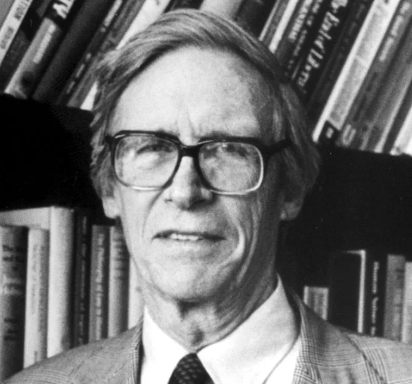
If A were not allowed his better position, B would be even worse off than he is.
▼
Source
source
Chapter II, Section 17, pg. 103
1 month 1 week ago
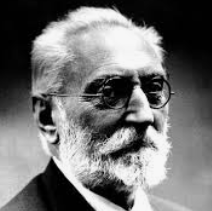
If a philosopher is not a man, he is anything but a philosopher; he is above all a pedant, and a pedant is a caricature of a man. The cultivation of any branch of science - of chemistry, of physics, of geometry, of philology - may be a work of differentiated specialization, and even so, only within very narrow limits and restrictions; but philosophy, like poetry, is a work of integration and synthesis, or else it is merely pseudo-philosophical erudition.
2 months 3 weeks ago
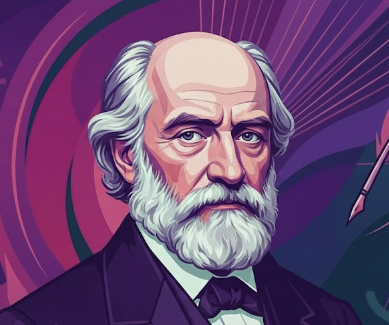
Compassion for animals is intimately connected with goodness of character, and it may be confidently asserted that he, who is cruel to living creatures, cannot be a good man. Moreover, this compassion manifestly flows from the same source whence arise the virtues of justice and loving-kindness towards men.
▼
Source
source
Part III, Ch. VIII, 7, p. 223
1 month 2 weeks ago
Verily I say unto you, If ye have faith, and doubt not, ye shall not only do this which is done to the fig tree, but also if ye shall say unto this mountain, Be thou removed, and be thou cast into the sea; it shall be done.
1 month 3 weeks ago
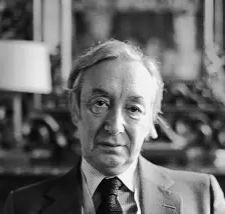
The ground for taking ignorance to be restrictive of freedom is that it causes people to make choices which they would not have made if they had seen what the realization of their choices involved.
▼
Source
source
"The Concept of Freedom".
1 month 3 weeks ago
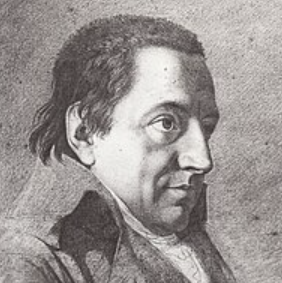
The Doctrine of a Perfect God; in whose nature nothing arbitrary or changeable can have a place; in whose Highest Being we all live, and in this Life may, and ought at all times to be, blessed;-this Doctrine, which ignorant men think they have sufficiently demolished when they have proclaimed it to be Mysticism, is by no means Mysticism, for it has an immediate reference to human action, and in deed to the inmost spirit which ought to inspire and guide all our actions. It can only become Mysticism when it is associated with the pretext that the insight into this truth proceeds from a certain inward and mysterious light, which is not accessible to all men, but is only bestowed upon a few favourites chosen from among the rest:-in which pretext the Mysticism consists, for it betrays a presumptuous contemplation of personal merit, and a pride in mere sensuous Individuality.
▼
Source
source
p, 122-123
2 months 1 week ago
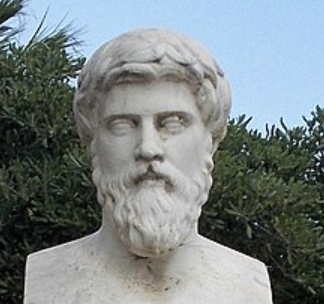
"I will show," said Agesilaus, "that it is not the places that grace men, but men the places."
▼
Source
source
Of Agesilaus the Great
3 months 3 weeks ago
Great novelists are philosopher-novelists who write in images instead of arguments.

1 month 1 week ago
The very proclaimers of "America first" have long before this betrayed the fundamental principles of real Americanism...the other truly great Americans who aimed to make of this country a haven of refuge, who hoped that all the disinherited and oppressed people in coming to these shores would give character, quality and meaning to the country.
2 months 4 weeks ago
I want you to read the true system of the heart, drafted by a decent man and published under another name. I do not want you to be biased against good and useful books merely because a man unworthy of reading them has the audacity to call himself the Author.
▼
Source
source
First Dialogue; translated by Judith R. Bush, Christopher Kelly, Roger D. Masters
2 months 3 weeks ago
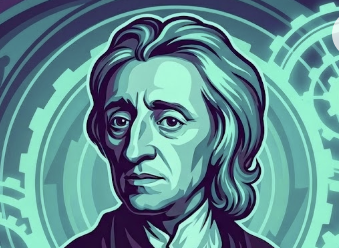
The law of faith, being a covenant of free grace, God alone can appoint what shall be necessarily believed by everyone whom He will justify. What is the faith which He will accept and account for righteousness, depends wholly on his good pleasure. For it is of grace, and not of right, that this faith is accepted. And therefore He alone can set the measures of it: and what he has so appointed and declared is alone necessary. No-body can add to these fundamental articles of faith; nor make any other necessary, but what God himself hath made, and declared to be so. And what these are which God requires of those who will enter into, and receive the benefits of the new covenant, has already been shown. An explicit belief of these is absolutely required of all those to whom the gospel of Jesus Christ is preached, and salvation through his name proposed.
▼
Source
source
§ 156
2 months 2 weeks ago
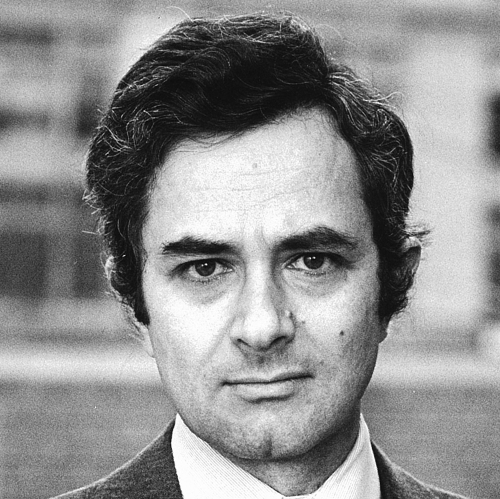
Ethics increases the range of what it is about ourselves that we can will-extending it from our actions to the motives and character traits and dispositions from which they arise. We want to be able to will the sources of our actions down to the very bottom.
▼
Source
source
p. 135.

1 month 3 weeks ago
I do nothing, granted. But I see the hours pass - which is better than trying to fill them.
2 months ago
People praise virtue, but they hate it, they run away from it. It freezes you to death, and in this world you've got to keep your feet warm.
1 week 2 days ago
What J.P. Morgan and John D. Rockefeller were to the Age of Robber Barons, Microsoft's Bill Gates and Berkshire Hathaway's Warren Buffett, as well as digital moguls like Mark Zuckerberg and Jeff Bezos are to the contemporary age of the rule of the 1%. Then as now, the super-rich used governments to write laws and rules to allow them to accumulate unlimited wealth; then as now, creating monopolies by enclosing the commons and killing competition is the strategy for becoming the 1%.
3 weeks 2 days ago
Bless advertising art for its pictorial vitality and verbal creativity.
▼
Source
source
(p. 18)

2 months ago
They call, in fact, for the forfeiture, to a greater or less degree, of human liberty, to the point where, were I to attempt to sum up what socialism is, I would say that it was simply a new system of serfdom.
▼
Source
source
Notes for a Speech on Socialism (1848). http://oll.libertyfund.org/pages/tocqueville-s-critique-of-socialism-1848
2 months ago
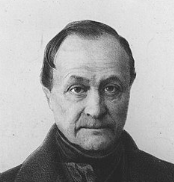
It was under Catholic Feudalism that they were first united; a union for which their incorporation into the Roman empire had prepared them, and which was finally organized by the incomparable genius of Charlemagne.
▼
Source
source
p. 88


4 days ago
Universal Humanism:
1) Preserve Life (end)
Precludes those who think they get to decide who lives and who dies.
2) Avoid and limit suffering (means)
Precludes those who use absurd exceptions to turn their backs on functional rules.

3 months 3 weeks ago
Take a book, the poorest one written, but read it with the passion that it is the only book you will read-ultimately you will read everything out of it, that is, as much as there was in yourself, and you could never get more out of reading, even if you read the best of books.

2 months 3 weeks ago
My friend Professor Tolkien asked me the very simple question, "What class of men would you expect to be most preoccupied with, and most hostile to, the idea of escape?" and gave the obvious answer: jailers.
▼
Source
source
"On Science Fiction". Of Other Worlds: Essays and Stories. Houghton Mifflin Harcourt (2002). p. 67.
2 weeks 4 days ago
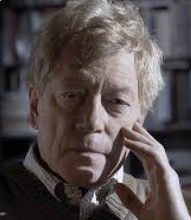
Burke emphasized that the new forms of politics, which hope to organize society around the rational pursuit of liberty, equality, fraternity, or their modernist equivalents, are actually forms of militant irrationality.
▼
Source
source
Why I became a conservative, The New Criterion
2 months 3 weeks ago
By the rude bridge that arched the flood, Their flag to April's breeze unfurled, Here once the embattled farmers stood, And fired the shot heard round the world.
▼
Source
source
Hymn sung at the Completion of the Battle Monument
2 months 3 weeks ago
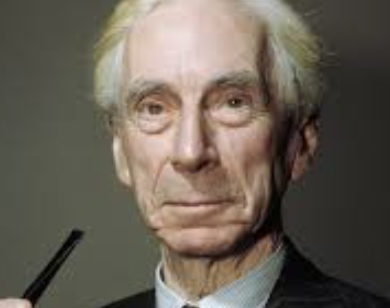
I may as well say at once that I do not distinguish between inference and deduction. What is called induction appears to me to be either disguised deduction or a mere method of making plausible guesses.
▼
Source
source
Principles of Mathematics (1903), Ch. II: Symbolic Logic, p. 11

2 months 1 day ago
Times before you, when even the living men were Antiquities; when the living might exceed the dead, and to depart this world, could not be properly said, to go unto the greater number. Dedication
3 months 3 weeks ago
Confession should be only in secret before God, who knows everything anyway, and thus it could remain hidden in one's innermost being. But at a dinner and a woman! A dinner-it is not some hidden, remote place, nor is the lighting dim, nor is the mood like that among graves, nor are the listeners silent or invisibly present.
3 months 3 weeks ago
When people are friends, they have no need of justice, but when they are just, they need friendship in addition.
2 months 3 weeks ago
We see then, commodities are in love with money, but "the course of true love never did run smooth".
▼
Source
source
Vol. I, Ch. 3, Section 2, pg. 121.
1 month 3 weeks ago
Equality, proclaimed in 1793, has been one of the greatest conquests of the French Revolution. Despite all the reactions which have arrived since, that great principle has triumphed in the political economy of Europe. In the most advanced countries, it is called the equality of politic rights; in the other countries, civil equality - equality before the law. No country in Europe would dare to openly proclaim today the principle of political inequality. But the history of the revolution itself and that of the seventy-five years that have passed since, we prove that political equality without economic equality is a lie. You would proclaim in vain the equality of political rights, as long as society remains split by its economic organization into socially different layers - that equality will be nothing but a fiction.

3 months 3 weeks ago
Victories over ingrained patterns of thought are not won in a day or a year.
3 months 3 days ago
Few are the women and maidens who would let themselves think that one could at the same time be joyous and modest. They are all bold and coarse in their speech, in their demeanor wild and lewd. That is now the fashion of being in good cheer. But it is specially evil that the young maiden folk are exceedingly bold of speech and bearing, and curse like troopers, to say nothing of their shameful words and scandalous coarse sayings, which one always hears and learns from another.
2 months 3 weeks ago
Real power begins where secrecy begins.
▼
Source
source
Part 3, Ch. 12, § 1
1 month 3 weeks ago
Someone arrived there - who lifted the veil of the goddess, at Sais. - But what did he see? He saw - wonder of wonders - himself. Novalis here alludes to Plutarch's account of the shrine of the goddess Minerva, identified with Isis, at Sais, which he reports had the inscription "I am all that hath been, and is, and shall be; and my veil no mortal has hitherto raised."

CivilSimian.com created by AxiomaticPanic, CivilSimian, Kalokagathia