

6 months 4 weeks ago
1 month 3 weeks ago
There is not a Musselman alive who would not imagine that he was performing an action pleasing to God and his Holy Prophet by exterminating every Christian on earth, while the Christians are scarcely more tolerant on their side.
1 month 5 days ago
When, in the course of human development, existing institutions prove inadequate to the needs of man, when they serve merely to enslave, rob, and oppress mankind, the people have the eternal right to rebel against, and overthrow, these institutions.
2 months 3 weeks ago
...You could take up the line that some of the gnostics took up - a line which I often thought was a very plausible one - that as a matter of fact this world that we know was made by the devil at a moment when God was not looking. There is a good deal to be said for that, and I am not concerned to refute it.
▼
Source
source
"The Moral Arguments for Deity"
3 weeks 4 days ago
Just acquiring this amount of "education" will not, by itself, make you an educated person, even less will it give you what Oakeshott calls "judgment." But if the manner of instruction is adequate, the student should be able to acquire this much knowledge in a way that combines intellectual openness, critical scrutiny, and logical clarity. If so, learning will not stop when the student leaves the university.
2 months 3 weeks ago
Let any one try, I will not say to arrest, but to notice or attend to, the present moment of time. One of the most baffling experiences occurs. Where is it, this present? It has melted in our grasp, fled ere we could touch it, gone in the instant of becoming.
▼
Source
source
Ch. 15
1 month 1 week ago
It is not a question of the mass-man being a fool. On the contrary, to-day he is more clever, has more capacity of understanding than his fellow of any previous period. But that capacity is of no use to him; in reality, the vague feeling that he possesses it seems only to shut him up more within himself and keep him from using it. Once for all, he accepts the stock of commonplaces, prejudices, fag-ends of ideas or simply empty words which chance has piled up within his mind, and with a boldness only explicable by his ingenuousness, is prepared to impose them everywhere.... Why should he listen if he has within him all that is necessary? There is no reason now for listening, but rather for judging, pronouncing, deciding. There is no question concerning public life, in which he does not intervene, blind and deaf as he is, imposing his "opinions."
▼
Source
source
Chap. VIII: The Masses Intervene In Everything, And Why Their Intervention Is Solely By Violence
2 months 3 weeks ago
Knowledge is not so precise a concept as is commonly thought. Instead of saying "I know this," we ought to say "I more or less know something more or less like this." It is true that this proviso is hardly necessary as regards the multiplication table, but knowledge in practical affairs has not the certainty or the precision of arithmetic. Suppose I say "democracy is a good thing": I must admit, first, that I am less sure of this than I am that two and two are four, and secondly, that "democracy" is a somewhat vague term which I cannot define precisely. We ought to say, therefore: "I am fairly certain that it is a good thing if a government has something of the characteristics that are common to the British and American Constitutions," or something of this sort. And one of the aims of education ought to be to make such a statement more effective from a platform than the usual type of political slogan.
2 months 3 weeks ago
I met, not long ago, a young man who aspired to become a novelist. Knowing that I was in the profession, he asked me to tell him how he should set to work to realize his ambition. I did my best to explain. 'The first thing,' I said, 'is to buy quite a lot of paper, a bottle of ink, and a pen. After that you merely have to write.'
▼
Source
source
"Sermons in Cats"

1 month 2 weeks ago
I want to proclaim a truth that would forever exile me from among the living. I know only the conditions but not the words that would allow me to formulate it.
2 weeks 6 days ago
Money alone sets all the world in motion.
▼
Source
source
Maxim 656

1 week 6 days ago
Like many others, I came to philosophy to study matters of life and death, and was taught that professionalization required forgetting them. The more I learned, the more I grew convinced of the opposite: the history of philosophy was indeed animated by the questions that drew us there.
2 months 3 weeks ago
Men tend to have the beliefs that suit their passions. Cruel men believe in a cruel God, and use their belief to excuse their cruelty. Only kindly men believe in a kindly God, and they would be kindly in any case.
▼
Source
source
In London Calling (1947), p. 18
2 months 3 weeks ago
Of all those expensive and uncertain projects, however, which bring bankruptcy upon the greater part of the people who engage in in them, there is none perhaps more perfectly ruinous than the search after new silver and gold mines. It is perhaps the most disadvantageous lottery in the world, or the one in which the gain of those who draw the prizes bears the least proportion to the loss of those who draw the blanks: for though the prizes are few and the blanks are many, the common price of a ticket is the whole fortune of a very rich man.
▼
Source
source
Chapter VII, Part First, p. 610.
2 months 3 weeks ago
This life affords no solid satisfaction, but in the consciousness of having done well, and the hopes of another life.
▼
Source
source
Letter to Anthony Collins (23 August 1704), in The Works of John Locke, Vol. X (London, 1823), p. 298; quoted by William Julius Mickle in Voltain in the Shades (London, 1770), p. 7

2 months 1 week ago
When you wish to instruct, be brief; that men's minds may take in quickly what you say, learn its lesson, and retain it faithfully. Every word that is unnecessary only pours over the side of a brimming mind.
▼
Source
source
Lines 335-337; Edward Charles Wickham translation

2 months 3 weeks ago
You can't get a cup of tea large enough or a book long enough to suit me.
▼
Source
source
As quoted in Of This and Other Worlds (1982) by Walter Hooper, Preface, p. 9

1 month 4 days ago
Perhaps it is not true to speak of God as a judge at all, or of his judgements. There does not seem to be really any evidence that His worlds are places of trial but rather schools, place of training, or that He is a judge but rather a Teacher, a Trainer, not in the imperfect sense in which men are teachers, but in the sense of His contriving and adapting His whole universe for one purpose of training every intelligent being to be perfect. ... I think God would not be the Almighty, the All-Wise, the All-Good, if he were the judge, in the sense that the evangelical and Roman Catholic Christians impute judgement to him. ... Our business is, I think, to understand, not to judge. What He does, as far as we know, to rule by law down to the most infinitesimally small portion of His universe, not to judge.
▼
Source
source
As quoted in Florence Nightingale's Theology: Collected Works of Florence Nightingale (2002) by Lynn McDonald, pps. 177-179
1 week 1 day ago
What is this wide-spread component of the surface of the earth? and whence did it come? You may think this no very hopeful inquiry. You may not unnaturally suppose that the attempt to solve such problems as these can lead to no result, save that of entangling the inquirer in vague speculations, incapable of refutation and of verification. If such were really the case, I should have selected some other subject than a "piece of chalk" for my discourse. But, in truth, after much deliberation, I have been unable to think of any topic which would so well enable me to lead you to see how solid is the foundation upon which some of the most startling conclusions of physical science rest.
2 months 3 weeks ago
Ironclads and Maxim guns must be the ultimate arbiters of metaphysical truth.
▼
Source
source
Quoted in The Edinburgh Review: Or Critical Journal, Vol. 209 (1909), p. 387

3 months 1 day ago
Nay, number (itself) in armies, importeth not much, where the people is of weak courage; for (as Virgil saith) it never troubles the wolf how many the sheep be.
▼
Source
source
Essays or Counsels Civil and Moral (1597), XXIX: "Of the True Greatness of Kingdoms and Estates."
1 month 2 weeks ago
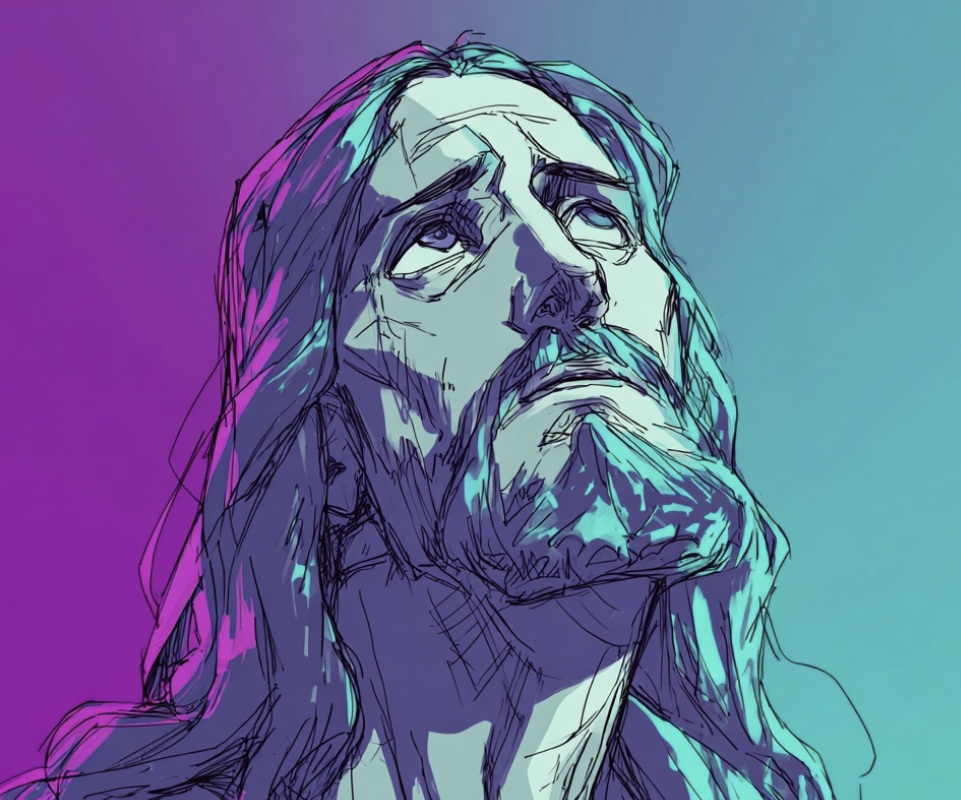
Every plant, which my heavenly Father hath not planted, shall be rooted up. Let them alone: they be blind leaders of the blind. And if the blind lead the blind, both shall fall into the ditch.
▼
Source
source
15:13-14 (KJV)
1 month 2 weeks ago
Art like life should be free, since both are experimental.
▼
Source
source
Ch. IX.: Justification of Art
2 months 3 weeks ago
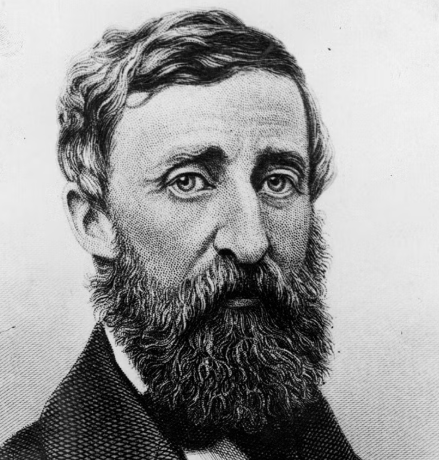
The fate of the country does not depend on how you vote at the polls - the worst man is as strong as the best at that game; it does not depend on what kind of paper you drop into the ballot-box once a year, but on what kind of man you drop from your chamber into the street every morning.
▼
Source
source
"Slavery in Massachusetts", 1854
3 weeks 1 day ago
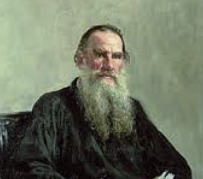
Art is a human activity having for its purpose the transmission to others of the highest and best feelings to which men have risen.
▼
Source
source
Ch. 8
2 weeks 6 days ago
It is sometimes expedient to forget who we are.
▼
Source
source
Maxim 233
1 month 3 weeks ago
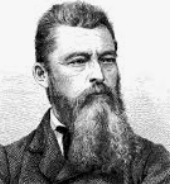
The first philosophers were astronomers. The heavens remind man ... that he is destined not merely to act, but also to contemplate.
▼
Source
source
Introduction, Z. Hanfi, trans., in The Fiery Brook (1972), pp. 101-102

2 months 4 days ago
Sobriety is the strength of the soul, for it preserves its reason unclouded by passion.
▼
Source
source
As quoted in The History of Philosophy: From the Earliest Times to the Beginning of the Present Century (1819) by William Enfield Sobriety is the strength of the mind
3 months 1 week ago
If a person gave your body to any stranger he met on his way, you would certainly be angry. And do you feel no shame in handing over your own mind to be confused and mystified by anyone who happens to verbally attack you?
▼
Source
source
(28) [tr. Elizabeth Carter]
3 weeks 4 days ago
The assertion fallacy ... is the fallacy of confusing the conditions for the performance of the speech act of assertion with the analysis of the meaning of particular words occurring in certain assertions.
▼
Source
source
P. 141.
1 month 3 weeks ago
To attempt the destruction of our passions is the height of folly. What a noble aim is that of the zealot who tortures himself like a madman in order to desire nothing, love nothing, feel nothing, and who, if he succeeded, would end up a complete monster!
▼
Source
source
Ch. 5, as quoted in Selected Writings (1966) edited by Lester G. Crocker

3 months 1 week ago
The superior man is satisfied and composed; the mean man is always full of distress. The virtuous is frank and open; the non-virtuous is secretive and worrying.
2 months 3 weeks ago
Mercantile jealousy is excited, and both inflames, and is itself inflamed, by the violence of national animosity.
▼
Source
source
Chapter III, Part II, p. 534.
1 month 2 weeks ago
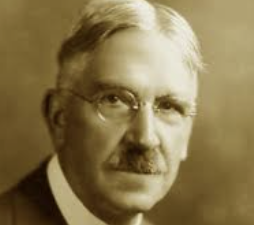
Because energy is not restrained by other elements that are at once antagonistic and cooperative, action proceeds by jerks and spasms. There is discontinuity.
▼
Source
source
p. 189

3 months 3 weeks ago
That which distinguishes the Christian narrow way from the common human narrow way is the voluntary. Christ was not someone who coveted earthly things but had to be satisfied with poverty, no, he chose poverty.
2 months 3 weeks ago
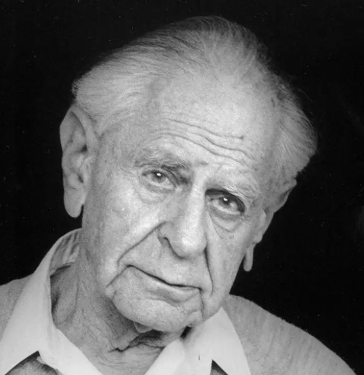
There are many difficulties impeding the rapid spread of reasonableness. One of the main difficulties is that it always takes two to make a discussion reasonable. Each of the parties must be ready to learn from the other. You cannot have a rational discussion with a man who prefers shooting you to being convinced by you.
3 months 2 weeks ago
Never let your sense of morals prevent you from doing what is right.
2 months 3 weeks ago
Things added to things, as statistics, civil history, are inventories. Things used as language are inexhaustibly attractive.
▼
Source
source
Plato; or, The Philosopher
3 months 3 weeks ago
Everything that depends on the action of nature is by nature as good as it can be, and similarly everything that depends on art or any rational cause, and especially if it depends on the best of all causes. To entrust to chance what is greatest and most noble would be a very defective arrangement.
1 month 2 days ago
Prejudices are so to speak the mechanical instincts of men: through their prejudices they do without any effort many things they would find too difficult to think through to the point of resolving to do them.
▼
Source
source
A 58
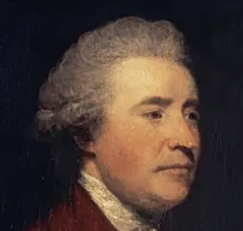
1 month 3 weeks ago
All persons possessing any portion of power ought to be strongly and awfully impressed with an idea that they act in trust and that they are to account for their conduct in that trust to the one great Master, Author, and Founder of society.
1 month 2 weeks ago
Time is heavy sometimes; imagine how heavy eternity must be.
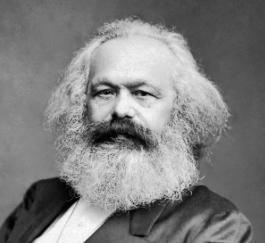
2 months 3 weeks ago
Capital is dead labor, that vampire-like, only lives by sucking living labor, and lives the more, the more labor it sucks.
▼
Source
source
Vol. I, Ch. 10, Section 1, p. 257.

1 month 4 weeks ago
Not to be content with Life is the unsatisfactory state of those which destroy themselves; who being afraid to live, run blindly upon their own Death, which no Man fears by Experience.
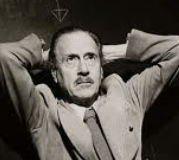
2 weeks 6 days ago
Invention is the mother of all necessities.

2 months 1 week ago
My enemy is not the man who wrongs me, but the man who means to wrong me.
2 months 3 weeks ago
The directing motive, the end and aim of capitalist production, is to extract the greatest possible amount of surplus value, and consequently to exploit labor-power to the greatest possible extent.
▼
Source
source
Vol. I, Ch. 13, pg. 363.
2 months 3 weeks ago
You can do everything with bayonets except sit on them. If you want to preserve your power indefinitely you have to get the consent of the ruled. And this they will do partly by drugs as I foresaw in "Brave new World", and partly by these new techniques of propaganda. They will do it by bypassing the sort of rational side of man and appealing to his subconscious, and his deeper emotions, and his physiology, even, and so making him actually love his slavery. I mean I think this is the danger that actually people may be, in some ways, happy under the new regime. But they will be happy in situations when they oughtn't be happy.
1 month 2 weeks ago
If we would regain our freedom, we must shake off the burden of sensation, no longer react to the world by our senses, break our bonds. For all sensation is a bond, pleasure as much as pain, joy as much as misery. The only free mind is the one that, pure of all intimacy with beings or objects, plies its own vacuity.
2 weeks 6 days ago
The criminal, like the artist, is a social explorer.
▼
Source
source
quoted in "Marshall McLuhan, Author, Dies; Declared 'Medium Is the Message'" by Alden Whitman, The New York Times, January 1, 1981
CivilSimian.com created by AxiomaticPanic, CivilSimian, Kalokagathia