

3 weeks 5 days ago
It seems as if marriage were the royal road through life, and realised, on the instant, what we have all dreamed on summer Sundays when the bells ring, or at night when we cannot sleep for the desire of living. They think it will sober and change them. Like those who join a brotherhood, they fancy it needs but an act to be out of the coil and clamour for ever. But this is a wile of the devil's. To the end, spring winds will sow disquietude, passing faces leave a regret behind them, and the whole world keep calling and calling in their ears. For marriage is like life in this - that it is a field of battle, and not a bed of roses.
▼
Source
source
Virginibus Puerisque, Ch. 1.

2 months 5 days ago
There is hardly a pioneer's hut which does not contain a few odd volumes of Shakespeare. I remember reading the feudal drama of Henry V for the first time in a log cabin.
▼
Source
source
Book One, Chapter XIII.
1 month 3 weeks ago
To eat, teeth must meet.
▼
Source
source
The Sacred and Profane Love Machine (1974), p. 66.

2 months 4 weeks ago
Then he tried to recall the lessons of Mr. Wisdom. "it is I myself, eternal Spirit, who drives this Me, the slave, along that ledge. I ought not to care whether he falls and breaks his neck or not. It is not he that is real, it is I - I - I.
▼
Source
source
Pilgrim's Regress 137
3 months 3 weeks ago
A robot, the man had said, is logical but not reasonable.

3 months 1 week ago
Who then to frail mortality shall trust But limns the water, or but writes in dust.
3 weeks 5 days ago
Contrary to earlier prejudices, there is nothing inherently progressive about evolution.
▼
Source
source
Chapter 7 "Constructive Evolution" (p. 178)
3 months 2 weeks ago
Why, then, do we wonder any longer that, although in material things we are thoroughly experienced, nevertheless in our actions we are dejected, unseemly, worthless, cowardly, unwilling to stand the strain, utter failures one and all? .
▼
Source
source
Book II, ch. 16, 18

1 month 3 weeks ago
I did not hate the author of my misfortunes - truth and justice acquit me of that; I rather pitied the hard destiny to which he seemed condemned. But I thought with unspeakable loathing of those errors, in consequence of which every man is fated to be, more or less, the tyrant or the slave. I was astonished at the folly of my species, that they did not rise up as one man, and shake off chains so ignominious, and misery so insupportable. So far as related to myself, I resolved - and this resolution has never been entirety forgotten by me - to hold myself disengaged from this odious scene, and never fill the part either of the oppressor or the sufferer.

3 months 3 days ago
Remorse sleeps during a prosperous period but wakes up in adversity.
▼
Source
source
Variant translations: Remorse sleeps during prosperity but awakes bitter consciousness during adversity. Remorse goes to sleep during a prosperous period and wakes up in adversity.

3 months 2 weeks ago
Among the appliances to transform the people, sound and appearances are but trivial influences.
3 months 1 day ago
Freedom of opinion can only exist when the government thinks itself secure...
▼
Source
source
A Fresh Look at Empiricism: 1927-42 (1996), p. 443
3 months ago
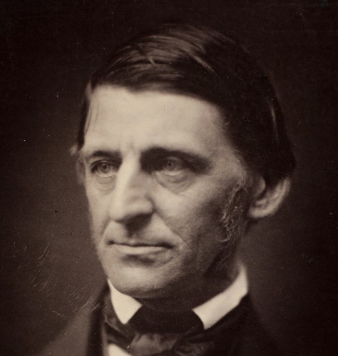
Leave this hypocritical prating about the masses. Masses are rude, lame, unmade, pernicious in their demands and influence, and need not to be flattered, but to be schooled. I wish not to concede anything to them, but to tame, drill, divide, and break them up, and draw individuals out of them.
▼
Source
source
Considerations by the Way
1 month 1 week ago
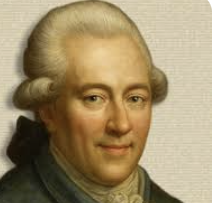
Much can be inferred about a man from his mistress: in her one beholds his weaknesses and his dreams.
▼
Source
source
F 88

4 months 2 days ago
These people who have fled inward for their freedom also have to live outwardly, become visible, let themselves be seen; they are united with mankind through countless ties of blood, residence, education, fatherland, chance, the importunity of others; they are likewise presupposed to harbour countless opinions simply because these are the ruling opinions of the time; every gesture which is not clearly a denial counts as agreement.
3 months ago
How can he [today's writer] be honored, when he does not honor himself; when he loses himself in the crowd; when he is no longer the lawgiver, but the sycophant, ducking to the giddy opinion of a reckless public.
▼
Source
source
Goethe; or, The Writer
2 months 2 weeks ago
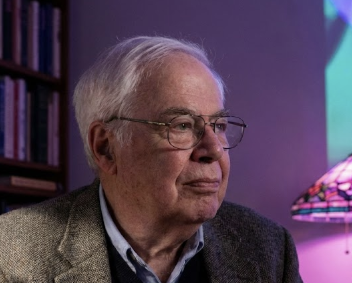
Truthfulness under oath is, by now, a matter of our civic religion, our relation to our fellow citizens rather than our relation to a nonhuman power.
▼
Source
source
"John Searle on Realism and Relativism." Truth and Progress: Philosophical Papers, Volume 3 (1998).
2 months ago
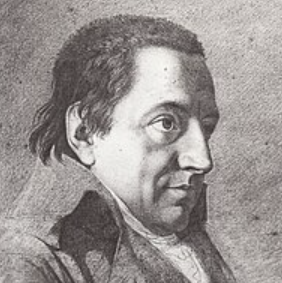
I take as my example the three notorious words, Humanity, Popularity, and Liberality. When these words are used in speaking to a German who has learnt no language but his own they are to him nothing but a meaningless noise, which has no relationship of sound to remind him of anything he knows already and so takes him completely out of his circle of observation and beyond any observation possible to him. ... Further, if in speaking to the German, instead of the words Popularity [Popularitdt] and Liberality [Liberalitat], I should use the expressions, " striving for favour with the great mob," and " not having the mind of a slave," which is how they must be literally translated, he would, to begin with, not even obtain a clear and vivid sense-image such as was certainly obtained by a Roman of old.
▼
Source
source
The Chief Difference Between The Germans And The Other Peoples Of Teutonic Descent p. 64
3 months 4 days ago
Mercy to the guilty is cruelty to the innocent.
▼
Source
source
Section II, Chap. III.
3 months ago
Through the emancipation of private property from the community, the State has become a separate entity, beside and outside civil society; but is it nothing more than the form of organization which the bourgeois necessarily adopt both for internal and external purposes, for the mutual guarantee of their property and interests.
▼
Source
source
Part One The Marx-Engels Reader, p. 187

3 months 3 days ago
Suicide evokes revulsion with horror, because everything in nature seeks to preserve itself: a damaged tree, a living body, an animal; and in man, then, is freedom, which is the highest degree of life, and constitutes the worth of it, to become now a principium for self-destruction? This is the most horrifying thing imaginable. For anyone who has already got so far as to be master, at any time, over his own life, is also master over the life of anyone else; for him, the door stands open to every crime, and before he can be seized he is ready to spirit himself away out of the world. So suicide evokes horror, in that a man thereby puts himself below the beasts. We regard a suicide as a carcase, whereas we feel pity for one who meets his end through fate.
▼
Source
source
Part II, p. 146
2 months 4 weeks ago
What do I care about Jupiter? Justice is a human issue, and I do not need a god to teach it to me.
▼
Source
source
Orestes, Act 2

1 week ago
Science is not distinguished from myth by science being literally true and myth only a type of poetic analogy. While their aims are different, both are composed of symbols we use to deal with a slippery world.
▼
Source
source
Beyond the Last Thought: Freud's cigars and the long way round to Nirvana (p. 96)
3 months 4 days ago
Lands for the purposes of pleasure and magnificence, parks, gardens, public walks, &c. possessions which are every where considered as causes of expence, not as sources of revenue, seem to be the only lands which, in a great and civilized monarchy, ought to belong the crown.
▼
Source
source
Chapter II, Part I, p. 891.

3 months 1 week ago
Though I certainly deserve no ill treatment from mortals, yet if the insults and repulses I receive were attended with any advantage to them, I would content myself with lamenting in silence my own unmerited indignities and man's injustice.
2 months ago
You women could make someone fall in love even with a lie.
▼
Source
source
Act I.

1 month 3 weeks ago
Life is too full of death for death to be able to add anything to it.
3 months ago
Most of what happens actually is forgotten.
▼
Source
source
Ch. 16
1 month 3 weeks ago
Should it be proved that woman is naturally weaker than man, from whence does it follow that it is natural for her to labour to become still weaker than nature intended her to be? Arguments of this cast are an insult to common sense, and savour of passion. The divine right of husbands, like the divine right of kings, may, it is to be hoped, in this enlightened age, be contested without danger, and though conviction may not silence many boisterous disputants, yet, when any prevailing prejudice is attacked, the wise will consider, and leave the narrow-minded to rail with thoughtless vehemence at innovation.
▼
Source
source
Ch. 3
3 months 3 weeks ago
The work of each individual contributes to a totality and so becomes an undying part of the totality. That totality of human lives - past and present and to come - forms a tapestry that has been in existence now for many thousands of years and has been growing more elaborate and, on the whole, more beautiful in all that time. Even the Spacers are an offshoot of the tapestry and they, too, add to the elaborateness and beauty of the pattern. An individual life is one thread in the tapestry and what is one thread compared to the whole?
1 month 1 week ago
What excited me was the recognition that this was simply another version of the problem that had obsessed me all of my life -- the problem of those moments when life seems entirely delightful, when we experience a sensation of what G.K. Chesterton called "absurd good news." Life normally strikes most of us as hard, dull and unsatisfying; but in these moments, consciousness seems to glow and expand, and all the contradictions seem to be resolved. Which of the two visions is true? My own reflections had led me to conclude that the vision of "absurd good news" is somehow broader and more comprehensive than the feeling that life is dull, boring and meaningless. Boredom is basically a feeling of narrowness, and surely a narrow vision is bound to be less true than a broad one?
▼
Source
source
p. 16
1 month 2 weeks ago
It is in literature that the concrete outlook of humanity receives its expression.
▼
Source
source
Ch. 5: "The Romantic Reaction", p. 106
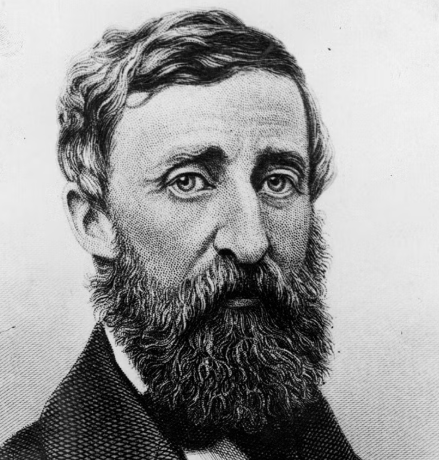
3 months ago
The youth gets together his materials to build a bridge to the moon, or, perchance, a palace or temple on the earth, and, at length, the middle-aged man concludes to build a woodshed with them.
▼
Source
source
July 14, 1852
2 months 5 days ago
In cities men cannot be prevented from concerting together, and from awakening a mutual excitement which prompts sudden and passionate resolutions. Cities may be looked upon as large assemblies, of which all the inhabitants are members; their populace exercises a prodigious influence upon the magistrates, and frequently executes its own wishes without their intervention. Variant translation: In towns it is impossible to prevent men from assembling, getting excited together and forming sudden passionate resolves. Towns are like great meeting houses with all the inhabitants as members. In them the people wield immense influence over their magistrates and often carry their desires into execution without intermediaries.
▼
Source
source
Chapter XVII.
3 months ago
The weapon of criticism obviously cannot replace the criticism of weapons. Material force can only be overthrown by material force, but theory itself becomes a material force when it has gripped the masses. Theory is capable of gripping the masses when it demonstrates ad hominem, and it demonstrates ad hominem, when it becomes radical. To be radical is to grasp things by the root, but for man the root is man himself. The clear proof of the radicalism of German theory, and hence of its political energy, is that it proceeds from the decisive positive abolition of religion.
▼
Source
source
As quoted from David McLellan, Marx before Marxism, MacMillan, 1980, p. 150.

3 months 3 weeks ago
To become god is merely to be free on this earth, not to serve an immortal being.

3 months 1 week ago
How many worthy men have we seen survive their own reputation!
▼
Source
source
Book II, Ch. 16. Of Glory
3 months 3 days ago
In man (as the only rational creature on earth) those natural capacities which are directed to the use of his reason are to be fully developed only in the race, not in the individual.
▼
Source
source
Second Thesis
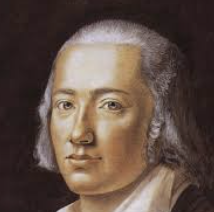
2 months ago
You seek life, and a godly fire Gushes and gleams for you out of the earth, As, with shuddering long, you Hurl yourself down to the flames of the Etna. So by a queen's wanton whim Pearls were dissolved in wine- heed her not! What folly, poet, to cast your riches Into that bright and bubbling cup! Yet still are you holy to me, as the might of the earth That bore you away, audaciously perishing! And I would follow the hero into the depths Did love not hold me.
▼
Source
source
"Empedokles"
2 weeks 2 days ago
In a well worn metaphor, a parallel is drawn between the life of man and the metamorphosis of the caterpillar into the butterfly; but the comparison may be more just as well as more novel, if for its former term we take the mental progress of the race. History shows that the human mind, fed by constant accessions of knowledge, periodically grows too large for its theoretical coverings, and bursts them asunder to appear in new habiliments, as the feeding and growing grub, at intervals, casts its too narrow skin and assumes another, itself but temporary. Truly the imago state of Man seems to be terribly distant, but every moult is a step gained, and of such there have been many.
▼
Source
source
Ch.2, p. 72
1 month 2 weeks ago
When the great religious and philosophical conceptions were alive, thinking people did not extol humility and brotherly love, justice and humanity because it was realistic to maintain such principles and odd and dangerous to deviate from them, or because these maxims were more in harmony with their supposedly free tastes than others. They held to such ideas because they saw in them elements of truth, because they connected them with the idea of logos, whether in the form of God or of a transcendental mind, or even of nature as an eternal principle.
▼
Source
source
p. 34.
1 month 1 week ago
Emptiness is not a denial of the proper but an affirmation of it.
3 months ago
Perhaps I am more than usually jealous with respect to my freedom. I feel that my connection with and obligation to society are still very slight and transient. Those slight labors which afford me a livelihood, and by which it is allowed that I am to some extent serviceable to my contemporaries, are as yet commonly a pleasure to me, and I am not often reminded that they are a necessity. So far I am successful. But I foresee, that, if my wants should be much increased, the labor required to supply them would become a drudgery. If I should sell both my forenoons and afternoons to society, as most appear to do, I am sure, that, for me, there would be nothing left worth living for. I trust that I shall never thus sell my birthright for a mess of pottage.
▼
Source
source
p. 486

3 months 2 weeks ago
If teleological study of the world is philosophy, and if the Law commands such a study, then the Law commands philosophy.
4 months 2 days ago
One has attained to mastery when one neither goes wrong nor hesitates in the performance.
1 month 2 weeks ago
But it has been necessary, for the benefit of the social order, to convert religion into a kind of police system, and hence hell. Oriental or Greek Christianity is predominantly eschatological, Protestantism predominantly ethical, and Catholicism is a compromise between the two, although with the eschatological element predominating.
1 month 1 week ago
As of old, the most enlightened, even, hope for a miracle from the twentieth-century deity, - suffrage. Life, happiness, joy, freedom, independence, - all that, and more, is to spring from suffrage. In her blind devotion woman does not see what people of intellect perceived fifty years ago: that suffrage is an evil, that it has only helped to enslave people, that it has but closed their eyes that they may not see how craftily they were made to submit.
3 months 1 day ago
It is difficult, if not impossible, to define the limit of our reasonable desires in respect of possessions.
▼
Source
source
E. Payne, trans. (1974) Vol. 1, p. 346
1 month 1 week ago
For me [fiction] is a manner of philosophizing ... Philosophy may be only a shadow of the reality it tries to grasp, but the novel is altogether more satisfactory. I am almost tempted to say that no philosopher is qualified to do his job unless he is also a novelist ... I would certainly exchange any of the works of Whitehead or Wittgenstein for the novels they ought to have written.
▼
Source
source
p. 160-1
CivilSimian.com created by AxiomaticPanic, CivilSimian, Kalokagathia