

1 month 2 weeks ago
There are only two cases in which war is just: first, in order to resist the aggression of an enemy, and second, in order to help an ally who has been attacked.
▼
Source
source
No. 95. (Usbek writing to Rhedi)
2 months 4 weeks ago
I think that yesterday was a crisis in my life. I finished the first part of Renouvier's second Essais and see no reason why his definition of free will-"the sustaining of a thought because I choose to when I might have other thoughts"-need be the definition of an illusion. At any rate, I will assume for the present-until next year-that it is no illusion. My first act of free will shall be to believe in free will.
▼
Source
source
Diary entry (April 30, 1870) as quoted in Ralph Barton Perry, The Thought and Character of William James, vol. 1, p. 323; Letters of William James, vol. I, p. 147.
1 month 2 weeks ago
Isolation is the worst possible counselor.
▼
Source
source
Civilization is Civilism
2 months 3 weeks ago
The consciousness of being betrayed is to the collective consciousness of a sacred group what a certain form of schizophrenia is to the individual...it is a form of madness.
▼
Source
source
p. 193

2 months 3 days ago
Nothing seems at first sight less important than the outward form of human actions, yet there is nothing upon which men set more store: they grow used to everything except to living in a society which has not their own manners.
▼
Source
source
Book Three, Chapter XIV.
2 days ago
It goes without saying that any persons may attempt to unite kindred spirits, but, whatever their hopes and longings, none have the right to impose their vision of unity upon the rest.
▼
Source
source
Ch. 10 : A Framework for Utopia; The Framework as Utopian Common Ground, p. 325
3 months 2 weeks ago
The confession of evil works is the first beginning of good works.
▼
Source
source
Tractates on the Gospel of John; tractate XII on John 3:6-21, and 13

3 months ago
As these people are not convicted of forfeiting freedom, they have still a natural, perfect right to it; and the Governments whenever they come should, in justice set them free, and punish those who hold them in slavery.

2 months 3 weeks ago
Nietzsche understands the aesthetic state of the observer and recipient on the basis of the state of the creator. Thus the effect of the artwork is nothing else than a reawakening of the creator's state in the one who enjoys the artwork. Observation of art follows in the wake of creation. Nietzsche says (SM, 821), "-the effect of artworks is arousal of the art-creating state, rapture."
▼
Source
source
p. 117
3 months 3 weeks ago
A man is more a man through the things he keeps to himself than through those he says.
1 month 1 week ago
Temperament refers to the mode of reaction and is constitutional and not changeable; character is essentially formed by a person's experiences, especially of those in early life, and changeable, to some extent, by insights and new kinds of experiences. If a person has a choleric temperament, for instance, his mode of reaction is "quick and strong." But what he is quick or strong about depends on his kind of relatedness, his character. If he is a productive, just, loving person he will react quickly and strongly when he loves, when he is enraged by injustice, and when he is impressed by a new idea. If he is a destructive or sadistic character, he will be quick and strong in his destructiveness or in his cruelty. The confusion between temperament and character has had serious consequences for ethical theory. Preferences with regard to differences in temperament are mere matters of subjective taste. But differences in character are ethically of the most fundamental importance.
▼
Source
source
Ch. 3
1 month 3 weeks ago
Ennui is the echo in us of time tearing itself apart.
1 month 3 weeks ago
The farther men get from God, the farther they advance into the knowledge of religions.
3 months 2 weeks ago
Of all the means which wisdom acquires to ensure happiness throughout the whole of life, by far the most important is friendship.
3 weeks ago
Can we find nothing good to say about TV? Well, yes, it brings scattered solitaries into a sort of communion. TV allows your isolated American to think that he participates in the life of the entire country. It does not actually place him in a community, but his heart is warmed with the suggestion (on the whole false) that there is a community somewhere in the vicinity and that his atomized consciousness will be drawn back toward the whole.
▼
Source
source
The Distracted Public (1990), p. 159
1 month 3 weeks ago
No moral system can rest solely on authority.
▼
Source
source
Humanist Outlook (1968), p. 4.
2 months 4 weeks ago
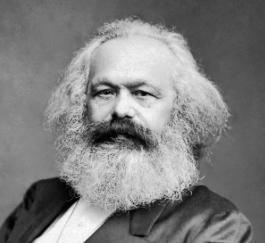
In England women are still occasionally used instead of horses for hauling canal boats, because the labour required to produce horses and machines is an accurately known quantity, while that required to maintain the women of the surplus population is below all calculation.
▼
Source
source
Vol. I, Ch. 15, Section 2, pg. 430.
1 week 4 days ago
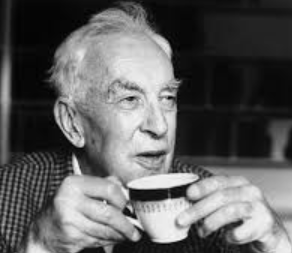
So-called racial characteristics are not really racial at all but are due to the historical experiences of the communities in question.
▼
Source
source
Abridgement of Vols. 1-6 by D. C. Somervell

3 months 4 weeks ago
Oh, can I really believe the poet's tales, that when one first sees the object of one's love, one imagines one has seen her long ago, that all love like all knowledge is remembrance, that love too has its prophecies in the individual. ... it seems to me that I should have to possess the beauty of all girls in order to draw out a beauty equal to yours; that I should have to circumnavigate the world in order to find the place I lack and which the deepest mystery of my whole being points towards, and at the next moment you are so near to me, filling my spirit so powerfully that I am transfigured for myself, and feel that it's good to be here.
1 month 3 weeks ago
We define only out of despair, we must have a formula... to give a facade to the void.
2 months 4 weeks ago
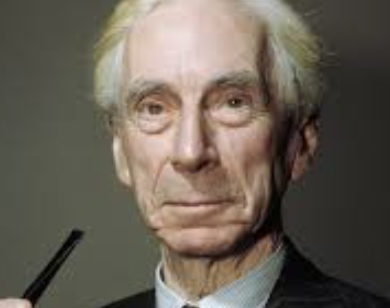
I do not pretend to start with precise questions. I do not think you can start with anything precise. You have to achieve such precision as you can, as you go along.
1 month 3 weeks ago
Society: an inferno of saviors!
3 weeks 5 days ago
Although the medium is the message, the controls go beyond programming. The restraints are always directed to the "content," which is always another medium. The content of the press is literary statement, as the content of the book is speech, and the content of the movie is the novel. So the effects of radio are quite independent of its programming.
▼
Source
source
(p. 267)
2 months 3 weeks ago
We think of beauty as being most worthy of reverence. But what is most worthy of reverence lights up only where the magnificent strength to revere is alive. To revere is not a thing for the petty and lowly, the incapacitated and underdeveloped. It is a matter of tremendous passion; only what flows from such passion is in the grand style.
▼
Source
source
p. 125

3 months ago
Doctors are men who prescribe medicine of which they know little, to human beings of whom they know less, to cure diseases of which they know nothing.
▼
Source
source
Note: This attribution to Voltaire appears in Strauss' Familiar Medical Quotations (1968), p. 394, and in publications as early as 1956
4 weeks ago
If you want to be happy, be.
▼
Source
source
Attributed in Wisdom for the Soul : Five Millennia of Prescriptions for Spiritual Healing (2006) by Larry Chang, p. 352
4 weeks ago
Science is meaningless because it gives no answer to our question, the only question important for us: 'what shall we do and how shall we live.
▼
Source
source
Quoted by Max Weber in his lecture "Science as a Vocation"; in Lynda Walsh (2013)

1 month 3 weeks ago
For such is the nature of men, that howsoever they may acknowledge many others to be more witty, or more eloquent, or more learned; Yet they will hardly believe there be many so wise as themselves: For they see their own wit at hand, and other men's at a distance.
▼
Source
source
The First Part, Chapter 13, p. 61
3 weeks 3 days ago
The imagination loves to trifle with what is not.
▼
Source
source
The Sea Fogs
2 months 3 weeks ago
Knowledge is in the end based on acknowledgement.

3 months 6 days ago
Faith is a living, bold trust in God's grace, so certain of God's favor that it would risk death a thousand times trusting in it. Such confidence and knowledge of God's grace makes you happy, joyful and bold in your relationship to God and all creatures. The Holy Spirit makes this happen through faith. Because of it, you freely, willingly and joyfully do good to everyone, serve everyone, suffer all kinds of things, love and praise the God who has shown you such grace.
▼
Source
source
An Introduction to St. Paul's Letter to the Romans fromDr. Martin Luthers Vermischte Deutsche Schriften. Johann K. Irmischer, ed. Vol. 63(Erlangen: Heyder and Zimmer, 1854), pp. 124-125. (EA 63:124-125)
3 weeks 3 days ago
A faculty for idleness implies a catholic appetite and a strong sense of personal identity.
▼
Source
source
An Apology for Idlers.
3 months 1 week ago
On Ps 60:3: To Thee have I cried from the ends of the earth.
1 month 2 weeks ago
In a world that has been thoroughly permeated by the structures of the social order, a world that so overpowers every individual that scarcely any option remains but to accept it on its own terms, such naiveté reproduces itself incessantly and disastrously. What people have forced upon them by a boundless apparatus, which they themselves constitute and which they are locked into, virtually eliminates all natural elements and becomes "nature" to them.
▼
Source
source
p. 12
1 month 3 weeks ago
You have dreamed of setting the world ablaze, and you have not even managed to communicate your fire to words, to light up a single one!
1 week ago
Some days will be sublime. Others will be merely wonderful. But critically, there will be one particular texture ("what it feels like") of consciousness that will be missing from our lives; and that will be the texture of nastiness.
▼
Source
source
"Feeling Groovy, Forever", Institute for Ethics and Emerging Technologies, 14 Mar. 2012
1 week 4 days ago
Our western science is a child of moral virtues; and it must now become the father of further moral virtues if its extraordinary material triumphs in our time are not to bring human history to an abrupt, unpleasant and discreditable end.
▼
Source
source
"A Turning Point in Man's Destiny", The New York Times Magazine (26 December 1954) p. 5
2 weeks ago
The foundation of morality is to have done, once and for all, with lying; to give up pretending to believe that for which there is no evidence, and repeating unintelligible propositions about things beyond the possibilities of knowledge.
▼
Source
source
Science and Morals
1 month 4 weeks ago
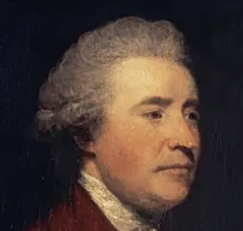
Hypocrisy, of course, delights in the most sublime speculations; for, never intending to go beyond speculation, it costs nothing to have it magnificent.
3 months 1 week ago
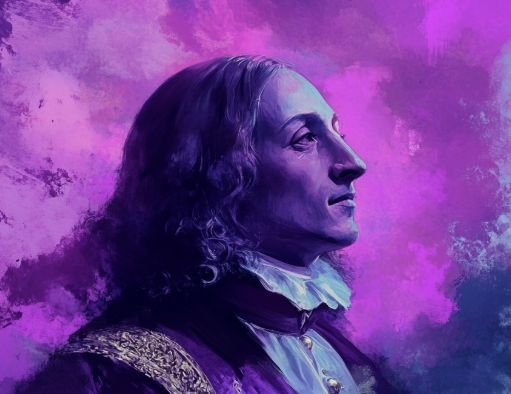
The whole title by which you possess your property, is not a title of nature but of a human institution.
2 months 4 weeks ago
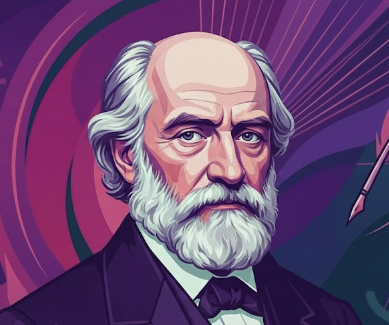
Means at our disposal should be regarded as a bulwark against the many evils and misfortunes that can occur. We should not regard such wealth as a permission or even an obligation to procure for ourselves the pleasures of the world.
▼
Source
source
E. Payne, trans. (1974) Vol. 1, p. 348
1 month 2 weeks ago
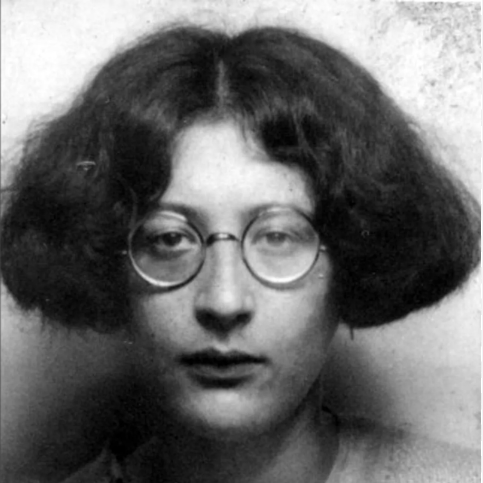
A society like the Church, which claims to be Divine is perhaps more dangerous on account of the ersatz good which it contains then on account of the evil which sullies it. Something of the social labelled divine: an intoxicating mixture which carries with it every sort of license.
▼
Source
source
Devil disguised. p. 122
4 weeks ago
For us, with the rule of right and wrong given us by Christ, there is nothing for which we have no standard. And there is no greatness where there is not simplicity, goodness, and truth.
▼
Source
source
Bk. XIV, ch. 18
2 months 4 weeks ago
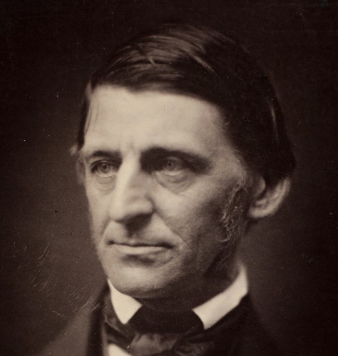
Society undergoes continual changes; it is barbarous, it is civilized, it is Christianized, it is rich, it is scientific; but this change is not amelioration. For everything that is given something is taken. Society acquires new arts, and loses old instincts. The civilized man has built a coach, but has lost the use of his feet; he has a fine Geneva watch, but cannot tell the hour by the sun.
▼
Source
source
p. 243
2 months 4 weeks ago
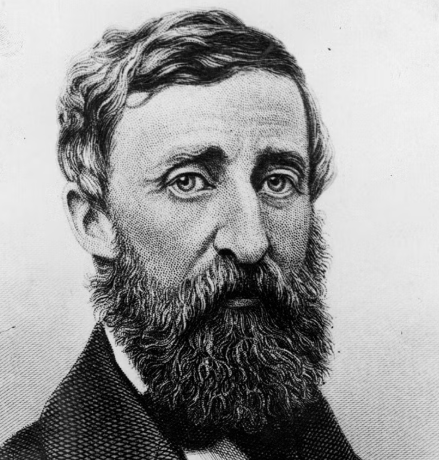
You must love the crust of the earth on which you dwell more than the sweet crust of any bread or cake; you must be able to extract nutriment out of a sand heap.
▼
Source
source
January 25, 1858
4 weeks ago
Pure and complete sorrow is as impossible as pure and complete joy.
▼
Source
source
Bk. XV, ch. 1
1 month 1 week ago
It is hardly to be believed how spiritual reflections when mixed with a little physics can hold people's attention and give them a livelier idea of God than do the often ill-applied examples of his wrath.
▼
Source
source
A 11
1 month 3 weeks ago
Having always lived in fear of being surprised by the worst, I have tried in every circumstance to get a head start, flinging myself into misfortune long before it occurred.
CivilSimian.com created by AxiomaticPanic, CivilSimian, Kalokagathia