

2 months 3 weeks ago
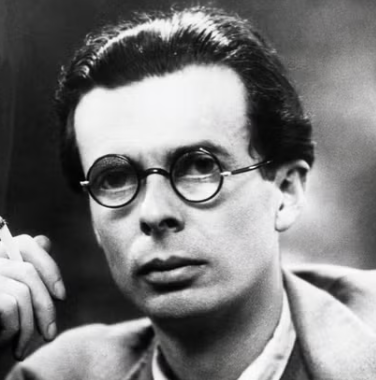
Both of us victims of the same twentieth-century plague. Not the Black Death, this time; the Grey Life.

2 months 2 weeks ago
The mind enamored with deceptive things, declines things better.
▼
Source
source
Book II, satire ii, line 6
2 weeks 5 days ago
Once you had read the Psychopathology of Everyday Life, you knew that everyday life was psychopathology.
▼
Source
source
Humboldt's Gift (1975) [Penguin Classics, 1996, ISBN 0-140-18944-0], p. 5
2 months 2 weeks ago
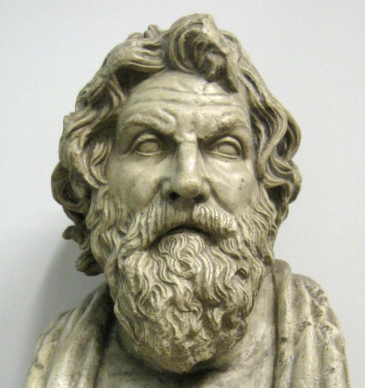
I'd rather be mad than feel pleasure.
▼
Source
source
§ 3; quoted also by Eusebius of Caesarea, Praeparatio Evangelica xv. 13
3 months 3 days ago
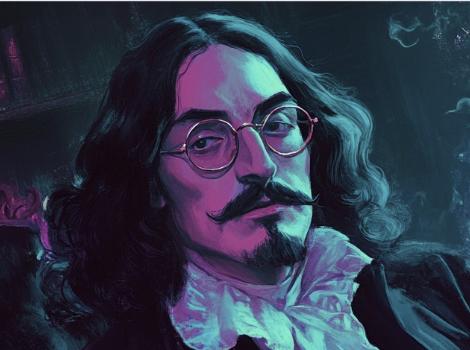
What I have given in the second book on the nature and properties of curved lines, and the method of examining them, is, it seems to me, as far beyond the treatment in the ordinary geometry, as the rhetoric of Cicero is beyond the a, b, c of children.
▼
Source
source
Letter to Marin Mersenne (1637) as quoted by D. E. Smith & M. L. Latham Tr. The Geometry of René Descartes
1 month 3 weeks ago
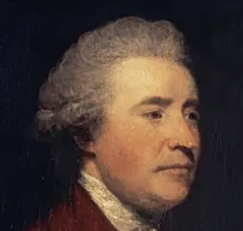
It is the function of a judge not to make but to declare the law, according to the golden mete-wand of the law and not by the crooked cord of discretion.
▼
Source
source
Preface to Brissot's Address
2 months 3 weeks ago
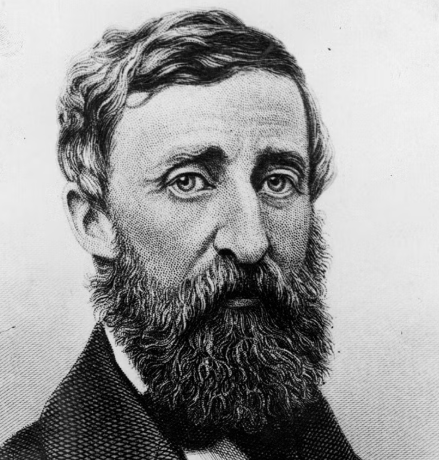
He would have left a Greek accent slanting the wrong way, and righted up a falling man.
3 months ago
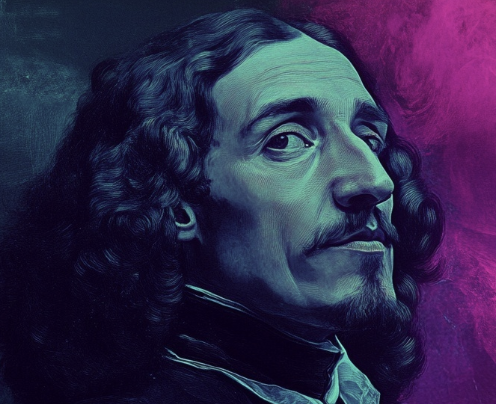
Extreme pride or dejection indicates extreme ignorance of self.
▼
Source
source
Part IV, Prop. LV
2 months 3 weeks ago
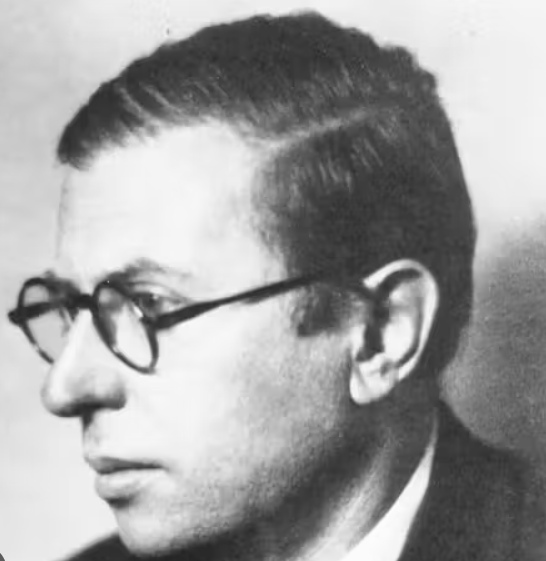
I mistrust illuminations: what we take for a discovery is very often only a familiar thought that we have not recognized.
▼
Source
source
p. 439
1 month 1 week ago
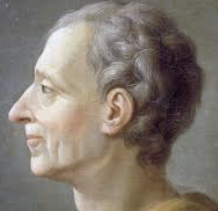
Not to be loved is a misfortune, but it is an insult to be loved no longer.
▼
Source
source
No. 3. (Zachi writing to Usbek)
1 month 3 weeks ago
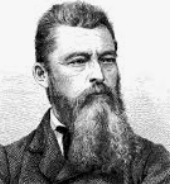
We have busied ourselves and contented ourselves long enough with speaking and writing; now at last we demand that the word become flesh, the spirit matter; we are as sick of political as we are of philosophical idealism; we are determined to become political materialists.
▼
Source
source
Lecture I, Occasion and Context
3 months 2 weeks ago
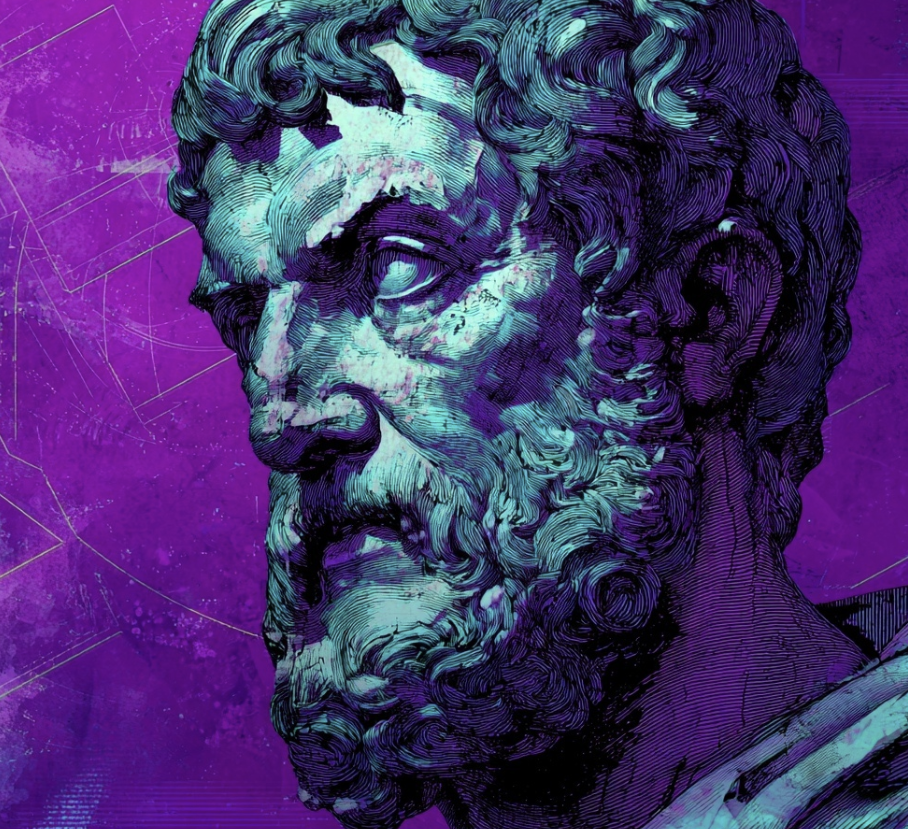
Since, of desires some are natural and necessary; others natural, but not necessary; and others neither natural nor necessary, but the offspring of false judgment; it must be the office of temperance to gratify the first class, as far as nature requires: to restrain the second within the bounds of moderation; and, as to the third, resolutely to oppose, and, if possible, entirely repress them.
2 months 3 weeks ago
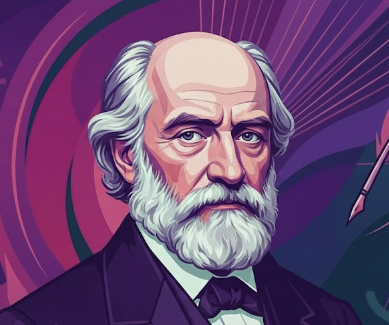
There is no more mistaken path to happiness than worldliness, revelry, high life.
▼
Source
source
Our Relation to Others, § 24
1 month 3 weeks ago
The transition of the subject-object relation to that of the I-Thou implies a passage of consciousness to a new sphere of existence, viz, the interval, betweenness or Zwischen; and this is a passage from thought to Umfassung.
▼
Source
source
The Levinas reader by Levinas, Emmanuel p. 73
3 months 2 weeks ago
We must consider both the ultimate end and all clear sensory evidence, to which we refer our opinions; for otherwise everything will be full of uncertainty and confusion.
1 month 4 days ago
I might try to save the view that 'future contingents' have no truth value by saying that even present-tense statements have no truth value if they refer to the outcome of events that are so far away that a causal signal informing me of the outcome could not have reached me-now without traveling faster than light. In other words, I might attempt saying that statements about events that are in neither the upper half nor the lower half of my light-cone have no truth value. In addition, statements about events in the upper half of my light-cone have no truth value, since they are in my future according to every coordinate system. So only statements about events in the lower half of my light-cone have a truth value; only events that are in 'my past* according to all observers are determined.
▼
Source
source
Time and physical geometry
1 month 1 week ago
The Kropotkins, the Perovskayas, the Breshkovskayas, and hosts of others repudiated wealth and station and refused to serve King Mammon. They went among the people, not to lift them up but themselves to be lifted up, to be instructed, and in return to give themselves wholly to the people. That accounts for the heroism, the art, the literature of Russia, the unity between the people, the mujik and the intellectual. That to some extent explains the literature of all European countries, the fact that the Strindbergs, the Hauptmanns, the Wedekinds, the Brieux, the Mirbeaus, the Steinlins and Rodins have never dissociated themselves from the people.

2 months 4 weeks ago
Let us maintain inviolably equality in the sacred right of suffrage: public security can never have a basis more solid.
▼
Source
source
Author's Inscription: French Edition

2 months 3 weeks ago
As there is a use in medicine for poisons, so the world cannot move without rogues.
▼
Source
source
Power
1 week 5 days ago
The mediaeval university looked backwards: it professed to be a storehouse of old knowledge... The modern university looks forward: it is a factory of new knowledge.
▼
Source
source
Letter to E. Ray Lankester (11 April 1892) Huxley Papers, Imperial College: 30.448
1 month 3 weeks ago
I decline the election. - It has ever been my rule through life, to observe a proportion between my efforts and my objects. I have never been remarkable for a bold, active, and sanguine pursuit of advantages that are personal to myself.
▼
Source
source
Speech at Bristol on declining the poll (9 September 1780), quoted in The Works of the Right Honourable Edmund Burke, Vol. II (1855), p. 170
2 months 3 weeks ago
I cannot escape from the conclusion that the great ages of progress have depended upon a small number of individuals of transcendent ability.
▼
Source
source
Ch. 8: Western Civilisation
1 month 1 week ago
We should have with each person the relationship of one conception of the universe to another conception of the universe, and not to a part of the universe.
▼
Source
source
p. 129
2 months 4 weeks ago
Suicide evokes revulsion with horror, because everything in nature seeks to preserve itself: a damaged tree, a living body, an animal; and in man, then, is freedom, which is the highest degree of life, and constitutes the worth of it, to become now a principium for self-destruction? This is the most horrifying thing imaginable. For anyone who has already got so far as to be master, at any time, over his own life, is also master over the life of anyone else; for him, the door stands open to every crime, and before he can be seized he is ready to spirit himself away out of the world. So suicide evokes horror, in that a man thereby puts himself below the beasts. We regard a suicide as a carcase, whereas we feel pity for one who meets his end through fate.
▼
Source
source
Part II, p. 146
2 weeks 5 days ago
In an age of enormities, the emotions are naturally weakened. We are continually called upon to have feelings - about genocide, for instance, or about famine or the blowing up of passenger planes - and we are all aware that we are incapable of reacting appropriately. A guilty consciousness of emotional inadequacy or impotence makes people doubt their own human weight.
▼
Source
source
"The Distracted Public" (1990), p. 156

2 months 3 weeks ago
India has always been an object of yearning, a realm of wonder, a world of magic... India is the land of dreams. India had always dreamt - more of the Bliss that is man's final goal. And this has helped India to be more creative in history than any other nation. Hence the effervescence of myths and legends, religious and philosophies, music, and dances and the different styles of architecture." ...
▼
Source
source
quoted in Patri, Umesh Hindu scriptures and American transcendentalists 1st ed. quoted from Londhe, S. (2008).
1 month 2 weeks ago
For I came to cause division, with a man against his father, and a daughter against her mother, and a daughter-in-law against her mother-in-law. 36 Indeed, a man's enemies will be those of his own household.
▼
Source
source
10:35,36, New World Translation
2 months 4 weeks ago
The concept of space, therefore, is a pure intuition, being a singular concept, not made up by sensations, but itself the fundamental form of all external sensation.

1 month 3 weeks ago
The only minds which seduce us are the minds which have destroyed themselves trying to give their life a meaning.
3 months 3 weeks ago
A tragedy, then, is the imitation of an action that is serious and also, as having magnitude, complete in itself; in language ... not in a narrative form; with incidents arousing pity and fear, wherewith to accomplish its catharsis of such emotions.
2 months 3 weeks ago
Diversity makes critical argument fruitful. ...[P]artners in an argument must share ...the wish to know, and the readiness to learn from the other ...by severely criticizing his views... and hearing... [the] reply. ...the so-called method of science consists in this kind of criticism.
3 weeks 3 days ago
America is 100% 18th Century. The 18th century had chucked out the principle of metaphor and analogy - the basic fact that as A is to B so is C to D. AB:CD. It can see AB relations. But relations in four terms are still verboten. This amounts to deep occultation of nearly all human thought for the USA.
▼
Source
source
Letter to Ezra Pound

3 months 4 weeks ago
Life is, after all, not a product of morality.
1 month 1 week ago
Words of the jargon sound as if they said something higher than what they mean.
▼
Source
source
p. 9
3 weeks 3 days ago
Without an understanding of causality there can be no theory of communication. What passes as information theory today is not communication at all, but merely transportation.
▼
Source
source
(p. 362)
1 month 2 weeks ago
The most immediate result of this unbalanced specialisation has been that to-day, when there are more "scientists" than ever, there are much less "cultured" men than, for example, about 1750. And the worst is that with these turnspits of science not even the real progress of science itself is assured. For science needs from time to time, as a necessary regulator of its own advance, a labour of reconstitution, and, as I have said, this demands an effort towards unification, which grows more and more difficult, involving, as it does, ever-vaster regions of the world of knowledge. Newton was able to found his system of physics without knowing much philosophy, but Einstein needed to saturate himself with Kant and Mach before he could reach his own keen synthesis. Kant and Mach - the names are mere symbols of the enormous mass of philosophic and psychological thought which has influenced Einstein.
▼
Source
source
Chapter XII: The Barbarism Of "Specialisation"
2 months 1 week ago
Lycurgus the Lacedæmonian brought long hair into fashion among his countrymen, saying that it rendered those that were handsome more beautiful, and those that were deformed more terrible. To one that advised him to set up a democracy in Sparta, "Pray," said Lycurgus, "do you first set up a democracy in your own house."
▼
Source
source
57 Lycurgus
1 month 1 week ago
The 'open' mind of the poet and artist can sense realities beyond the reach of our normal senses. The real problem is that our materialistic assumptions have a number of false premises built into them: it is only when we recognize this that we see there is no sharp dividing line between the everyday world and the invisible world of the clairvoyant.
▼
Source
source
p. 294
3 weeks 2 days ago
When two do the same thing, it is not the same thing after all.
▼
Source
source
Maxim 338
3 weeks 3 days ago
Electric circuitry profoundly involves men with one another. Information pours upon us, instantaneously and continuously.

1 month 2 days ago
There are two kinds of people, killers, and everybody else.
3 weeks 3 days ago
All media of communications are cliches serving to enlarge man's scope of action, his patterns of associations and awareness. These media create environments that numb our powers of attention by sheer pervasiveness.
1 month 2 weeks ago
Perhaps when distant people on other planets pick up some wave-length of ours all they hear is a continuous scream.
▼
Source
source
The Message to the Planet (1989) p. 509.
1 month 1 week ago
I have told you that... we know nothing save what we have first, in one way or another, desired; and it may even be added that we can know nothing well save what we love, save what we pity.
1 month 3 weeks ago
Reason does not exist for the sake of life, but life for the sake of reason. An existence which does not of itself satisfy reason and solve all her doubts, cannot be the true one.
▼
Source
source
Jane Sinnett, trans 1846 p.94
1 month 2 weeks ago
The RIGHT OF NATURE, which Writers commonly call Jus Naturale, is the Liberty each man hath, to use his own power, as he will himself, for the preservation of his own Nature; that is to say, of his own Life; and consequently, of doing any thing, which in his own Judgement, and Reason, he shall conceive to be the aptest means thereunto.
▼
Source
source
The First Part, Chapter 14, p. 64
1 month 3 weeks ago
Do a man dirt, yourself you hurt.
1 month 3 weeks ago
A diversity of opinion upon almost every principle of politics, had indeed drawn a strong line of separation between them and some others. However, they were desirous not to extend the misfortune by unnecessary bitterness; they wished to prevent a difference of opinion on the commonwealth from festering into rancorous and incurable hostility. Accordingly they endeavoured that all past controversies should be forgotten; and that enough for the day should be the evil thereof. There is however a limit at which forbearance ceases to be a virtue. Men may tolerate injuries, whilst they are only personal to themselves. But it is not the first of virtues to bear with moderation the indignities that are offered to our country.
▼
Source
source
Describing the Government's position at a previous time of deep division in British politics in fact over policy on America, Observations on a Late Publication on the Present State of the Nation (1769), page 2
3 months 2 weeks ago
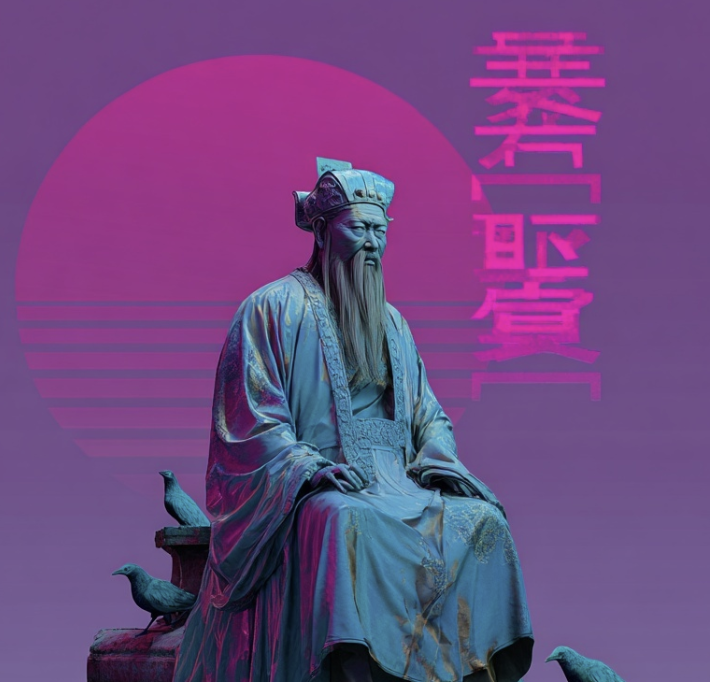
The superior man examines his heart, that there may be nothing wrong there, and that he may have no cause for dissatisfaction with himself. That wherein the superior man cannot be equaled is simply this, his work which other men cannot see.

2 months 2 weeks ago
One who is serious all day will never have a good time, while one who is frivolous all day will never establish a household.
▼
Source
source
Maxim no. 25.
CivilSimian.com created by AxiomaticPanic, CivilSimian, Kalokagathia