


1 month 3 weeks ago
The poor maidservant who used to say that she only believed in God when she had a toothache puts all theologians to shame.

2 months 3 weeks ago
My difficulty is only an - enormous - difficulty of expression.
▼
Source
source
Journal entry (8 March 1915) p. 40
2 months 3 weeks ago
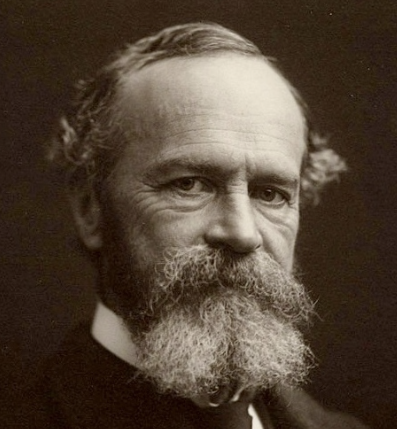
No particular results then, so far, but only an attitude of orientation, is what the pragmatic method means. The attitude of looking away from first things, principles, 'categories,' supposed necessities; and of looking towards last things, fruits, consequences, facts.
▼
Source
source
Lecture II, What Pragmatism Means
1 month 3 weeks ago
Word - that invisible dagger.
1 month 1 week ago
Psychoanalysis is essentially a theory of unconscious strivings, of resistance, of falsification of reality according to one's subjective needs and expectations.
▼
Source
source
p. 109
1 month 3 weeks ago
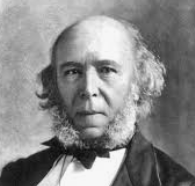
"No human laws are of any validity if contrary to the law of nature; and such of them as are valid derive all their force and all their authority mediately or immediately from this original." Thus writes Blackstone, to whom let all honour be given for having so far outseen the ideas of his time; and, indeed, we may say of our time. A good antidote, this, for those political superstitions which so widely prevail. A good check upon that sentiment of power-worship which still misleads us by magnifying the prerogatives of constitutional governments as it once did those of monarchs. Let men learn that a legislature is not "our God upon earth," though, by the authority they ascribe to it, and the things they expect from it, they would seem to think it is. Let them learn rather that it is an institution serving a purely temporary purpose, whose power, when not stolen, is at the best borrowed.
▼
Source
source
Pt. III, Ch. 19 : The Right to Ignore the State, § 2

1 month 1 week ago
Racism has always been a divisive force separating black men and white men, and sexism has been a force that unites the two groups.
1 month 3 weeks ago
As long as one believes in philosophy, one is healthy; sickness begins when one starts to think.
1 month 3 weeks ago
Anxiety - or the fanaticism of the worst.
1 month 1 week ago
Both are torn halves of an integral freedom, to which however they do not add up.
▼
Source
source
On high culture and popular culture, in a letter to Walter Benjamin
3 months 1 week ago
Although life is a matter of indifference, the use which you make of it is not a matter of indifference.
▼
Source
source
Book II, ch. 6, 1.
2 months 3 weeks ago
We are told that a utilitarian will be apt to make his own particular case an exception to moral rules, and, when under temptation, will see a utility in the breach of a rule, greater than he will see in its observance. But is utility the only creed which is able to furnish us with excuses for evil doing, and means of cheating our own conscience? They are afforded in abundance by all doctrines which recognise as a fact in morals the existence of conflicting considerations; which all doctrines do, that have been believed by sane persons. It is not the fault of any creed, but of the complicated nature of human affairs, that rules of conduct cannot be so framed as to require no exceptions, and that hardly any kind of action can safely be laid down as either always obligatory or always condemnable.
▼
Source
source
Ch. 2

2 months 2 weeks ago
We know nothing accurately in reality, but [only] as it changes according to the bodily condition, and the constitution of those things that flow upon [the body] and impinge upon it.
▼
Source
source
Freeman (1948), p. 142

3 months 3 weeks ago
This is the end of the web of the statesman activity: the direct interweaving of the characters of restrained and courageous men, when the kingly science has drawn them together by friendship and community of sentiment into a common life, and having perfected the most glorious and the best of all textures, clothes with it all the inhabitants of the state, both slaves and freemen, holds them together by this fabric, and omitting nothing which ought to belong to a happy state, rules and watches over them.


3 months 2 weeks ago
The texts about the future life fall into, since demonstrative scholars do not agree whether to take them in their apparent meaning or interpret them allegorically. Either is permissible. But it is inexcusable to deny the fact of a future life altogether.

1 week 1 day ago
One can never pay in gratitude; one can only pay "in kind" somewhere else in life.
▼
Source
source
North to the Orient (1935) Ch. 19
1 month 3 weeks ago
The ground for taking ignorance to be restrictive of freedom is that it causes people to make choices which they would not have made if they had seen what the realization of their choices involved.
▼
Source
source
"The Concept of Freedom".

1 month 3 weeks ago
It is not calling the landed estates, possessed by old prescriptive rights, the 'accumulations of ignorance and superstition', that can support me in shaking that grand title, which supersedes all other title, and which all my studies of general jurisprudence have taught me to consider as one principal cause of the formation of states; I mean the ascertaining and securing prescription. But these are donations made in 'ages of ignorance and superstition'. Be it so. It proves that these donations were made long ago; and this is prescription; and this gives right and title.
▼
Source
source
Letter to Captain Thomas Mercer (26 February 1790), quoted in Alfred Cobban and Robert A. Smith (eds.), The Correspondence of Edmund Burke, Volume VI: July 1789-December 1791 (1967), p. 95
1 month 1 week ago
When television screens had only rare images of black folks, black people were more critically vigilant about these representations. Even when blackness was represented 'positiviely,' as it was in early black television shows like Julia, which focused on the life of a black nurse, the beauty standard was a reflection of white supremacist aesthetics.

3 months 3 days ago
Who does not in some sort live to others, does not live much to himself.
▼
Source
source
Book III, Ch. 10

3 months 3 weeks ago
I do not want to found anything on the incomprehensible. I want to know whether I can live with what I know and with that alone.

2 months 4 weeks ago
...they cudgel their brains with absurd questions, such as, for instance, why God did not make the world many centuries earlier. They persuade themselves that it is easy to conceive, to be sure, how God may discern what is present, that is, what is actual in the time in which he is, but how He may foresee what is future, that is, what is actual in the time in which He is not yet, they deem an intellectual difficulty; as if the existence of the Necessary Being descended through all the moments of an imaginary time, and, having already exhausted a part of His duration, saw before Him the eternity He was yet to live simultaneously with the present events of the world. All these difficulties upon proper insight into the notion of time vanish like smoke.
3 months 3 days ago
To which we may add this other Aristotelian consideration, that he who confers a benefit on any one loves him better than he is beloved by him again.
▼
Source
source
Book II, Ch. 8. Of the Affections of Fathers
2 months 1 week ago
About Pontus there are some creatures of such an extempore being that the whole term of their life is confined within the space of a day; for they are brought forth in the morning, are in the prime of their existence at noon, grow old at night, and then die.

2 months 4 weeks ago
The heroes in paganism correspond exactly to the saints in popery, and holy dervises in MAHOMETANISM. The place of, HERCULES, THESEUS, HECTOR, ROMULUS, is now supplied by DOMINIC, FRANCIS, ANTHONY, and BENEDICT. Instead of the destruction of monsters, the subduing of tyrants, the defence of our native country; whippings and fastings, cowardice and humility, abject submission and slavish obedience, are become the means of obtaining celestial honours among mankind.
▼
Source
source
Part X - With regard to courage or abasement
3 months 3 weeks ago
The artist reconstructs the world to his plan.

2 months 3 weeks ago
Men will always be mad, and those who think they can cure them are the maddest of all.
▼
Source
source
Letter to Louise Dorothea of Meiningen, duchess of Saxe-Gotha Madame, 30 January 1762
1 month 1 week ago
I hope, reader, that some time while our tragedy is still playing, in some interval between acts, we shall meet again. And we shall recognize one another. And forgive me if I have troubled you more than was needful and inevitable, more than I intended to do when I took up my pen proposing to distract you from your distractions. And may God deny you peace, but give you glory!
2 months 3 weeks ago
Intellectuals cannot be good revolutionaries; they are just good enough to be assassins.
▼
Source
source
Act 5, sc. 3

1 month 1 week ago
I spoke after Sasha, for an hour. I discussed the farce of a government undertaking to carry democracy abroad by suppressing the last vestiges of it at home. I took up the contention of Judge Mayer that only such ideas are permissible as are "within the law." Thus he had instructed the jurymen when he had asked them if they were prejudiced against those who propagate unpopular ideas. I pointed out that there had never been an ideal, however humane and peaceful, which in its time had been considered "within the law." I named Jesus, Socrates, Galileo, Giordano Bruno. "Were they 'within the law"?" I asked. "And the men who set America free from British rule, the Jeffersons and the Patrick Henrys? The William Lloyd Garrisons, the John Browns, the David Thoreaus and Wendell Phillipses-were they within the law?"
▼
Source
source
chapter 45

2 months 3 weeks ago
If a man makes the press utter atrocious things he becomes as answerable for them as if he had uttered them by word of mouth. Mr. Jefferson has said in his inaugural speech, that "error of opinion might be tolerated, when reason was left free to combat it." This is sound philosophy in cases of error. But there is a difference between error and licentiousness.
▼
Source
source
Liberty of the Press, 1806
3 weeks 4 days ago
The condition of life to which people of the well-to-do classes are accustomed is that of an abundant production of various articles necessary for their comfort and pleasure, and these things are obtained only thanks to the existence of factories and works organized as at present. And, therefore, discussing the improvement of the workers' position, the men of science belonging to the well- to-do classes always have in view only such improvements as will not do away with the system of factory-production and those conveniences of which they avail themselves.
▼
Source
source
Chapter V: Why Learned Economists Assert What Is False
1 month 1 week ago
If you have had your attention directed to the novelties in thought in your own lifetime, you will have observed that almost all really new ideas have a certain aspect of foolishness when they are first produced.
▼
Source
source
Ch. 3: "The Century of Genius", pp. 67-68

2 months 3 weeks ago
Love may forgive all infirmities and love still in spite of them: but Love cannot cease to will their removal.
2 weeks ago
Men are never so likely to settle a question rightly as when they discuss it freely.
▼
Source
source
p. 248
1 month 3 weeks ago
No one can enjoy freedom without trembling.

2 months 3 weeks ago
A command can express no more than an ought or a shall, because it is a universal, but it does not express an 'is'; and this at once makes plain its deficiency. Against such commands Jesus sets virtue, i.e., a loving disposition, which makes the content of the command superfluous and destroys its form as a command, because that form implies an opposition between a commander and something resisting the command.

1 month 1 week ago
In both positivism and Heidegger-at least in his later work-speculation is the target of attack. In both cases the thought that autonomously raises itself above the facts through interpreting them and that cannot be reclaimed by them without leaving a surplus is condemned for being empty and vain concept-mongering.
▼
Source
source
p. 9
2 months 3 weeks ago
In my individual heart I fully believe my faith is as robust as yours. The trouble with your robust and full bodied faiths, however, is, that they begin to cut each others throats too soon, and for getting on in the world and establishing a modus vivendi these pestilential refinements and reasonablenesses and moderations have to creep in.
▼
Source
source
Letter to John Jay Chapman, 5 April 1897

1 month 1 week ago
Humility consists of knowing that in this world the whole soul, not only what we term the ego in its totality, but also the supernatural part of the soul, which is God present in it, is subject to time and to the vicissitudes of change. There must be absolutely acceptance of the possibility that everything material in us should be destroyed. But we must simultaneously accept and repudiate the possibility that the supernatural part of the soul should disappear.
▼
Source
source
"Concerning the Our Father" in Waiting on God (1972), Routledge & Kegan Paul edition, p. 153
2 months 3 weeks ago
I regard utility as the ultimate appeal on all ethical questions; but it must be utility in the largest sense, grounded on the permanent interests of man as a progressive being.
▼
Source
source
Ch. 1: Introductory
2 weeks ago
As civilization advances, poetry almost necessarily declines.
▼
Source
source
p. 5
3 months 3 days ago
My appetite comes to me while eating.
▼
Source
source
Book III, Ch. 9. Of Vanity

3 months 3 weeks ago
The purpose of aphorisms is to keep fools who have memorised them from having nothing to say.

3 months 3 weeks ago
How absurd men are! They never use the liberties they have, they demand those they do not have. They have freedom of thought, they demand freedom of speech. Either/Or Part I, Swenson Translation p. 19 Variations include: People demand freedom of speech to make up for the freedom of thought, which they avoid. People demand freedom of speech as a compensation for the freedom of thought which they seldom use.

2 months 3 weeks ago
Our chief want in life, is somebody who shall make us do what we can.
▼
Source
source
Considerations by the Way

3 weeks 6 days ago
If nonviolence is to make sense as an ethical and political position, it cannot simply repress aggression or do away with its reality; rather, nonviolence emerges as a meaningful concept precisely when destruction is most likely or seems most certain.
▼
Source
source
p. 39

1 month 2 weeks ago
The chief requirement of the good life... is to live without any image of oneself.
▼
Source
source
The Bell (1958), ch. 9; 2001, p. 119.
CivilSimian.com created by AxiomaticPanic, CivilSimian, Kalokagathia