

2 months 3 weeks ago
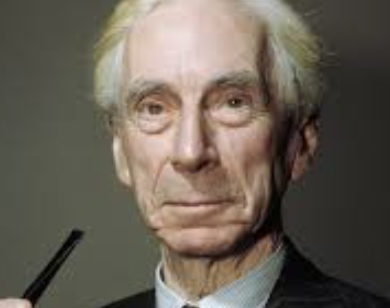
At the present stage in the development of the art of war, there is only way of coping with them, and that is to keep out of war. In all the densely populated countries of Western Europe, it seems almost certain that, within a few days of the outbreak of war, panic will seize the surviving inhabitants of the capitals and the industrial areas, leading to anarchy, starvation, and paralysis of all warlike effort. The only sensible course, therefore, is to prevent war if possible, and to remain neutral if war occurs.
▼
Source
source
Letter to The New Statesman and Nation (10 August 1935)
1 month 3 weeks ago
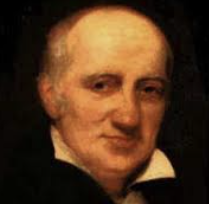
The case of mere titles is so absurd that it would deserve to be treated only with ridicule were t not for the serious mischief they impose on mankind. The feudal system was a ferocious monster, devouring, where it came, all that the friend of humanity regards with attachment and love. The system of titles appears under a different form. The monster is at length destroyed, and they who followed in his train, and fattened upon the carcasses of those he slew, have stuffed his skin, and, b exhibiting it, hope still to terrify mankind into patient and pusillanimity.
▼
Source
source
Book V, Chapter 13

1 month 3 weeks ago
Since it is difficult to approve the reasons people invoke, each time we leave one of our 'fellow men', the question which comes to mind is invariably the same: how does he keep from killing himself?
2 months 2 weeks ago
He who upholds Truth with all the might of his power, He who upholds Truth the utmost in his word and deed,He, indeed, is Thy most valued helper, O Mazda Ahura!
▼
Source
source
Ahunuvaiti Gatha; Yasna 31, 22.
2 months 3 weeks ago
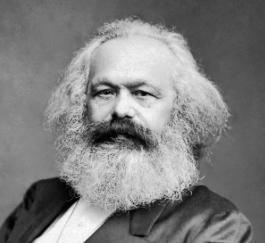
When we have weighed everything, and when our relations in life permit us to choose any given position, we may take that one which guarantees us the greatest dignity, which is based on ideas of whose truth we are completely convinced, which offers the largest field to work for mankind and approach the universal goal for which every position is only a means: perfection.
▼
Source
source
Writings of the Young Marx on Philosophy and Society, L. Easton, trans. (1967), p. 38

3 months 2 weeks ago
The way of the superior man may be compared to what takes place in traveling, when to go to a distance we must first traverse the space that is near, and in ascending a height, when we must begin from the lower ground.
1 month 2 weeks ago
So that in the first place, I put for a general inclination of all mankind a perpetual and restless desire of Power after power, that ceaseth only in Death. And the cause of this is not always that a man hopes for a more intensive delight than he has already attained to, or that he cannot be content with a moderate power: but because he cannot assure the power and means to live well, which he hath present, without the acquisition of more.
▼
Source
source
The First Part, Chapter 11, p. 47
1 month 3 weeks ago
What can be said, lacks reality. Only what fails to make its way into words exists and counts.
3 weeks 2 days ago
Interface, of the resonant interval as 'where the action is', whether chemical, psychic or social, involves touch.
▼
Source
source
p. 102

2 months 3 weeks ago
Ancient histories, as one of our wits has said, are but fables that have been agreed upon.
▼
Source
source
Jeannot et Colin, 1764
1 month 1 week ago
I could see clearly that this problem could only be solved on the individual and personal level; political revolt is irrelevant. Both Camus and Sartre had been neatly hog-tied by their earlier radicalism. Camus came to see that rebellion is a political roundabout that revolves back to the same old tyranny; too ashamed to admit that he had outgrown his leftism, he found himself in an intellectual cul-de-sac. Sartre accused Camus of being a reactionary; but he paid for his own refusal to reexamine his political convictions by congealing into a grotesque attitude of permanent indignation, shaking his fist at some abstract Authority. Where politics is concerned, he seemed determined to be guided by his emotions.
▼
Source
source
p. 101

2 months 2 weeks ago
But let there be no misunderstanding: it is not that a real man, the object of knowledge, philosophical reflection or technological intervention, has been substituted for the soul, the illusion of theologians. The man described for us, whom we are invited to free, is already in himself the effect of a subjection more profound than himself. A 'soul' inhabits him and brings him to existence, which is itself a factor in the mastery that power exercises over the body. The soul is the effect and instrument of a political anatomy; the soul is the prison of the body.

1 month 3 weeks ago
Flattery corrupts both the receiver and the giver.


3 months 1 week ago
Custom renders love attractive; for that which is struck by oft-repeated blows however lightly, yet after long course of time is overpowered and gives way. See you not too that drops of water falling on rocks after long course of time scoop a hole through these rocks?
▼
Source
source
Book IV, lines 1283-1287 (tr. Munro)
1 month 3 weeks ago
A great profusion of things, which are splendid or valuable in themselves, is magnificent. The starry heaven, though it occurs so very frequently to our view, never fails to excite an idea of grandeur. This cannot be owing to the stars themselves, separately considered. The number is certainly the cause. The apparent disorder augments the grandeur, for the appearance of care is highly contrary to our idea of magnificence. Besides, the stars lie in such apparent confusion, as makes it impossible on ordinary occasions to reckon them. This gives them the advantage of a sort of infinity.
▼
Source
source
Part II Section XIII
1 month 2 weeks ago
In so far as words are not used obviously to calculate technically relevant probabilities or for other practical purposes, ... they are in danger of being suspect as sales talk of some kind.
▼
Source
source
p. 22.
2 months 3 weeks ago
Reason is a harmonising, controlling force rather than a creative one.
▼
Source
source
Ch. 1: Mysticism and Logic

3 months 4 weeks ago
The liar is a person who uses the valid designations, the words, in order to make something which is unreal appear to be real. He says, for example, "I am rich," when the proper designation for his condition would be "poor." He misuses fixed conventions by means of arbitrary substitutions or even reversals of names. If he does this in a selfish and moreover harmful manner, society will cease to trust him and will thereby exclude him. What men avoid by excluding the liar is not so much being defrauded as it is being harmed by means of fraud. Thus, even at this stage, what they hate is basically not deception itself, but rather the unpleasant, hated consequences of certain sorts of deception. It is in a similarly restricted sense that man now wants nothing but truth: he desires the pleasant, life-preserving consequences of truth. He is indifferent toward pure knowledge which has no consequences; toward those truths which are possibly harmful and destructive he is even hostilely inclined.
1 month 3 weeks ago
I have never in my life met a man like him for noble simplicity, and boundless truthfulness. I understood from the way he talked that anyone who chose could deceive him, and that he would forgive anyone afterwards who had deceived him, and that was why I grew to love him.
▼
Source
source
Part 4, Chapter 8
2 months 2 weeks ago
The critical ontology of ourselves has to be considered not, certainly, as a theory, a doctrine, nor even as a permanent body of knowledge that is accumulating; it has to be conceived as an attitude, an ethos, a philosophical life in which the critique of what we are is at one and the same time the historical analysis of the limits that are imposed on us and an experiment with the possibility of going beyond them.
2 months 3 weeks ago
For the moment, the jazz is playing; there is no melody, just notes, a myriad of tiny tremors. The notes know no rest, an inflexible order gives birth to them then destroys them, without ever leaving them the chance to recuperate and exist for themselves.... I would like to hold them back, but I know that, if I succeeded in stopping one, there would only remain in my hand a corrupt and languishing sound. I must accept their death; I must even want that death: I know of few more bitter or intense impressions.
2 months 3 weeks ago
Whatever you do, crush the infamous thing, and love those who love you.
▼
Source
source
Letter to Jean le Rond d'Alembert (28 November 1762);
2 months 2 weeks ago
One should emulate works and deeds of virtue, not arguments about it.
1 month 1 week ago
Society triumphs over many. They wish to regenerate the world with their institutions, with their moral philosophy, with their love. Then they sink to living from breakfast till dinner, from dinner till tea, with a little worsted work, and to looking forward to nothing but bed. When shall we see a life full of steady enthusiasm, walking straight to its aim, flying home, as that bird is now, against the wind - with the calmness and the confidence of one who knows the laws of God and can apply them?

1 month 2 weeks ago
Understanding finds nothing but itself when it seeks the essence behind the appearance of things. 'It is manifest that behind the so-called curtain, which is to hide the inner world, there is nothing to be seen unless we ourselves go behind there, as much in order that we may thereby see, as that there may be something behind there which can be seen.'
▼
Source
source
P. 111
1 month 1 week ago
But many of us seek community solely to escape the fear of being alone. Knowing how to be solitary is central to the art of loving. When we can be alone, we can be with others without using them as a means of escape.
▼
Source
source
All About Love: New Visions, 1999
2 months 3 weeks ago
One is still what one is going to cease to be and already what one is going to become. One lives one's death, one dies one's life.
▼
Source
source
Book 2, "The Melodious Child Dead in Me"
3 weeks 4 days ago
The positivist philosophy of Comte and the I doctrine deduced from it that humanity is an organism, and Darwin's doctrine of a law of the struggle for existence that is supposed to govern life, with the differentiation of various breeds of people which follows from it, and the anthropology, biology, and sociology of which people are now so fond-all have the same aim. These have all become favourite sciences because they serve to justify the way in which people free themselves from the human obligation to labour, while consuming the fruits of other people's labour.
3 months 4 days ago
For I find that even those that have sought knowledge for itself and not for benefit, or ostentation, or any practical enablement in the course of their life, have nevertheless propounded to themselves a wrong mark, namely, satisfaction, which men call truth, and not operation. For as in the courts and services of princes and states, it is a much easier matter to give satisfaction than to do the business; so in the inquiring of causes and reasons it is much easier to find out such causes as will satisfy the mind of man, and quiet objections, than such causes as will direct him and give him light to new experiences and inventions.
▼
Source
source
Valerius Terminus: Of the Interpretation of Nature (ca. 1603), in Works, Vol. 1; The Works of Francis Bacon (1857), Vol. 3, p. 232
2 months 3 weeks ago
Jupiter: I committed the first crime by creating men as mortals. After that, what more could you do, you the murderers?
Aegisteus: Come on; they already had death in them: at most you simply hastened things a little.
▼
Source
source
Act 2
2 months 2 weeks ago
I believe that political power also exercises itself through the mediation of a certain number of institutions that seem to have nothing in common with political power, that have the appearance of being independent, but are not.
▼
Source
source
Debate with Noam Chomsky, École Supérieure de Technologie à Eindhoven, November 1971
1 month 1 week ago
The bastard form of mass culture is humiliated repetition: content, ideological schema, the blurring of contradictions-these are repeated, but the superficial forms are varied: always new books, new programs, new films, news items, but always the same meaning.
▼
Source
source
Modern, in The Pleasure of the Text
2 months ago
The first promise exchanged by two beings of flesh was at the foot of a rock that was crumbling into dust; they took as witness for their constancy a sky that is not the same for a single instant; everything changed in them and around them, and they believed their hearts free of vicissitudes. O children! always children!
2 months 3 weeks ago
The case of the conscience of Eichmann, which is admittedly complicated but is by no means unique, is scarcely comparable to the case of the German generals, one of whom, when asked at Nuremberg, "How was it possible that all of you honorable generals could continue to serve a murderer with such unquestioning loyalty?," replied that it was "not the task of a soldier to act as judge over his supreme commander. Let history do that or God in Heaven."
▼
Source
source
Ch. VIII
3 months 4 weeks ago
Because of the way that myth takes it for granted that miracles are always happening, the waking life of a mythically inspired people the ancient Greeks, for instance more closely resembles a dream than it does the waking world of a scientifically disenchanted thinker.
2 months 2 weeks ago
The capacity to reason is a special sort of capacity because it can lead us to places that we did not expect to go.
▼
Source
source
Chapter 4, Reason, p. 88

1 month 1 week ago
Regardless of the present trend toward the strong-armed man, the totalitarian states, or the dictatorship from the left, my ideas have remained unshaken. In fact, they have been strengthened by my personal experience and the world events through the years. I see no reason to change, as I do not believe that the tendency of dictatorship can ever successfully solve our social problems. As in the past, so I do now insist that freedom is the soul of progress and essential to every phase of life. I consider this as near a law of social evolution as anything we can postulate. My faith is in the individual and in the capacity of free individuals for united endeavor.
1 month 3 weeks ago
Few persons care to study logic, because everybody conceives himself to be proficient enough in the art of reasoning already. But I observe that this satisfaction is limited to one's own ratiocination and does not extend to that of other men. We come to the full possession of our power of drawing inferences the last of all our faculties, for it is not so much a natural gift as a long and difficult art.
▼
Source
source
Illustrations of the Logic of Science First Paper - The Fixation of Belief", in Popular Science Monthly, Vol. 12
2 months 3 weeks ago
So much of modern mathematical work is obviously on the border-line of logic, so much of modern logic is symbolic and formal, that the very close relationship of logic and mathematics has become obvious to every instructed student. The proof of their identity is, of course, a matter of detail: starting with premisses which would be universally admitted to belong to logic, and arriving by deduction at results which as obviously belong to mathematics, we find that there is no point at which a sharp line can be drawn, with logic to the left and mathematics to the right. If there are still those who do not admit the identity of logic and mathematics, we may challenge them to indicate at what point, in the successive definitions and deductions of Principia Mathematica, they consider that logic ends and mathematics begins. It will then be obvious that any answer must be quite arbitrary.
▼
Source
source
Ch. 18: Mathematics and Logic
3 months 1 week ago
We are all sprung from a heavenly seed.
▼
Source
source
Book II, line 991 (tr. Munro)
1 month 3 weeks ago
I anticipated witnessing in my lifetime the disappearance of our species. But the Gods have been against me.
3 months 1 week ago
The true servants of God are not solicitous that He should order them to do what they desire to do, but that they may desire to do what He orders them to do.
▼
Source
source
p. 616

2 months 3 weeks ago
If God had looked into our minds he would not have been able to see there whom we were speaking of.
▼
Source
source
Pt II, p. 217
1 month 3 weeks ago
It looks to me to be narrow and pedantic to apply the ordinary ideas of criminal justice to this great public contest. I do not know the method of drawing up an indictment against a whole people.
3 months 3 days ago
If you don't know how to die, don't worry; Nature will tell you what to do on the spot, fully and adequately. She will do this job perfectly for you; don't bother your head about it.
3 months 1 week ago
As to the objection that these rules are common in the world, that it is necessary to define every thing and to prove every thing, and that logicians themselves have placed them among their art, I would that the thing were true and that it were so well known... But so little is this the case, that, geometricians alone excepted, who are so few in number that they are a single in a whole nation and long periods of time, we see no others that know it.
1 month 1 week ago
My own long struggle to find my bearings, the disillusionments and disappointments I had experienced, had made me less dogmatic in my demands on people than I had been. They had helped me to understand the hard and lonely life of the rebel who had fought for an unpopular cause. Whatever bitterness I had felt against my old teacher had given way to deep sympathy long before his death. (about Johann Most)
1 month 1 week ago
The history of other cultures is non-existent until it erupts in confrontation with the United States.
▼
Source
source
Chap 4, Sect 2
1 month 3 weeks ago
Awareness of time: assault on time . . .
CivilSimian.com created by AxiomaticPanic, CivilSimian, Kalokagathia