

1 month 4 days ago
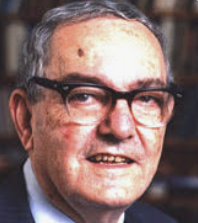
Computers were within my sphere of attention, but only computers used as number crunchers. In spite of the "giant brain" metaphor, there is little suggestion in this 1950 talk that the most important application of computers might lie in imitating intelligence symbolically, not numerically.
▼
Source
source
p. 199.
2 months 3 weeks ago
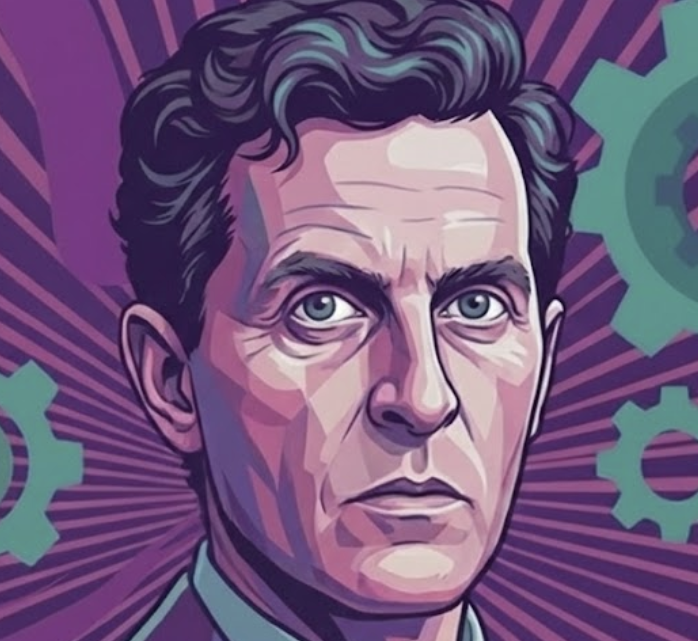
Human beings have a physical need to tell themselves when at work: "Let's have done with it now," and it's having constantly to go on thinking in the face of this need when philosophizing that makes this work so strenuous.
▼
Source
source
p. 86e

1 month 2 weeks ago
Institutionalized desublimation thus appears to be an aspect of the "conquest of transcendence" achieved by the one-dimensional society. Just as this society tends to reduce, and even absorb opposition (the qualitative difference!) in the realm of politics and higher culture, so it does in the instinctual sphere. The result is the atrophy of the mental organs for grasping the contradictions and the alternatives and, in the one remaining dimension of technological rationality, the Happy Consciousness comes to prevail.
▼
Source
source
p. 79
3 months 4 days ago
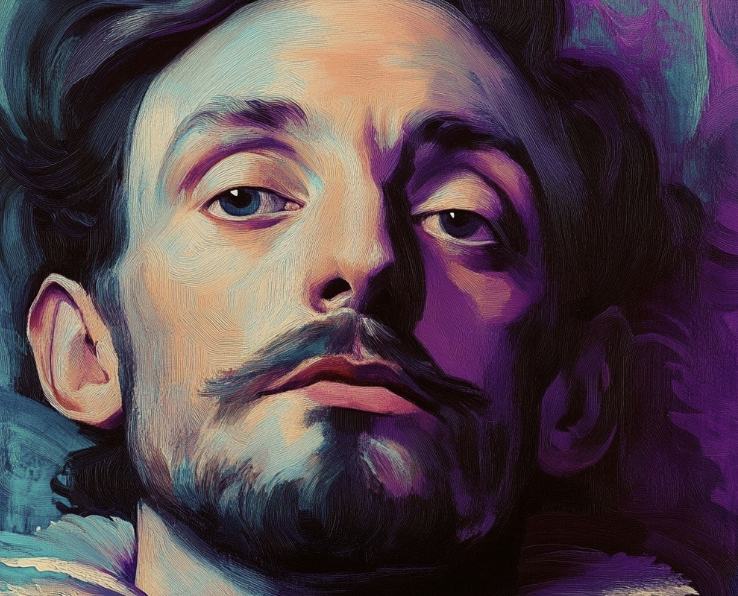
For a man to love again where he is loved, it is the charity of publicans contracted by mutual profit and good offices; but to love a man's enemies is one of the cunningest points of the law of Christ, and an imitation of the divine nature.
▼
Source
source
Of The Exaltation of Charity

2 months 3 weeks ago
In contrast to "Blessed are they who do not see and still believe," he speaks of "seeing and still not believing."
▼
Source
source
p. 30
3 months 4 days ago
Another argument of hope may be drawn from this - that some of the inventions already known are such as before they were discovered it could hardly have entered any man's head to think of; they would have been simply set aside as impossible. For in conjecturing what may be men set before them the example of what has been, and divine of the new with an imagination preoccupied and colored by the old; which way of forming opinions is very fallacious, for streams that are drawn from the springheads of nature do not always run in the old channels.
▼
Source
source
Aphorism 109
2 months 4 weeks ago
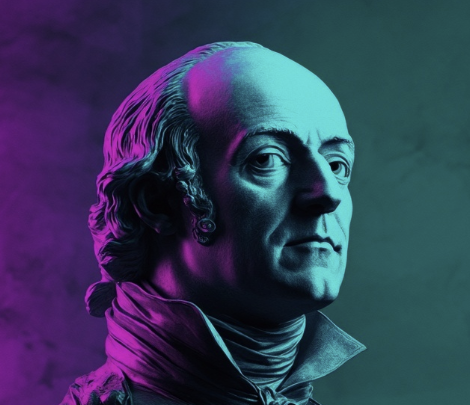
In the long-run the workman may be as necessary to his master as his master is to him, but the necessity is not so immediate.
▼
Source
source
Chapter VIII, p. 80.
1 month 5 days ago
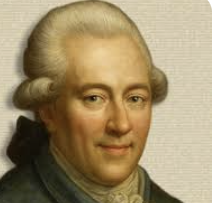
There are people who possess not so much genius as a certain talent for perceiving the desires of the century, or even of the decade, before it has done so itself.
▼
Source
source
D 70
3 months 1 week ago
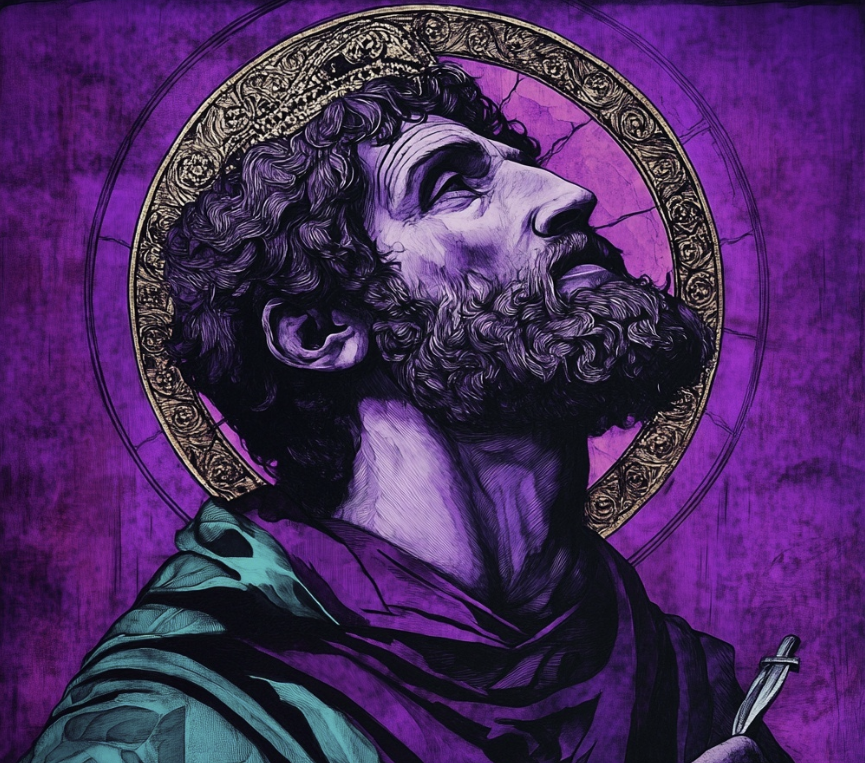
But it isn't just a matter of faith, but of faith and works. Each is necessary. For the demons also believe you heard the apostle and tremble (Jas 2:19); but their believing doesn't do them any good. Faith alone is not enough, unless works too are joined to it: Faith working through love (Gal 5:6), says the apostle.
▼
Source
source
16A:11:2
4 days ago
If we don't address the genetic causes of suffering (physical and mental) we will find ourselves in 500 years enjoying material abundance via nanotech, living in a perfect democracy, colonizing space, and still sitting around wondering "Why are we miserable so much of the time? Why can't we all just get along? Why are we not all happy?"
▼
Source
source
David Pearce in SF, Qualia Computing, 7 Oct. 2018
2 months 3 weeks ago
The Sabbath is not simply a time to rest, to recuperate. We should look at our work from the outside, not just from within.
▼
Source
source
p. 91e
2 months 3 weeks ago
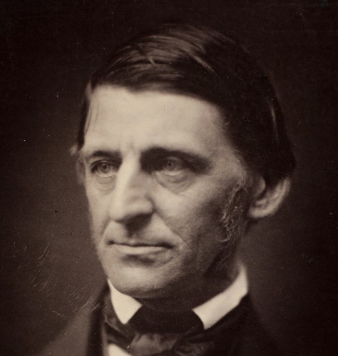
The state of society is one in which the members have suffered amputation from the trunk, and strut about so many walking monsters,-a good finger, a neck, a stomach, an elbow, but never a man.
▼
Source
source
par. 5
2 months ago
Distance is a great promoter of admiration!
▼
Source
source
As quoted in Thesaurus of Epigrams: A New Classified Collection of Witty Remarks, Bon Mots and Toasts (1942) by Edmund Fuller
3 months 3 weeks ago
The dullness of fact is the mother of fiction.
3 months 3 weeks ago
To work and create "for nothing," to sculpture in clay, to know one's creation has no future, to see one's work destroyed in a day while being aware that fundamentally this has no more importance than building for centuries, this is the difficult wisdom that absurd thought sanctions. Performing these two tasks simultaneously, negating on the one hand and magnifying on the other, it the way open to the absurd creator. He must give the void its colors.
3 months 3 days ago
A little of all things, but nothing of everything, after the French manner.
▼
Source
source
Chapter 26. Of the Education of Children

2 months 3 weeks ago
I became my own only when I gave myself to Another.
▼
Source
source
Letters of C. S. Lewis (17 July 1953), para. 2, p. 251 - as reported in The Quotable Lewis (1989), p. 334
1 month 2 weeks ago
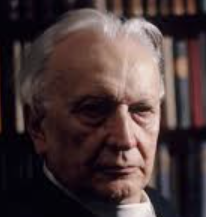
The masses are our masters; and for every one who looks facts in the face his existence has become dependent on them, so that the thought of them must control his doings, his cares, and his duties. Even an articulated mass always tends to become unspiritual and inhuman. It is life without existence, superstitions without faith. It may stamp all flat; it is disinclined to tolerate independence and greatness, but prone to constrain people to become as automatic as ants.
2 months 3 weeks ago
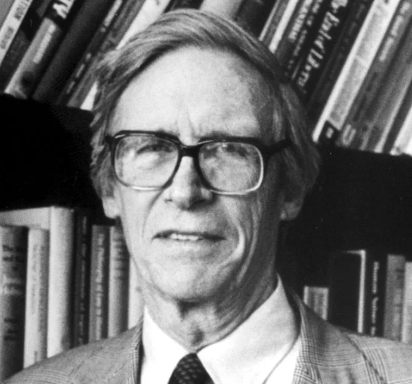
Social and economic inequalities are to satisfy two conditions: first, they are to be attached to positions and offices open to all under conditions of fair equality of opportunity; and second, they are to be to the greatest benefit to the least-advantaged members of society.
▼
Source
source
p. 6

1 month 3 weeks ago
The source of our actions resides in an unconscious propensity to regard ourselves as the center, the cause, and the conclusion of time. Our reflexes and our pride transform into a planet the parcel of flesh and consciousness we are. If we had the right sense of our position in the world, if to compare were inseparable from to live, the revelation of our infinitesimal presence would crush us. But to live is to blind ourselves to our own dimensions. . . .
2 months 3 weeks ago
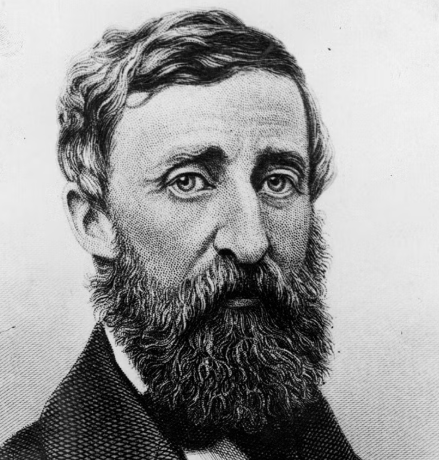
Men go to a fire for entertainment. When I see how eagerly men will run to a fire, whether in warm or in cold weather, by day or by night, dragging an engine at their heels, I'm astonished to perceive how good a purpose the level of excitement is made to serve.
▼
Source
source
June, 1850
2 months 2 weeks ago
Truth is best (of all that is) good. As desired, what is being desired is truth for him who (represents) the best truth.
▼
Source
source
Ahunuvaiti Gatha; Yasna 27, 14.
3 months 1 week ago
Do not imagine that it is less an accident by which you find yourself master of the wealth which you possess, than that by which this man found himself king.
1 month 3 weeks ago
We cannot hope to give here a final clarification of the essence of fact, judgement, object, property; this task leads into metaphysical abysses; about these one has to seek advice from men whose name cannot be stated without earning a compassionate smile-e.g.
▼
Source
source
Fichte. Hermann Weyl, Das Kontinuum. Kritische Untersuchungen uber die Grundlagen der Analysis (1918)
1 month 2 weeks ago
Thought without language, says Lavelle, would not be a purer thought; it would be no more than the intention to think. And his last book offers a theory of expressiveness which makes of expression not "a faithful image of an already realized interior being, but the very means by which it is realized."
▼
Source
source
p. 8
2 months ago
Shakespeare's fault is not the greatest into which a poet may fall. It merely indicates a deficiency of taste.
2 months 3 weeks ago
What does not exist must be something, or it would be meaningless to deny its existence; and hence we need the concept of being, as that which belongs even to the non-existent.
▼
Source
source
Principles of Mathematics (1903), p. 450
2 months 3 weeks ago
Even the best things are not equal to their fame.
▼
Source
source
Pearls of Thought (1881) p. 87

3 months 3 weeks ago
Lord Jesus Christ, our foolish minds are weak; they are more than willing to be drawn-and there is so much that wants to draw us to itself. There is pleasure with its seductive power, the multiplicity with its bewildering distractions, the moment with its infatuating importance and the conceited laboriousness of busyness and the careless time-wasting of light-mindedness and the gloomy brooding of heavy-mindedness-all this will draw us away from ourselves to itself in order to deceive us. But you, who are truth, only you, our Savior and Redeemer, can truly draw a person to yourself, which you have promised to do-that you will draw all to yourself. Then may God grant that by repenting we may come to ourselves, so that you, according to your Word, can draw us to yourself-from on high, but through lowliness and abasement.
1 month 3 weeks ago
Tyranny is just what one can develop a taste for, since it so happens that man prefers to wallow in fear rather than to face the anguish of being himself.
1 month 1 week ago
When, as a result of what was called Enlightenment in the eighteenth century, the priests had in fact almost entirely lost this function of guidance. Their place was taken by writers and scientists. In both cases it is equally absurd. Mathematics, physics, and biology are as remote from spiritual guidance as the art of arranging words. When that function is usurped by literature and science it proves there is no longer any spiritual life.
▼
Source
source
"Morality and literature," pp. 164-165
1 month 3 weeks ago
It is not as a child that I believe and confess Jesus Christ. My hosanna is born of a furnace of doubt.
▼
Source
source
As quoted in Kierkegaard, the Melancholy Dane (1950) by Harold Victor Martin.
2 months 4 weeks ago
Consumption is the sole end and purpose of all production; and the interest of the producer ought to be attended to, only so far as it may be necessary for promoting that of the consumer.
▼
Source
source
Chapter VIII, p. 719.
3 months 1 week ago
No man is free who is not master of himself.
▼
Source
source
Fragment 35 (Oldfather translation)
2 months 3 weeks ago
The collective name for the ripe fruits of religion in a character is Saintliness. The saintly character is the character for which spiritual emotions are the habitual centre of the personal energy; and there is a certain composite photograph of universal saintliness, the same in all religions, of which the features can easily be traced.
▼
Source
source
Lectures XI, XII, AND XIII : "Saintliness"
3 weeks ago
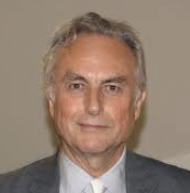
If you have a faith, it is statistically overwhelmingly likely that it is the same faith as your parents and grandparents had. No doubt soaring cathedrals, stirring music, moving stories and parables, help a bit. But by far the most important variable determining your religion is the accident of birth. The convictions that you so passionately believe would have been a completely different, and largely contradictory, set of convictions, if only you had happened to be born in a different place. Epidemiology, not evidence.
1 month 1 week ago
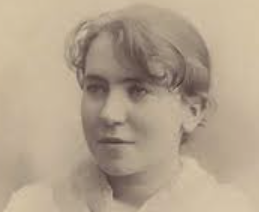
Its first ethical precept is the identity of means used and aims sought. The ultimate end of all revolutionary social change is to establish the sanctity of human life, the dignity of man, the right of every human being to liberty and wellbeing. Unless this be the essential aim of revolution, violent social changes would have no justification. For external social alterations can be, and have been, accomplished by the normal processes of evolution. Revolution, on the contrary, signifies not mere external change, but internal, basic, fundamental change. That internal change of concepts and ideas, permeating ever-larger social strata, finally culminates in the violent upheaval known as revolution.
1 month 1 week ago
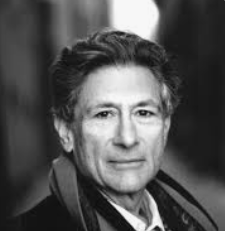
Theory is taught so as to make the student believe that he or she can become a Marxist, a feminist, an Afrocentrist, or a deconstructionist with about the same effort and commitment required in choosing items from a menu.
▼
Source
source
Chap 4, Sect 2
1 month 2 weeks ago
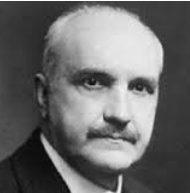
... I once shook hands with Longfellow at a garden party in 1881; and I often saw Dr. Holmes, who was our neighbor in Beacon Street: but Emerson I never saw.
▼
Source
source
p. 50
2 months 3 weeks ago
The progress from an absolute to a limited monarchy, from a limited monarchy to a democracy, is a progress toward a true respect for the individual.

1 month 1 week ago
If life is deprived of any meaningful closure, it will be ended in non-time.
2 months 4 weeks ago
In our reasonings concerning matter of fact, there are all imaginable degrees of assurance, from the highest certainty to the lowest species of moral evidence. A wise man, therefore, proportions his belief to the evidence.
▼
Source
source
Section X: Of Miracles; Part I. 87
2 months 4 weeks ago
Thus our duties to animals are indirectly duties to humanity.
▼
Source
source
Part II, p. 213
1 month 1 week ago
Imagine a book of unexplained mysteries written by a contemporary of Shakespeare. It might include the mystery of the falling stars that sweep through the sky foretelling disaster; the mystery of the Kraken, the giant sea devil with 50-foot tentacles; the mystery of monster bones, sometimes found in caves or on beaches. Such a book would be a curious mixture of truth and absurdity, fact and legend. We would all feel superior as we turned its pages and murmured: "Of course, they didn't know about comets and giant squids and dinosaurs." If this book should happen to find its way into the hands of our remote descendants, they may smile pityingly and say: "It's incredible to think that they knew nothing about epsilon fields or multiple psychic feedback or cross gravitational energies. They didn't even know about the ineluctability of time." But let us hope that such a descendant is in a charitable mood, and might add: "And yet they managed to ask a few of the right questions."
▼
Source
source
p. 142
3 months 3 weeks ago
For man to become successful, for man to establish himself as the ruler of the planet, it was necessary for him to use his brain as something more than a device to make the daily routine of getting food and evading enemies a little more efficient. Man had to learn to control his environment.
3 weeks 2 days ago
For a good cause, wrongdoing is virtuous.
▼
Source
source
Maxim 207
2 weeks 4 days ago
Conquered people tend to be witty.
▼
Source
source
Mr. Sammler's Planet, (1976), p. 98
1 month 1 week ago
Our minds are finite, and yet even in these circumstances of finitude we are surrounded by possibilities that are infinite, and the purpose of human life is to grasp as much as we can out of the infinitude.
▼
Source
source
Ch. 21, June 28, 1941.
2 months 3 weeks ago
He sees as well as you do that courage is not simply one of the virtues, but the form of every virtue at the testing point, which means, at the point of highest reality. A chastity or honesty, or mercy, which yields to danger will be chaste or honest or merciful only on conditions.
▼
Source
source
Letter XXIX
CivilSimian.com created by AxiomaticPanic, CivilSimian, Kalokagathia