


3 months 3 weeks ago
That which distinguishes the Christian narrow way from the common human narrow way is the voluntary. Christ was not someone who coveted earthly things but had to be satisfied with poverty, no, he chose poverty.

3 months 1 day ago
I approached the task of destroying images by first tearing them out of the heart through God's Word and making them worthless and despised. This indeed took place before Dr. Karlstadt ever dreamed of destroying images. For when they are no longer in the heart, they can do no harm when seen with the eyes. But Dr. Karlstadt, who pays no attention to matters of the heart, has reversed the order by removing them from sight and leaving them in the heart. For he does not preach faith, nor can he preach it; unfortunately, only now do I see that. Which of these two forms of destroying images is best, I will let each man judge for himself.
▼
Source
source
pp. 84-85
2 weeks 3 days ago
In advanced age, and in cases of disability from accident, natural infirmity or any other cause, the individual shall be supported by the colony, and receive every comfort which kindness can administer.
3 months 1 day ago
The strangest, most generous, and proudest of all virtues is true courage.

2 months 5 days ago
Dear youths, I warn you cherish peace divine, And in your hearts lay deep these words of mine.
▼
Source
source
As reported by Heraclides, son of Sarapion, and Diogenes Laërtius, in Lives and Opinions of Eminent Philosophers, "Pythagoras", Sect. 7, in the translation of C. D. Yonge

1 month 2 weeks ago
If instead of expanding you, putting you in a state of energetic euphoria, your ordeals depress and embitter you, you can be sure you have no spiritual vocation.
2 months 3 weeks ago
The practical consequence of such a[n individualistic] philosophy is the well-known democratic respect for the sacredness of individuality,-is, at any rate, the outward tolerance of whatever is not itself intolerant. These phrases are so familiar that they sound now rather dead in our ears. Once they had a passionate inner meaning. Such a passionate inner meaning they may easily acquire again if the pretension of our nation to inflict its own inner ideals and institutions vi et armis upon Orientals should meet with a resistance as obdurate as so far it has been gallant and spirited. Religiously and philosophically, our ancient national doctrine of live and let live may prove to have a far deeper meaning than our people now seem to imagine it to possess.
▼
Source
source
"Preface"
1 month 3 days ago
It is almost impossible to bear the torch of truth through a crowd without singeing somebody's beard. G 4 Variant translations: It is almost impossible to carry the torch of wisdom through a crowd without singeing someone's beard. It is virtually impossible to carry the torch of truth through a crowd, without singeing someone's beard
1 month 3 weeks ago
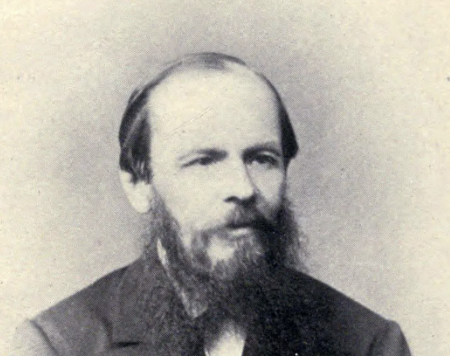
Brothers, love is a teacher; but one must know how to acquire it, for it is hard to acquire, it is dearly bought, it is won slowly by long labour. For we must love not only occasionally, for a moment, but for ever. Everyone can love occasionally, even the wicked can.
▼
Source
source
Book VI, Chapter 3: Conversations and Exhortations of Father Zossima
2 months 3 weeks ago
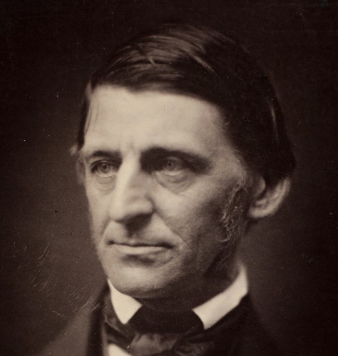
If the colleges were better, if they ... had the power of imparting valuable thought, creative principles, truths which become powers, thoughts which become talents, - if they could cause that a mind not profound should become profound, - we should all rush to their gates: instead of contriving inducements to draw students, you would need to set policy at the gates to keep order in the in-rushing multitude.
▼
Source
source
The Celebration of Intellect, 1861
1 month 2 weeks ago
To understand this for sense it is not required that a man should be a geometrician or a logician, but that he should be mad. On the proposition that the volume generated by revolving the region under 1/x from 1 to infinity has finite volume.
▼
Source
source
Quoted in Mathematical Maxims and Minims by N. Rose
2 weeks 5 days ago
A woman loves to be obeyed at first, although afterwards she finds her pleasure in obeying.
▼
Source
source
The Suicide Club, Story of the Physician and the Saratoga Trunk.
3 months 1 day ago
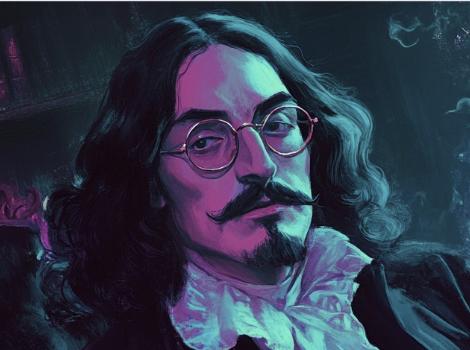
Thus, all unknown quantities can be expressed in terms of a single quantity, whenever the problem can be constructed by means of circles and straight lines, or by conic sections, or even by some other curve of degree not greater than the third or fourth.But I shall not stop to explain this in more detail, because I should deprive you of the pleasure of mastering it yourself, as well as of the advantage of training your mind by working over it, which is in my opinion the principal benefit to be derived from this science. Because, I find nothing here so difficult that it cannot be worked out by anyone at all familiar with ordinary geometry and with algebra, who will consider carefully all that is set forth in this treatise.
▼
Source
source
First Book
3 weeks 5 days ago
If every strategy today is that of mental terror and of deterrence tied to the suspension and the eternal simulation of catastrophe, then the only means of mitigating this scenario would be to make the catastrophe arrive, to produce or to reproduce a real catastrophe. To which Nature is at times given: in its inspired moments, it is God who through his cataclysms unknots the equilibrium of terror in which humans are imprisoned. Closer to us, this is what terrorism is occupied with as well: making real, palpable violence surface in opposition to the invisible violence of security. Besides, therein lies terrorism's ambiguity.
▼
Source
source
"The China Syndrome," p. 58
1 month 2 weeks ago
You do not attain to knowledge by remaining on the shore and watching the foaming waves, you must make the venture and cast yourself in, you must swim, alert and with all your force, even if a moment comes when you think you are losing consciousness; in this way, and in no other, do you reach anthropological insight.
▼
Source
source
p. 148

3 months 3 weeks ago
When you write a short story ... you had better know the ending first. The end of a story is only the end to the reader. To the writer, it's the beginning. If you don't know exactly where you're going every minute you're writing, you'll never get there or anywhere.
1 month 4 weeks ago
We are far more liable to catch the vices than the virtues of our associates.
▼
Source
source
As quoted in Thesaurus of Epigrams: A New Classified Collection of Witty Remarks, Bon Mots and Toasts (1942) by Edmund Fuller
3 months 1 day ago
I am entirely of the opinion that the papacy is the Antichrist. But if anyone wants to add the Turk, then the Pope is the spirit of the Antichrist, and the Turk is the flesh of the Antichrist. They help each other in their murderous work. The latter slaughters bodily and by the sword, the former spiritually and by doctrine.
▼
Source
source
330
1 month 2 weeks ago
Some would deny any legitimate use of the word God because it has been misused so much. Certainly it is the most burdened of all human words. Precisely for that reason it is the most imperishable and unavoidable. And how much weight has all erroneous talk about God's nature and works (although there never has been nor can be any such talk that is not erroneous) compared with the one truth that all men who have addressed God really meant him? For whoever pronounces the word God and really means Thou, addresses, no matter what his delusion, the true Thou of his life that cannot be restricted by any other and to whom he stands in a relationship that includes all others.
1 month 3 weeks ago
Expect nothing more from philosophy than a voice, language and grammar of the instinct for Godliness that lies at its origin, and, essentially, is philosophy itself.
▼
Source
source
"On Philosophy: To Dorothea," in Theory as Practice (1997), p. 421
2 months 3 weeks ago
I wish to propose for the reader's favourable consideration a doctrine which may, I fear, appear wildly paradoxical and subversive. The doctrine in question is this: that it is undesirable to believe a proposition when there is no ground whatever for supposing it true.
▼
Source
source
Ch. 1: The Value of Scepticism
2 months 3 weeks ago
The retinue of a grandee in China or Indostan accordingly is, by all accounts, much more numerous and splendid than that of the richest subjects of Europe.
▼
Source
source
Chapter XI, Part III, Third Period, p. 240.
1 week 5 days ago
It will hardly be disputed, I suppose, that the department of literature in which the Eastern writers stand highest is poetry. And I certainly never met with any orientalist who ventured to maintain that the Arabic and Sanscrit poetry could be compared to that of the great European nations. But when we pass from works of imagination to works in which facts are recorded and general principles investigated, the superiority of the Europeans becomes absolutely immeasurable. It is, I believe, no exaggeration to say that all the historical information which has been collected from all the books written in the Sanscrit language is less valuable than what may be found in the most paltry abridgments used at preparatory schools in England. In every branch of physical or moral philosophy, the relative position of the two nations is nearly the same.
1 month 2 weeks ago
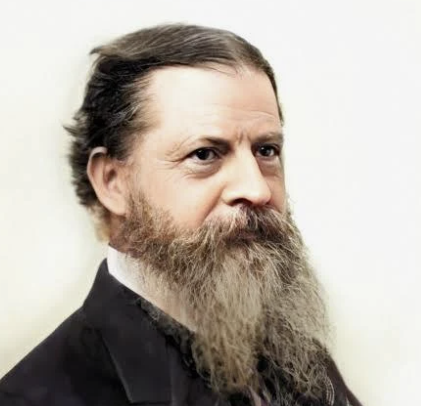
In the case of colors, there is a tridimensional spread of feelings. Originally all feelings may have been connected in the same way, and the presumption is that the number of dimensions was endless. For development essentially involves a limitation of possibilities. But given a number of dimensions of feeling, all possible varieties are obtainable by varying the intensities of the different elements.
2 months 2 weeks ago
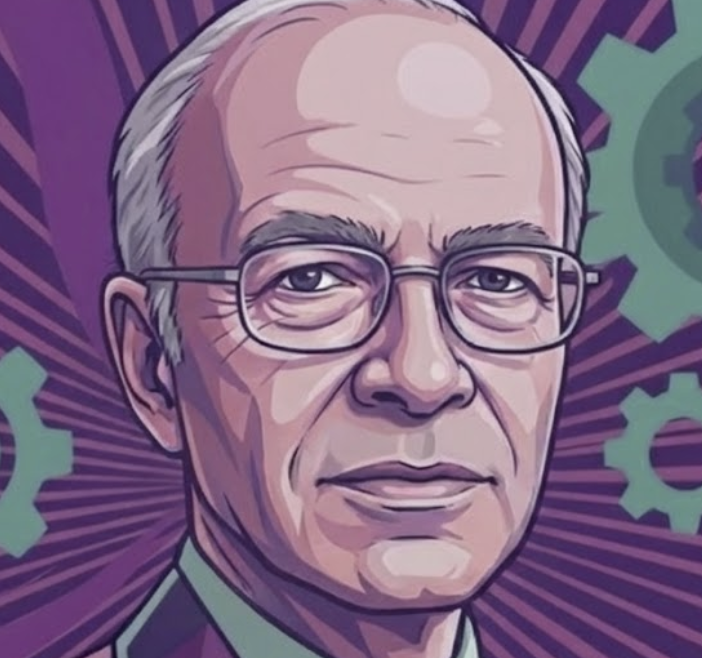
It is now generally accepted that the roots of our ethics lie in patterns of behavior that evolved among our pre-human ancestors, the social mammals and that we retain within our biological nature elements of these evolved responses. We have learned considerably more about these responses, and we are beginning to to understand how they interact with our capacity to reason.
▼
Source
source
Preface To The 2011 edition, p. xi
3 months 1 week ago
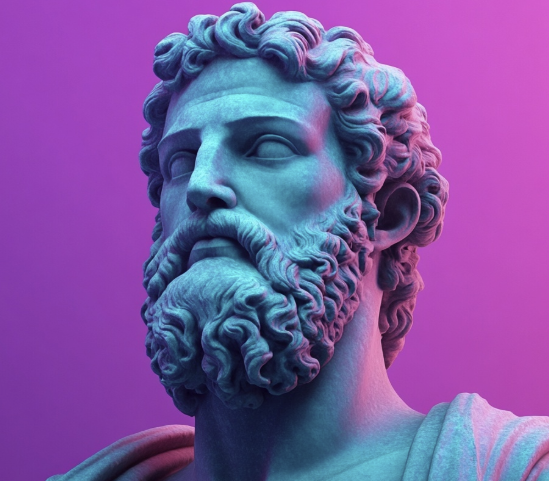
For what is lacking now is not quibbles; nay, the books of the Stoics are full of quibbles.
▼
Source
source
Book I, ch. 29, § 56
1 month 2 days ago
Before a science can develop principles, it must possess concepts. Before a law of gravitation could be formulated, it was necessary to have the notions of "acceleration" and "weight."
▼
Source
source
p. 43.
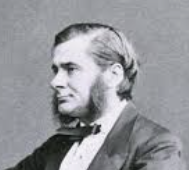
1 week 2 days ago
The fact is he made a prodigious blunder in commencing the attack, and now his only chance is to be silent and let people forget the exposure. I do not believe that in the whole history of science there is a case of any man of reputation getting himself into such a contemptible position.
▼
Source
source
About Richard Owen's view on human and ape brains, in a letter to J.D. Hooker
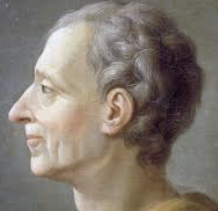
1 month 1 week ago
I acknowledge that history is full of religious wars: but we must distinguish; it is not the multiplicity of religions which has produced wars; it is the intolerant spirit animating that which believed itself in the ascendant.
▼
Source
source
No. 86. (Usbek writing to Mirza)
1 month 2 weeks ago
Give an inch, he'll take an ell.
▼
Source
source
Liberty and Necessity (no. 111)
2 months 3 weeks ago
Most people, at a crisis, feel more loyalty to their nation than to their class.
▼
Source
source
Ch. 8: Economic Power
3 months 1 day ago
Make your educational laws strict and your criminal ones can be gentle; but if you leave youth its liberty you will have to dig dungeons for ages.
2 months 2 weeks ago
This book, admirable in so many respects, power in its break and style, is even more intimidating for me in that, having formely had the good fortune to study under Michel Foucault, I retain the consciousness of an admiring and grateful disciple. Now, the disciple's consciousness, when he starts, I would not say to dispute, but to engage in dialogue with the master or, better, to articulate the interminable and silent dialogue which made him into a disciple-this disciple's consciousness is an unhappy consciousness.
▼
Source
source
Cogito and The History of Madness (Routledge classics edition)
3 months 3 weeks ago
If, as I maintain and firmly believe, there is no objective definition of intelligence, and what we call intelligence is only a creation of cultural fashion and subjective prejudice, what the devil is it we test when we make use of an intelligence test?
2 months 3 weeks ago
A philosophical attempt to work out a universal history according to a natural plan directed to achieving the civic union of the human race must be regarded as possible and, indeed, as contributing to this end of Nature.
▼
Source
source
Ninth Thesis
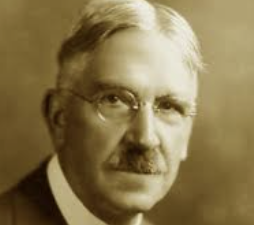
1 month 2 weeks ago
The recurrence of relations-not of elements-in different contexts, which constitutes transposition is qualitative and hence directly experienced in perception.
▼
Source
source
p. 219



2 months 2 weeks ago
A new word is like a fresh seed sown on the ground of the discussion.
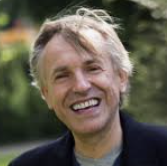
2 days ago
It's not that there are no differences between human and non-human animals, any more than there are no differences between black people and white people, freeborn citizens and slaves, men and women, Jews and gentiles, gays or heterosexuals. The question is rather: are they morally relevant differences? This matters because morally catastrophic consequences can ensue when we latch on to a real but morally irrelevant difference between sentient beings.
▼
Source
source
"The Abolitionist Project", Talks given at the FHI (Oxford University) and the Charity International Happiness Conference, 2007
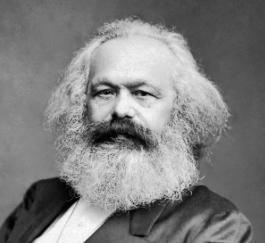
2 months 3 weeks ago
On the other hand one must not entertain any fantastic illusions on the productive power of the credit system, so far as it supplies or sets in motion money-capital.
▼
Source
source
Vol. II, Ch. XVII, p. 351.
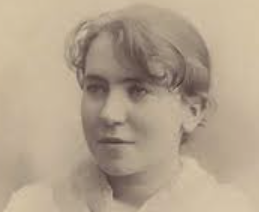
1 month 6 days ago
Some will ask, what about weak natures, must they not be protected? Yes, but to be able to do that, it will be necessary to realize that education of children is not synonymous with herdlike drilling and training. If education should really mean anything at all, it must insist upon the free growth and development of the innate forces and tendencies of the child. In this way alone can we hope for the free individual and eventually also for a free community, which shall make interference and coercion of human growth impossible.
3 months 1 day ago
Fashion is the science of appearances, and it inspires one with the desire to seem rather than to be.
3 weeks ago
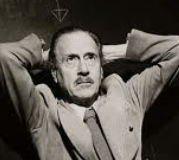
America is 100% 18th Century. The 18th century had chucked out the principle of metaphor and analogy - the basic fact that as A is to B so is C to D. AB:CD. It can see AB relations. But relations in four terms are still verboten. This amounts to deep occultation of nearly all human thought for the USA.
▼
Source
source
Letter to Ezra Pound
1 month 3 weeks ago
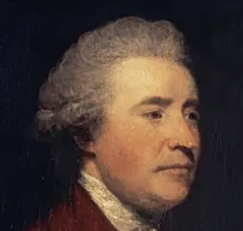
It is not, what a lawyer tells me I may do; but what humanity, reason, and justice, tell me I ought to do.
1 month 2 weeks ago
No one should forget: Eros alone can fulfill life; knowledge, never. Only Eros makes sense; knowledge is empty infinity; - for thoughts, there is always time; life has its time; there is no thought that comes too late; any desire can become a regret.

2 months ago
The Divine light is always in man, presenting itself to the senses and to the comprehension, but man rejects it.
▼
Source
source
As quoted in Life and Teachings of Giordano Bruno : Philosopher, Martyr, Mystic 1548 - 1600 (1913) by Coulson Turnbull
2 months 3 weeks ago
Those who forget good and evil and seek only to know the facts are more likely to achieve good than those who view the world through the distorting medium of their own desires.
▼
Source
source
Ch. 1: Mysticism and Logic

3 months 2 days ago
The things that we can see with our physical eyes are mere shadows of reality. If they appear ugly and ill formed, then what must be the ugliness of the soul in sin, deprived of all light? The soul, like the body, can undergo transformation in appearance. In sin it appears as completely ugly to the beholder. In virtue it shines resplendently before God.
2 months 5 days ago
Wind indeed increases fire, but custom love.
▼
Source
source
Pythagorean Ethical Sentences From Stobæus
2 months 2 weeks ago
I squander untold effort making an arrangement of my thoughts that may have no value whatever.
▼
Source
source
p. 33e
CivilSimian.com created by AxiomaticPanic, CivilSimian, Kalokagathia