

2 weeks 6 days ago
All media of communications are cliches serving to enlarge man's scope of action, his patterns of associations and awareness. These media create environments that numb our powers of attention by sheer pervasiveness.
2 months 3 weeks ago
I have described religion as the metaphysics of the people.
▼
Source
source
E. Payne, trans. (1974) Vol. 1, p. 140

1 month 2 weeks ago
Death makes no sense except to people who have passionately loved life. How can one die without having something to part from? Detachment is a negation of both life and death. Whoever has overcome his fear of death has also triumphed over life. For life is nothing but another word for this fear.

2 months 3 weeks ago
This I think is sufficiently evident, that children generally hate to be idle. All the care then is, that their busy humour should be constantly employ'd in something of use to them; which, if you will attain, you must make what you would have them do a recreation to them, and not a business.
▼
Source
source
Sec. 129
1 month 4 days ago
I believe that freedom is not a constant attribute that "we have" or "we don't have"; perhaps there is only one reality: the act of liberating ourselves in the process of using choices. Every step in life that heightens the maturity of man heightens his ability to choose the freeing alternative. I believe that "freedom of choice" is not always equal for all men at every moment. The man with an exclusively necrophilic orientation; who is narcissistic; or who is symbiotic-incestuous, can only make a regressive choice. The free man, freed from irrational ties, can no longer make a regressive choice.
2 weeks 1 day ago
There is simply too much to think about. It is hopeless - too many kinds of special preparation are required. In electronics, in economics, in social analysis, in history, in psychology, in international politics, most of us are, given the oceanic proliferating complexity of things, paralyzed by the very suggestion that we assume responsibility for so much. This is what makes packaged opinion so attractive.
▼
Source
source
There Is Simply Too Much to Think About (1992), pp. 173-174

2 months 3 weeks ago
Space is employed as the type even of the concept of time itself, representing it by a line, and its limits - moments - by points. Time, on the other had, approaches more to a universal and rational concept, comprising under its relations all things whatsoever, to wit, space itself, and besides, those accidents which are not comprehended in the relations of space, such as the thoughts of the soul. Again, time, besides this, though it certainly does not dictate the laws of reason, yet constitutes the principal conditions tinder favor of which the mind compares its notions according to the laws of reason. Thus, I cannot judge what is impossible except by predicating a and not-a of the same subject at the same time.
1 month 2 weeks ago
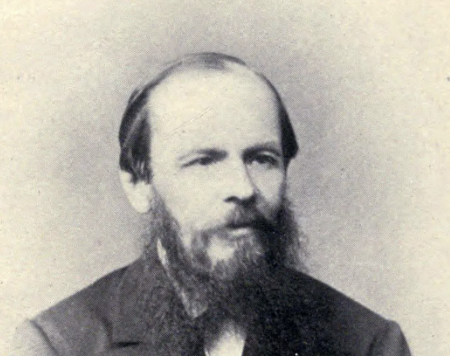
It is not by genius, it is by suffering, and suffering alone, that one ceases to be a marionette.
1 month 3 weeks ago
If you are penitent, you love. And if you love you are of God. All things are atoned for, all things are saved by love. If I, a sinner even as you are, am tender with you and have pity on you, how much more will God have pity upon you. Love is such a priceless treasure that you can redeem the whole world by it, and cleanse not only your own sins but the sins of others.
▼
Source
source
Book II, Chapter 3 (trans. Constance Garnett) The Elder Zossima, speaking to a devout widow afraid of death

1 day ago
Suppose we encounter an advanced civilization that has engineered a happy biosphere. Population sizes are controlled by cross-species immunocontraception. Free-living herbivores lead idyllic lives in their wildlife parks. Should we urge the reintroduction of starvation, asphyxiation, disemboweling and being eaten alive by predators? Is their regime of compassionate stewardship of the biosphere best abandoned in favour of "re-wilding"? I suspect the advanced civilization would regard human pleas to restore the old Darwinian regime of "Nature, red in tooth and claw" as callous if not borderline sociopathic.
▼
Source
source
Reply to "I am horrified at what goes on in philosophy departments, personally", Freethought Blogs, 10 Sept. 2015

2 months 3 weeks ago
The hatefulness of a hated person is "real"-in hatred you see men as they are; you are disillusioned; but the loveliness of a loved person is merely a subjective haze concealing a "real" core of sexual appetite or economic association. Wars and poverty are "really" horrible; peace and plenty are mere physical facts about which men happen to have certain sentiments.
▼
Source
source
Letter XXX

1 month 2 weeks ago
The tangible source of exploitation disappears behind the façade of objective rationality.
▼
Source
source
p. 32
1 month 2 weeks ago
"What do you do from morning to night?" "I endure myself."

2 months 3 weeks ago
The sublime is excited in me by the great stoical doctrine, Obey thyself.
▼
Source
source
p. 14
1 month 3 weeks ago
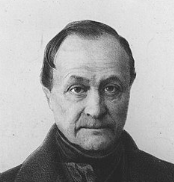
In the final, positive state, the mind has given over the vain search after Abolute notions, the origin and destination of the universe, and the cause of phenomenon, and applies itself to the tudy of their laws, - that is, their invariable relations of succession and resemblance. Reasoning and observation, duly combined, are the means of this knowledge. What is now understood when we speak of an explanation of the facts is simply the establishment of a connection between single phenomena and some general facts, the number of which continually diminishes with the progress of science.
▼
Source
source
Vol I

3 months ago
Why may not a goose say thus: "All the parts of the universe I have an interest in: the earth serves me to walk upon, the sun to light me; the stars have their influence upon me; I have such an advantage by the winds and such by the waters; there is nothing that yon heavenly roof looks upon so favourably as me. I am the darling of Nature! Is it not man that keeps and serves me?"
▼
Source
source
Book II, Ch. 12. Apology for Raimond Sebond
2 weeks 6 days ago
Invention is the mother of all necessities.
2 months 3 weeks ago
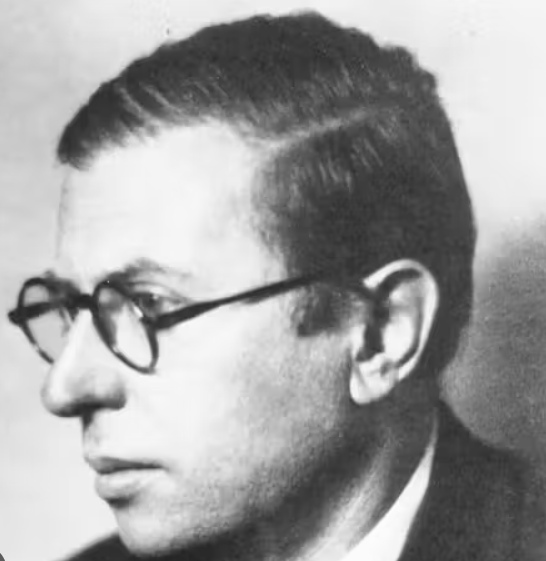
What do I care about Jupiter? Justice is a human issue, and I do not need a god to teach it to me.
▼
Source
source
Orestes, Act 2

3 months 5 days ago
One of the principal reasons that diverts those who are entering upon this knowledge so much from the true path which they should follow, is the fancy that they take at the outset that good things are inaccessible, giving them the name great, lofty, elevated, sublime. This destroys everything. I would call them low, common, familiar: these names suit it better; I hate such inflated expressions.
1 month 1 day ago
The empirical research of the last fifteen years on the structure of large organizations seems to confirm the hypothesis of Herbert Simon that human cognitive limits are a basic limiting factor in determining organization structures .
▼
Source
source
Jay R. Galbraith, "Organization design: An information processing view." Organizational Effectiveness Center and School 21 (1977). p. 21
1 month 1 week ago
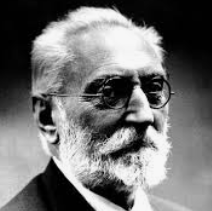
To say that everything is idea or that everything is spirit, is the same as saying that everything is matter or that everything is energy, for if everything is idea or spirit, just as my consciousness is, it is not plain why the diamond should not endure for ever, if my consciousness, because it is idea or spirit, endures forever.
2 months 3 weeks ago
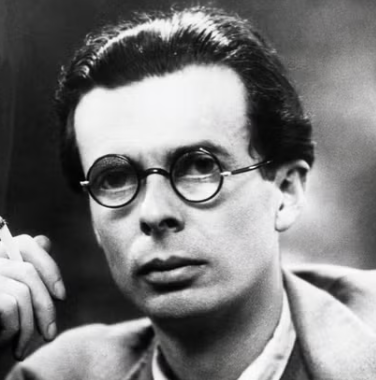
...this Jewish doctrine of the primacy of economic values has found the widest acceptance and been most whole-heartedly acted upon. From America it has begun to infect the rest of the world. We may be pardoned for wishing that the Jews had remained not forty, but four thousand years in their repulsive wilderness.
▼
Source
source
"One and Many," pp. 18

1 month 4 weeks ago
I thanke God for my happy Dreams|dreames, as I doe for my good rest, for there is a satisfaction in them unto reasonable desires, and such as can be content with a fit of happinesse; and surely it is not a melancholy conceite to thinke we are all asleepe in this world, and that the conceits of this life are as meare dreames to those of the next, as the Phantasmes of the night, to the conceit of the day. There is an equall delusion in both, and the one doth but seeme to bee the embleme or picture of the other;
▼
Source
source
Section 12

1 month 2 weeks ago
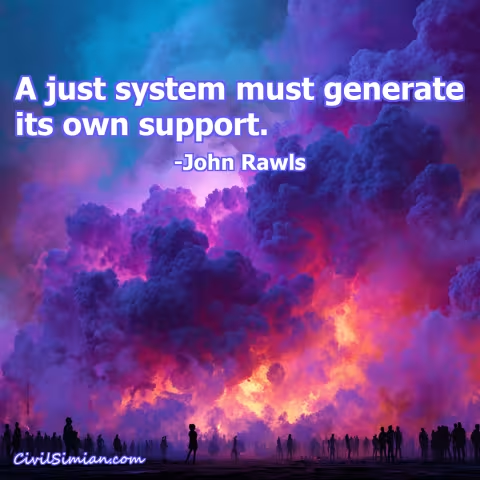
Kierkegaard's individualistic interpretation of 'the negation of philosophy' inevitably developed a fierce opposition to Western rationalism. .... According to Kierkegaard, the individual is not the knowing but only the 'ethically existing subjectivity.' The sole reality that matters to him is his own 'ethical existence'.
▼
Source
source
P. 263-264
1 month 1 week ago
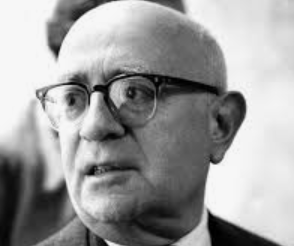
Whoever is versed in the jargon does not have to say what he thinks, does not even have to think it properly. The jargon takes over this task.
▼
Source
source
p. 9
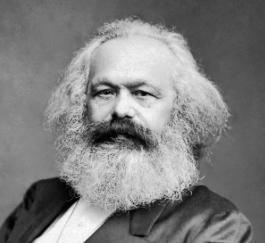
2 months 3 weeks ago
Titles of property, for instance railway shares, may change hands every day, and their owner may make a profit by their sale even in foreign countries, so that titles to property are exportable, although the railway itself is not.
▼
Source
source
Vol. II, Ch. X, p. 215.

1 month 3 weeks ago
Muhammad brought down from heaven and put into the Koran not religious doctrines only, but political maxims, criminal and civil laws, and scientific theories. The Gospels, on the other hand, deal only with the general relations between man and God and between man and man. Beyond that, they teach nothing and do not oblige people to believe anything. That alone, among a thousand reasons, is enough to show that Islam will not be able to hold its power long in ages of enlightenment and democracy, while Christianity is destined to reign in such ages, as in all others.
▼
Source
source
Book One, Chapter V.
1 month 5 days ago
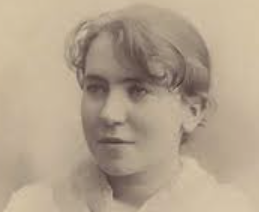
Motherhood in the true sense should embrace all children. Because so few realize this truth, child life is so empty of warmth, of love, of color, and beauty. A home-what is it to-day but a cage from which most of its inhabitants wish to escape? No, I should never have found happiness in such a place. My ideals, the struggle for them, and whatever hardships and suffering they have brought, far from wasting my life, have enriched it a thousandfold. To me it has been a grand adventure which I should not have missed for all the wealth in the world.
2 months 3 weeks ago
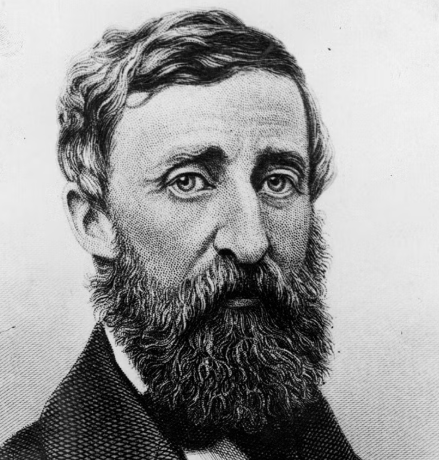
Free in this world as the birds in the air, disengaged from every kind of chains, those who have practiced the Yoga gather in Brahmin the certain fruit of their works. Depend upon it; rude and careless as I am, I would fain practice the yoga faithfully. This Yogi, absorbed in contemplation, contributes in his degree to creation; he breathes a divine perfume, he heard wonderful things. Divine forms traverse him without tearing him and he goes, he acts as animating original matter. To some extent, and at rare intervals, even I am a Yogi.
▼
Source
source
Letter to H. G. O. Blake, November 20, 1849

3 months 3 weeks ago
It is as useless for a person to want first of all to decide the externals and after that the fundamentals as it is for a cosmic body, thinking to form itself, first of all to decide the nature of its surface, to what bodies it should turn its light, which its dark side, without first letting the harmony of centrifugal and centripetal forces realize its existence and letting the rest come of itself. One must learn to know oneself before knowing anything else (gnothi seauton). Not until a person has inwardly understood himself and then sees the course he is to take does his life gain peace and meaning.

2 months 1 week ago
Suffer no anxiety, for he who is a sufferer of anxiety becomes regardless of enjoyment of the world and the spirit, and contraction happens to his body and soul.

2 months 4 days ago
Water is the first principle of everything.
▼
Source
source
As quoted in Aristotle, Metaphysics, 983b
2 weeks 4 days ago
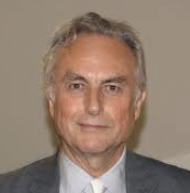
It really comes down to parsimony, economy of explanation. It is possible that your car engine is driven by psychokinetic energy, but if it looks like a petrol engine, smells like a petrol engine and performs exactly as well as a petrol engine, the sensible working hypothesis is that it is a petrol engine.

2 months 1 week ago
Beware an act of avarice; it is bad and incurable disease.
▼
Source
source
Maxim no. 19.
1 month 1 week ago
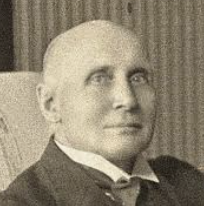
Any physical object which by its influence deteriorates its environment, commits suicide.
▼
Source
source
Ch. 6: "The Nineteenth Century", p. 155
2 months 3 weeks ago
Write it on your heart that every day is the best day in the year.
▼
Source
source
Works and Days

1 month 2 weeks ago
Go into the city to such a man, and say unto him, The Master saith, My time is at hand; I will keep the passover at thy house with my disciples.
▼
Source
source
26:18 (KJV)
2 months 3 weeks ago
His heart was as great as the world, but there was no room in it to hold the memory of a wrong.
▼
Source
source
Greatness
1 month 1 week ago
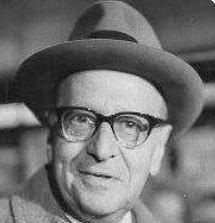
Notwithstanding their attacks on the basic conception of rationalism, on synthetic a priori judgments, that is, material propositions that cannot be contradicted by any experience, the empiricist posits the forms of being as constant.
▼
Source
source
p. 146.
1 month 2 weeks ago
Society: an inferno of saviors!
2 months 3 weeks ago
The same law that shapes the earth-star shapes the snow-star. As surely as the petals of a flower are fixed, each of these countless snow-stars comes whirling to earth...these glorious spangles, the sweeping of heaven's floor.
▼
Source
source
January 5, 1856
2 months 3 weeks ago
The really important facts were that spatial relationships had ceased to matter very much and that my mind was perceiving the world in terms of other than spatial categories. At ordinary times the eye concerns itself with such problems as where? - how far? - how situated in relation to what? In the mescaline experience the implied questions to which the eye responds are of another order. Place and distance cease to be of much interest. The mind does its perceiving in terms of intensity of existence, profundity of significance, relationships within a pattern."
1 month 3 weeks ago
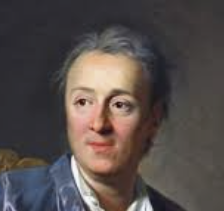
I believe in God, although I live very happily with atheists... It is very important not to mistake hemlock for parsley; but not at all so to believe or not in God.
▼
Source
source
As quoted in Against the Faith (1985) by Jim Herrick, p. 75

2 months 2 weeks ago
If the only alternative to fascism we produce is a corporate-driven, milquetoast, neoliberal Democratic Party, fascism will come to America. Let us be very clear. It's like a Weimar America.
▼
Source
source
Speaking to Chris Hedges on The Real News Network, Cornel West's presidential candidacy is 'for the least of these'. June 16, 2023.

1 month 5 days ago
A screen bans reality.
1 month 3 weeks ago
We are all instruments endowed with feeling and memory. Our senses are so many strings that are struck by surrounding objects and that also frequently strike themselves.
▼
Source
source
"Conversation Between D'Alembert and Diderot"
1 month 4 weeks ago
I intend no Monopoly, but a Community in Learning; I study not for my own sake only, but for theirs that study not for themselves.
▼
Source
source
Section 3
1 month 5 days ago
The motto should not be: Forgive one another; rather, Understand one another.

2 months 6 days ago
As touching the gods, I do not know whether they exist or not, nor how they are featured; for there is much to prevent our knowing: the obscurity of the subject and the brevity of human life.
▼
Source
source
Opening lines of Concerning the Gods (DK 80 B4).
CivilSimian.com created by AxiomaticPanic, CivilSimian, Kalokagathia