


5 days ago
Humans are prone to status quo bias. So let's do a thought-experiment. Imagine we stumble across an advanced civilisation that has abolished predation, disease, famine, and all the horrors of primitive Darwinian life. The descendants of archaic lifeforms flourish unmolested in their wildlife parks - free living, but not "wild". Should we urge scrapping their regime of compassionate stewardship of the living world - and a return to asphyxiation, disembowelling and being eaten alive? Or is a happy biosphere best conserved intact? Reply to "Should humans wipe out all carnivorous animals so the succeeding generations of herbivores can live in peace?"
▼
Source
source
, Quora, 16 Jun. 2018

2 months 2 weeks ago
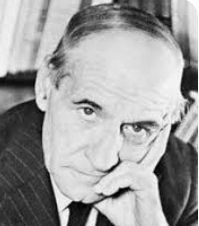
This investigation aims to analyze the type "bourgeois public sphere". Its particular approach is required, to begin with, by the difficulties specific to an object whose complexity precludes exclusive reliance on the specialized methods of a single discipline. Rather, the category. "public sphere" must be investigated within the broad field formerly reflected in the perspective of the traditional science of "politics."' When particular social-scientific discipline, this object disintegrates. The problems that result from fusing aspects of sociology and economics, of constitutional law and political science, and of social and intellectual history are obvious: given the present state of differentiation and specialization in the social sciences, scarcely anyone will be able to master several, let alone all, of these disciplines.
▼
Source
source
p.xvii
1 month 2 weeks ago
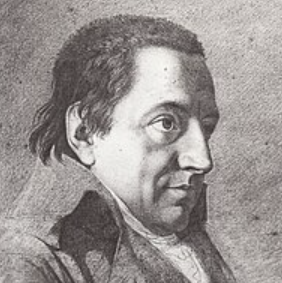
He [the "specialist"] is one who, out of all that has to be known in order to be a man of judgment, is only acquainted with one science, and even of that one only knows the small corner in which he is an active investigator. He even proclaims it as a virtue that he takes no cognisance of what lies outside the narrow territory specially cultivated by himself, and gives the name of "dilettantism" to any curiosity for the general scheme of knowledge.
▼
Source
source
Chapter XII: The Barbarism Of "Specialisation"
1 month 3 weeks ago
The representation of the self-sufficiency of the I can certainly co-exist with a representation of the self-sufficiency of the thing, though the self-sufficiency of the I itself cannot co-exist with that of the thing. Only one of these two can come first, only one can be the starting point; only one can be independent. The one that comes second, just because it comes second, necessarily becomes dependent upon the one that comes first, with which it is supposed to be connected. Which of these two should come first?
▼
Source
source
p. 17-18.

2 months 3 weeks ago
Kant [...] stated that he had "found it necessary to deny knowledge [...] to make room for faith," but all he had "denied" was knowledge of things that are unknowable, and he had not made room for faith but for thought.
▼
Source
source
p. 63

1 month 1 week ago
America had declared war with Spain.... It did not require much political wisdom to see that America's concern was a matter of sugar and had nothing to do with humanitarian feelings. Of course there were plenty of credulous people, not only in the country at large, but even in liberal ranks, who believed in America's claim. I could not join them. I was sure that no one, be it individual or government, engaged in enslaving and exploiting at home, could have the integrity or the desire to free people in other lands.
▼
Source
source
(p. 226)

2 months ago
The Americans combine the notions of Christianity and of liberty so intimately in their minds, that it is impossible to make them conceive the one without the other; and with them this conviction does not spring from that barren traditionary faith which seems to vegetate in the soul rather than to live.
▼
Source
source
Chapter XVII.

2 months 1 week ago
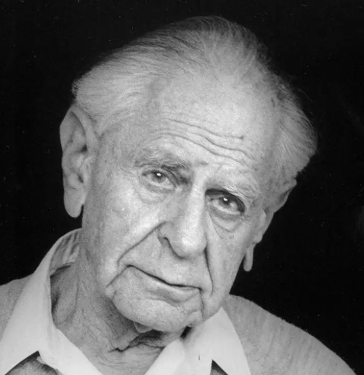
It is not proper either to have a blunt sword or to use freedom of speech ineffectually. Neither is the sun to be taken from the world, nor freedom of speech from erudition.
▼
Source
source
As quoted in the translation of Thomas Taylor
2 months 3 weeks ago
It is often asserted that discussion is only possible between people who have a common language and accept common basic assumptions. I think that this is a mistake. All that is needed is a readiness to learn from one's partner in the discussion, which includes a genuine wish to understand what he intends to say. If this readiness is there, the discussion will be the more fruitful the more the partner's backgrounds differ.
▼
Source
source
p. 352

3 weeks 1 day ago
Today the theory of evolution is about as much open to doubt as the theory that the earth goes round the sun, but the full implications of Darwin's revolution have yet to be widely realized.
▼
Source
source
Ch. 1. Why Are People?

1 month 3 weeks ago
The notion of nothingness is not characteristic of laboring humanity: those who toil have neither time nor inclination to weigh their dust; they resign themselves to the difficulties or the doltishness of fate; they hope: hope is a slave's virtue.

3 months 3 weeks ago
Deep within every human being there still lives the anxiety over the possibility of being alone in the world, forgotten by God, overlooked among the millions and millions in this enormous household. One keeps this anxiety at a distance by looking at the many round about who are related to him as kin and friends, but the anxiety is still there, nevertheless, and one hardly dares think of how he would feel if all this were taken away.
1 month 1 week ago
The average mind is slow in grasping a truth, but when the most thoroughly organized, centralized institution, maintained at an excessive national expense, has proven a complete social failure, the dullest must begin to question its right to exist. The time is past when we can be content with our social fabric merely because it is "ordained by divine right," or by the majesty of the law.
2 months 2 weeks ago
No text in the tradition seems as lucid concerning the way in which the political is becoming worldwide. concerning the irreducibility of the technical and the media in the current of the most thinking thought-and this goes beyond the railroad and the newspapers of the time whose powers were analyzed in such an incomparable way in the Manifesto. And few texts have shed so much light on law. international law. and nationalism.
▼
Source
source
Injunctions of Marx
1 month 3 weeks ago
This education, therefore, results at the very outset in knowledge which transcends all experience, which is abstract, absolute, and strictly universal, and which includes within itself beforehand all subsequently possible experience. On the other hand, the old education was concerned, as a rule, only with the actual qualities of things as they are and as they should be believed and rioted, without anyone being able to assign a reason for them. It aimed, therefore, at purely passive reception by means of the power of memory, which was completely at the service of things. It was, therefore, impossible to have any idea of the mind as an independent original principle of things themselves.
▼
Source
source
General Nature of New Eduction p. 28

1 month 3 weeks ago
The ideal of Morality has no more dangerous rival than the ideal of highest Strength, of most powerful life; which also has been named (very falsely as it was there meant) the ideal of poetic greatness. It is the maximum of the savage; and has, in these times, gained, precisely among the greatest weaklings, very many proselytes. By this ideal, man becomes a Beast-Spirit, a Mixture; whose brutal wit has, for weaklings, a brutal power of attraction.
3 months 3 weeks ago
Between God and man there is and remains an eternal, essential, qualitative difference. The paradoxical relationship (which, quite rightly, cannot be thought, but only believed) appears when God appoints a particular man to divine authority, in relation, be it carefully noted, to that which has entrusted to him.
3 weeks 4 days ago
Giving alms is only a virtuous deed when you give money that you yourself worked to get.
▼
Source
source
p. 83

2 months 3 weeks ago
If anything extraordinary seems to have happened, we can always say that we have been the victims of an illusion. If we hold a philosophy which excludes the supernatural, this is what we always shall say.
▼
Source
source
Ch. 1: "The Scope of this Book"
1 month 3 weeks ago
Where are my sensations? They have melted into... me, and what is this me, this self, but the sum of these evaporated sensations?
3 weeks 3 days ago
Each of our senses makes its own space, but no sense can function in isolation. Only as sight relates the touch, or kinaesthesia, or sound, can the eye see.
2 months 3 weeks ago
I now saw, that a science is either deductive or experimental, according as, in the province it deals with, the effects of causes when conjoined, are or are not the sums of the effects which the same causes produce when separate. It followed that politics must be a deductive science. It thus appeared, that both Macaulay and my father were wrong; the one in assimilating the method of philosophising in politics to the purely experimental method of chemistry; while the other, though right in adopting a deductive method, had made a wrong selection of one, having taken as the type of deduction, not the appropriate process, that of the deductive branches of natural philosophy, but the inappropriate one of pure geometry, which, not being a science of causation at all, does not require or admit of any summing-up of effects.
▼
Source
source
(pp. 160-161)
3 months ago
I perfectly agree with your Lordship too, that to crush the Industry of so great and so fine a province of the empire, in order to favour the monopoly of some particular towns in Scotland or England, is equally unjust and impolitic. The general opulence and improvement of Ireland might certainly, under proper management, afford much greater resources to the Government, than can ever be drawn from a few mercantile or manufacturing towns.
▼
Source
source
Letter to Henry Dundas (1 November 1779), quoted in Adam Smith, The Correspondence of Adam Smith, eds. E. C. Mossner and I. S. Ross (1987), p. 241

3 months 3 weeks ago
People are entirely too disbelieving of coincidence. They are far too ready to dismiss it and to build arcane structures of extremely rickety substance in order to avoid it. I, on the other hand, see coincidence everywhere as an inevitable consequence of the laws of probability, according to which having no unusual coincidence is far more unusual than any coincidence could possibly be.
3 months 3 weeks ago
If one thing goes without saying, almost anything can.
3 weeks 4 days ago
He did not, and could not, understand the meaning of words apart from their context. Every word and action of his was the manifestation of an activity unknown to him, which was his life.
▼
Source
source
About Platon Karataev in Bk. XII, ch. 13

3 months 1 week ago
since our leading men think themselves in a seventh heaven, if there are bearded mullets in their fish-ponds that will come to hand for food, and neglect everything else, do not you think that I am doing no mean service if I secure that those who have the power, should not have the will, to do any harm?
▼
Source
source
Letters to Atticus, Book II, 1.
3 months 3 weeks ago
The majority of mankind and people who lack refinement conceive it to be pleasure, and hence they approve a life of sensual enjoyment.
3 months ago
When profit diminishes, merchants are very apt to complain that trade decays; though the diminution of profit is the natural effect of its prosperity, or of a greater stock being employed in it than before.
▼
Source
source
Chapter IX

1 month 1 week ago
Not all women, in fact, very few, have had the good fortune to live and work among women and men actively involved in the feminist movement. Many of us live in circumstances and environments where we must engage in feminist struggle alone, with only occasional support and affirmation.
▼
Source
source
Acknowledgments.
2 months 3 weeks ago
Do you think that I count the days? There is only one day left, always starting over: it is given to us at dawn and taken away from us at dusk.
▼
Source
source
Act 10, sc. 2
2 months 3 weeks ago
The perception of the comic is a tie of sympathy with other men, a pledge of sanity, and protection from those perverse tendencies and gloomy insanities in which fine intellects sometimes lose themselves. A rogue alive to the ludicrous is still convertible.
▼
Source
source
The Comic

2 months 4 weeks ago
The problem of establishing a perfect civic constitution is dependent upon the problem of a lawful external relation among states and cannot be solved without a solution of the latter problem.
▼
Source
source
Seventh Thesis
2 months 3 weeks ago
In the United States of North America, every independent movement of the workers was paralysed so long as slavery disfigured a part of the Republic. Labour cannot emancipate itself in the white skin where in the black it is branded.
▼
Source
source
Vol. I, Ch. 10, Section 7, pg. 329.
2 months 3 weeks ago
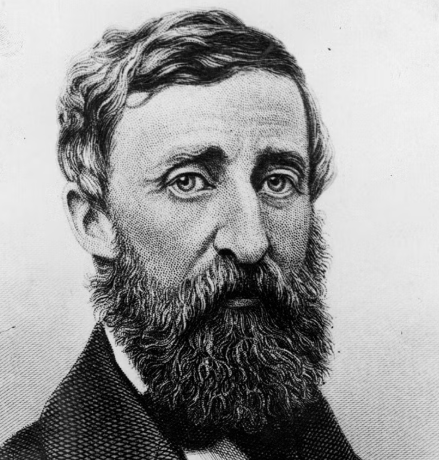
Where there is a lull of truth, an institution springs up. But the truth blows right on over it, nevertheless, and at length blows it down.
▼
Source
source
p. 494
4 weeks ago
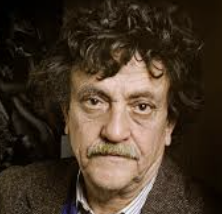
No matter how corrupt, greedy, and heartless our government, our corporations, our media, and our religious and charitable institutions may become, the music will still be wonderful. If I should ever die, God forbid, let this be my epitaph:THE ONLY PROOF HE NEEDEDFOR THE EXISTENCE OF GOD WAS MUSIC. Now, during our catastrophically idiotic war in Vietnam, the music kept getting better and better and better. We lost that war, by the way. Order couldn't be restored in Indochina until the people kicked us out. That war only made billionaires out of millionaires. Today's war is making trillionaires out of billionaires. Now I call that progress.
▼
Source
source
As quoted in "Vonnegut's Blues For America" Sunday Herald

3 months 4 days ago
We refuse to have our conscience bound by any work or law, so that by doing this or that we should be righteous, or leaving this or that undone we should be damned.
▼
Source
source
Chapter 2
2 months 3 weeks ago
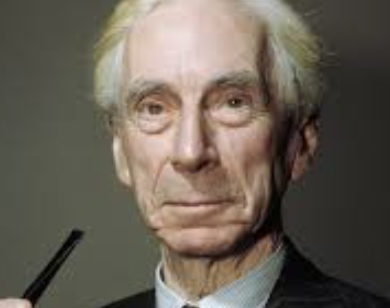
Mysticism is, in essence, little more than a certain intensity and depth of feeling in regard to what is believed about the universe.
▼
Source
source
Ch. 1: Mysticism and Logic

2 months 3 weeks ago
The inclination to act as the laws command, a virtue, is a synthesis in which the law ... loses its universality and the subject its particularity; both lose their opposition, while in the Kantian conception of virtue this opposition remains, and the universal becomes the master and the particular the mastered.
2 months 3 weeks ago
It is easy to live for others; everybody does. I call on you to live for yourselves.
▼
Source
source
May 3, 1845
2 months 3 weeks ago
The ornament of a house is the friends who frequent it.
▼
Source
source
Domestic Life

1 month 1 week ago
But if Germany, thanks to Hitler and his successors, were to enslave the European nations and destroy most of the treasures of their past, future historians would certainly pronounce that she had civilized Europe.
▼
Source
source
p. 124

3 months 1 week ago
He who created you without you will not justify you without you.
▼
Source
source
169
1 month 3 weeks ago
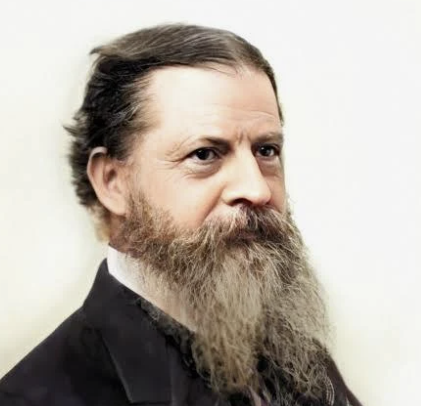
It is ...easy to be certain. One has only to be sufficiently vague.
▼
Source
source
Vol. IV, par. 237
1 month 1 week ago
The needs of a human being are sacred. Their satisfaction cannot be subordinated either to reasons of state, or to any consideration of money, nationality, race, or colour, or to the moral or other value attributed to the human being in question, or to any consideration whatsoever. There is no legitimate limit to the satisfaction of the needs of a human being except as imposed by necessity and by the needs of other human beings. The limit is only legitimate if the needs of all human beings receive an equal degree of attention.

3 months 1 week ago
So far as it goes, a small thing may give an analogy of great things, and show the tracks of knowledge.
▼
Source
source
Book II, lines 123-124 (tr. Rouse)
1 month 3 weeks ago
As the mathematics are now understood, each branch - or, if you please, each problem, - is but the study of the relations of a collection of connected objects, without parts, without any distinctive characters, except their names or designating letters. These objects are commonly called points; but to remove all notion of space relations, it may be better to name them monads. The relations between these points are mere complications of two different kinds of elementary relations, which may be termed immediate connection and immediate non-connection. All the monads except as serve as intermediaries for the connections have distinctive designations.
▼
Source
source
p. 268


1 month 3 weeks ago
Criticism is a misconception: we must read not to understand others but to understand ourselves.
2 months 3 weeks ago
For Genet, Beauty will be the offensive weapon that will enable him to beat the just on their own ground: that of value.
▼
Source
source
p. 405
CivilSimian.com created by AxiomaticPanic, CivilSimian, Kalokagathia